
LANDMARK
Blauwbrug
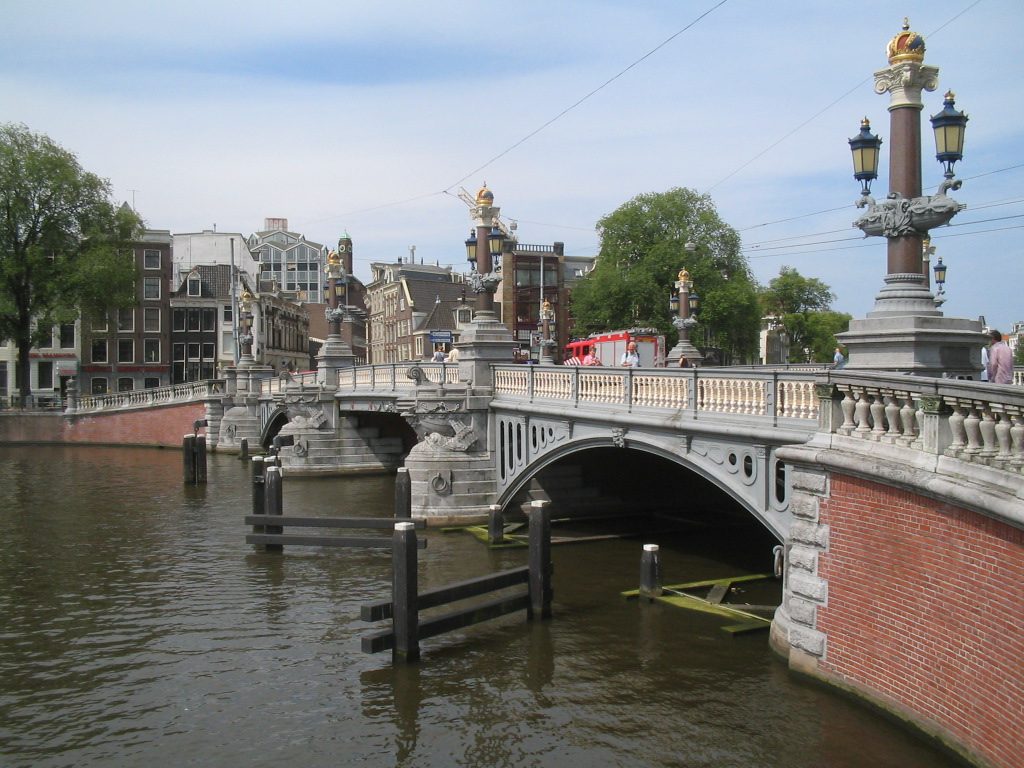
The ornate stone bridge over the Amstel, modelled on the Pont Alexandre III in Paris.
A bridge dressed for Paris
The Blauwbrug carries traffic across the Amstel between the Amstelstraat and the Waterlooplein. It is a stone bridge with three openings for boats, and it is far more decorated than most of the plain bridges in the centre. It is open air, free, and you can cross it at any hour.
The design borrows from Paris. The city wanted something grand here, and the architect Bastiaan de Greef and his assistant Willem Springer took the Pont Alexandre III as their model. Standing on the pavement, you can see why people talk about the Seine.
Why it is called blue
The name is older than the stone bridge. A wooden bridge stood here from around 1600, and the sources link the blue to the old bridges that came before 1883. One account says the wooden one was painted the blue of the Dutch flag. Another says the old bridges had blue railings. Either way, the name stuck.
It collected other names too. King Willem III wanted to call it the Sophiabrug in 1839, after his wife. In Yiddish it was the Bloubrik, because it was an entrance to the old Jewish quarter. The Yiddish sayings that use the name are all about how you never get free of where you come from.
Built for a show, and criticised for it
The present bridge opened in 1883, the year of the Colonial Exhibition. The council wanted a tram link and a bridge with some show to it. Once it opened, critics said it was too pompous for Amsterdam.
One detail came over from Paris for no good reason. The heavy piers were needed on the Seine to push ice floes away from the bridge. On the slow Amstel they do almost nothing. The arches, though, had to be shorter than the Paris ones. Longer arches would have made the bridge sink into the soft ground.
In 1938 and 1939 the bridge was reworked under the bridge architect Piet Kramer. Iron beams gave way to concrete so it could carry heavier traffic, and some of the decoration went. A restoration in 1999 reversed those changes and gave the bridge its blue colour back.
On 30 April 1980, the day Beatrix became queen, squatters and riot police fought here. The novelist A. F. Th. van der Heijden used that day for his 1983 book De Slag om de Blauwbrug.
What to look for
Start at the corners. Eight granite pylons stand along the bridge, with limestone balustrades between them. Each pylon ends in an imperial crown, the same crown that is on Amsterdam's coat of arms.
Look at the bases of the pylons too. They are shaped like ships' bows. The lamp posts carry shipping motifs, and the lanterns themselves are shaped like crowns. Higher up on the pylons you will find columns with leaf patterns and carved masks.
Then look along the water. The Stopera is next door on one side. Down the river you can see across the Amstel, which gives you the wide view that the 1938 rebuild once opened up. Trams still cross here, so watch the tracks as you take photos.
Before you go
- Walk from Rembrandtplein in about five minutes, or from the Waterlooplein side in two.
- Come early in the morning for a quiet bridge, or at dusk when the crown lanterns are lit.
- Stand on the pavement at the middle of the bridge for the best view along the Amstel.
- Watch for trams and cyclists, and cross at the proper crossings when taking photos.
- Walk to the Stopera end and look back to see the pylons and ship-bow bases in profile.
What people say
Related spots
More things to do in Amsterdam ›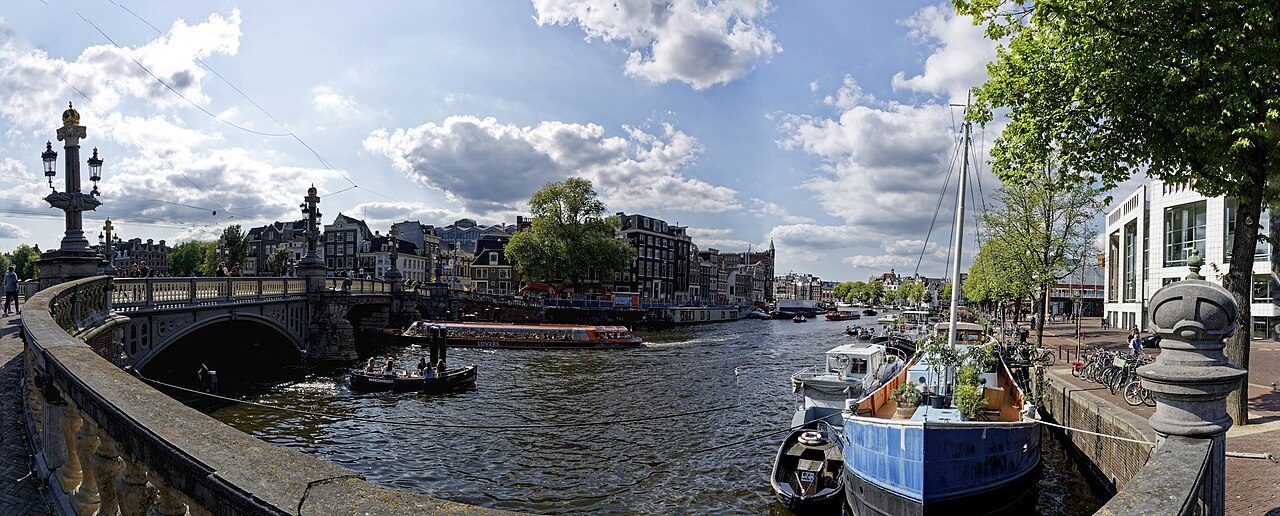 LANDMARK
Waterlooplein flea market
The city's oldest flea market, next to the Stopera.
 LANDMARK
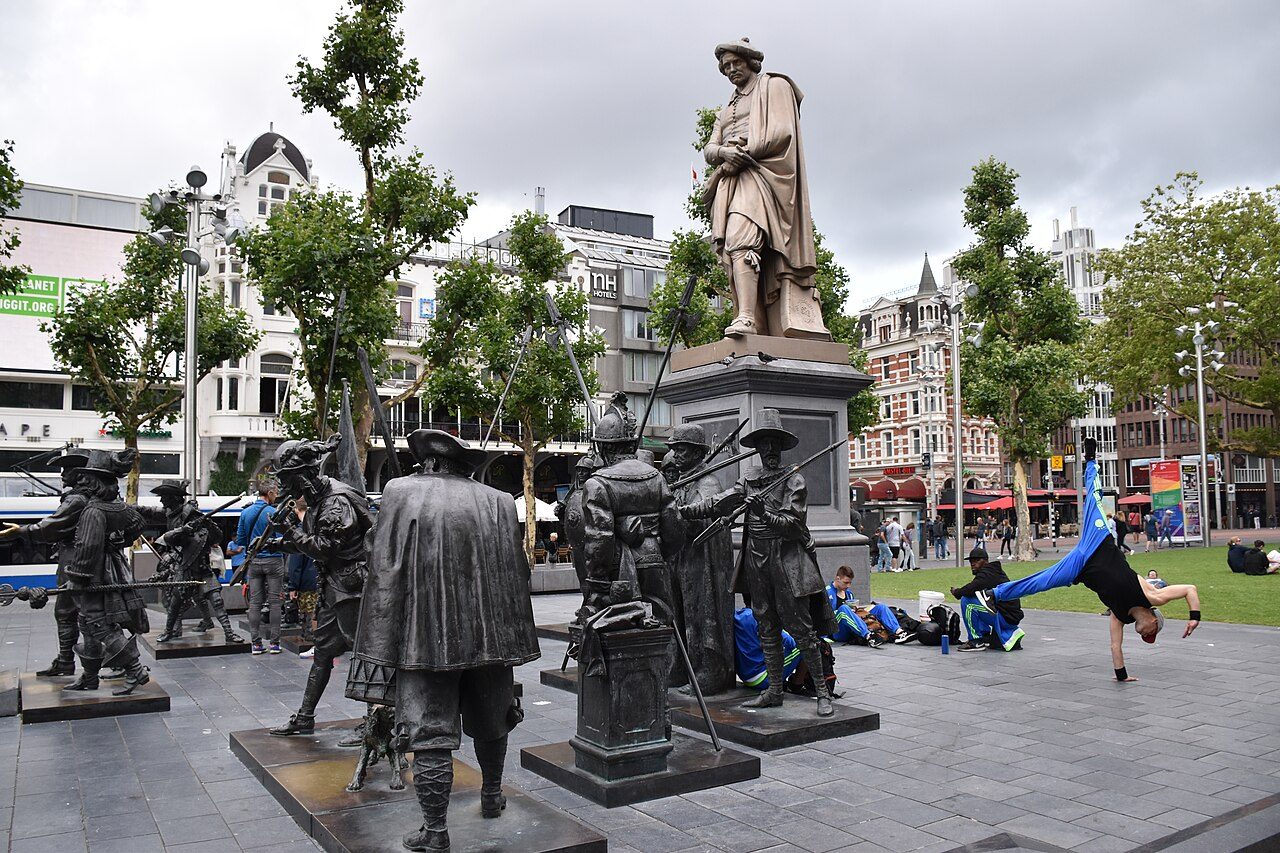
Rembrandtplein & Night Watch statues
Rembrandt's statue with a life-size bronze version of The Night Watch around him.
 LANDMARK
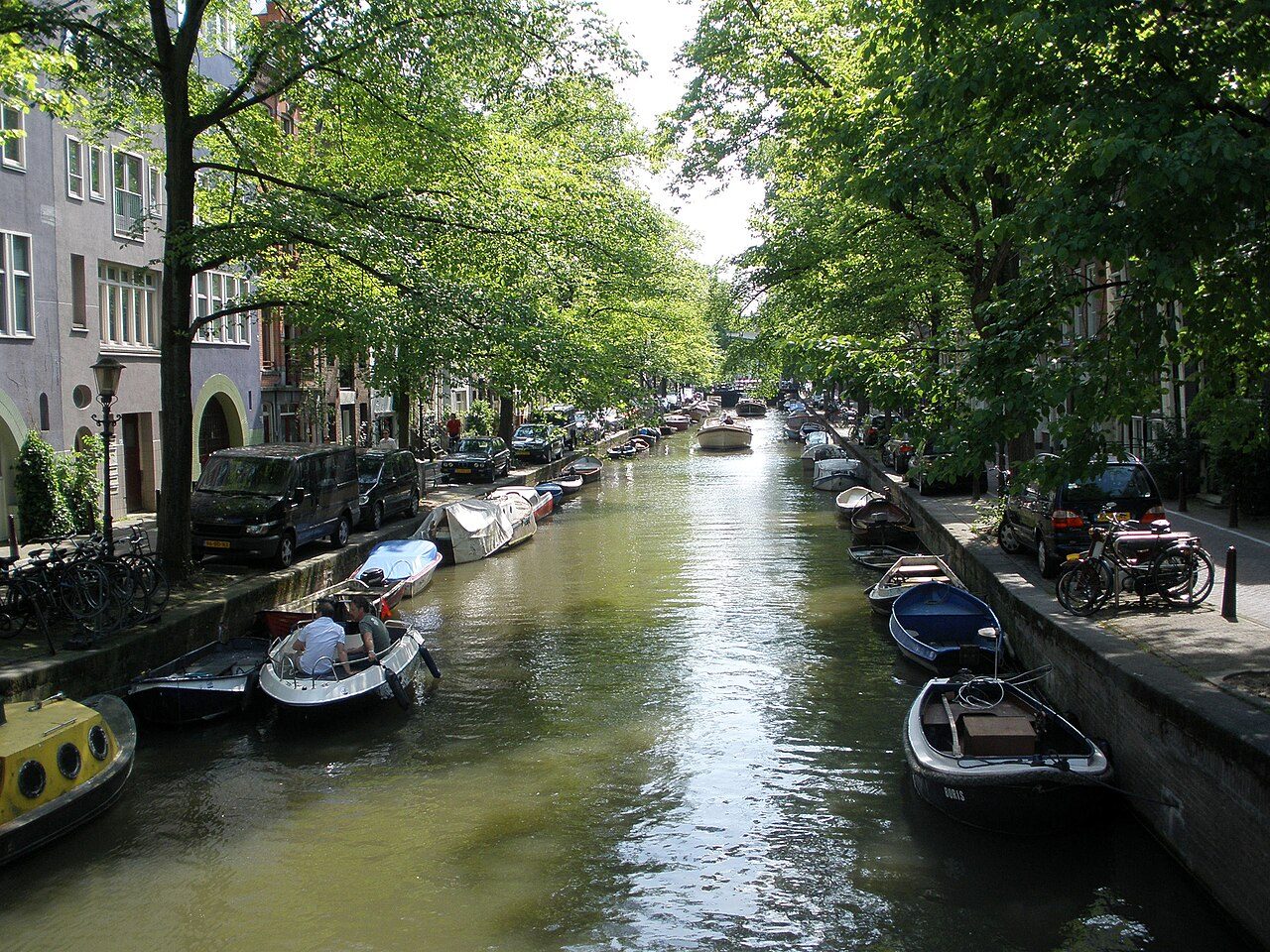
Groenburgwal
The quiet canal Monet painted, with the Zuiderkerk tower at the end.
 LANDMARK
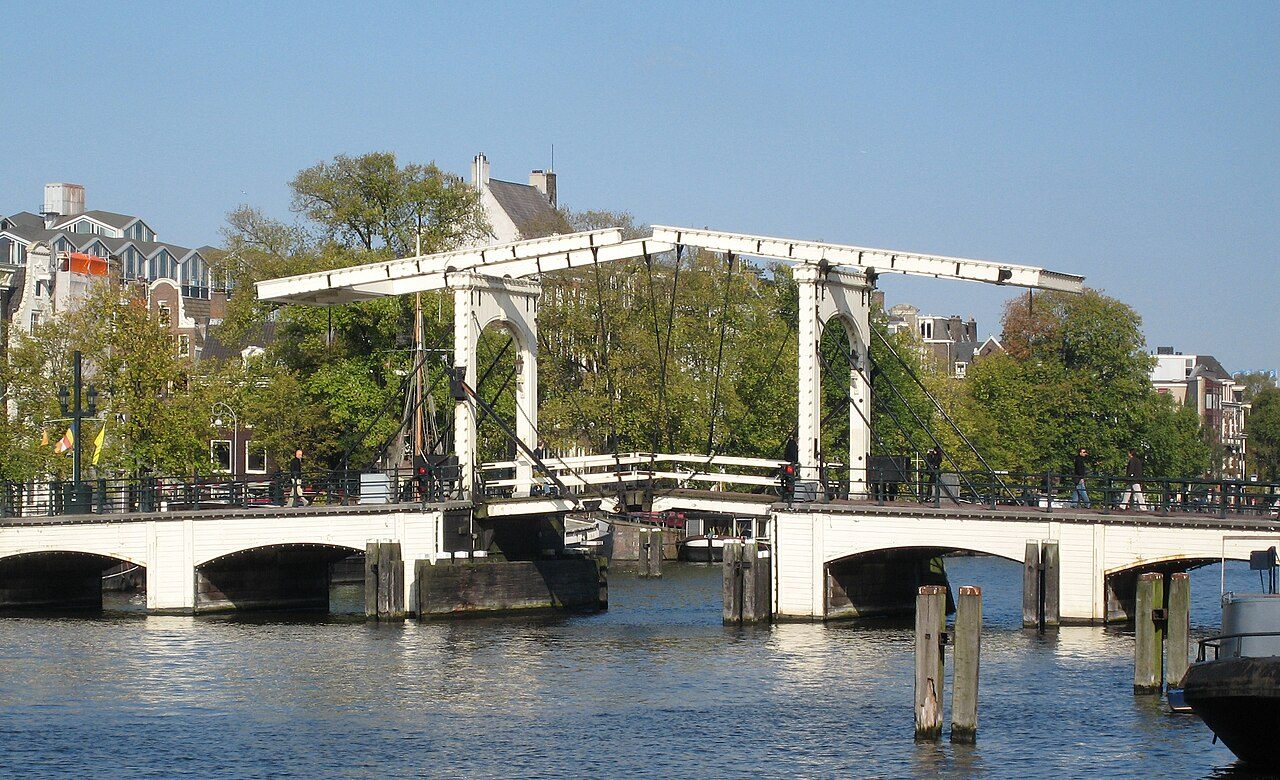
Magere Brug
The white wooden drawbridge over the Amstel, lit by 1,200 bulbs at night.
 CHURCH
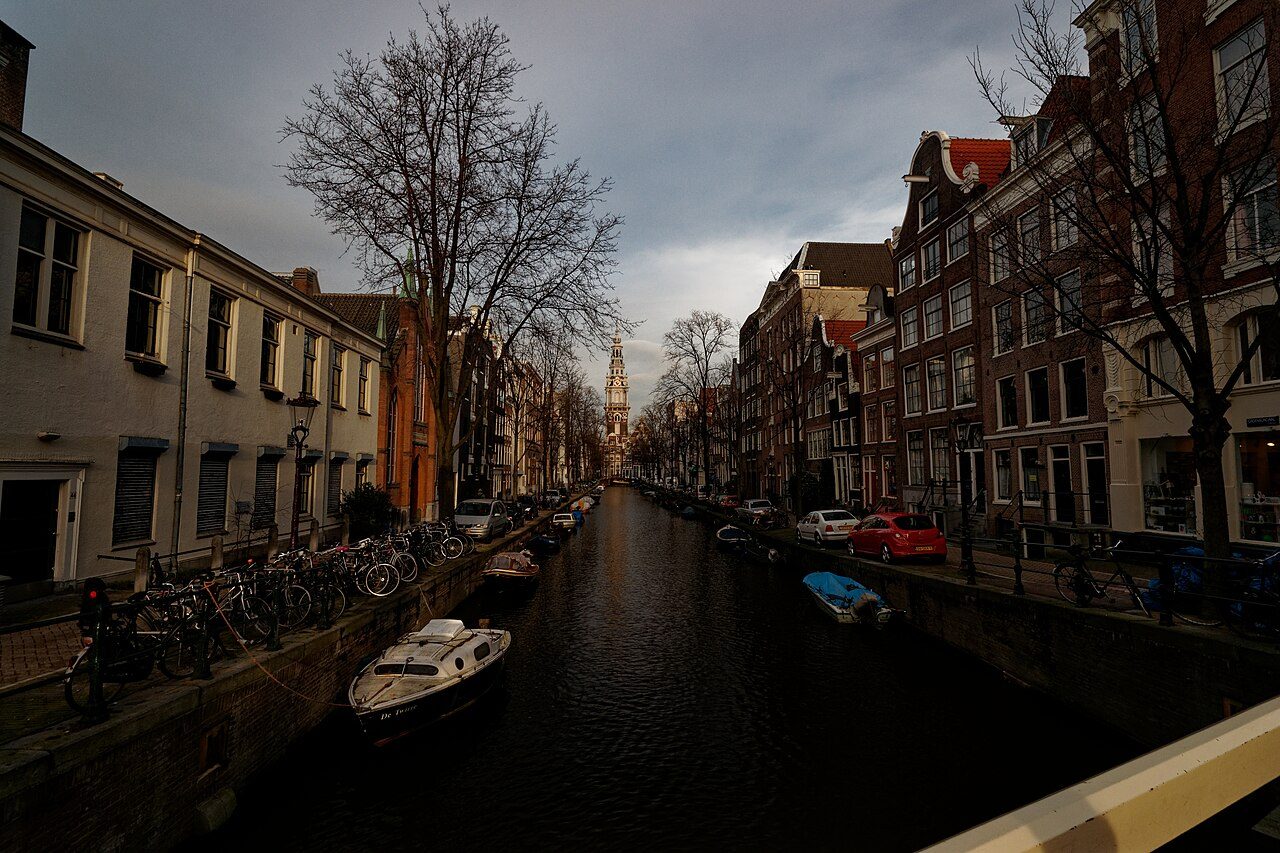
Zuiderkerk
The first Protestant church of Amsterdam, painted by Monet; the skull gate to its graveyard is around the corner.
 LANDMARK
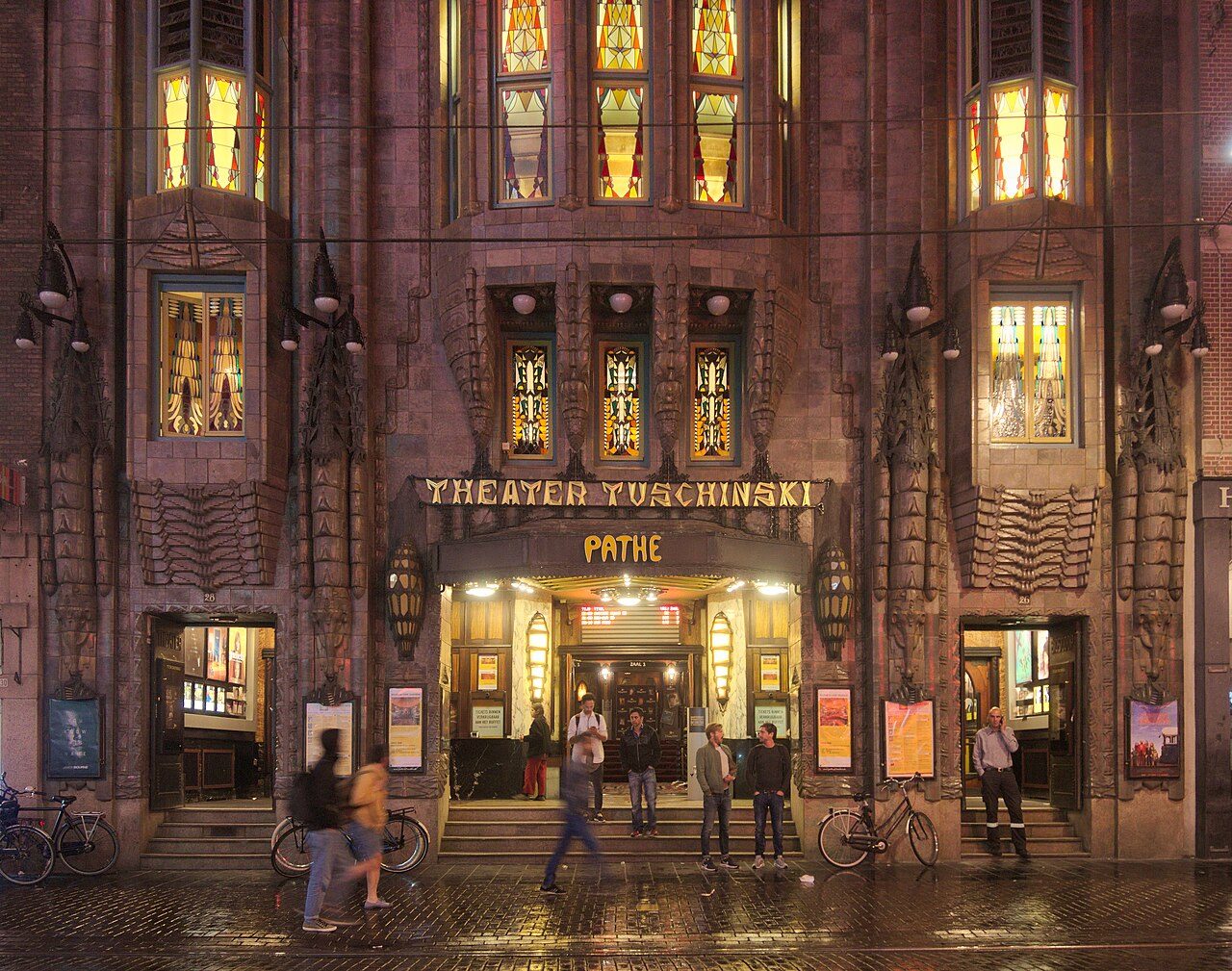
Tuschinski Theatre
An Art Deco cinema palace from 1921, often called the most beautiful cinema in the world; peek into the lobby.
Tours and quests that pass here
These walks have a stop a few minutes from Blauwbrug. Free, on your phone, start any time.
 AUDIO TOUR
Van Gogh's Amsterdam
The years before the fame: a failed bookshop clerk walking these same streets. Ends at the museum door.
 CITY QUEST
Rembrandt's Missing Panel
Count steps, columns and a missing piece of skyline. Rembrandt's city, looking closely.
 AUDIO TOUR
In Rembrandt's Footsteps
From the biggest house on the street to bankruptcy and an unmarked grave. His Amsterdam, in the order he lived it.