
LANDMARK
Red Light District (De Wallen)
The oldest part of the city: medieval alleys, the Oude Kerk and the windows, free to walk through.
The oldest part of the city
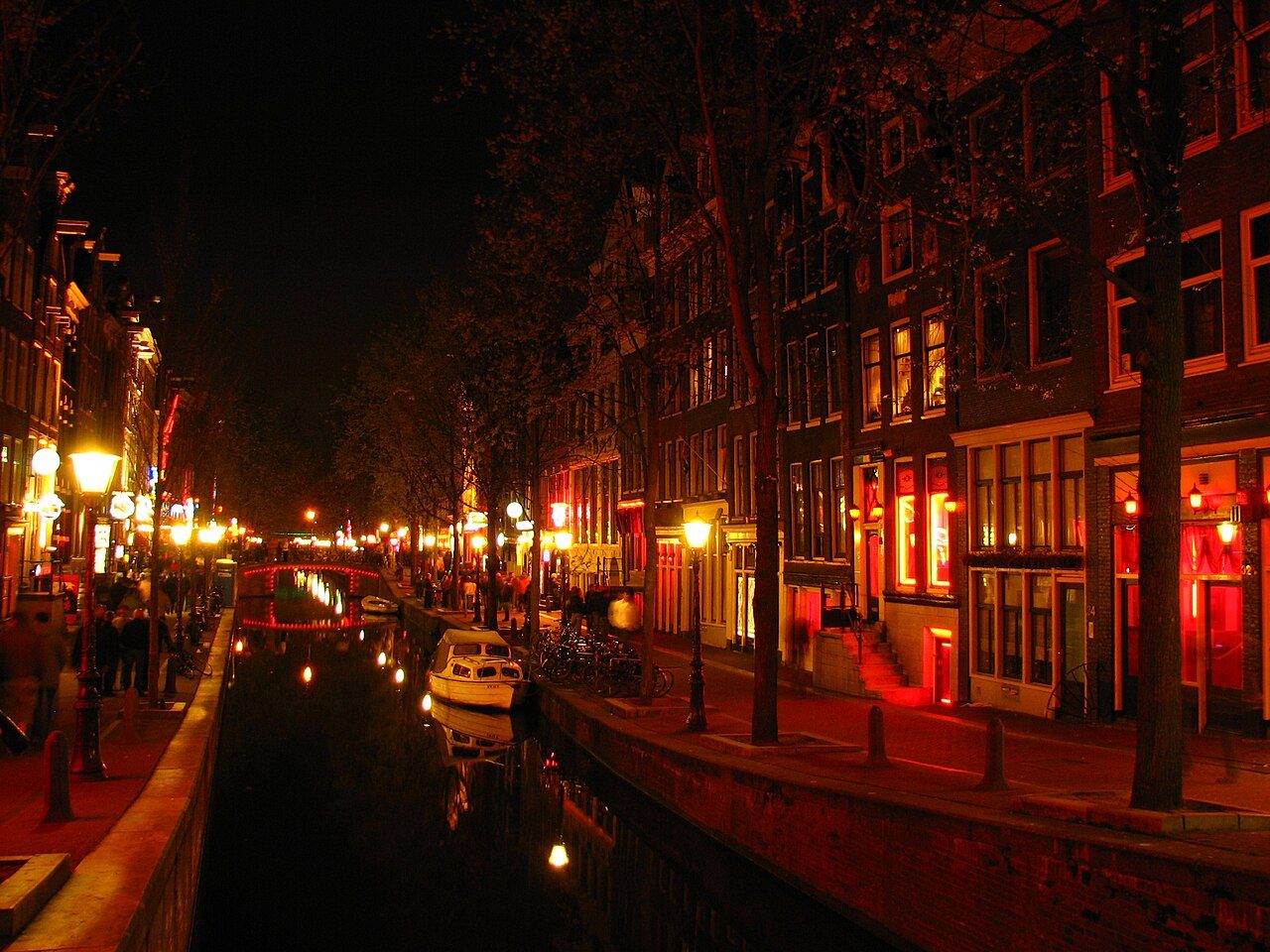
De Wallen is where Amsterdam began. Before it was known for anything else, it was a tangle of medieval alleys around the harbour and the Oude Kerk. Today it is also the city's best known red-light district, with small one-room cabins along the lanes, each with a window or glass door lit in red.
It is worth the walk because the old city is still here. The canals are narrow, the alleys are crooked, and the church tower rises over the roofs. It costs nothing to walk through, and in daylight it can feel like an ordinary neighbourhood where people live, work and cycle to the shops.
The district is small. You can cross it in a few minutes, but it is better to give it an hour and let it unfold.
How it got here
The name comes from the walls. The medieval town was edged by canals with embankments beside them, and the little walls gave the area its name, De Wallen. The Oude Kerk, from the early 1300s, is the oldest building in Amsterdam, and the streets grew up around it.
A harbour brings sailors, and sailors brought the trade. Prostitution here goes back many centuries. It was often banned and never fully stamped out, and the authorities mostly tolerated it as long as it stayed out of sight. Selling sex has been legal in the Netherlands for a long time, and since 2000 running a brothel has been legal too, under licence.
The city has spent years trying to change the area. It has closed some windows and coffeeshops, and it has talked about moving part of the trade elsewhere. What you see is a neighbourhood that is still being argued over.
What to look for
Start on Oudekerksplein, in front of the Oude Kerk. Look at the pavement near the church. In a doorway stands a bronze statue of a woman's hand-on-hip pose, unveiled in 2007 as a tribute to sex workers, by the artist Els Rijerse. It was the idea of Mariska Majoor, a former sex worker who founded the Prostitution Information Center.
Then look at the lights. Red is the usual colour. Blue marks transgender sex workers.
Look up as well. Many houses have tall, narrow gables and hoisting beams that are far older than the windows at street level. Along the Oudezijds Voorburgwal and Oudezijds Achterburgwal the canals are lined with merchants' houses, and you can see how grand the area once was.
A few rules make it better for everyone. Do not photograph the women working. Do not stop in front of a window to stare. Keep your voice down and your bag zipped, because pickpockets work the busiest lanes. Mornings and afternoons are calm. In the evening, especially at weekends, the lanes fill fast.
Before you go
- Walk from Centraal Station in about ten minutes, or from Dam Square in about five.
- Free to walk through at any time. Mornings and afternoons are calm, evenings and weekends are crowded.
- Do not photograph the women in the windows, and keep your phone away near the doors.
- Bring a small bag and keep it zipped. Pickpockets work the busiest lanes at night.
- Allow an hour, and add the Oude Kerk square and the Zeedijk for a fuller picture of the old city.
What people say
Related spots
More things to do in Amsterdam ›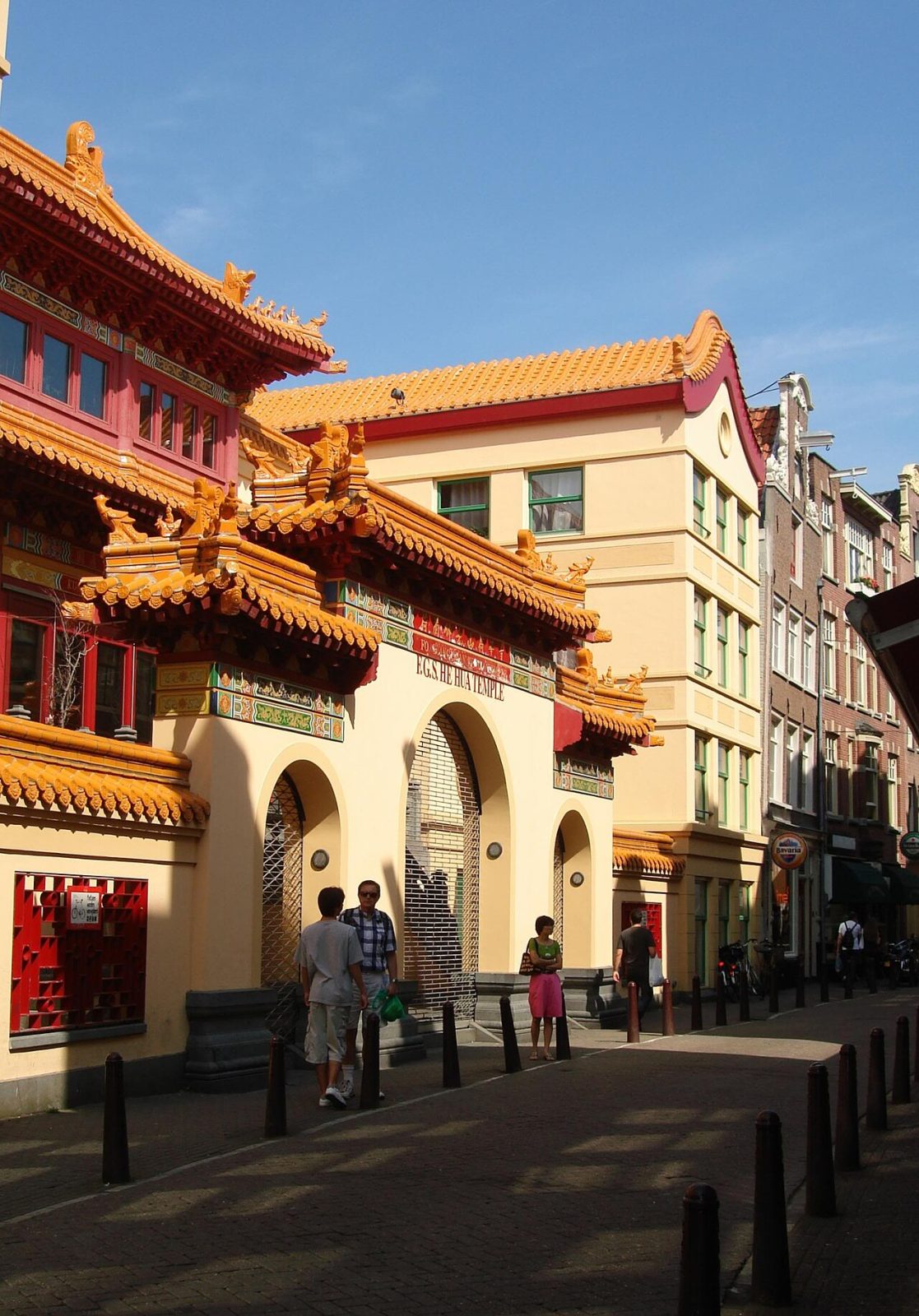 LANDMARK
Chinatown (Zeedijk)
The Zeedijk and Nieuwmarkt area: Chinese bakeries, the old sailors' street, and a Buddhist temple.
 MUSEUM
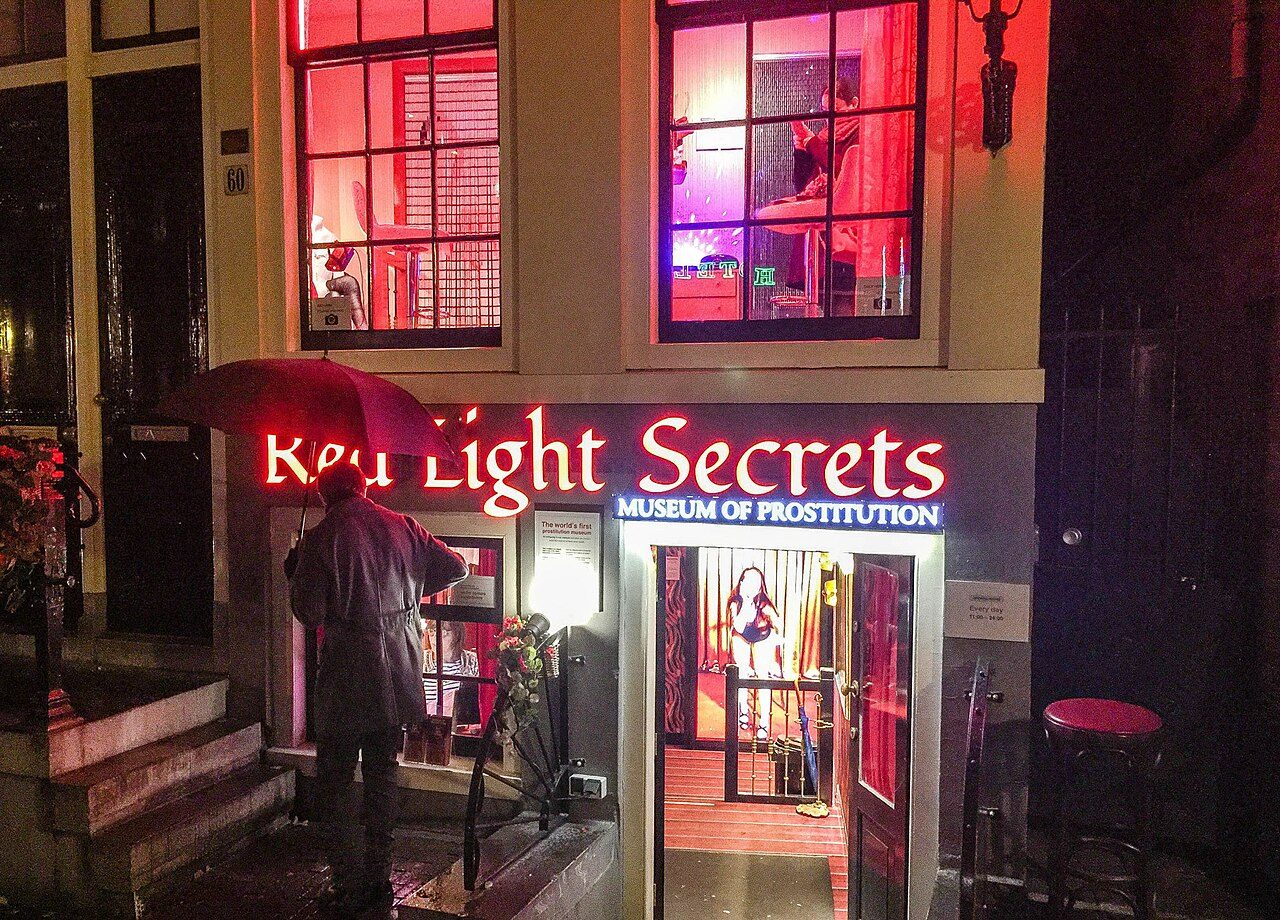
Red Light Secrets
The museum of prostitution, in a former brothel in the Red Light District.
 ODD FIND
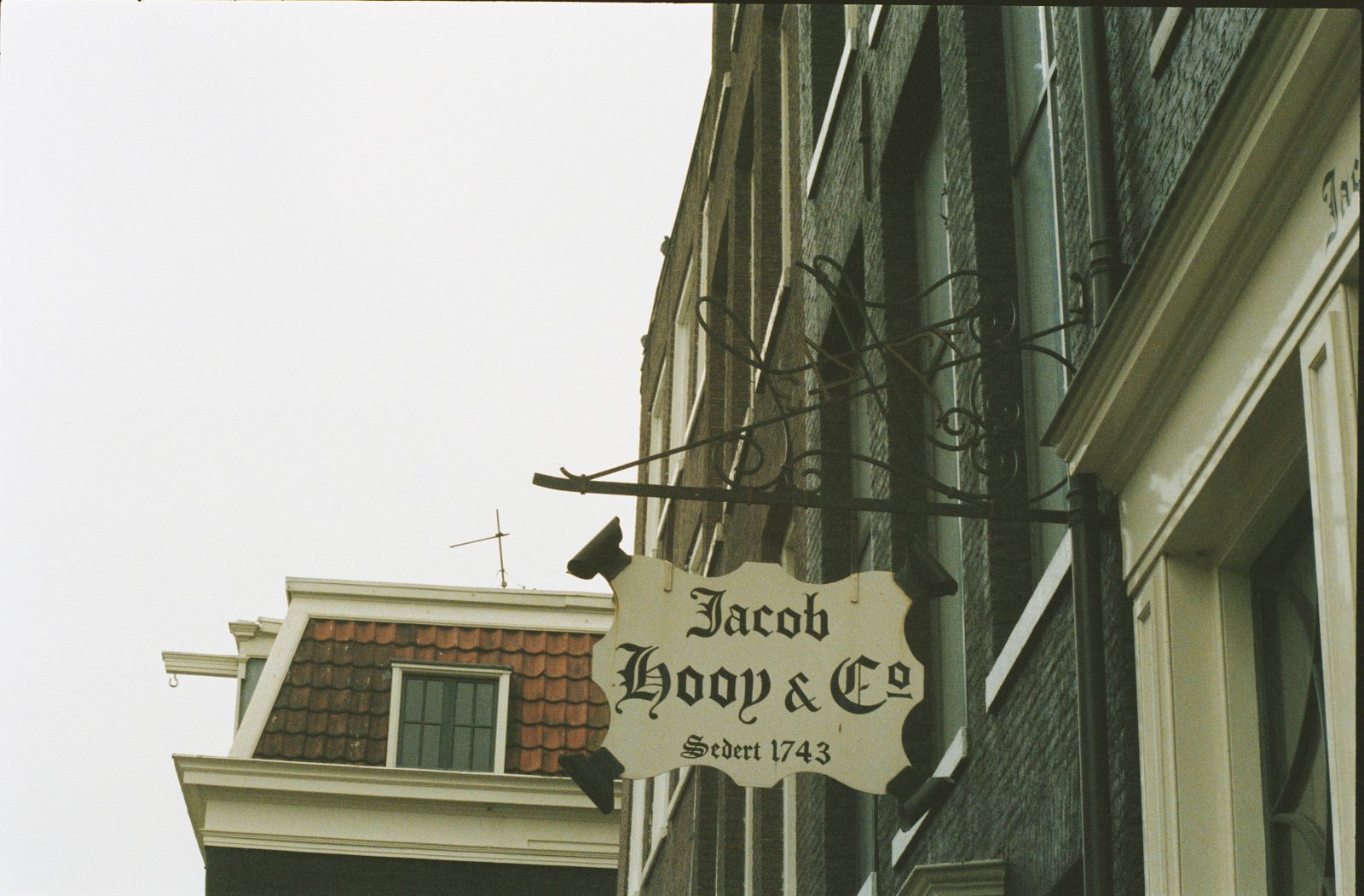
Jacob Hooy & Co
An apothecary shop unchanged since 1743: wooden drawers of herbs, liquorice jars and a 'gaper' head over the door.
 LANDMARK
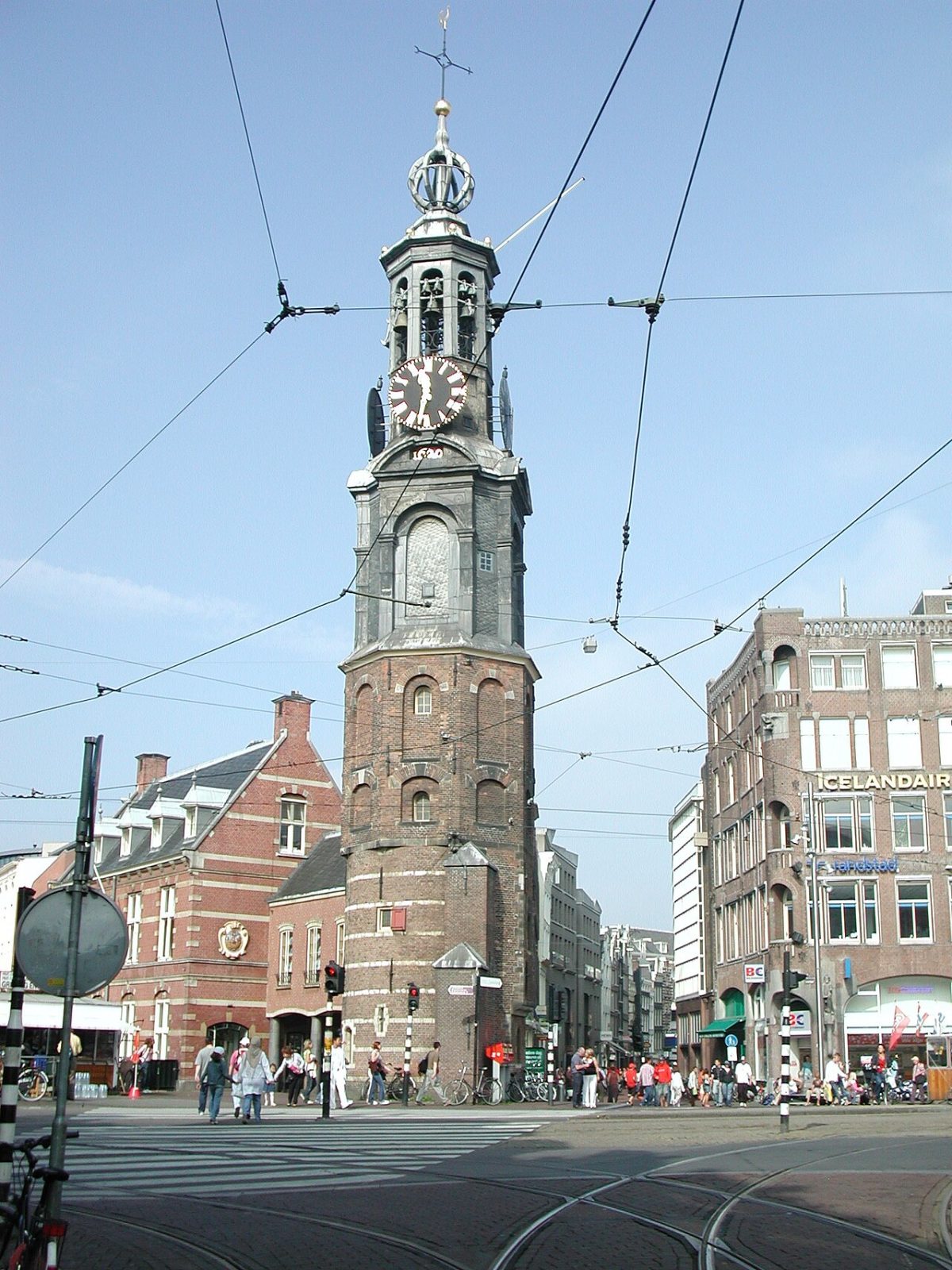
Munttoren
The tower where Amsterdam minted its own coins in 1672, by the flower market.
 LANDMARK
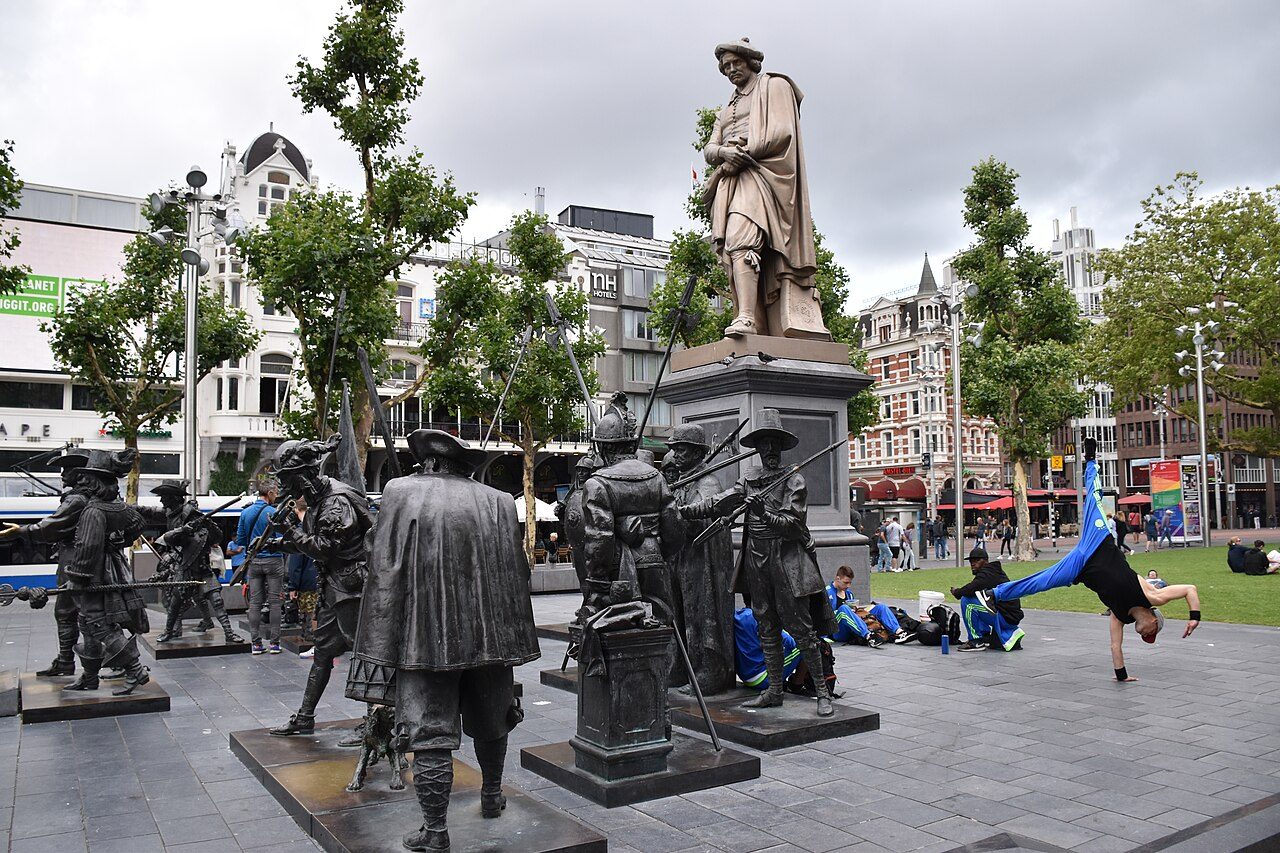
Rembrandtplein & Night Watch statues
Rembrandt's statue with a life-size bronze version of The Night Watch around him.
 LANDMARK
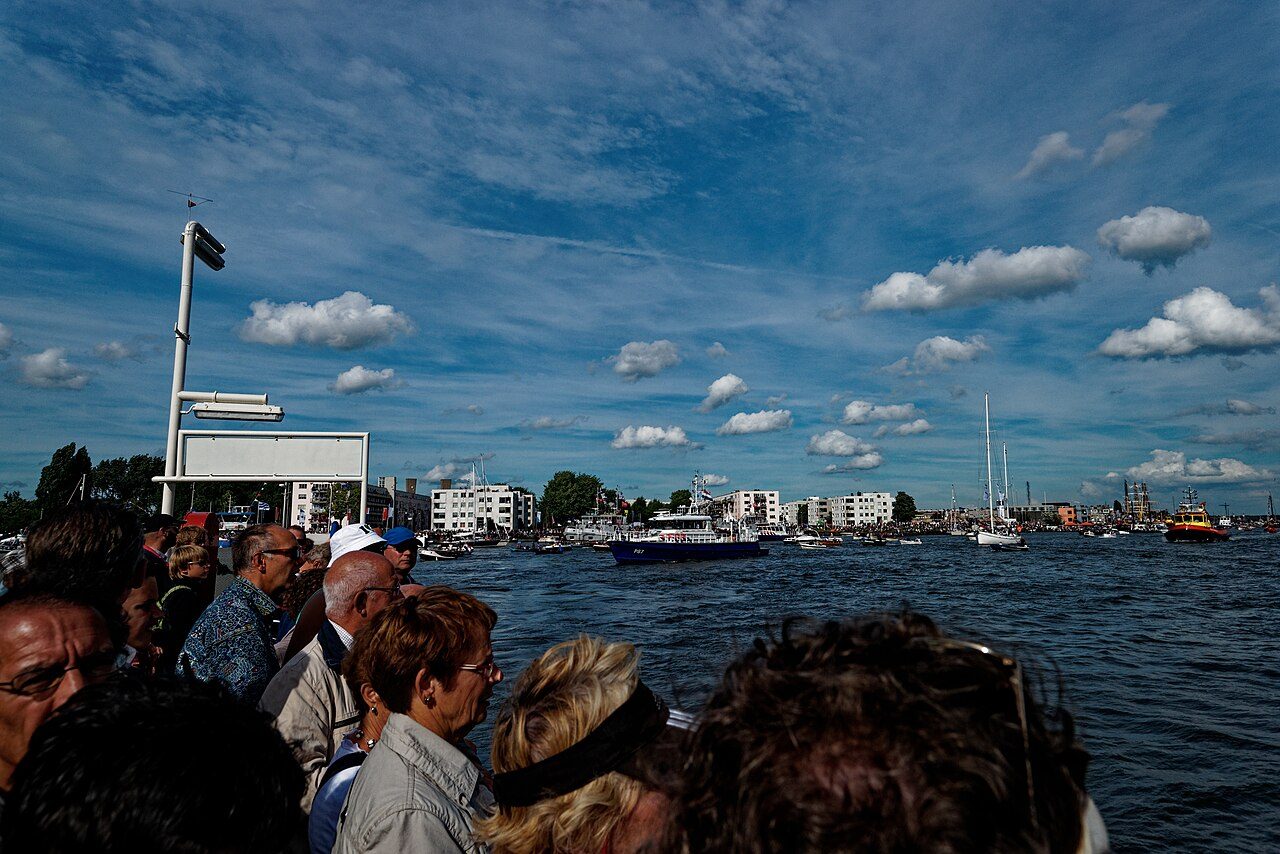
Free ferry to Amsterdam Noord
The free ferries behind Centraal Station: the best cheap view of the IJ.
Tours and quests that pass here
These walks have a stop a few minutes from Red Light District (De Wallen). Free, on your phone, start any time.
 AUDIO TOUR
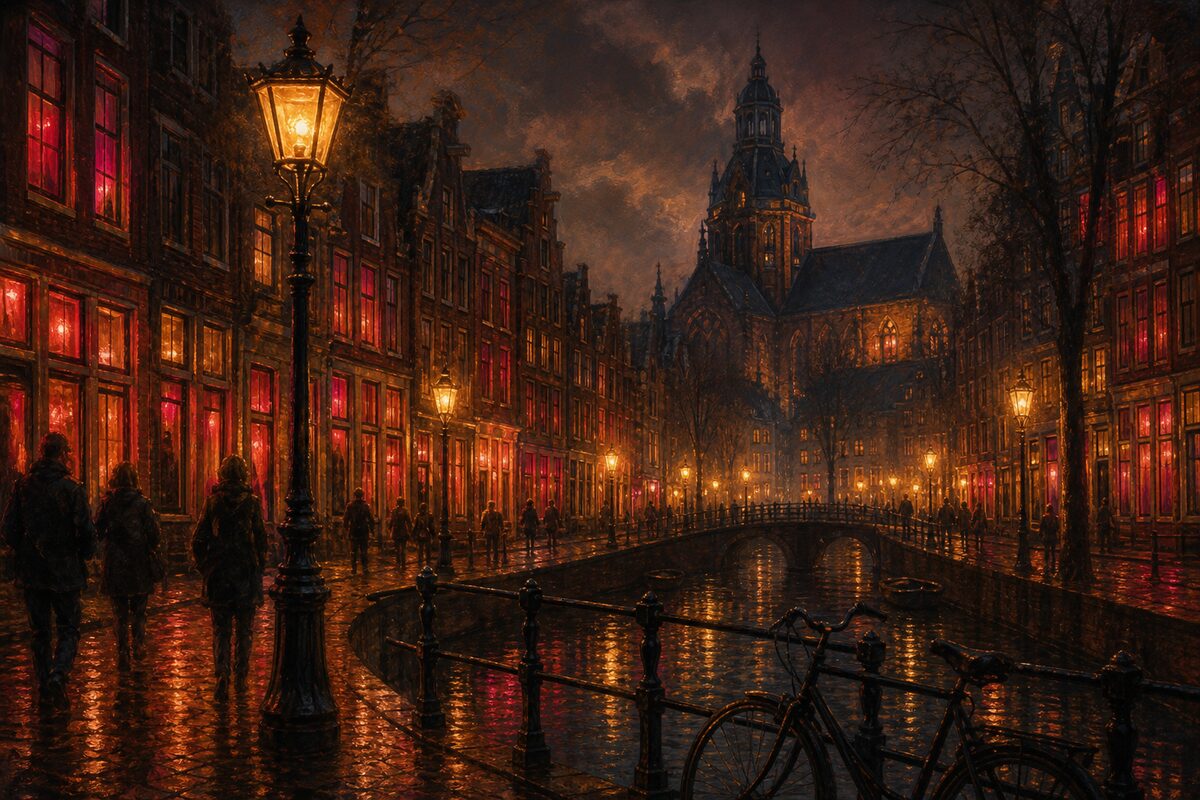
Red Light District
Seven centuries of sailors, sin and stubborn tolerance. The real history of the oldest part of town, told straight.
 AUDIO TOUR
In Rembrandt's Footsteps
From the biggest house on the street to bankruptcy and an unmarked grave. His Amsterdam, in the order he lived it.
 CITY QUEST
Rembrandt's Missing Panel
Count steps, columns and a missing piece of skyline. Rembrandt's city, looking closely.