
ODD FIND
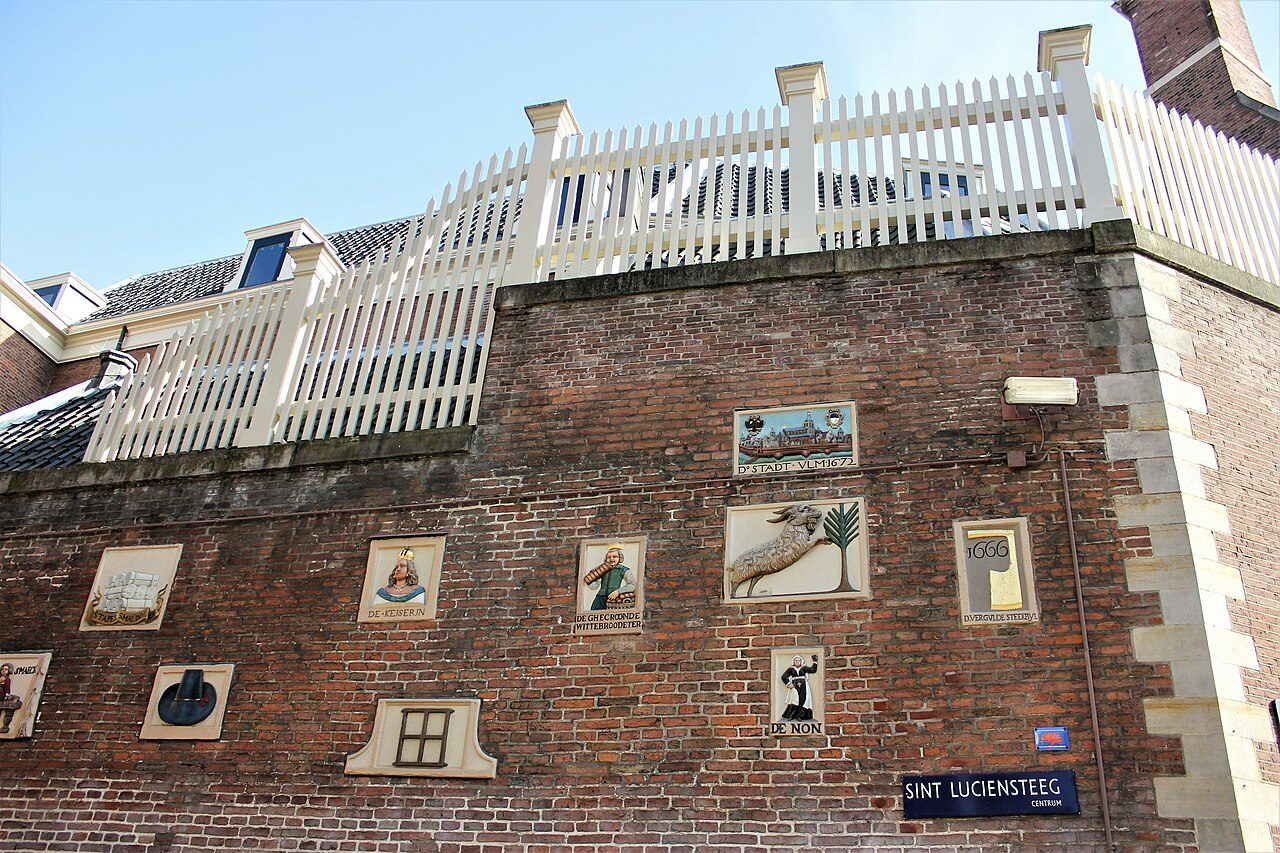
Gable stone wall (Sint Luciënsteeg)
A whole wall of rescued gable stones, the picture house numbers Amsterdam used before street numbers.
A wall of house signs
Sint Luciënsteeg is a narrow alley beside the Amsterdam Museum, just off Kalverstraat. Most people walk past the entrance without a glance. Look along the wall and you will see stone tablets set into the brick, one beside another, each carved or painted with a picture.
These are gable stones. Each one once sat on the front of an Amsterdam house. Here a collection of them has been saved and set together at eye level, so you can stand close and read them.
It takes ten minutes and costs nothing. It is worth the detour because it explains something you will keep noticing for the rest of your walk: the small carved pictures above doors all over the old centre.
Addresses before numbers
Amsterdam's houses were not always known by a number. A picture on the front did the job. A house might be the one with the lion, the ship, the sheaf of wheat or the figure at work. You told a visitor to look for the sign, and that was the address.
The stones could also say something about the people inside. A trade, a family name, a proverb or a hope could all be cut into stone. They worked as a shop sign and a house name in one.
When old houses were pulled down or rebuilt, the stones were easily thrown out with the rubble. A wall like this one is a way of keeping them. The stones here have been taken from their original streets, so you get the pictures but not the places. That is part of what makes the wall a little strange.
To see stones still on their own houses, De Drie Hendricken on the Bloemgracht is a good example. Its three houses date from 1642, and the stones show a townsman, a farmer and a sailor.
What to look for
Go slowly and read the wall from one end to the other. Do not try to take it all in at once.
Look first for the simplest pictures: animals, plants, tools. These are the ones that worked as a name. Then look for the stones with more detail, such as small scenes with people, or lettering. Some carry a few words that tell you what the owner wanted to say.
Notice the stones themselves. Some are sharply cut and some are worn smooth. Some keep traces of paint and some are plain grey. They come from different houses and different centuries, and each has weathered in its own way.
Then look up when you walk back out into the streets. Gable stones are still there above doors, often higher than you expect, and often beside the number that replaced them. After this wall you will spot them everywhere.
Before you go
- The alley runs beside the Amsterdam Museum, off Kalverstraat. Walk in from the Kalverstraat side and look along the wall.
- It is outdoors, always open to look at, and free. There is nothing to book.
- Go early in the morning or on a weekday to read the stones without people passing behind you. The shopping streets nearby get crowded in the afternoon.
- Bring a phone with a good camera. The carving is small, and a close photo lets you read lettering that is hard to see by eye.
- Pair it with the Begijnhof, a short walk away, for a calm second stop.
What people say
Related spots
More things to do in Amsterdam ›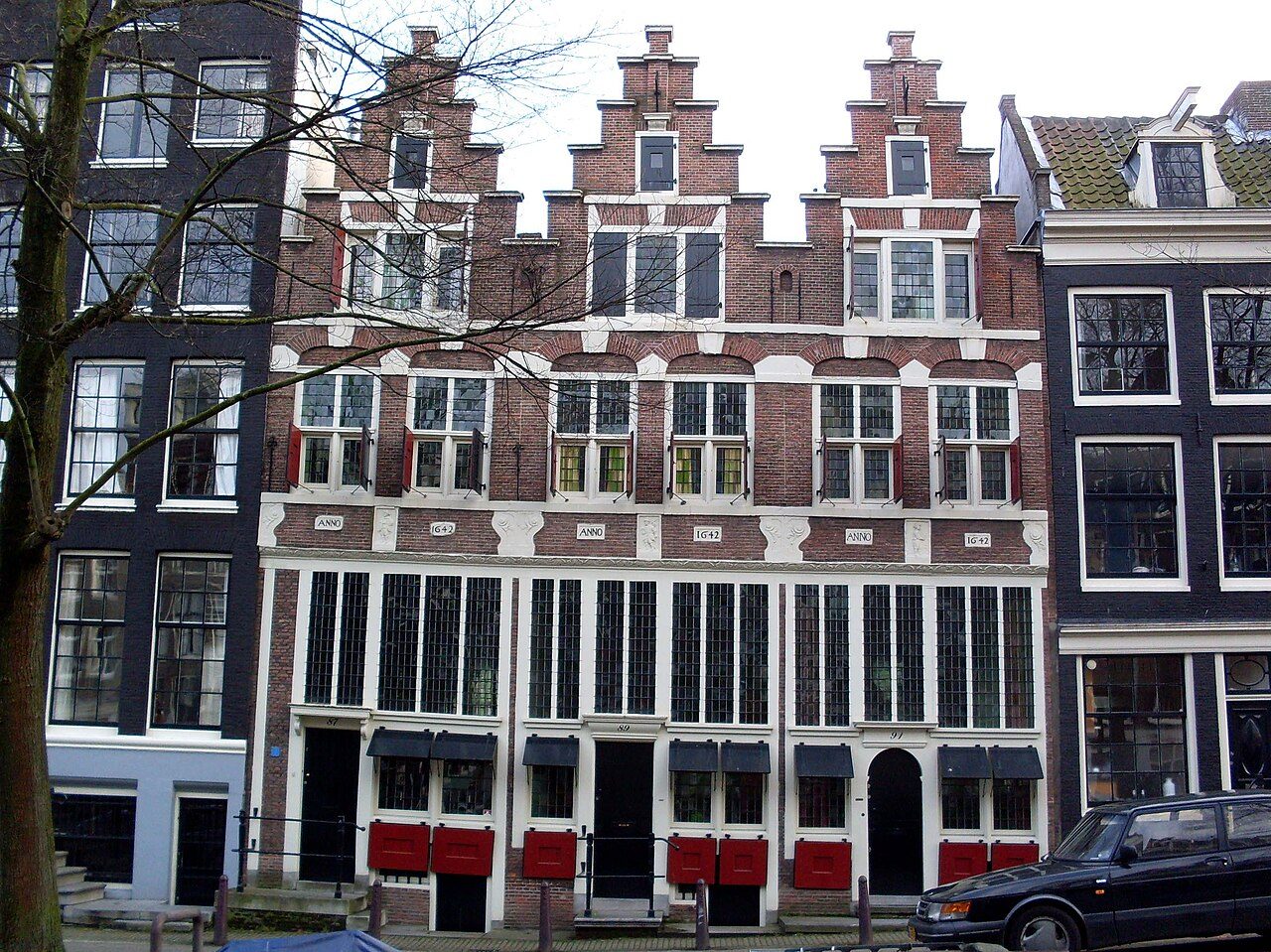 ODD FIND
De Drie Hendricken
Three 1642 houses on the Bloemgracht with gable stones of a townsman, a farmer and a sailor.
 ODD FIND
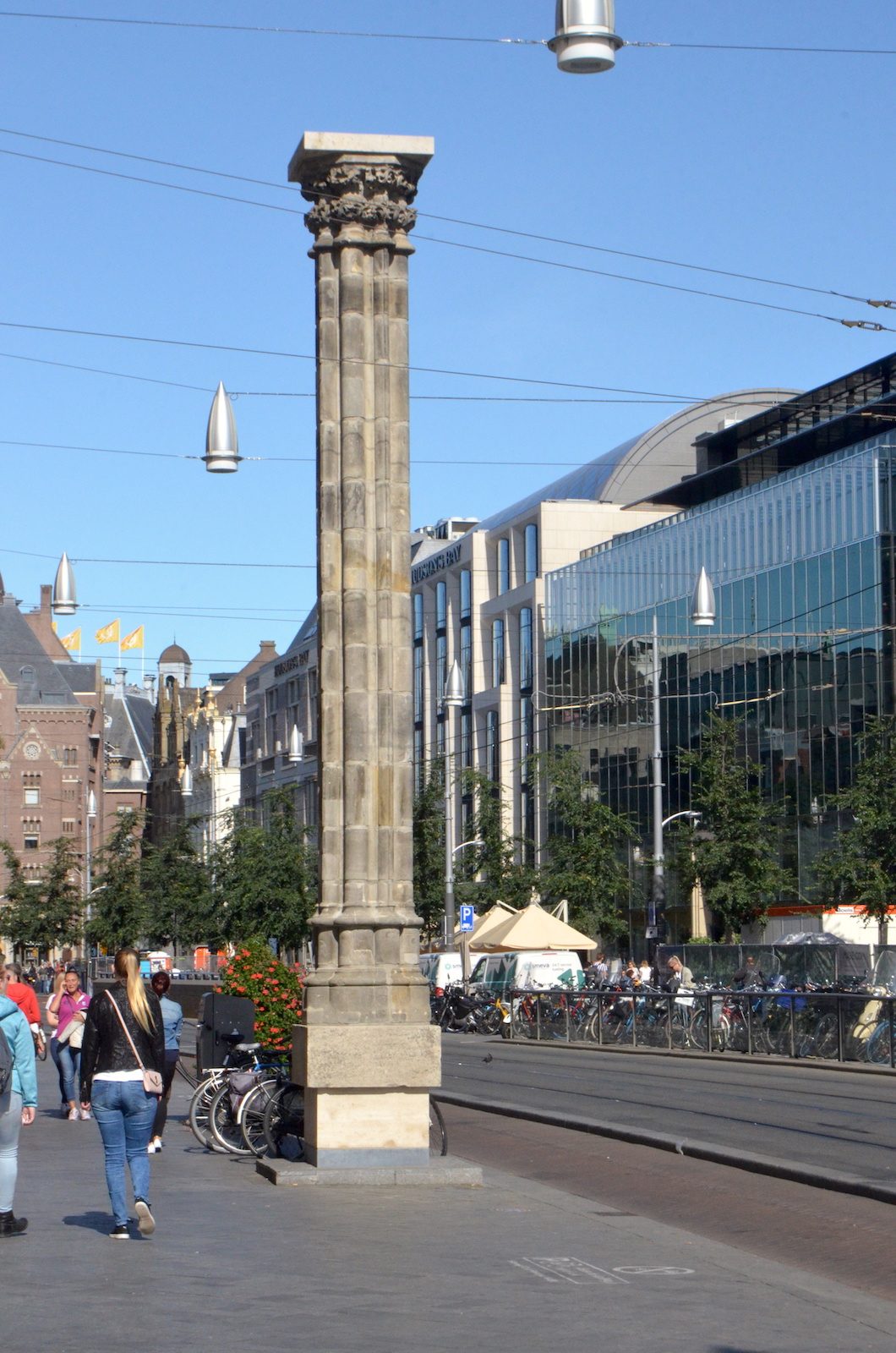
Mirakelkolom
A column on the Rokin for the Miracle of Amsterdam (1345), when a host thrown in the fire would not burn.
 ODD FIND
Below the Surface (Rokin metro)
Display cases in Rokin metro station with finds dug up for the line: keys, coins, toys and a 17th-century trumpet.
 HIDDEN COURTYARD
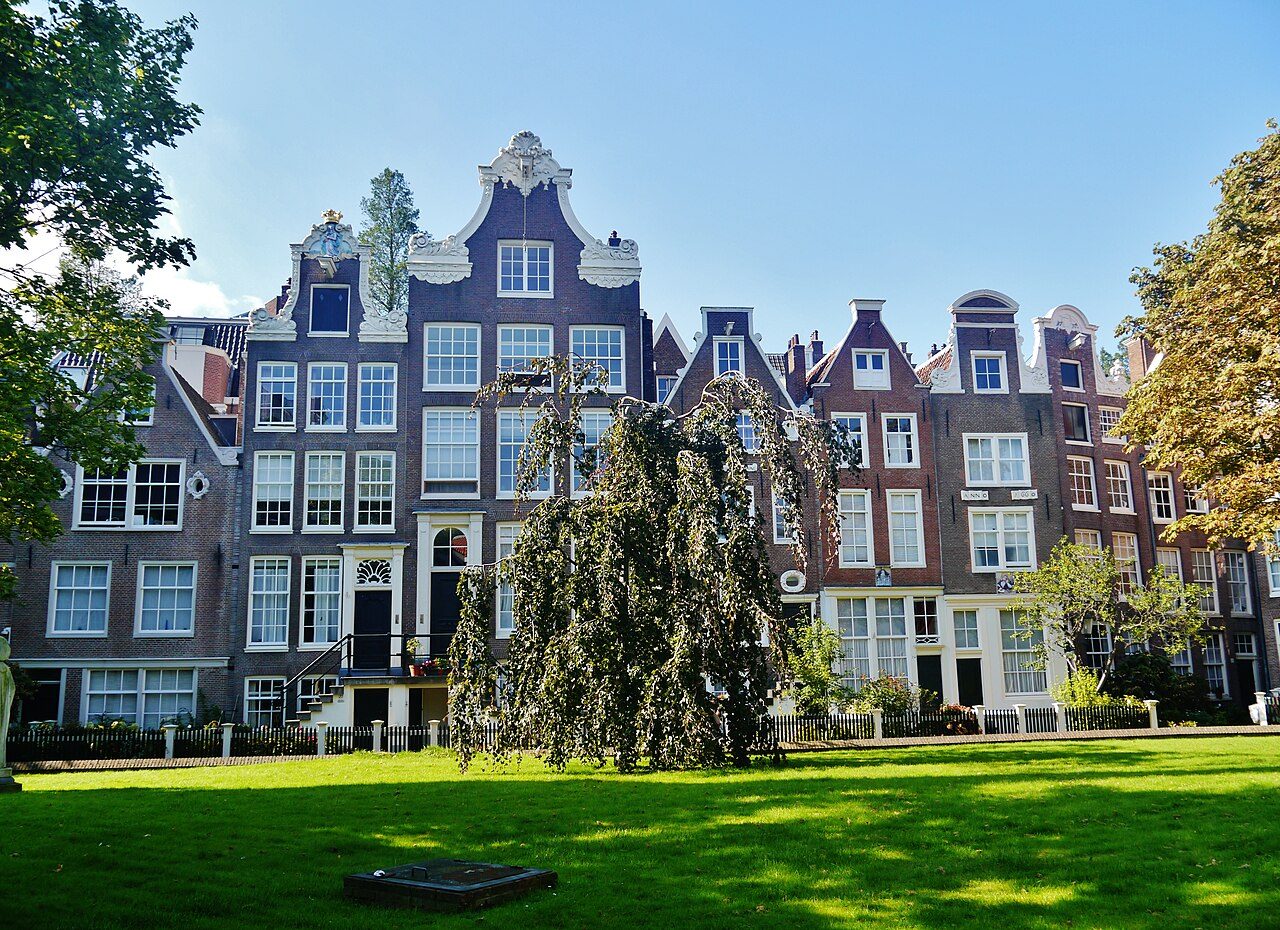
Begijnhof
A walled medieval courtyard in the middle of the old centre, home to single women for more than 600 years. Step through the gate on the Begijnensteeg and the city noise drops away.
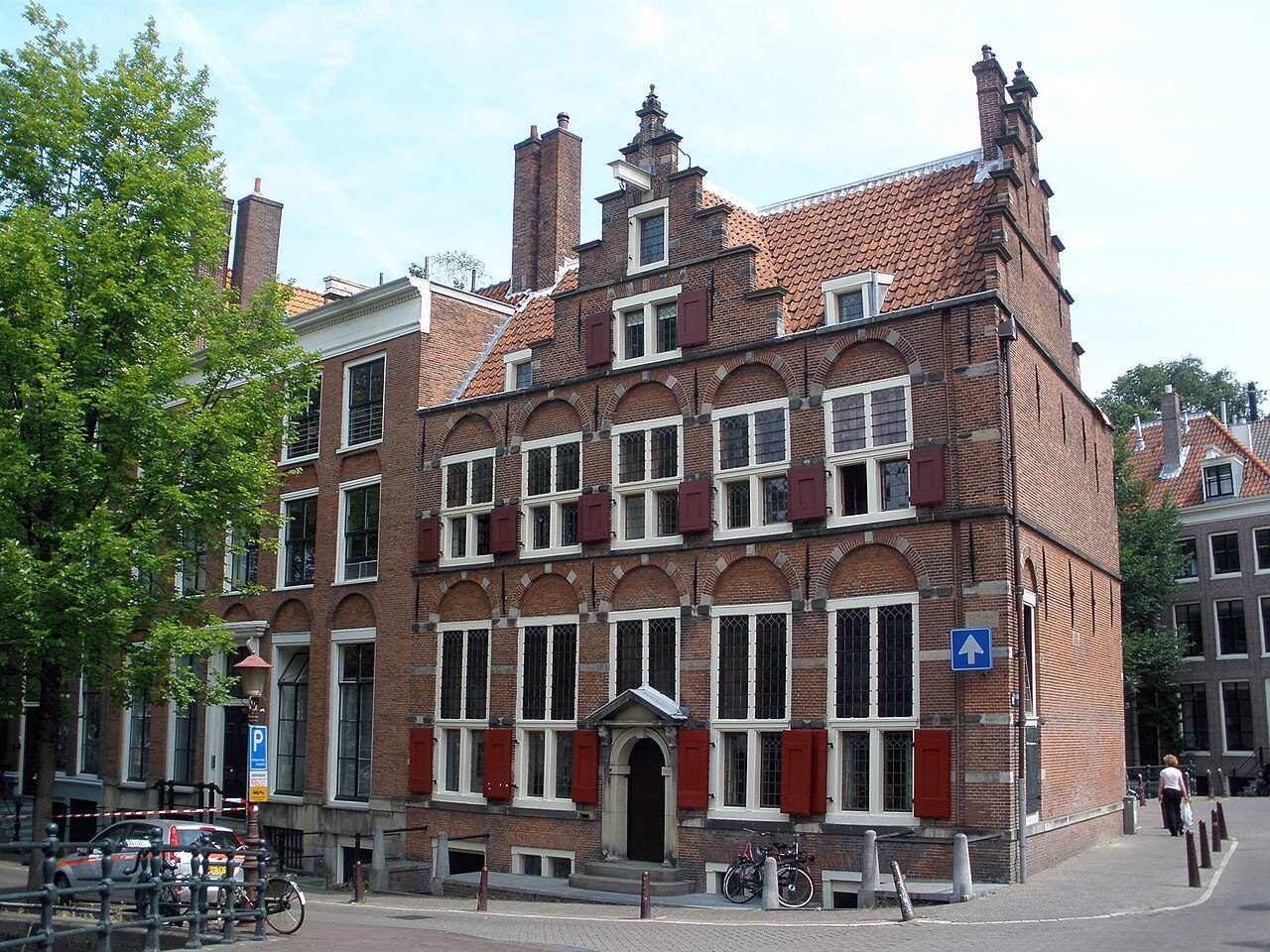 ODD FIND
Huis aan de Drie Grachten
A 1610 house with a canal on three sides, one of the most photographed corners nobody can name.
 FILM SPOT
The Fault in Our Stars bench
The bench on the Leidsegracht where Hazel and Augustus sit in The Fault in Our Stars (2014). Fans of the film still come from all over the world for a photo.
Tours and quests that pass here
These walks have a stop a few minutes from Gable stone wall (Sint Luciënsteeg). Free, on your phone, start any time.
 AUDIO TOUR
Amsterdam in a Day: Highlights Walk
Start here if it's your first day. Why the houses lean, how the canals were dug, and what the Golden Age was actually built on.
 AUDIO TOUR
Van Gogh's Amsterdam
The years before the fame: a failed bookshop clerk walking these same streets. Ends at the museum door.
 AUDIO TOUR
In Rembrandt's Footsteps
From the biggest house on the street to bankruptcy and an unmarked grave. His Amsterdam, in the order he lived it.