
LANDMARK
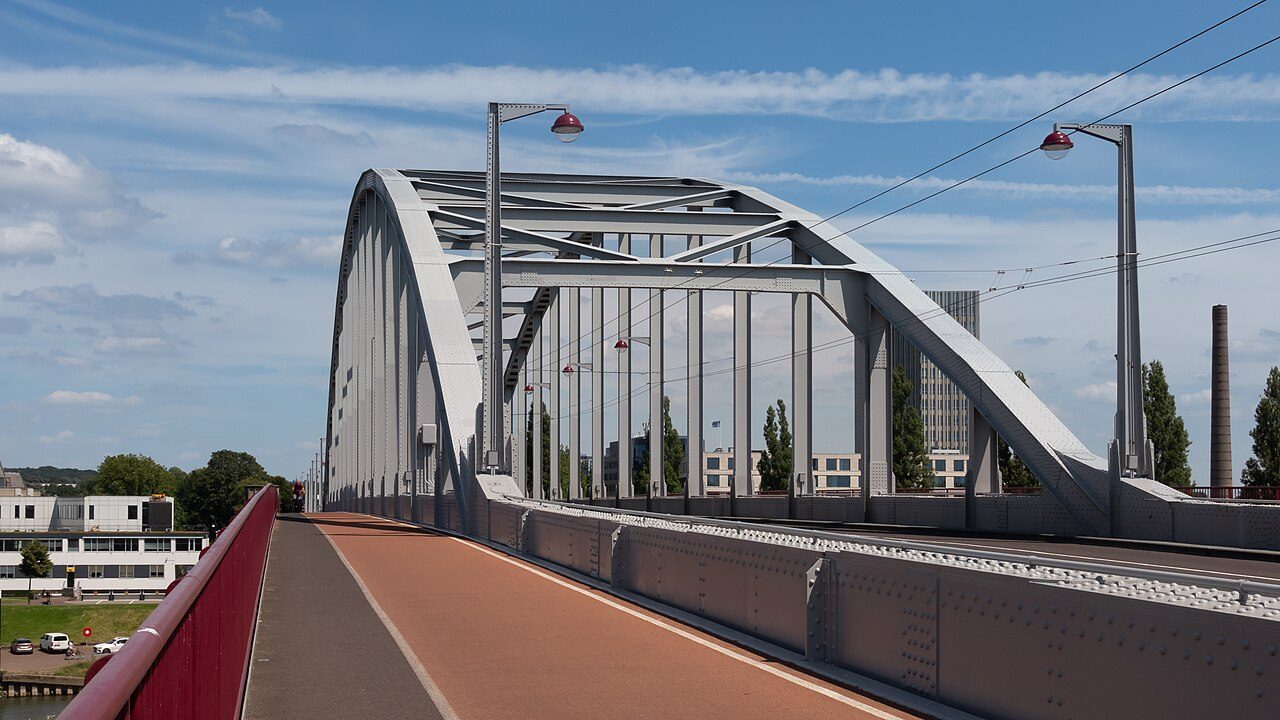
John Frost Bridge
The Rhine bridge the British held in 1944, rebuilt and renamed for John Frost. The film calls it a bridge too far.
A bridge with a long memory
The John Frost Bridge carries traffic over the Lower Rhine at the edge of Arnhem's centre. Most days it is just a road bridge. What brings people here is September 1944, when a small British force fought to hold it and the Allied advance stalled just short of it.
The bridge is named after Major-General John Dutton Frost (1912 to 1993). He was a Lt-Colonel at the time and led the men who reached it. It is also the bridge in the 1977 film A Bridge Too Far. The film was not shot here, though. Arnhem had changed too much since the war, so the makers used the IJssel bridge in Deventer, which looks similar.
Six crossings in a few decades
Arnhem had a floating bridge from 1603. As the city grew, it needed a permanent crossing. The first Rijnbrug (Rhine Bridge) was built between 1932 and 1935. Dutch engineers blew it up in 1940 to slow the German invasion. The Germans put a pontoon bridge in its place while they repaired the road bridge, and it was finished in August 1944.
A month later came Operation Market Garden. The bridge should have been the last objective, and the British 1st Airborne Division was to take it. German resistance in the city was stronger than expected. Only about 740 men, under Frost, reached the northern end.
On the night of 17 September the British tried to take the southern end. They used a flamethrower against German positions in the bridge's towers. It set off an ammunition store, and the fresh paint on the bridge caught fire. The blaze lit the area for most of the night, and the attempt failed.
Frost's men were eventually overwhelmed, but it took days. They kept the bridge closed to German armour for about four days, twice as long as a whole division was expected to hold it. The rest of the division held out in Oosterbeek until 25 September and was then evacuated across the river.
The bridge survived the battle. On 7 October 1944, American B-26 Marauders of the 344th Bomb Group bombed it to stop the Germans sending reinforcements south. After liberation in April 1945, Bailey bridges served as stopgaps. A new bridge, built in exactly the style of the old one, opened in 1948. It was renamed the John Frostbrug on 17 December 1977.
What to look for
The structure you see is a postwar copy of the 1930s design, so you are looking at a faithful rebuild rather than the bridge of the battle. Stand near the northern end and think of that as the ground Frost's men held. Then look across the water to the south bank, where the attempt to break through never arrived.
The buildings around the approach are largely new. That is why the film crew went elsewhere. The river itself is the constant. It is wide and fairly slow, and it is easy to see why a crossing here mattered.
For the best view of the whole span, go to the south bank. The floodplain park of Meinerswijk looks back at the city skyline, and the bridge sits in that picture. The river has marked a frontier before. In the same floodplain, the stone outlines of a Roman fort belong to the Lower Germanic Limes.
The bridge has also held a crowd. On 8 May 1995, the World Liberty Concert took place here for the 50th anniversary of the liberation of Europe. It was one of the largest memorial concerts ever held in the Netherlands.
Arnhem now has three bridges over the Lower Rhine: this one, the Nelson Mandela Bridge and the Andrei Sakharov Bridge. This is the one with the history behind it.
Before you go
- It is an open-air bridge on the edge of the centre, so it is free and always there. You can walk to it from the middle of Arnhem.
- Early morning or the hour before sunset gives you the quietest light and the least traffic noise.
- The wind comes straight off the river. Bring a jacket, even on a mild day.
- For the full view of the span, cross to the south bank and look back from the Meinerswijk side.
- Read a short account of the battle before you arrive. The bridge shows very little by itself, and the story is what makes the place.
What people say
Related spots
More spots in Arnhem ›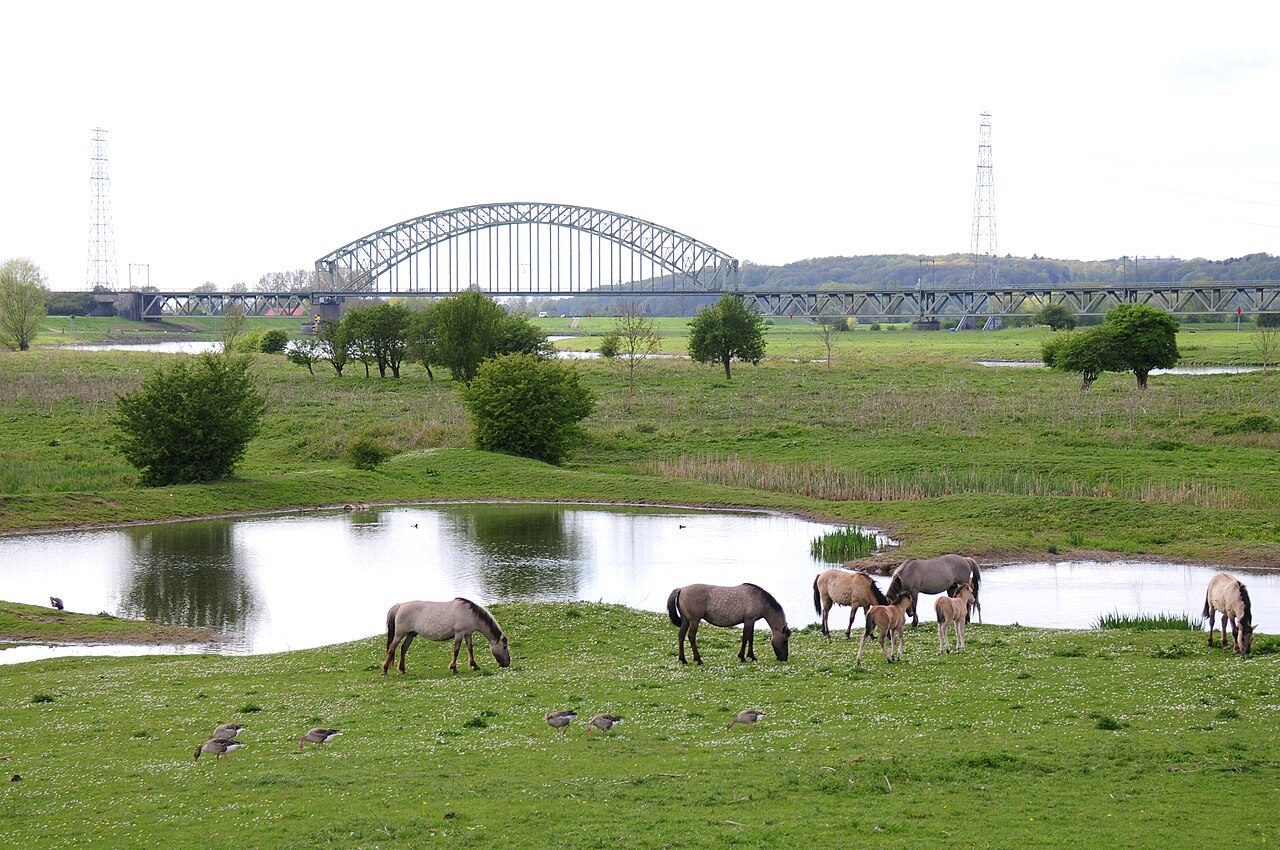 LANDMARK
Meinerswijk
Floodplain park on the south bank: Konik horses, Galloway cattle and a skyline view back to the city.
 ODD FIND
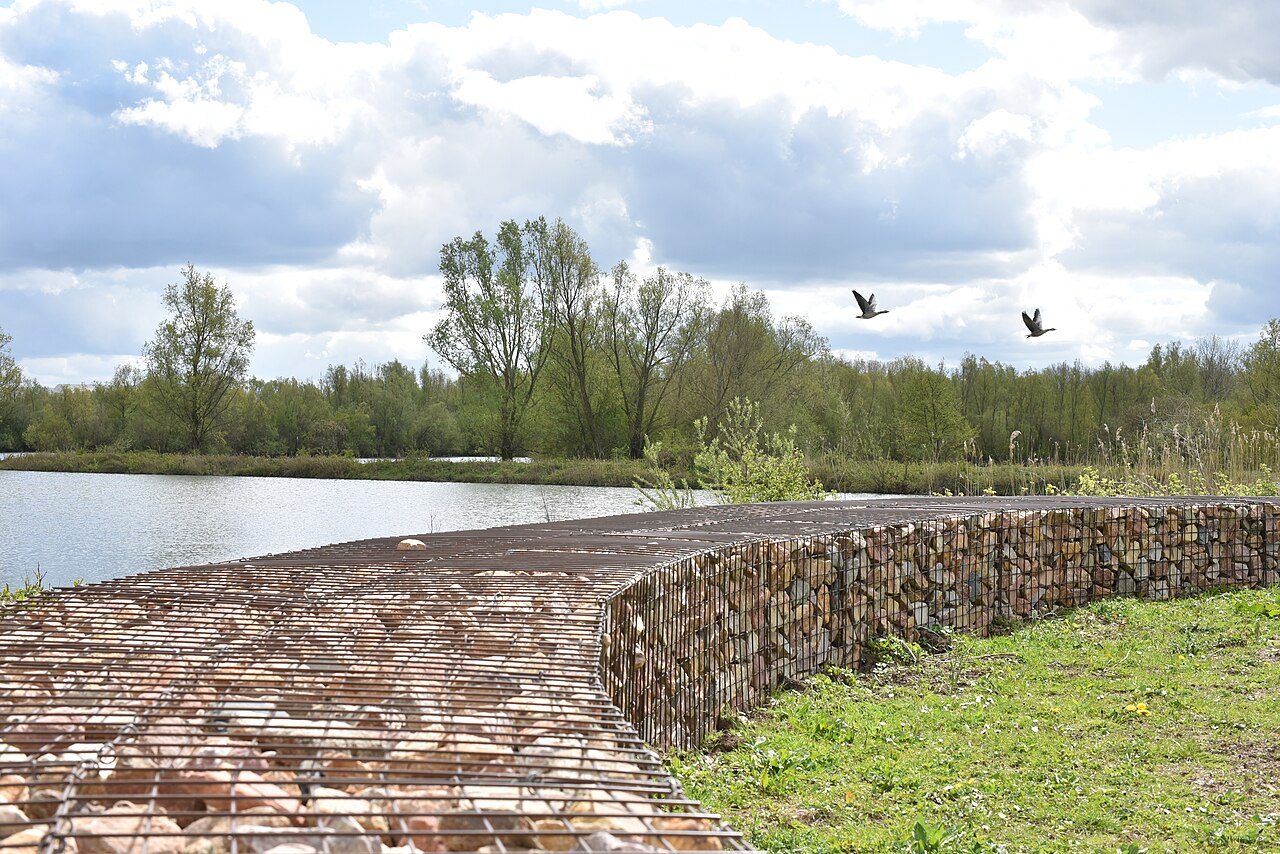
Castellum Meinerswijk
Stone outlines of a Roman fort in the Meinerswijk floodplain, part of the Lower Germanic Limes.
 LANDMARK
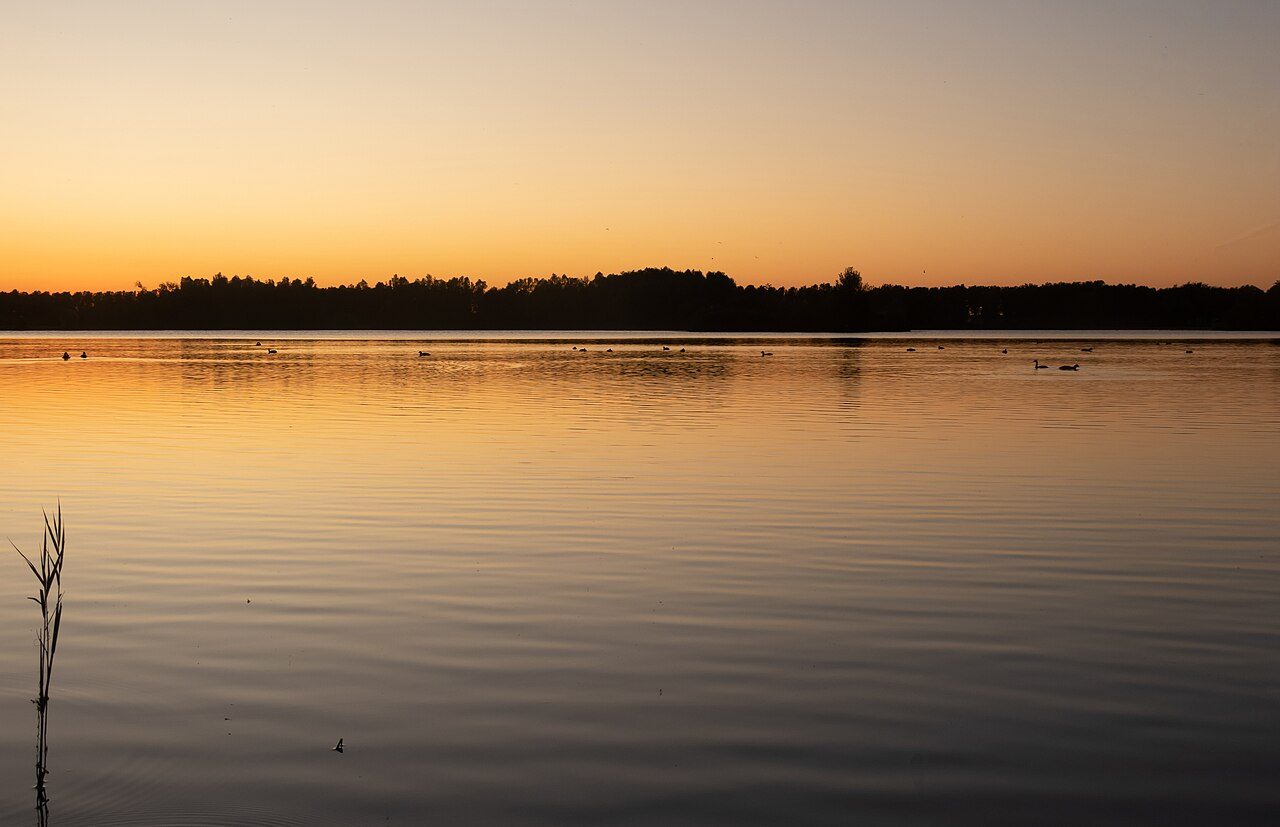
Rijkerswoerdse Plassen
Lakes on the south edge of the city, used for swimming and sailing.
 MUSEUM
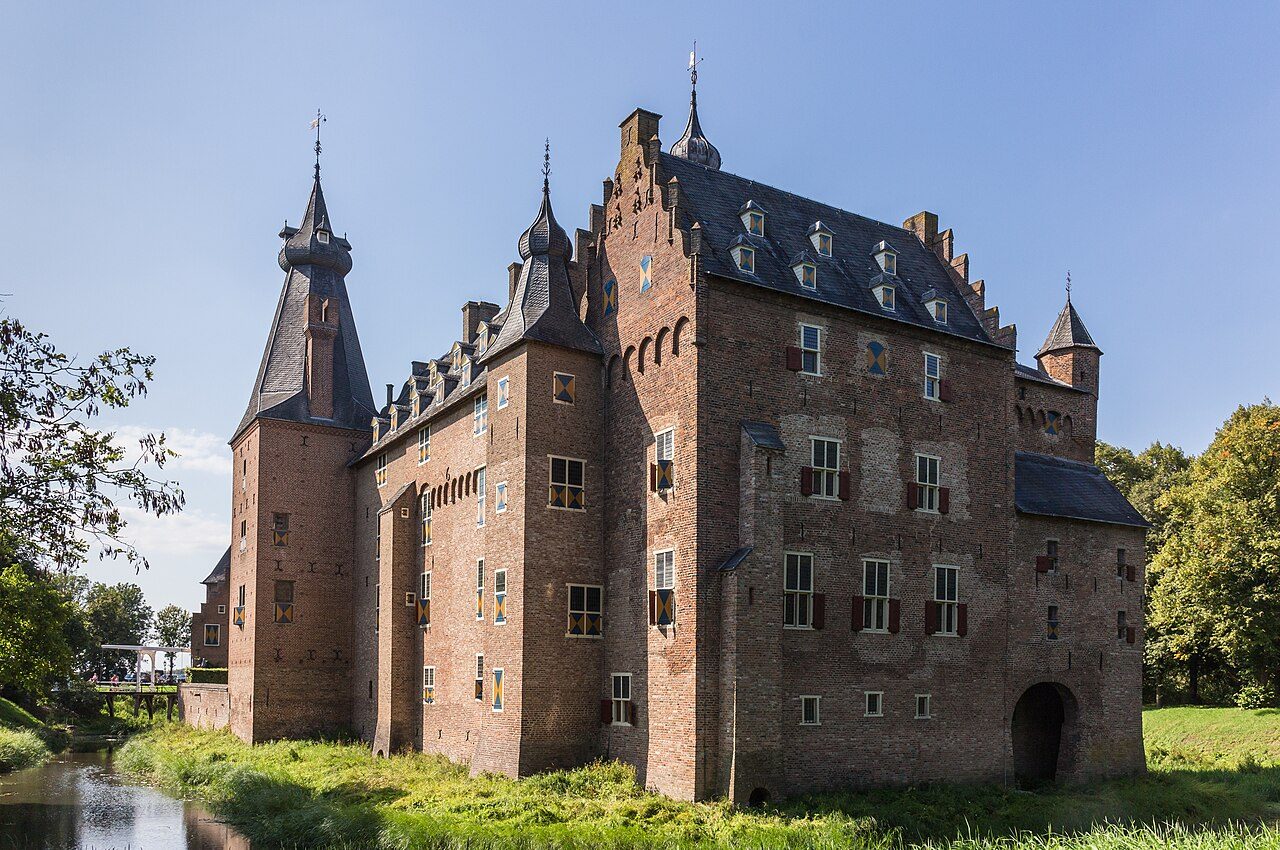
Doorwerth Castle
Medieval moated castle on the south bank, west of the city in Doorwerth, not in Arnhem Zuid.