
MUSEUM
Embassy of the Free Mind
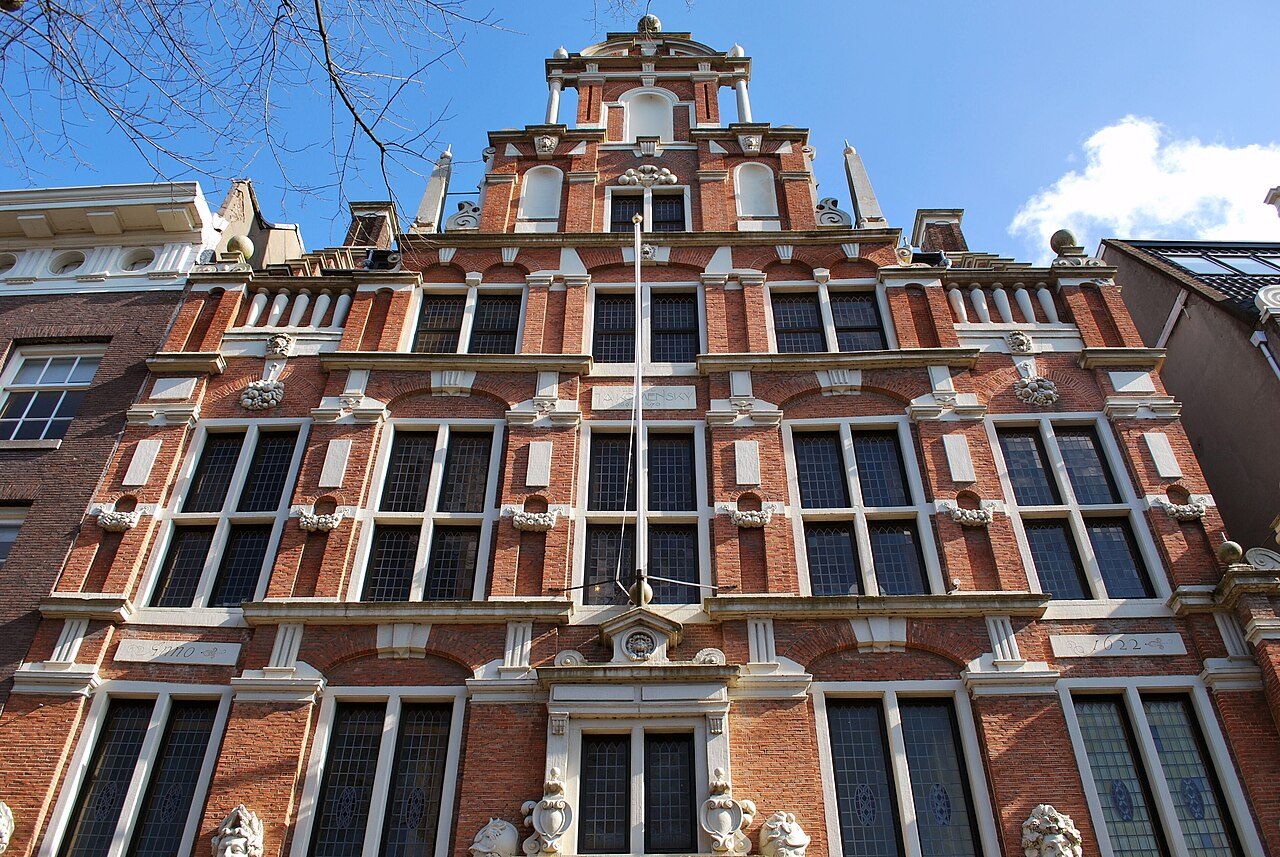
The Ritman library of hermetic philosophy in the House with the Heads.
A library of unconventional ideas
The Embassy of the Free Mind brings the Ritman Library’s world of alchemy, mysticism and Hermetic philosophy into a canal house on Keizersgracht. In October 2017, novelist Dan Brown opened the museum here. He already knew the collection well: he had regularly used it to research his thrillers. These books were working material for him, not simply old volumes behind glass.
Amsterdam businessman Joost Ritman began the library in 1958 and opened it to the public in 1984. Its move here in 2017 gave it a museum setting for a wider audience. The central idea is the relationship between God, the cosmos and humanity. You do not need to know the terminology before arriving. The images offer a way into subjects that can feel forbidding on the page.
Read the six faces
Before going inside Keizersgracht 123, look up. The House with the Heads was built in 1622. Its six carved faces represent Apollo, Ceres, Mercury, Minerva, Bacchus and Diana. Mercury, god of commerce, and Minerva, goddess of wisdom, flank the central entrance. Together they announce the ideal of the wise merchant.
There is a much bloodier explanation, but it is a legend. A tale recorded in 1836 says that a maid named Elsje used a sword to behead six robbers who entered the house. The heads supposedly commemorate them. Look again at the classical gods and you can separate the story from the stonework. Like the figures on De Drie Hendricken’s gable stones, these carvings give an Amsterdam house a readable identity.
A refuge, and a returning fireplace
The De Geer family’s connection with the house began in 1634. Lodewijk and Laurens de Geer were wealthy entrepreneurs who supported free thinkers and helped their works reach print. Their household library contained around 6,000 books. The commercial world visible along nearby Brouwersgracht’s former warehouses had a counterpart here in the funding of scholarship.
In 1656, the scholar Jan Amos Comenius stayed here as Laurens de Geer’s guest. He had lost his home, books and manuscripts in a fire in Poland. Among friends and protectors in Amsterdam, he wrote, he was beginning to feel at home again. That makes this house more than a suitable backdrop for a library: it had already sheltered a displaced thinker.
In the great hall, look for the marble fireplace bearing the combined coat of arms of Lodewijk de Geer and his wife, Adrienne Gérard. Removed in 1908, it spent decades at the Stedelijk Museum. In 1983 it returned to its original place.
Pictures, books and a cracked code
The permanent display uses 200 reproductions of illustrations from manuscripts and early printed books. Give individual images time rather than trying to absorb every tradition at once. The first-floor exhibition room presents temporary displays and rare books; the reading room holds around 2,000 modern books.
Research here still produces unexpected results. At a 2019 conference at the Embassy, researcher Megan Piorko presented a manuscript associated with the alchemists John and Arthur Dee. It contained an encrypted passage. Richard Bean cracked it in 2021: the text was a recipe for the philosopher’s stone. That did not establish that the recipe worked. It did recover what its writer had concealed, a useful distinction to keep in mind while looking at these mysterious pages.
Things to know
- Head to Keizersgracht 123; look for the six carved heads above the entrance.
- Allow about an hour for the house, illustrations and reading room.
- Daily guided tours offer help with the collection’s unfamiliar subjects.
- Check the programme for monthly lunch concerts in the great hall.
- Opening hours and prices can change. Check the official website before you go. Official website
What people say
Related spots
More things to do in Amsterdam ›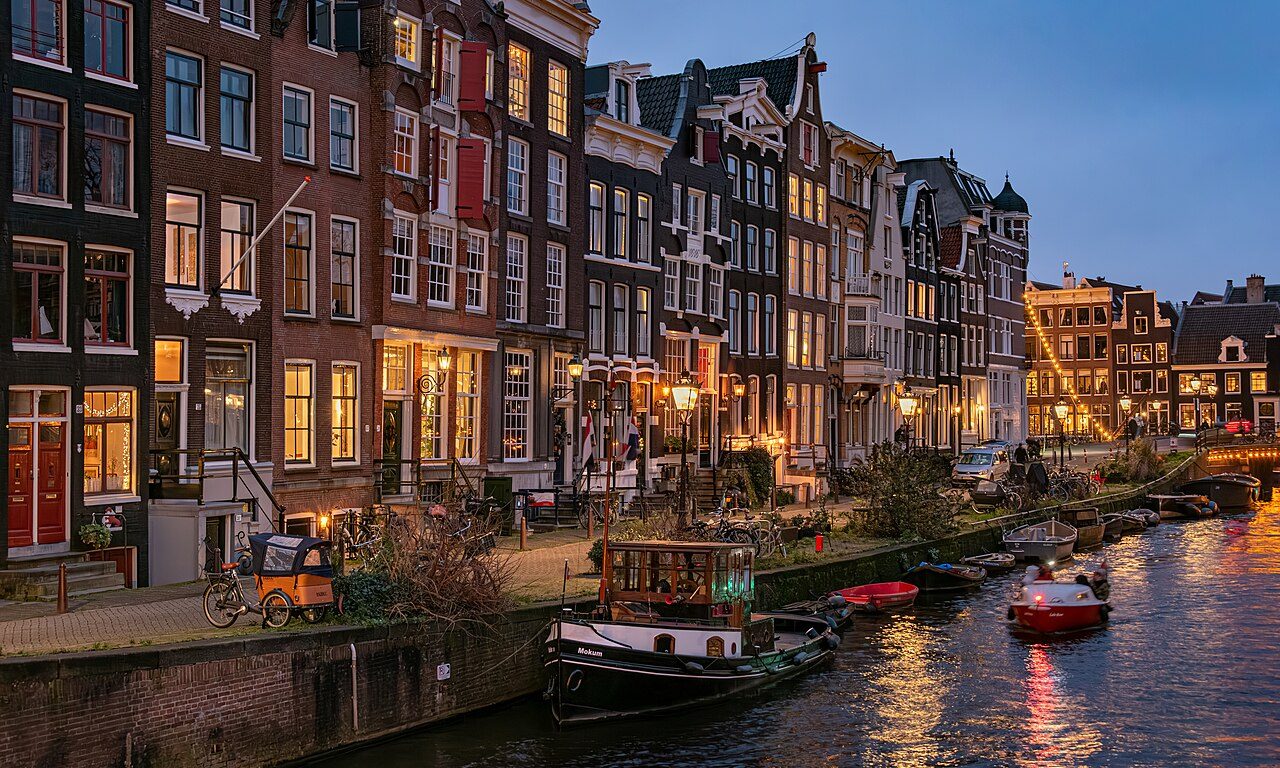
Brouwersgracht
A canal of former brewery warehouses, bridges and lived-in corners, where Amsterdam’s trade history is still easy to read.
De Drie Hendricken
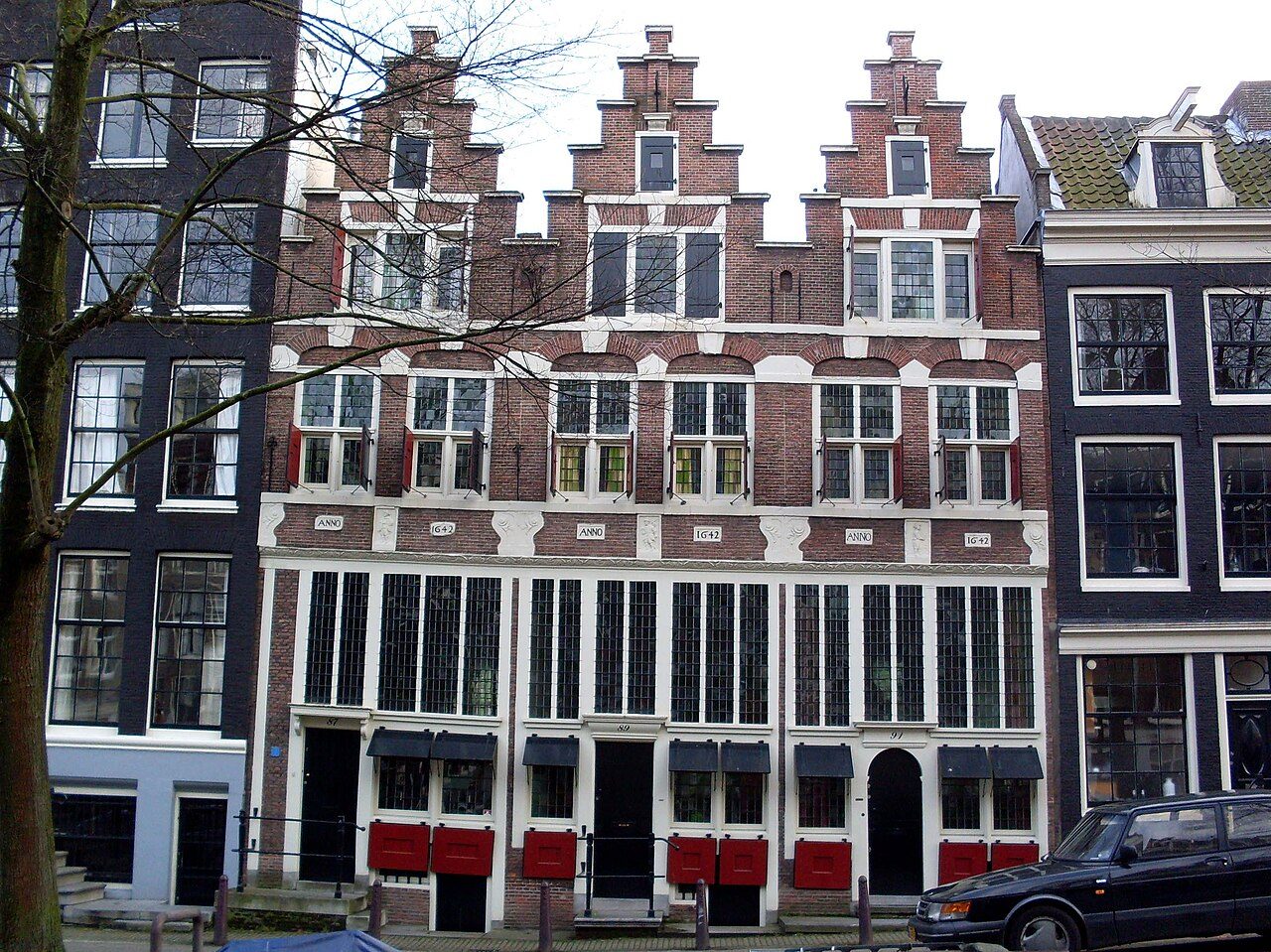
Three 1642 houses on the Bloemgracht with gable stones of a townsman, a farmer and a sailor.
Multatuli Museum
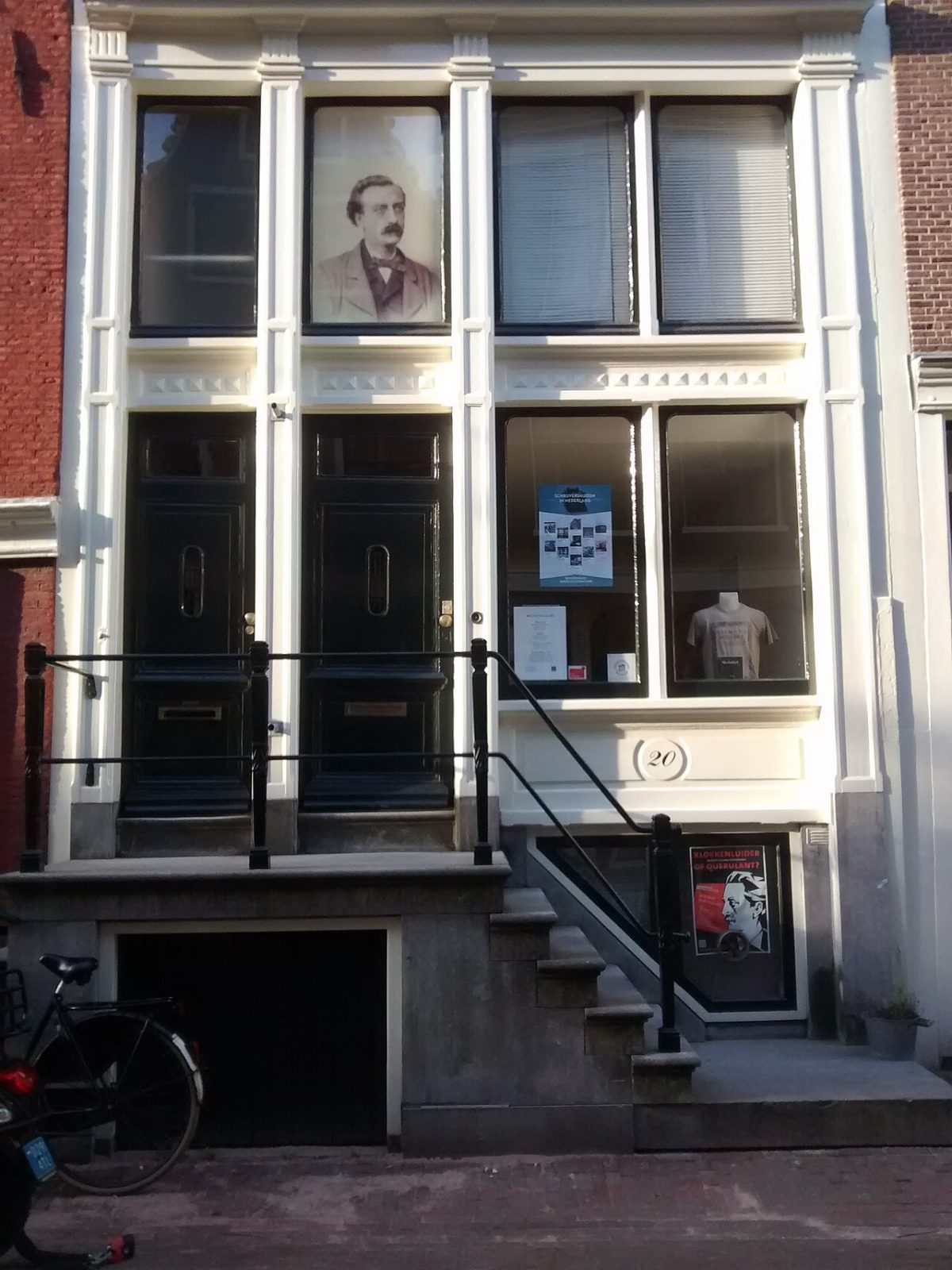
The birthplace of the writer Multatuli.
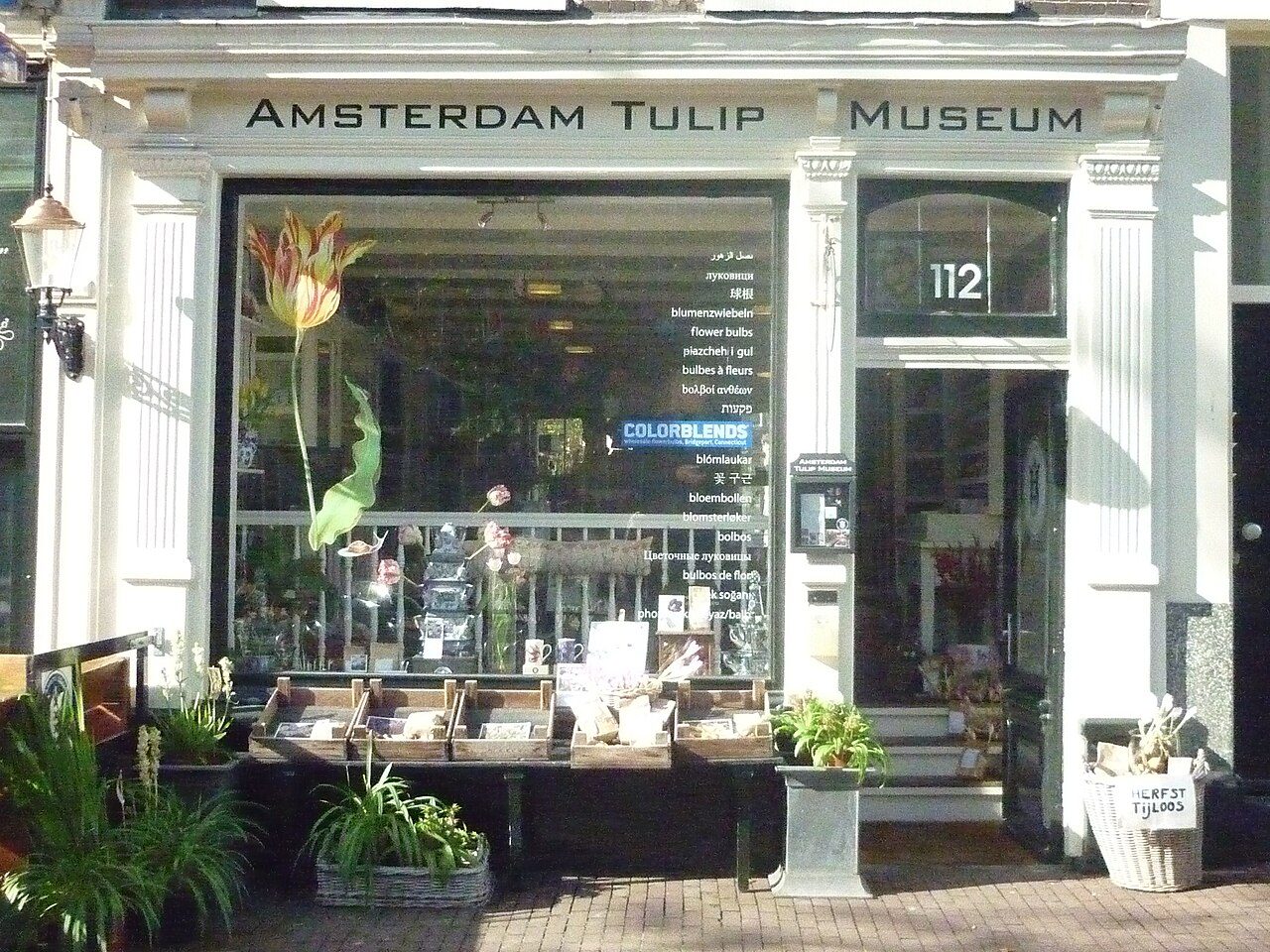
Amsterdam Tulip Museum
A small museum on the history of the tulip, in the Jordaan.
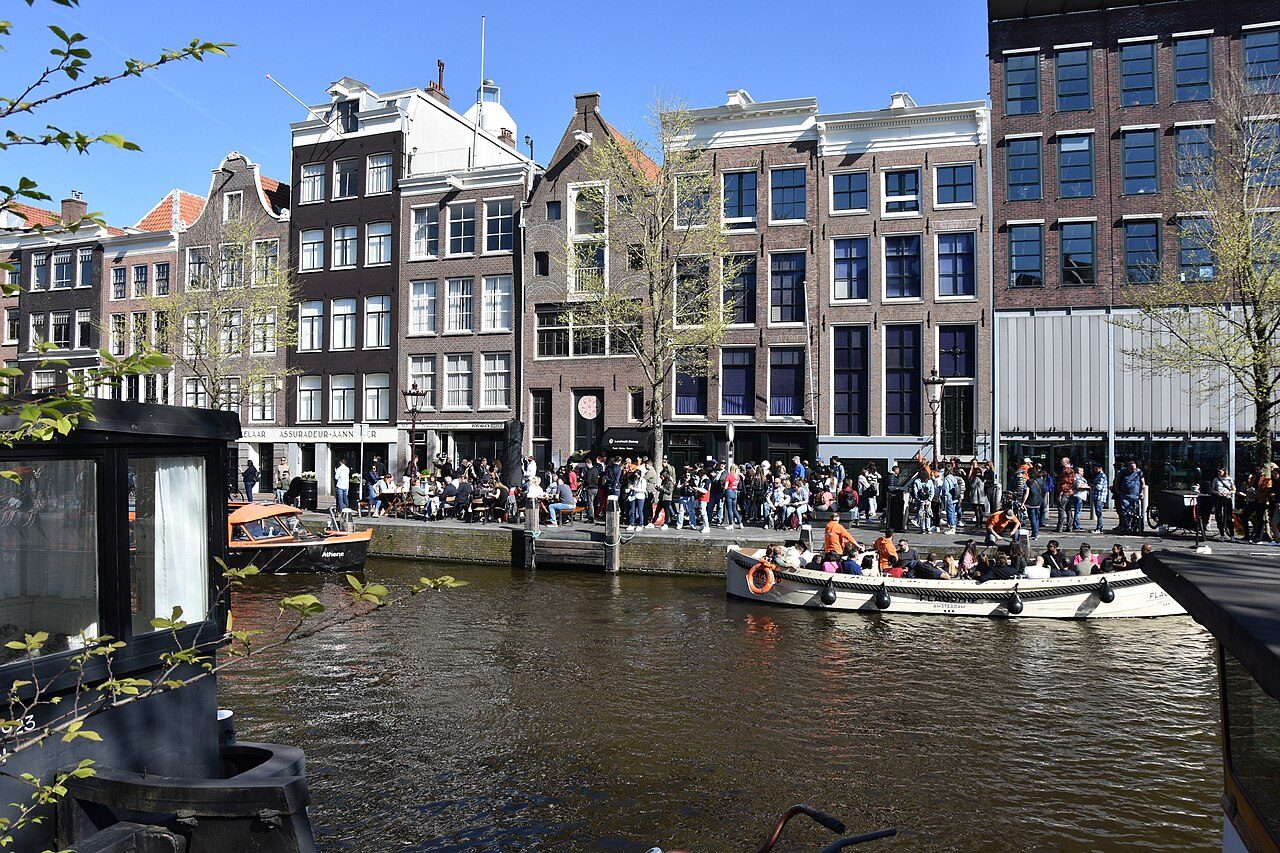
Anne Frank House
Walk through the Secret Annex and see Anne Frank's diary, picture walls and the traces her family left behind.
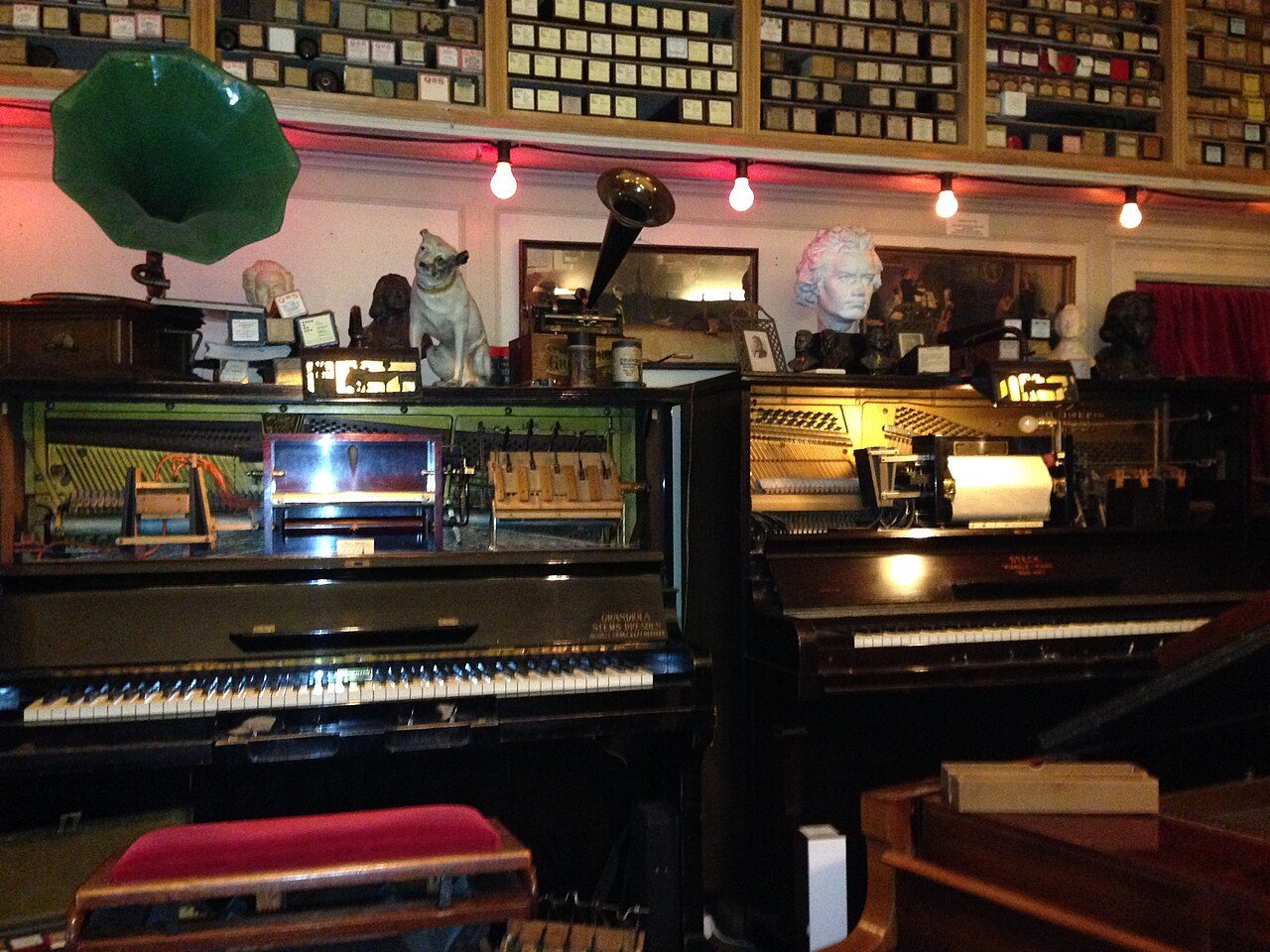
Pianola Museum
A small museum in the Jordaan full of pianos that play themselves. Every opening afternoon a guide sets the instruments going, so you hear the 1920s instead of only looking at them.
Tours and quests that pass here
These walks have a stop a few minutes from Embassy of the Free Mind. Free, on your phone, start any time.
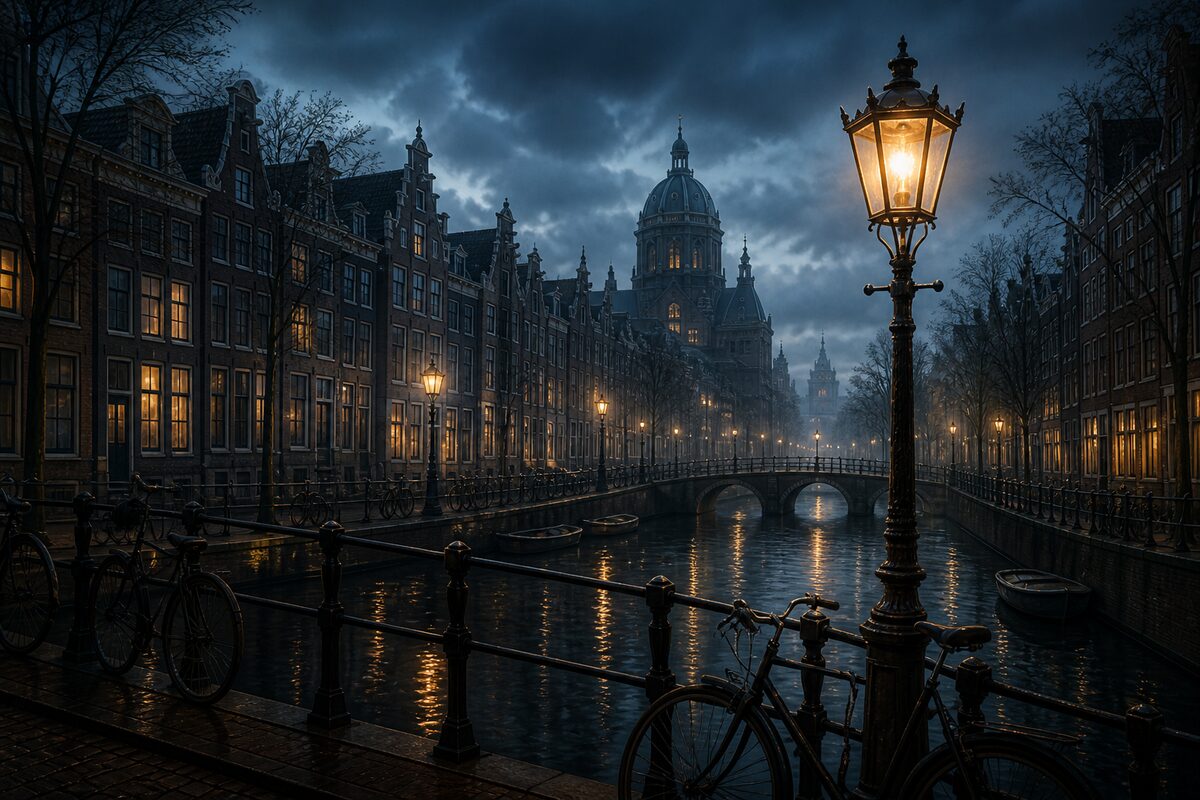 FREE AUDIO TOUR
Amsterdam Ghost Tour
Amsterdam’s ghost stories belong to real streets, where crowds waited for spirits and families went out to look at hanging bodies. You can stand in those places today, with canal water beside you and old church towers overhead.
 FREE AUDIO TOUR
Amsterdam in a Day: Highlights Walk
Amsterdam’s canals and grand houses tell you how a trading city grew rich, but that is only half the story. If you have one day in Amsterdam, spend it on the streets where merchants, workers and people in hiding lived within walking distance of each other.
 FREE AUDIO TOUR
Van Gogh's Amsterdam
The man who painted Sunflowers lived in Amsterdam for just over a year, before he became an artist. You can still stand at the naval yard he called home and follow his Sunday walks across the city.