
LANDMARK
Brouwersgracht
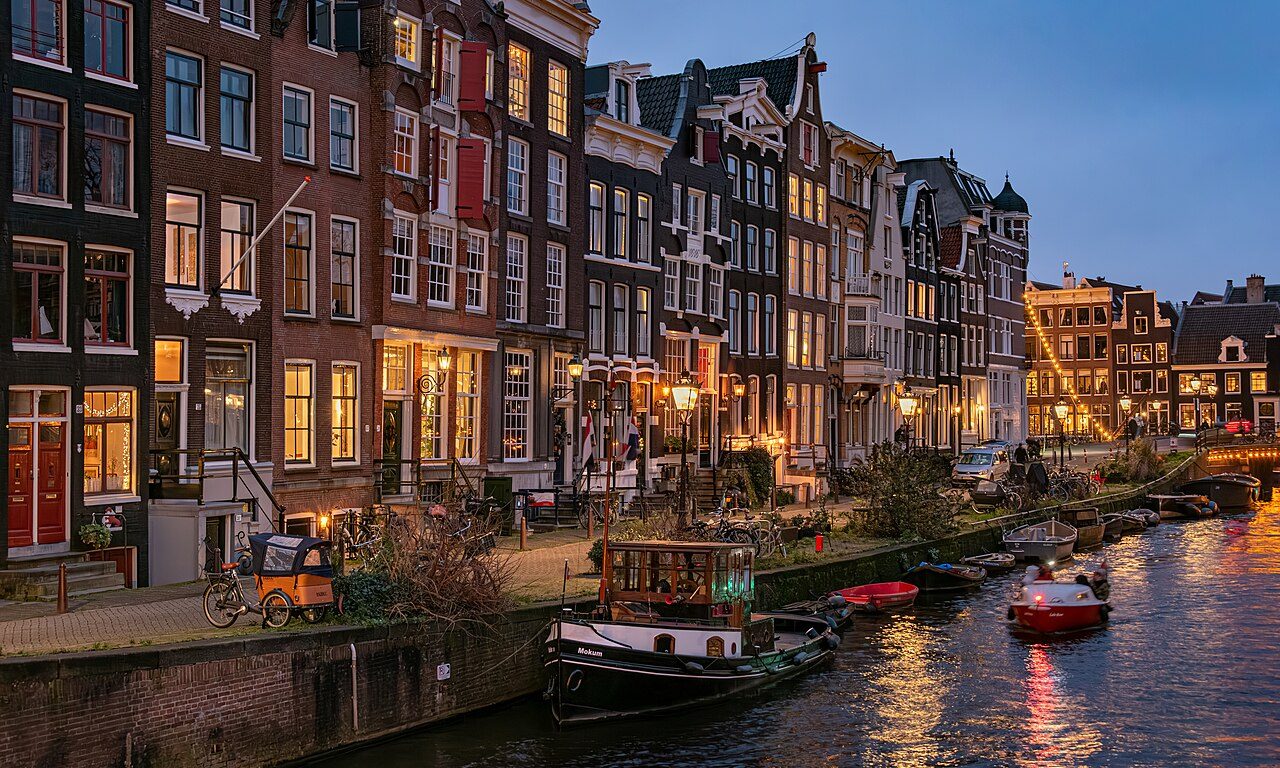
Often voted the prettiest canal: warehouses, houseboats and no tour-boat crowds.
A canal where the numbers begin
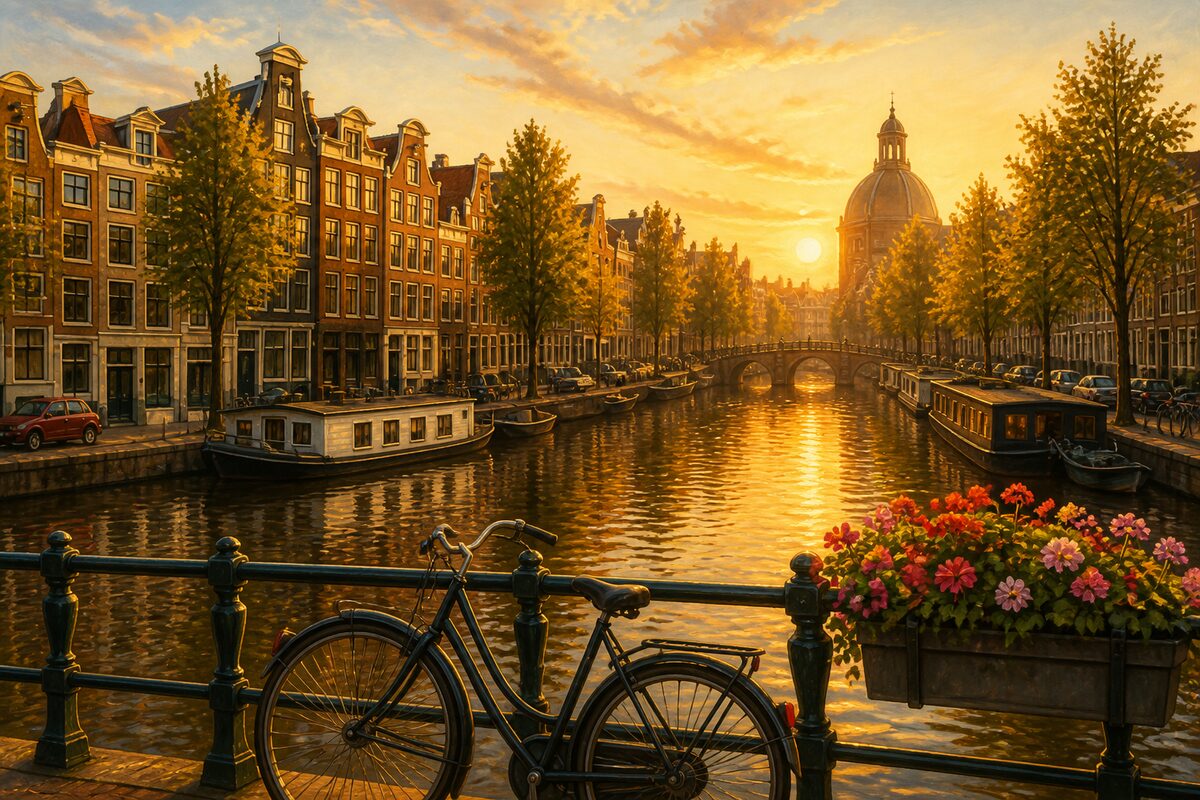
The Brouwersgracht joins the Singel to the Singelgracht. It marks the northwestern edge of the canal belt, and it is one of the best places in the city to slow down. Stand on a bridge and look along the water. Tall warehouses with big wooden shutters line both banks. Houseboats sit at the edge. Bicycles lean on the railings. It feels like a street where people live, not a sight to tick off.
It is also a starting line. The house numbers of the Singel, Herengracht, Keizersgracht, Prinsengracht and Lijnbaansgracht all begin counting from here. In 2007 readers of the newspaper Het Parool voted it the most beautiful street in Amsterdam, out of 150 nominations. Ten minutes on the water's edge will show you why.
Beer, fish and gin
The canal got its name in 1594. Brouwer means brewer, and this part of town was full of breweries in the sixteenth and seventeenth centuries. From 1612 the canal belt was dug southward from this point. So the grand canals you may already have seen all grew out of here.
The working past is easy to read in the buildings. They were warehouses, built to store goods, and most are now homes. The big shutters are still there. Near the corner with the Driehoekstraat, a gin and liqueur distillery called De Ooievaar is recorded from 1782. It was the last of its kind in Amsterdam.
Look at numbers 158 to 162. Albert Smit, a stockfish trader since 1821, bought number 162 in 1888 and built the two next to it in 1891 and 1895. The three warehouses are named after the Norwegian towns Bergen, Tromsö and Hammerfest. The firm left for Weesp in 1970, and the buildings are now apartments.
What to look for
Walk slowly and look up. Number 204 is called Spitsbergen. Numbers 206, 208 and 210 are the Green Deer warehouses, each with its own name. Further along, at number 218 on the corner of the Binnen Oranjestraat, stands the house called Geloof, which means Faith. It was built in 1650. It has a small neck gable with Doric pilasters and a triangular pediment on top. Count the three round attic windows, the so-called ox eyes.
Faith was once one of three. Numbers 220 and 222 were Hope and Love. Hope got a clock gable in the eighteenth century, and Love was demolished. Faith is the one that survived.
The bridges are part of the pleasure. The Melkmeisjesbrug is for pedestrians only. The Oranjebrug and the Dommersbrug are iron lift bridges. Between numbers 130 and 134 a narrow passage once led to a clandestine Old Catholic church, Johannes en Willibrordus, built inside the block. You can walk past without noticing, so watch for the gap.
Before you go
- It is about ten minutes on foot from Centraal Station. The Jordaan starts at the western end of the canal.
- Walk the whole length, from the Singel to the Singelgracht, and cross to the opposite bank now and then. The warehouse names and gables are easier to read from across the water.
- Early morning or evening is the quietest time, with the fewest people on the bridges.
- Stop on the Melkmeisjesbrug, the pedestrian bridge, for a view along the water without traffic.
- Watch for cyclists, and look for the narrow gap between numbers 130 and 134.
What people say
Related spots
More things to do in Amsterdam ›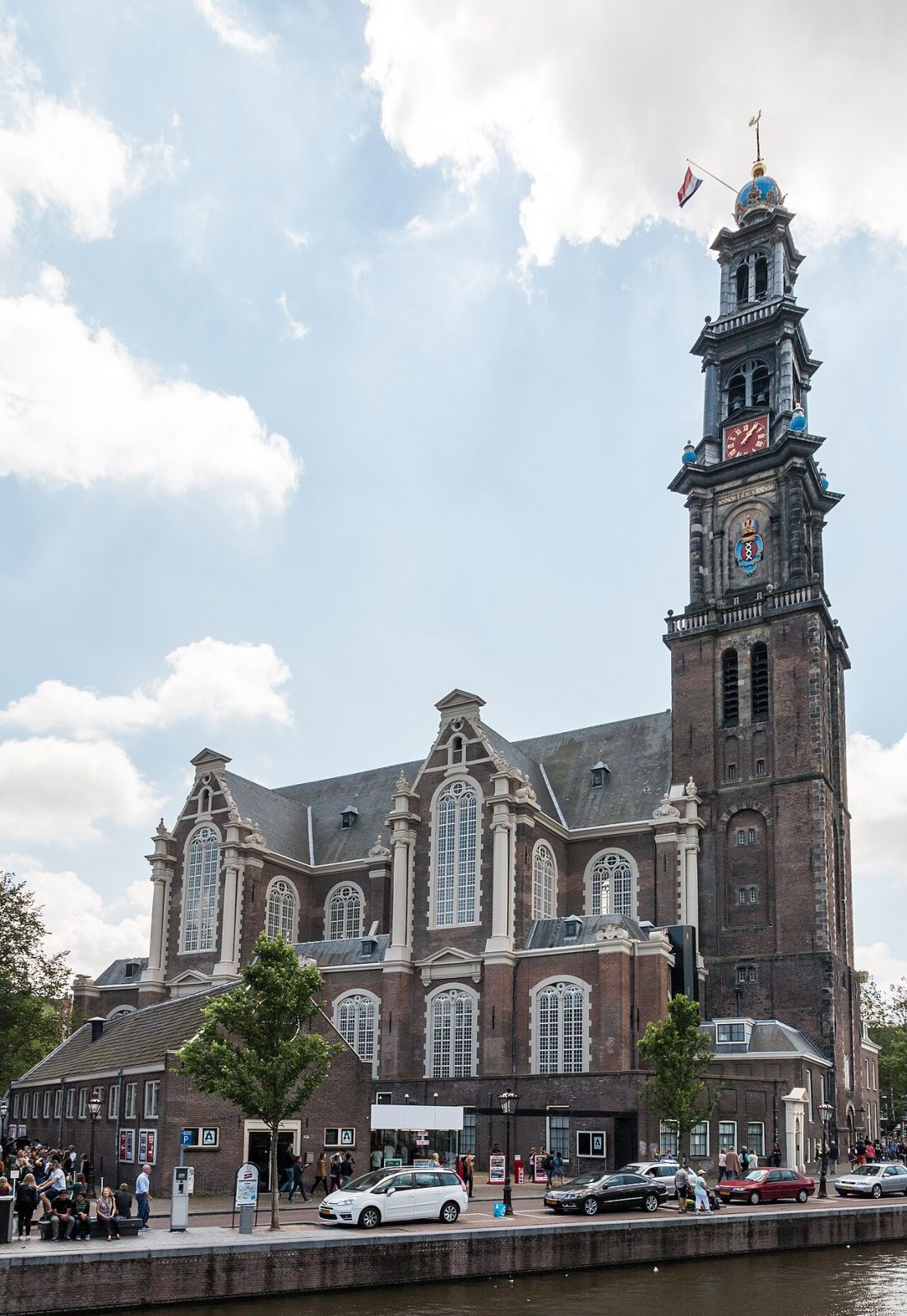 CHURCH
Westerkerk
The church under Amsterdam's tallest tower, where Rembrandt was buried in a grave nobody can find. Anne Frank could hear its bells from her hiding place a few doors away.
 ODD FIND
Café Papeneiland
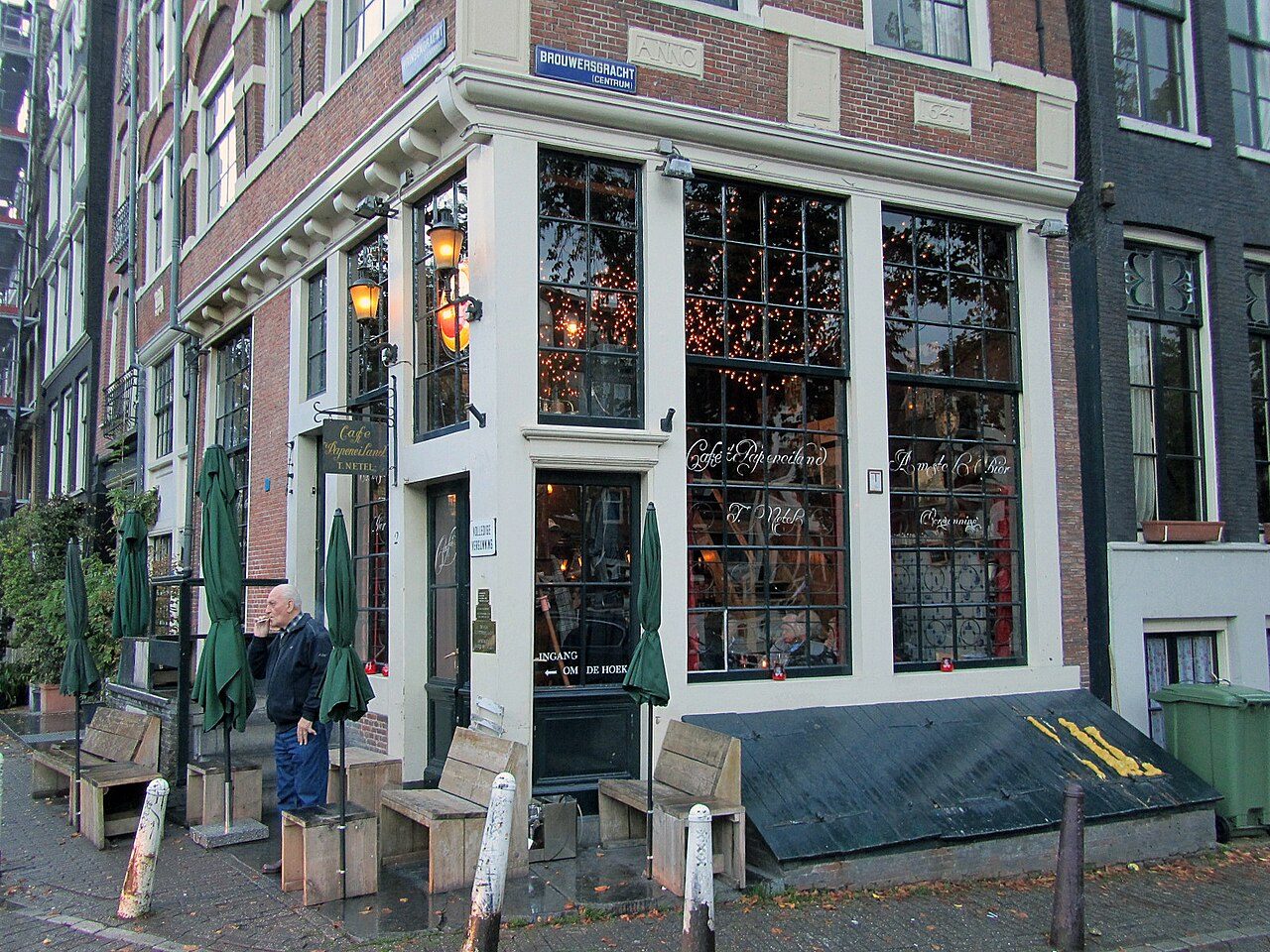
A 1642 brown café with the legend of a secret tunnel to a hidden church across the canal.
 LANDMARK
Free ferry to Amsterdam Noord
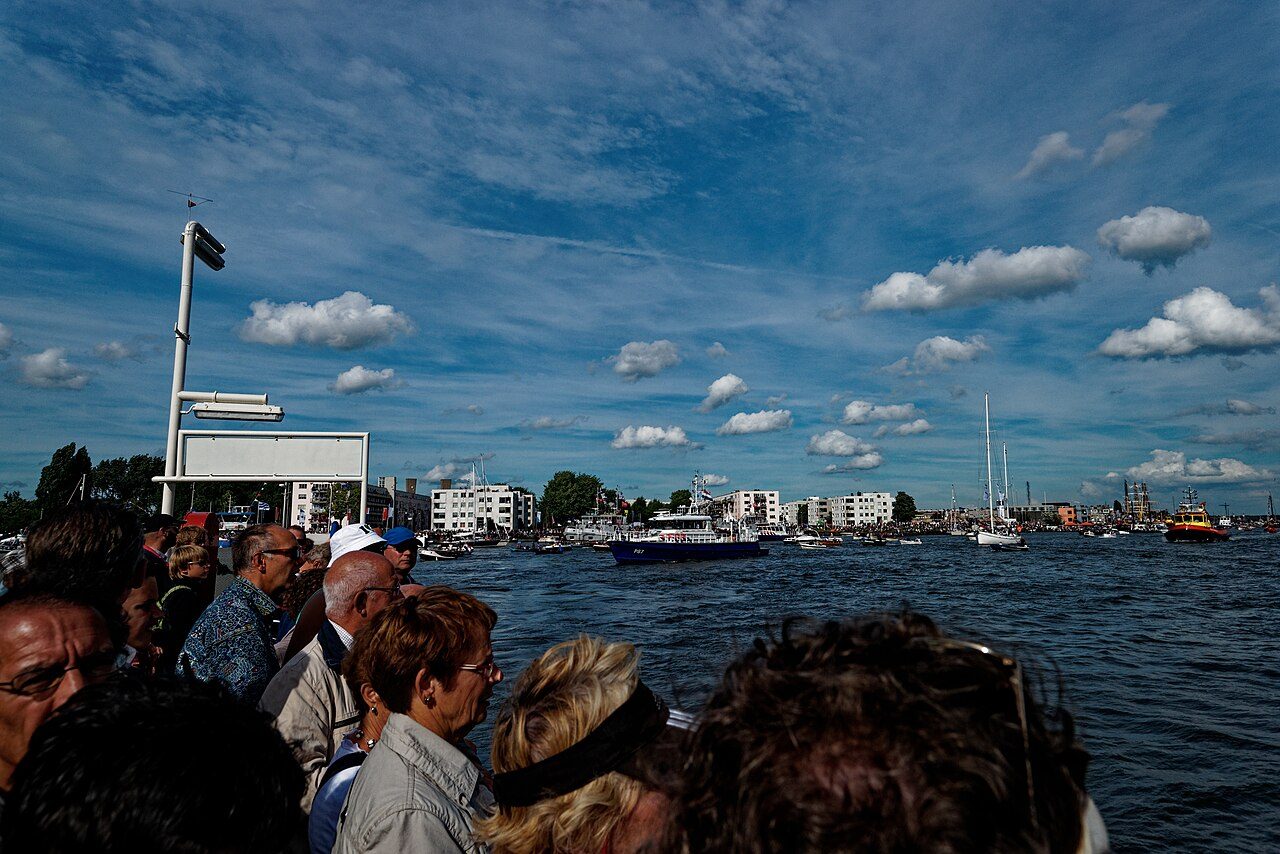
The free ferries behind Centraal Station: the best cheap view of the IJ.
 ODD FIND
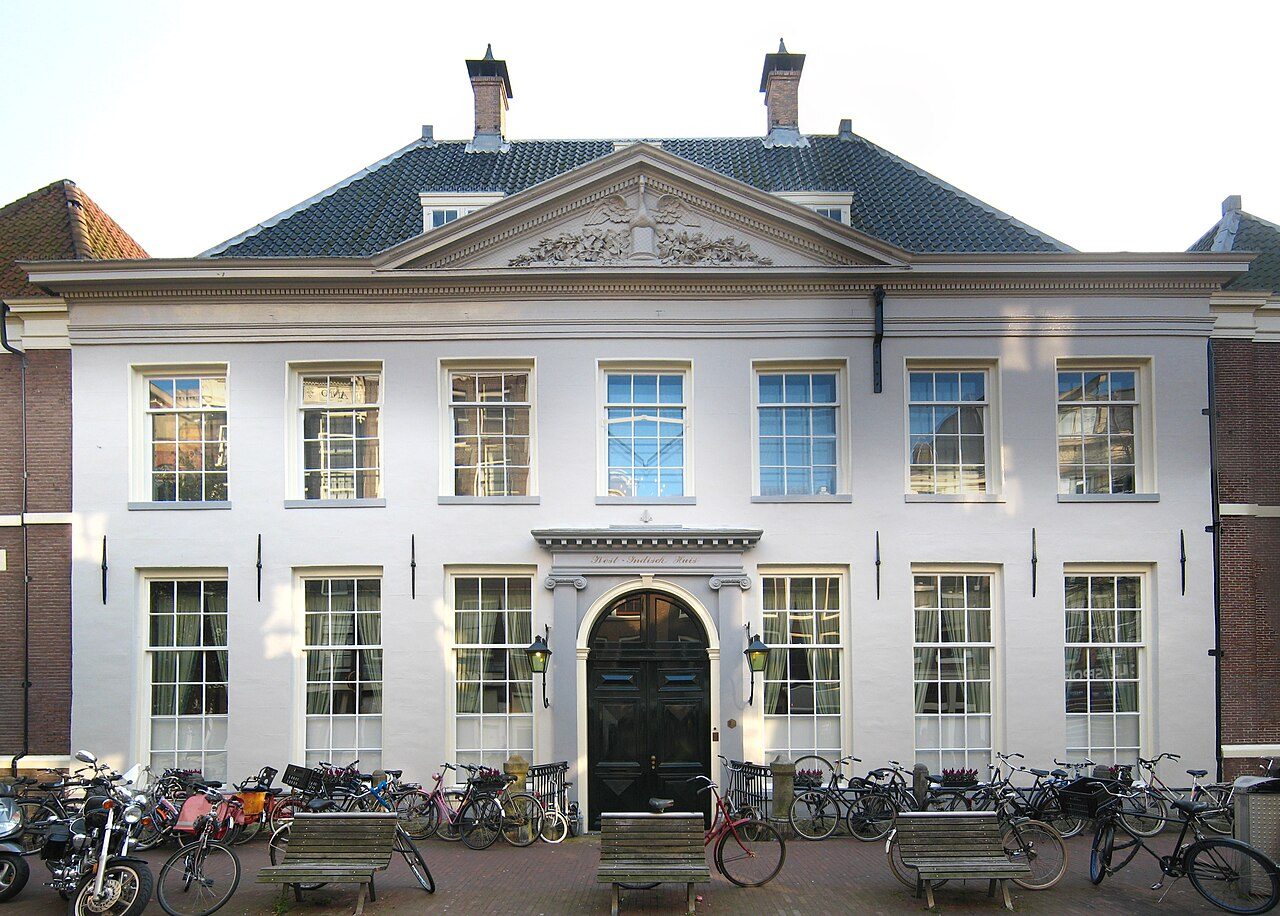
West-Indisch Huis courtyard
Where the West India Company decided to found New Amsterdam (New York); Peter Stuyvesant stands in the courtyard.
 LANDMARK
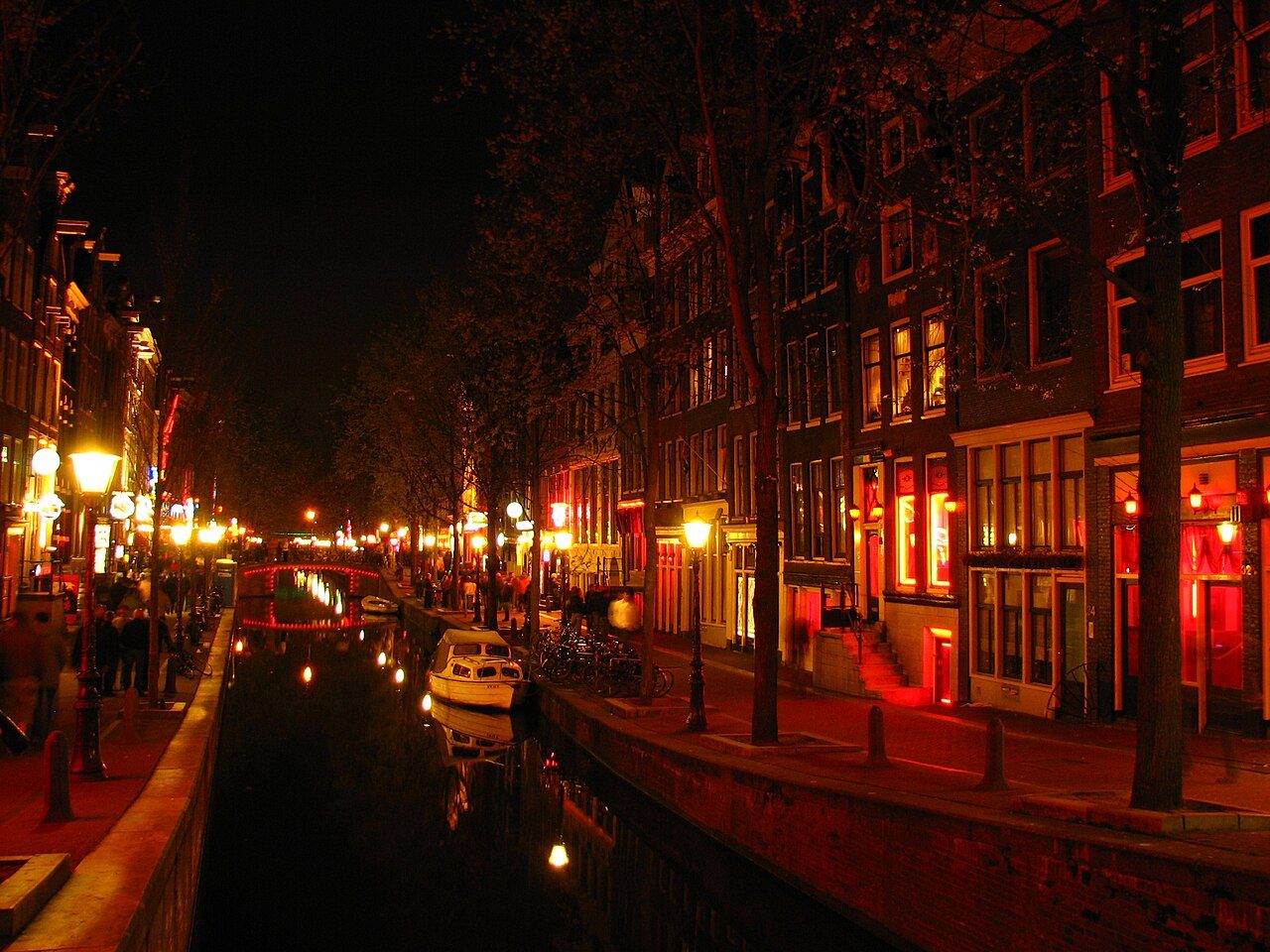
Red Light District (De Wallen)
The oldest part of the city: medieval alleys, the Oude Kerk and the windows, free to walk through.
 LANDMARK
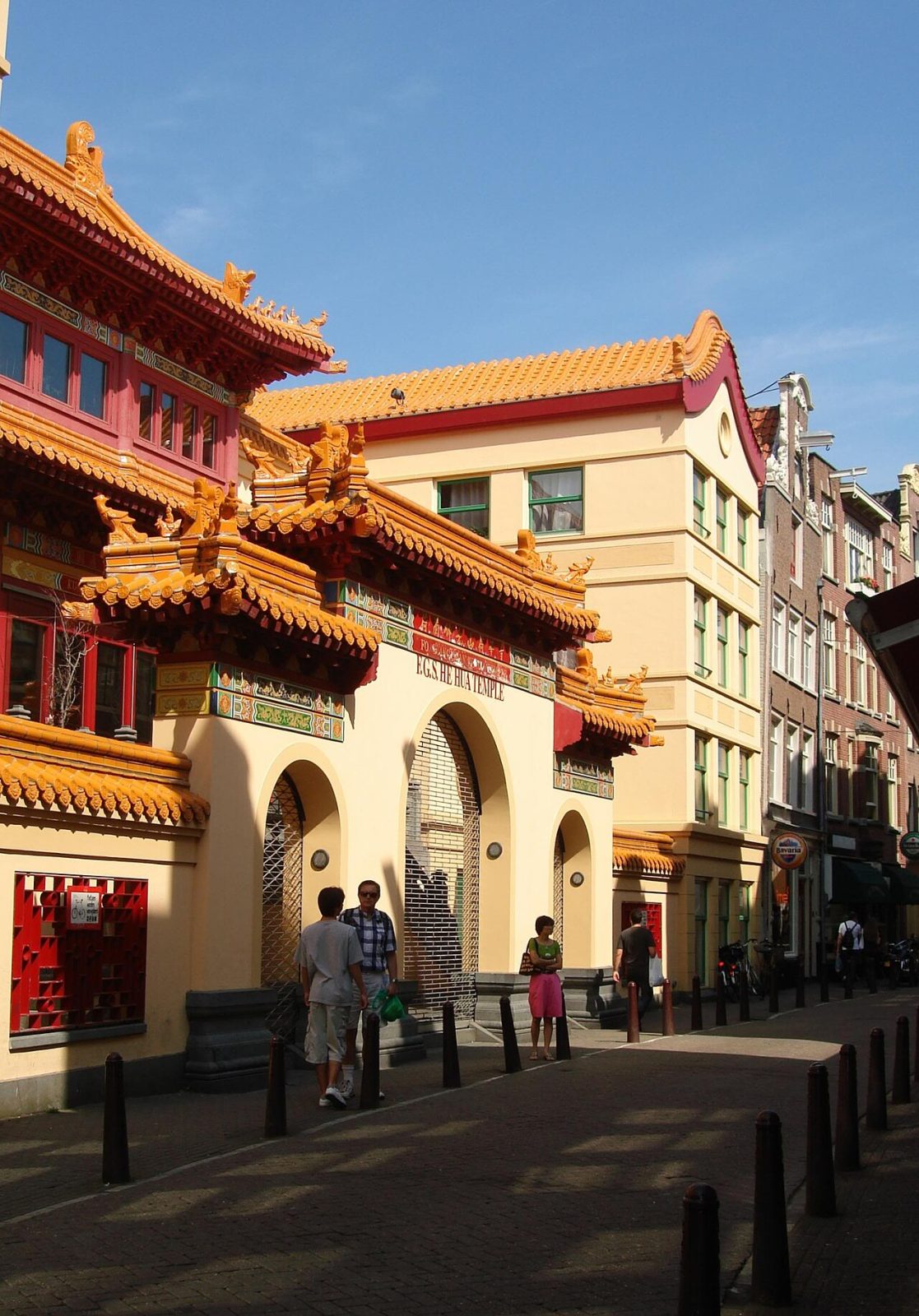
Chinatown (Zeedijk)
The Zeedijk and Nieuwmarkt area: Chinese bakeries, the old sailors' street, and a Buddhist temple.
Tours and quests that pass here
These walks have a stop a few minutes from Brouwersgracht. Free, on your phone, start any time.
 AUDIO TOUR
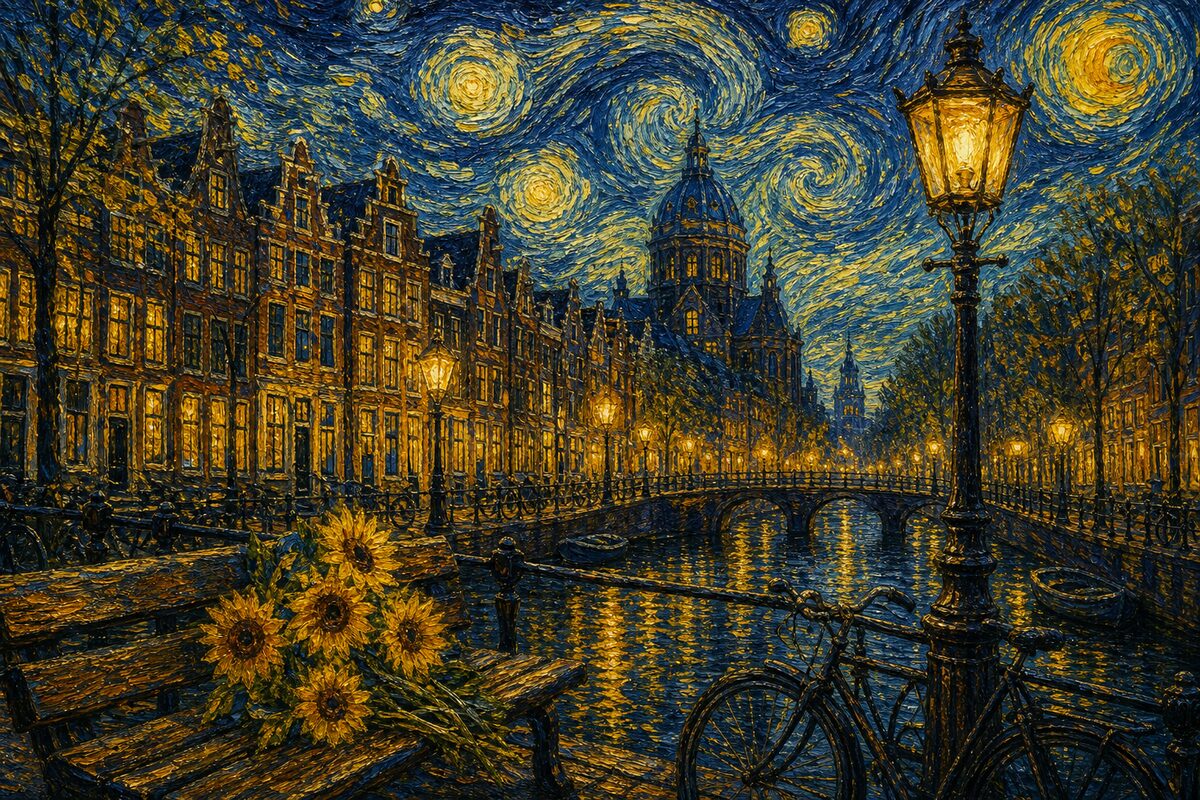
Van Gogh's Amsterdam
The years before the fame: a failed bookshop clerk walking these same streets. Ends at the museum door.
 CITY QUEST
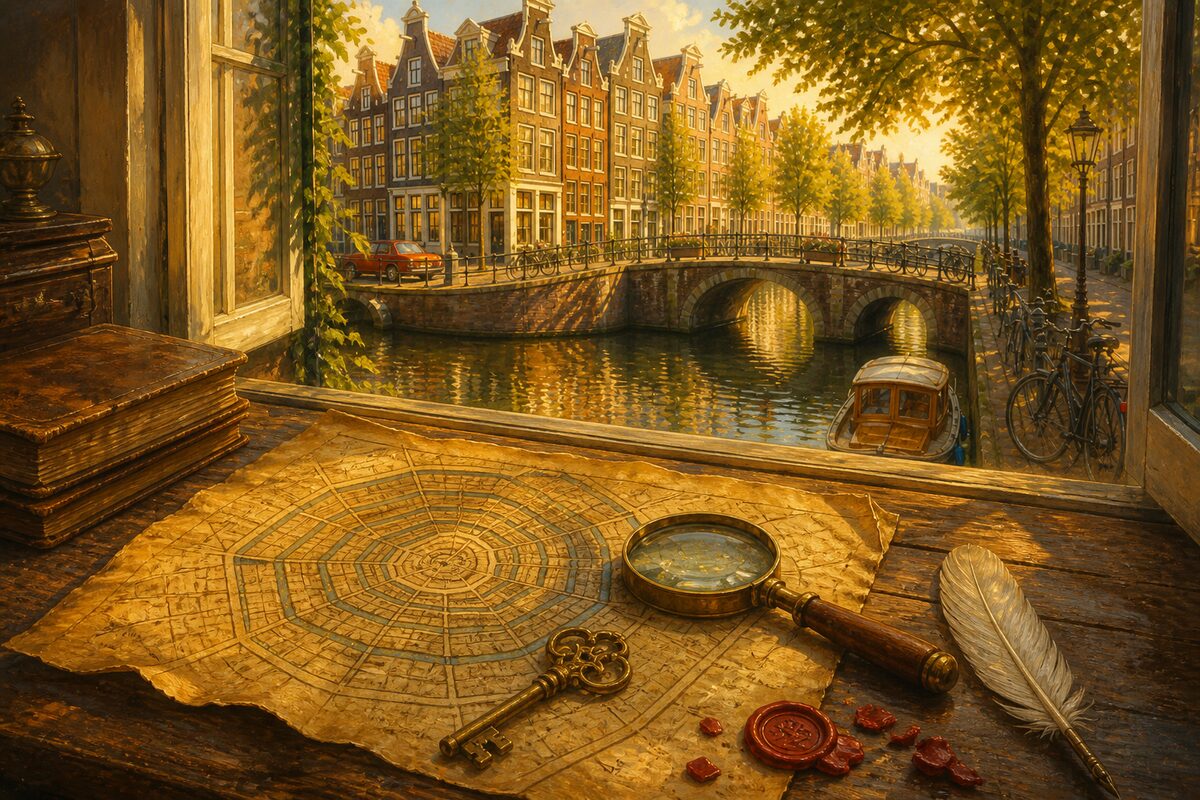
The Canal Cipher
A coded will, seven places, seven words. Walk the canal ring and read what the merchant hid.
 AUDIO TOUR
Amsterdam in a Day: Highlights Walk
Start here if it's your first day. Why the houses lean, how the canals were dug, and what the Golden Age was actually built on.