
LANDMARK
Concertgebouw
The concert hall on Museumplein, famous for its acoustics; free lunchtime concerts in season.
A concert hall in a former pasture
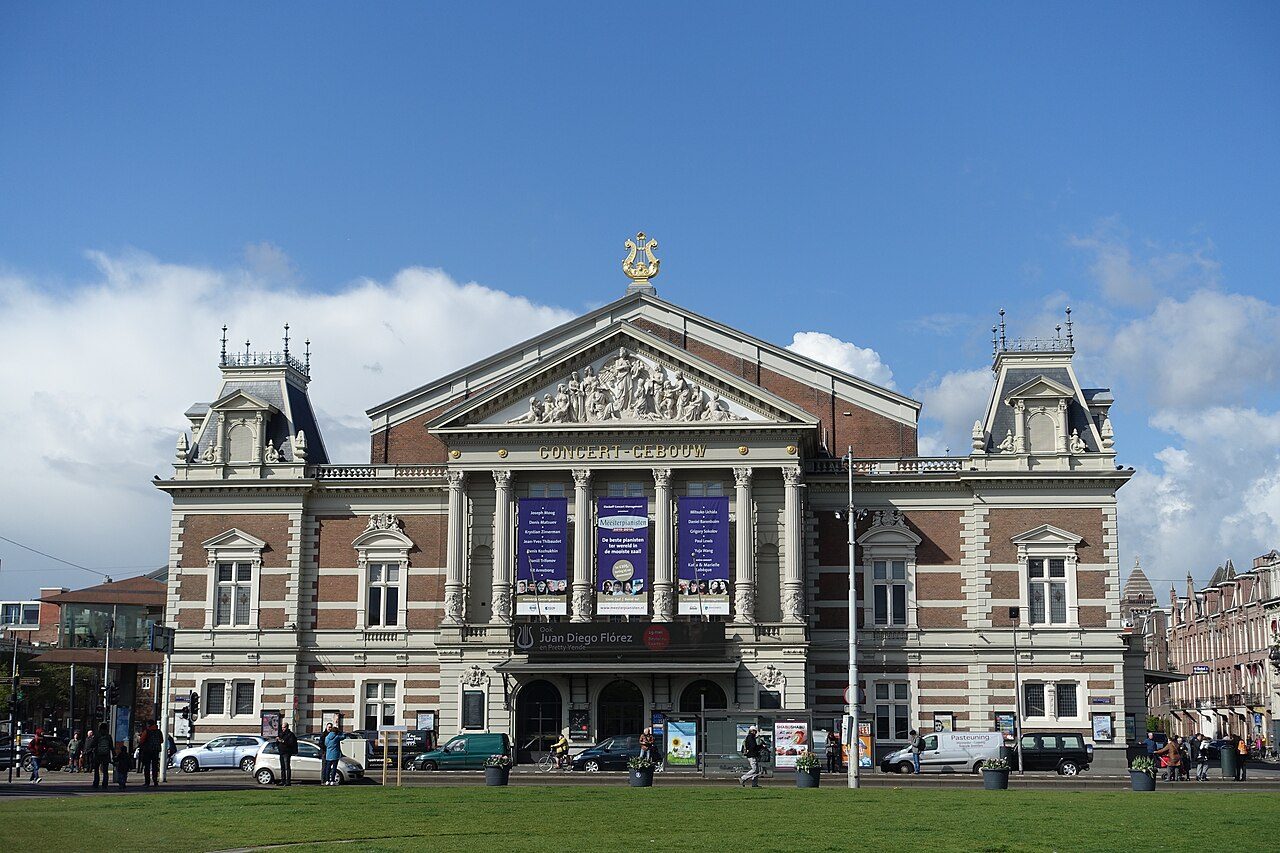
The Concertgebouw stands on the Van Baerlestraat, facing Museumplein. It is a neo-Renaissance building with a calm, pale front, and it is one of the best concert halls in the world. People put its Main Hall in the same breath as Boston's Symphony Hall and the Musikverein in Vienna. The reason is sound, not looks.
You can enjoy the outside on its own. Walk the full length of the front, then go round the side to the glass entrance on the Concertgebouwplein. Old brick and new glass sit next to each other, and the contrast tells you a lot about the building's story. The Rijksmuseum, the Van Gogh Museum and the Stedelijk Museum are all a short walk away across the same open ground.
Built on piles, rebuilt on concrete
Work began in 1883 on a pasture that lay outside Amsterdam, in the municipality of Nieuwer-Amstel. The architect, Adolf Leonard van Gendt, took his plan from the Gewandhaus in Leipzig. The soil was wet peat, so builders drove 2,186 wooden piles, each 12 to 13 metres long, down into the ground.
The hall opened on 11 April 1888. An orchestra of 120 players and a chorus of 500 performed Wagner, Handel, Bach and Beethoven. The Concertgebouw Orchestra gave its first concert there on 3 November 1888. The city only caught up with the building in 1896, when the area was annexed to Amsterdam.
By 1983 the hall was sinking. Cracks as wide as an inch had opened in the walls. The emergency restoration began in 1985, and the rotting timber piles were replaced with concrete ones. Pi de Bruijn designed the glass foyer and the new entrance that came with the work, finished in 1988. In 2013 the hall received the title Koninklijk, Royal, for its 125th anniversary.
The war left its mark too. Works by Jewish composers such as Mahler and Mendelssohn were banned, and the orchestra had to dismiss its seventeen Jewish musicians, almost a fifth of the players. In 2020 a memorial to them was unveiled in a corridor behind the Main Hall.
What to look for
Start on the roof. Above the Main Hall stands a lyre, the instrument of Apollo and the symbol of music. The one you see today is a copy from 1993, made of copper and covered in gold leaf. It is 3.25 metres high. The 1888 original was zinc. The sculptures on the building are the work of Johannes Franse.
Inside, the Main Hall seats 1,974 people. Its sound stays in the room for 2.8 seconds when it is empty and 2.2 with an audience. That suits late Romantic music, Mahler above all. The same quality makes it a poor match for amplified music, though Led Zeppelin, Pink Floyd and The Who all played here in the 1960s. The names of 46 composers run along the balcony ledges and the walls. Behind the stage sits the organ, built in 1890 by Michaël Maarschalkerweerd, with long staircases on either side that conductors and soloists walk down to reach the stage.
One detail is almost too good: in a few places in the Main Hall a layer of dust is left alone, because cleaning it away would change the acoustics.
Behind the Main Hall is the oval Recital Hall, for chamber music and song. Beneath it is the Spiegelzaal, named for the many mirrors in its doors. It serves as a coffee room and foyer.
Before you go
- The main entrance is the glass foyer on the Concertgebouwplein. The older front faces the Van Baerlestraat.
- Walk all the way round the outside. The old building and the modern glass entrance make a good pair.
- Look up from the Museumplein side to find the gilded lyre on the roof.
- Daylight shows the facade and sculpture best. An evening with a concert crowd arriving gives you the building at its liveliest.
- Check the hall's own programme for concerts and for any tours before you plan your visit.
What people say
Related spots
More things to do in Amsterdam ›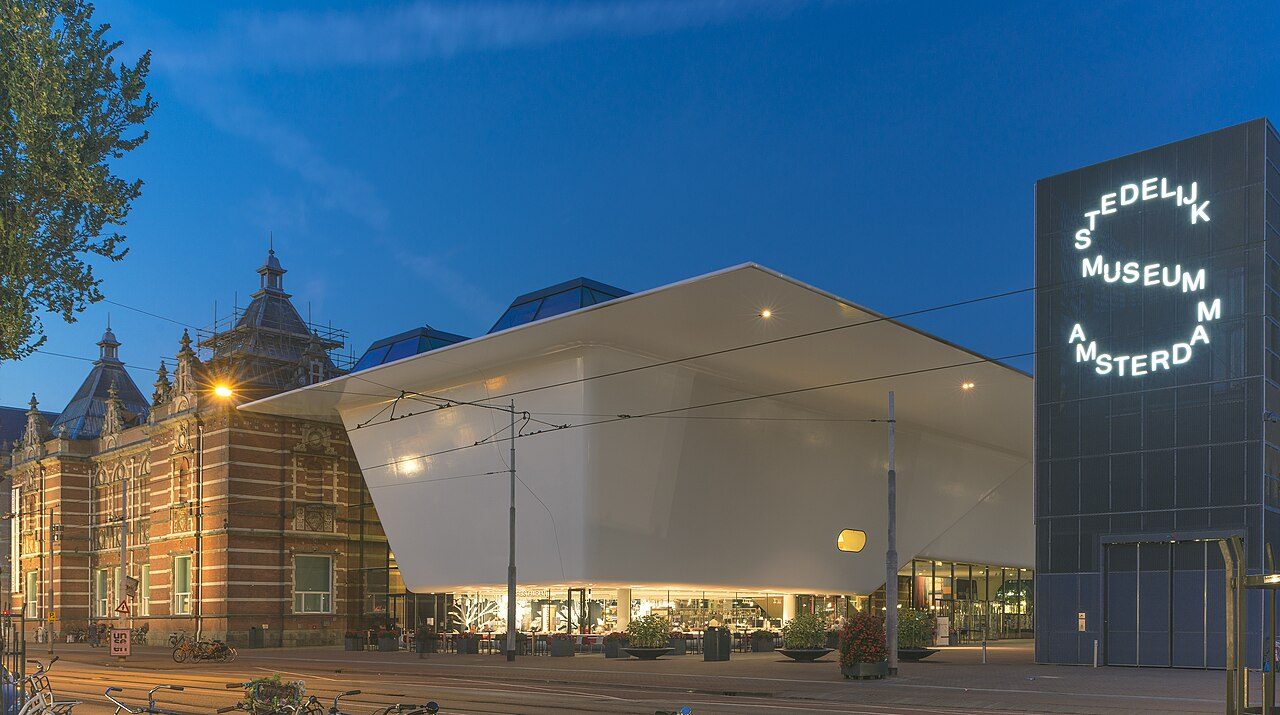 MUSEUM
Stedelijk Museum
Modern and contemporary art and design in the 'bathtub' building on Museumplein.
 MUSEUM
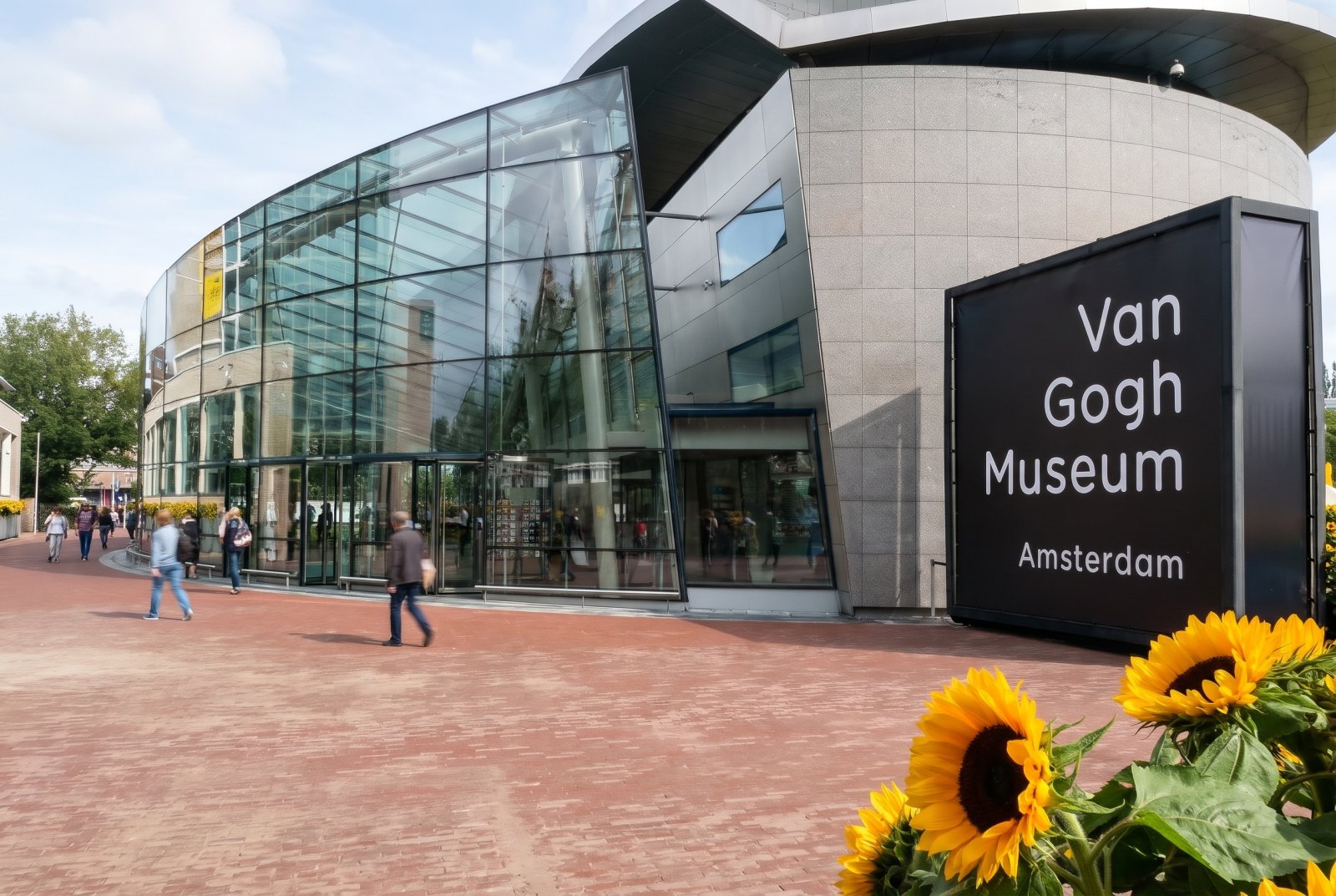
Van Gogh Museum
The world's largest Van Gogh collection: the Sunflowers, the bedroom and his letters.
 LANDMARK
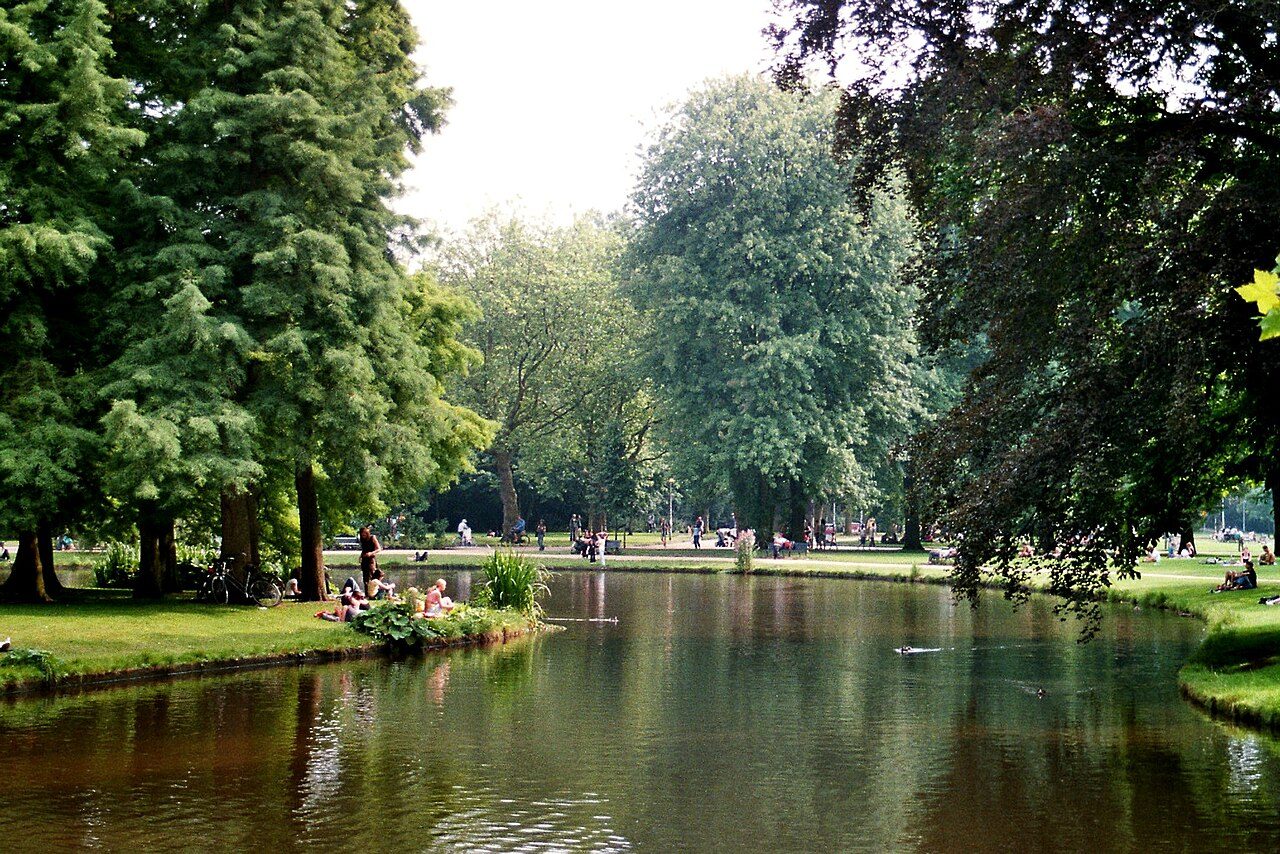
Vondelpark
The city's big park, with a free open-air theatre in summer and a Picasso sculpture.
 HIDDEN GEM
House of Bols
The Bols distillery's cocktail and genever experience next to the Van Gogh Museum.
 LANDMARK
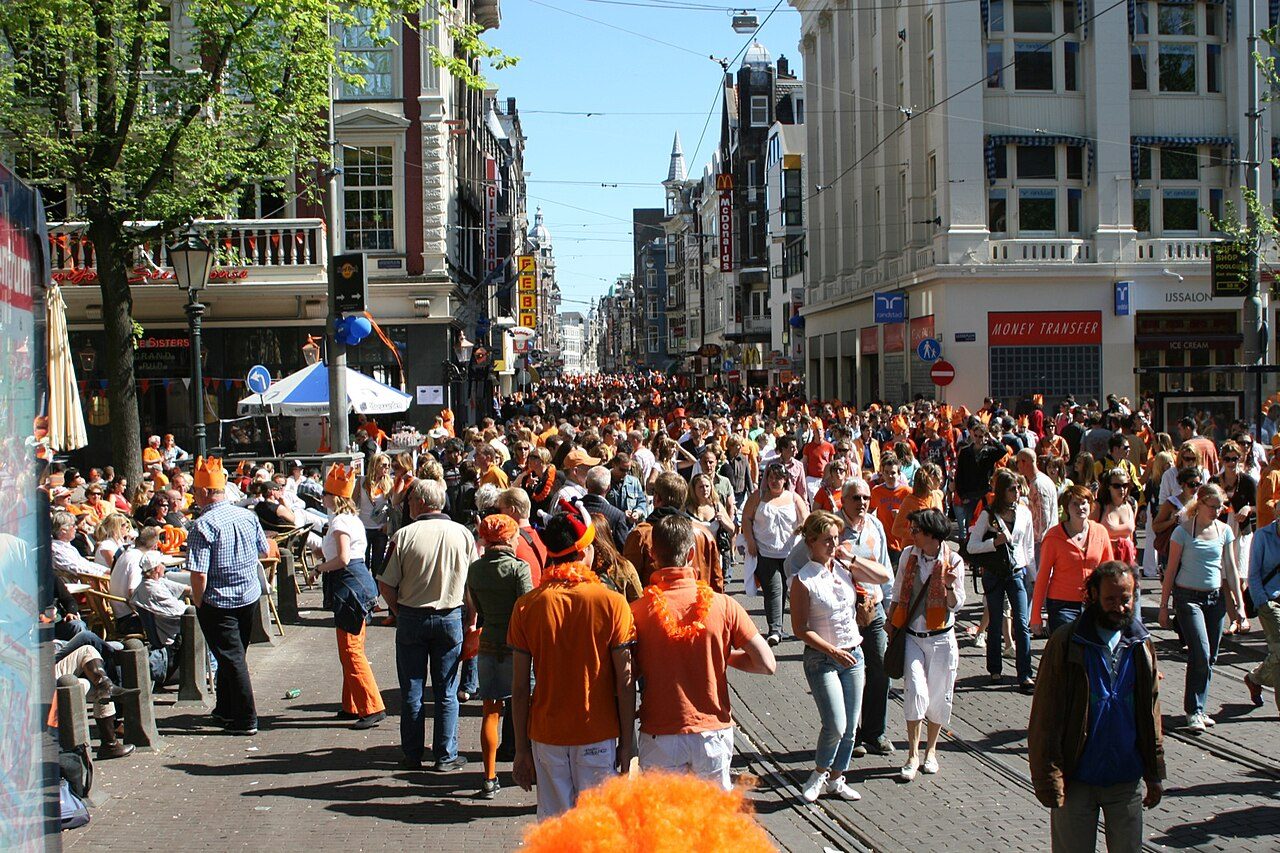
Leidseplein
The square of street performers, theatres and the Stadsschouwburg.
 MUSEUM
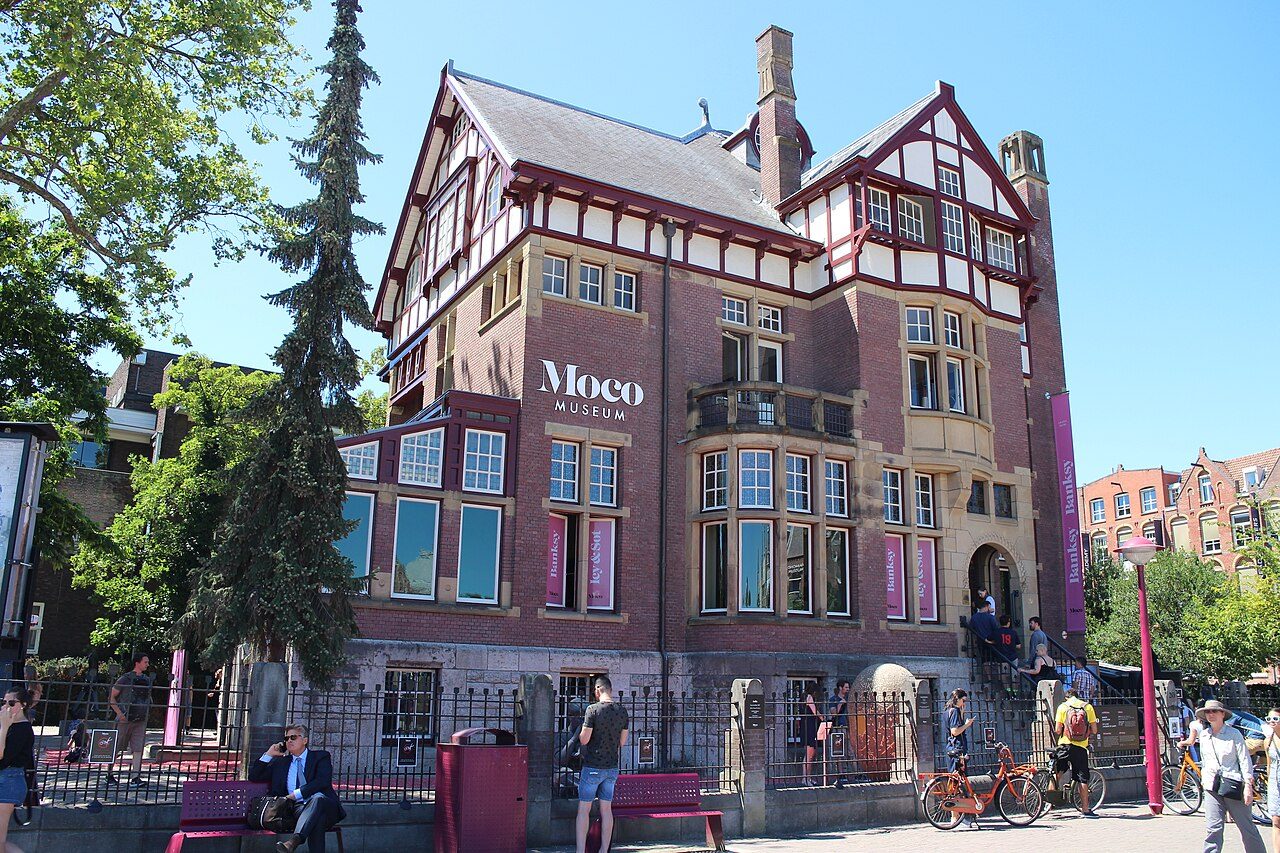
Moco Museum
Banksy, Warhol and digital art in a villa on Museumplein.
Tours and quests that pass here
These walks have a stop a few minutes from Concertgebouw. Free, on your phone, start any time.
 AUDIO TOUR
Van Gogh's Amsterdam
The years before the fame: a failed bookshop clerk walking these same streets. Ends at the museum door.
 AUDIO TOUR
In Rembrandt's Footsteps
From the biggest house on the street to bankruptcy and an unmarked grave. His Amsterdam, in the order he lived it.
 CITY QUEST
Rembrandt's Missing Panel
Count steps, columns and a missing piece of skyline. Rembrandt's city, looking closely.