
PARK
Lichtenbeek
An estate of woods, meadows and farmland between Arnhem and Oosterbeek, with surviving entrance columns, a coach house and an artificial hill enclosed by a beech hedge.
Meadows with a wartime memory
Lichtenbeek is an estate of woods, meadows and farmland between Arnhem and Oosterbeek. On 19 September 1944, British supply parachutes fell over these meadows. Local resident Gerard Dieckmann remembered German soldiers rushing for the containers, while priests and nuns ran out to collect food and parachute fabric for clothes. It is a striking story to hold in mind where woodland gives way to open grass.
The supplies were intended for British troops during the Battle of Arnhem, but Lichtenbeek was in German hands. The Mariëndaalse Veld here became part of the battlefield. Older trees still contain shell fragments. The war cemetery on the estate’s southern side gives that history a quieter, more personal setting.
The house that disappeared
Lichtenbeek was founded around 1651 by Wilhelm Creyvenger and Bernt Harscamp. After buying it in 1834, Jan Trakranen had a new neoclassical house built. You will not find that mansion today. Dieckmann recalled that a kitchen fire partly burned it in 1942, then a V-1 flying bomb destroyed it in 1944.
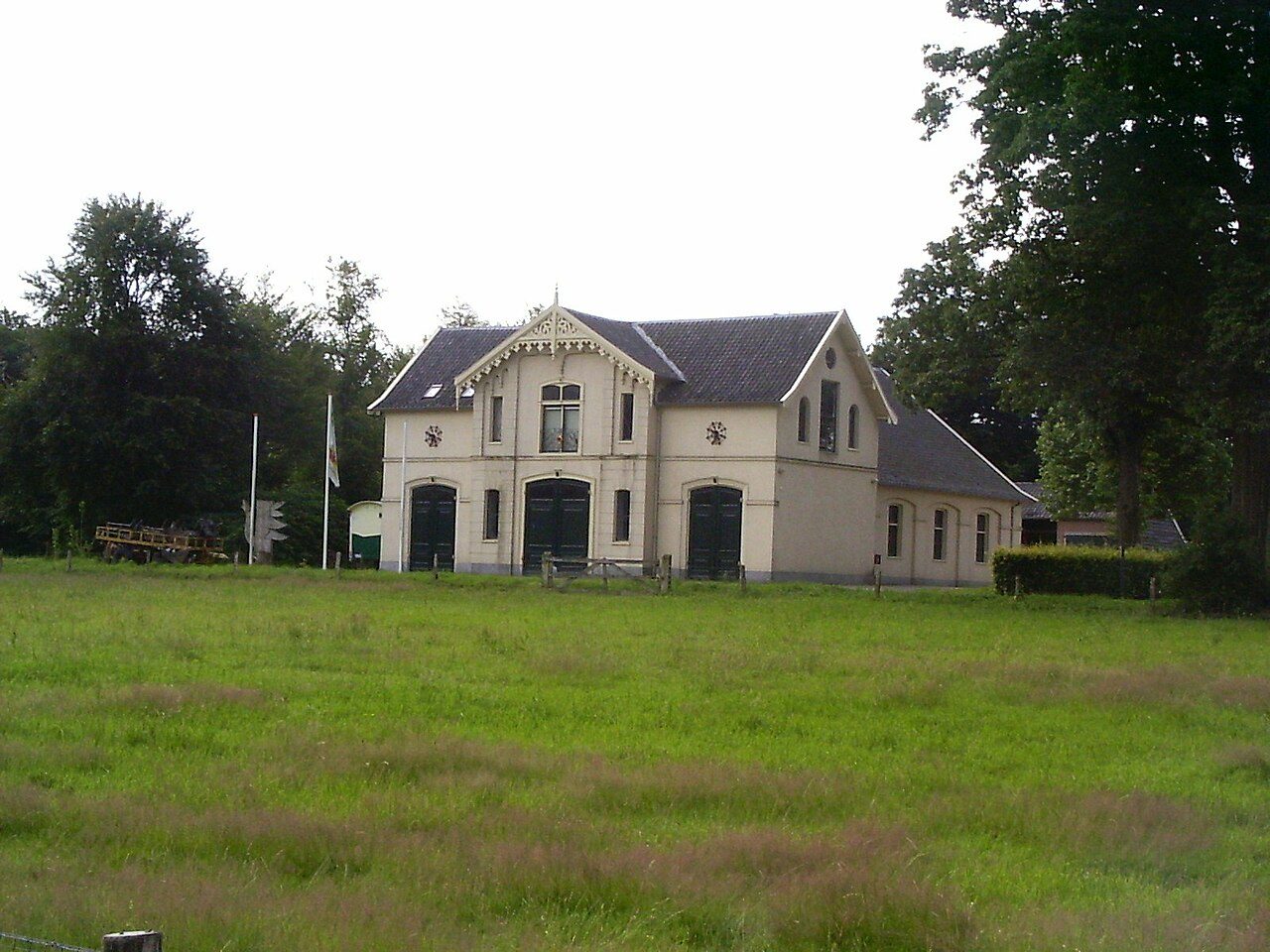
Look instead for the surviving entrance columns, garden wall and coach house. Two ornamental vases that marked the entrance also remain. These fragments help you picture a country estate rather than simply a wood. The former orangery became a home, while the coach house’s first floor has been used as artist Klaas Gubbels’s studio.
The neighbouring Boschveld estate became associated with the owners of Mariëndaal in 1870. Gateposts bearing that name by the former forester’s house at Van Limburg Stirumweg preserve the connection.
A landscape made to surprise
The old estate once extended into Vijverberg, across Amsterdamseweg, now part of Warnsborn. Two accounts reveal how deliberately theatrical its grounds could be. In 1793, Otto van Eck visited Lichtenbeek and found a wooden hermit reading a Bible in a mossy hut. The hut stood on an island in what is now Vijverberg. Its surrounding ditch, now dry, can still be traced there.
On their honeymoon in 1813, Maria Catharina Gallé and Nicolaas Esser Meerman sat in a little grotto on the old estate. A waterfall suddenly dropped in front of them. The grotto has disappeared, but the cascade remains on Vijverberg’s stream. Neither feature is in today’s Lichtenbeek woods: they belong to the larger landscape that earlier visitors knew.
Within Lichtenbeek, look for the Kleine Pol, an artificial hill at the crossing of two avenues, enclosed by a beech hedge. It probably dates from 1813.
Life beneath the trees
More than two-thirds of Lichtenbeek is woodland. Broadleaved trees mix with conifers, including Douglas fir and Japanese larch. Bracken and bilberries grow beneath them. Along the field edges, hedges provide shelter and routes for wildlife; roe deer and badgers live in this landscape.
Some of its smallest residents received unusually close attention in 2022. Schoolchildren Isabel Kersten and Teun van der Sterren joined beetle specialist Menno Schilthuizen to repeat his 1982 survey at the same Lichtenbeek sites. They baited buried traps with meat, old cheese, apple and mushrooms to find carrion beetles. It is a reminder that the woodland floor has its own busy life, quite apart from the estate’s surviving buildings and wartime memories.
Things to know
- Find Lichtenbeek south of the N224, between Dreijenseweg and Schelmseweg.
- Wear comfortable walking shoes for the woodland paths.
- Bring binoculars if you want to watch woodland birds.
- Use Amsterdamseweg to orient yourself: Vijverberg lies across it, outside today’s Lichtenbeek.
- Opening hours and prices can change. Check the official website before you go. Official website
What people say
Related spots
More things to do in Arnhem ›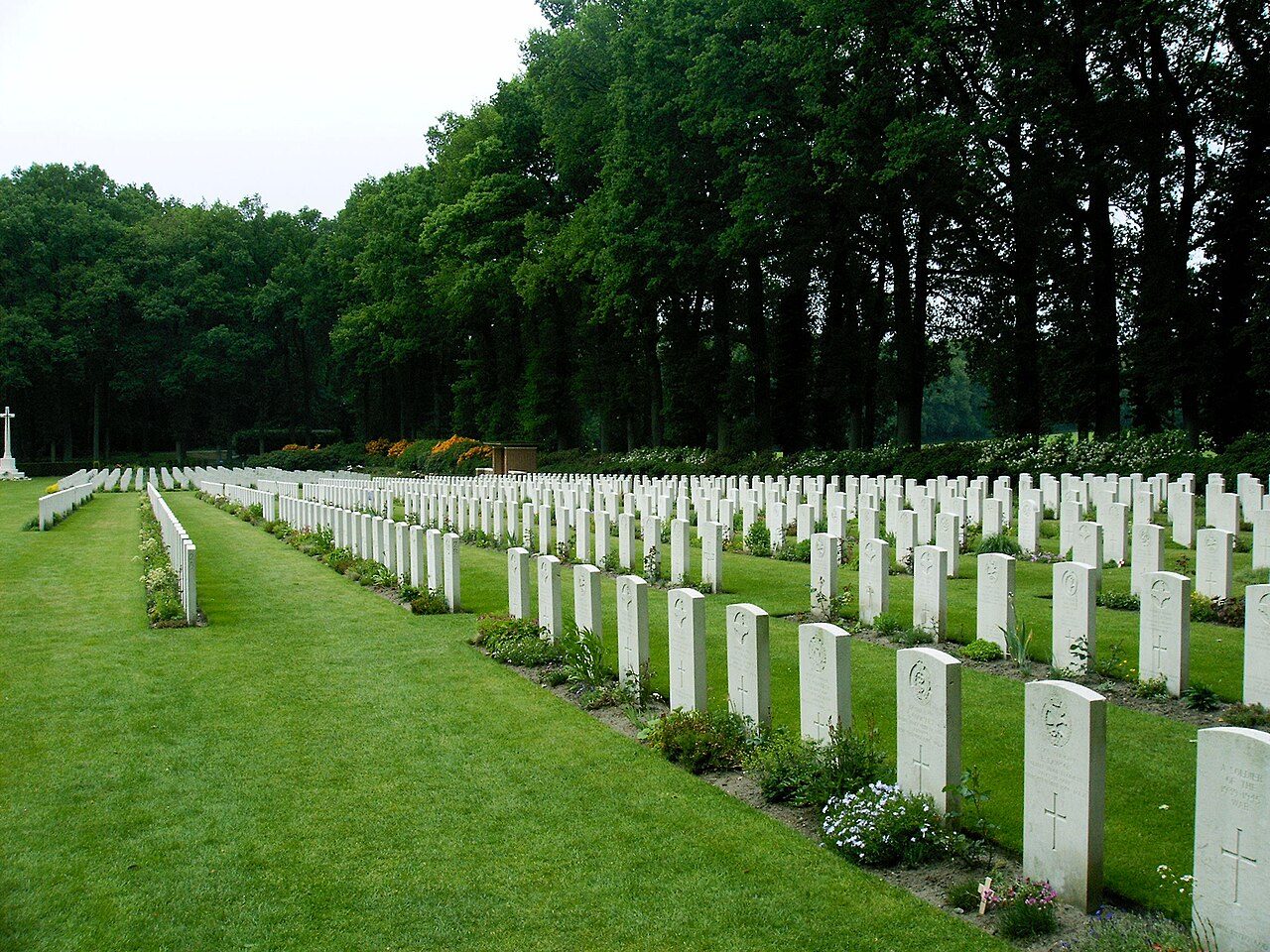
Arnhem Oosterbeek War Cemetery
A war cemetery with graves of Allied servicemen killed in the Battle of Arnhem and during the liberation, where generations of local children have laid flowers to keep their names remembered.
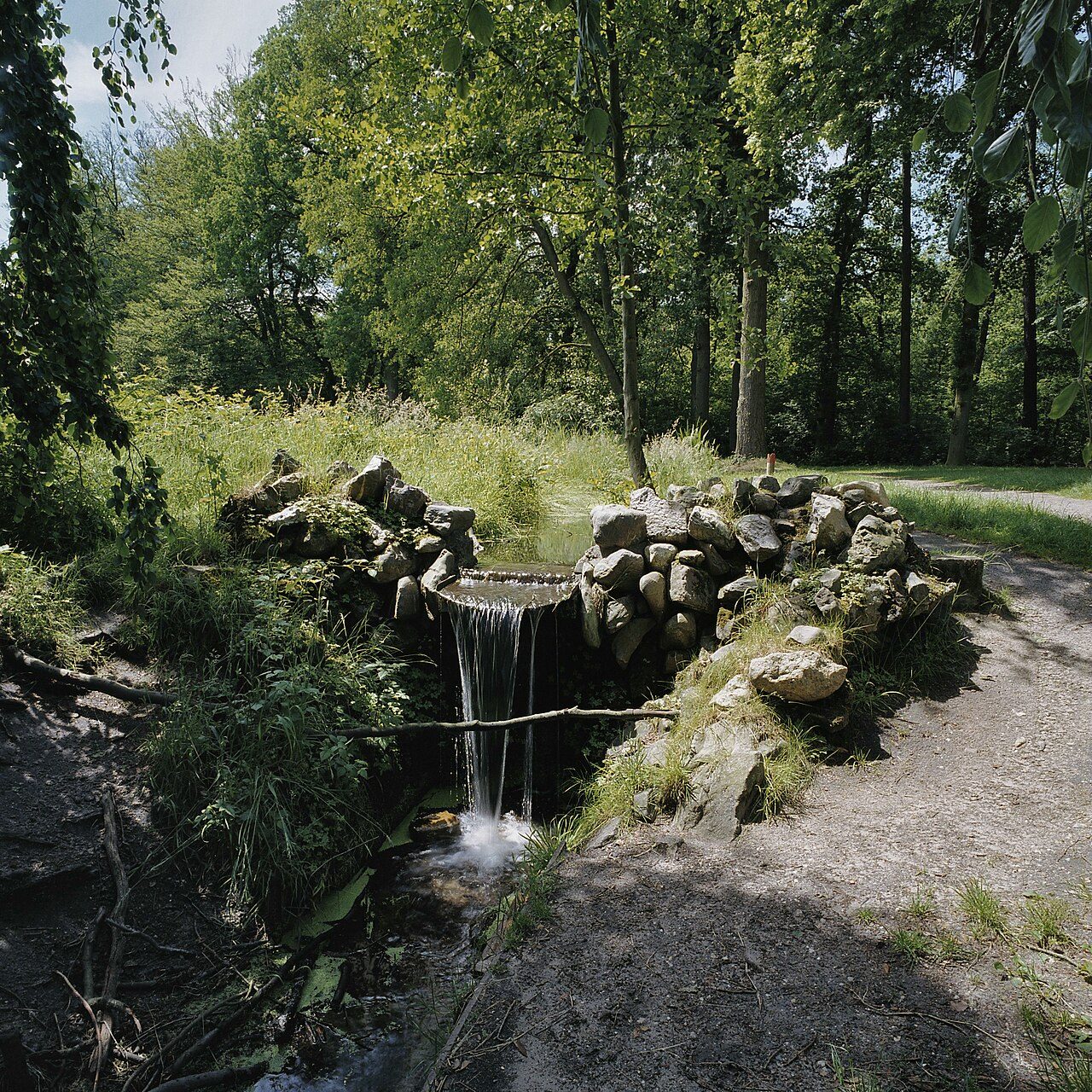
Warnsborn
An estate on Arnhem’s northwestern edge, with walks from formal garden terraces into woods, past ponds, heath and eleven prehistoric burial mounds.
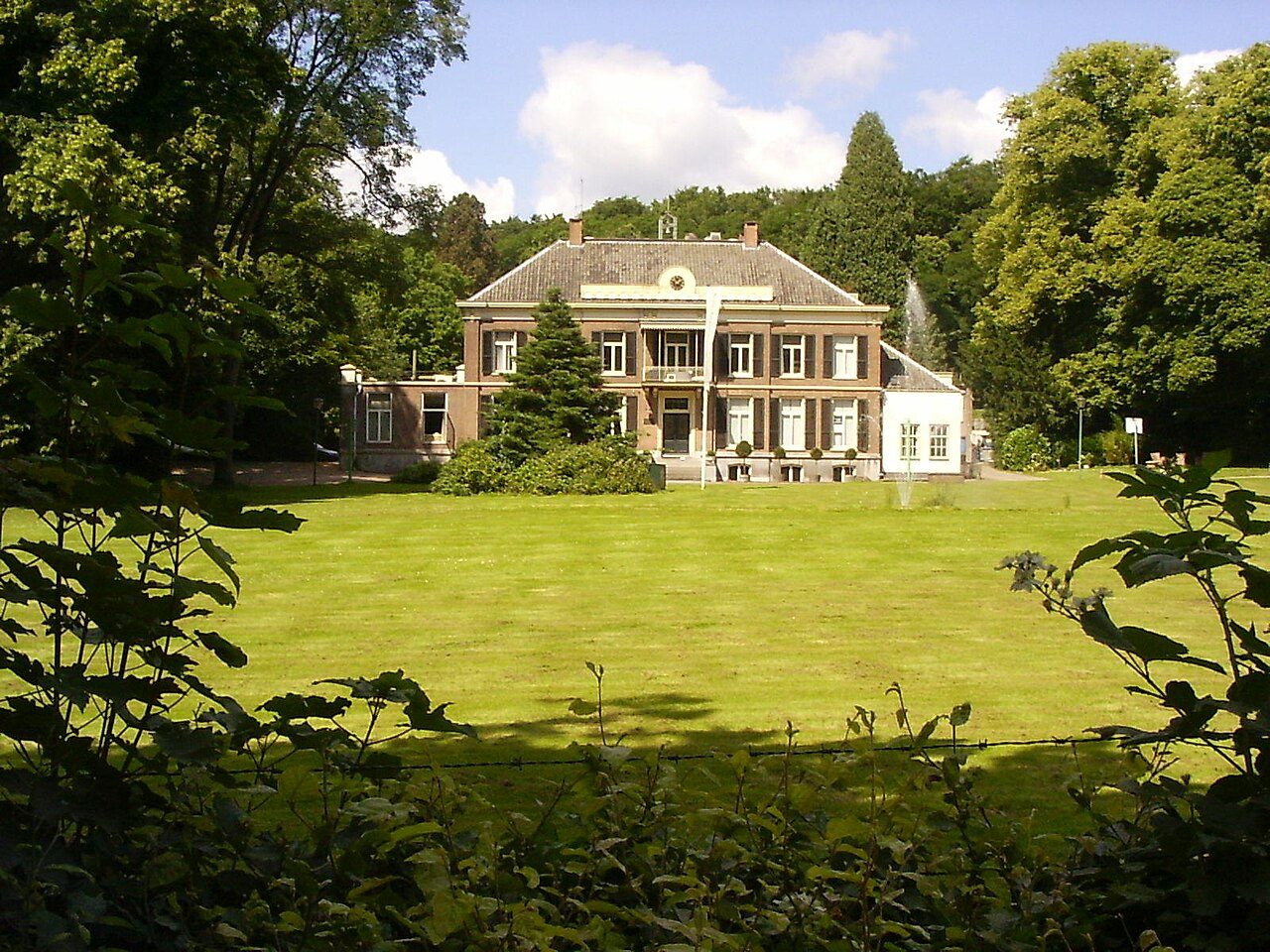
Mariëndaal
A hilly estate park between Arnhem and Oosterbeek, with wooded slopes, open fields and a stream through the valley. The Groene Bedstee leads beneath a tunnel of clipped beeches planted in 1856.
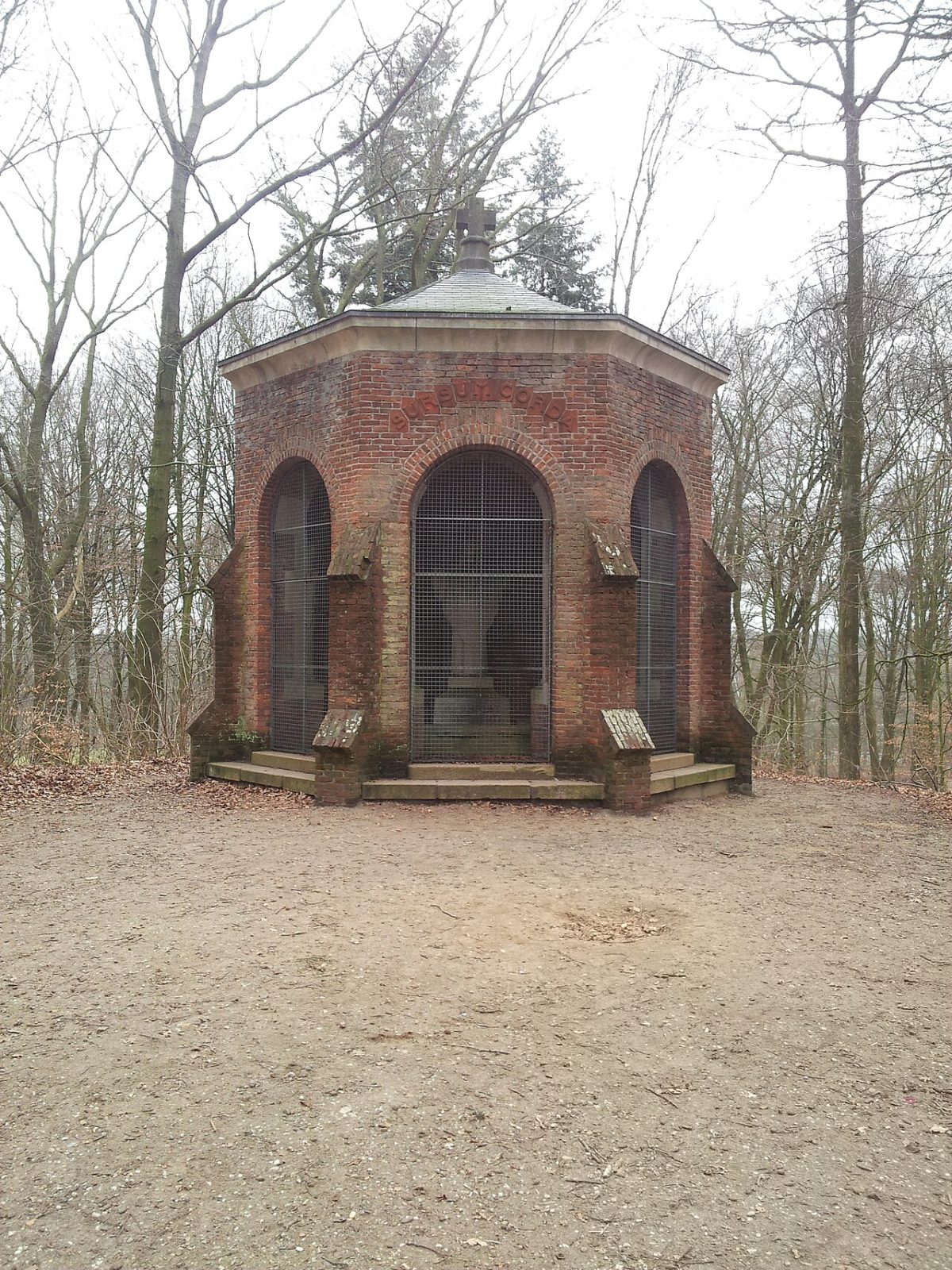
Christuskoepel
A seven-sided brick chapel on the Mariëndaal estate, with Mari Andriessen’s life-size Christ and seven figures representing the virtues, visible through iron grilles.
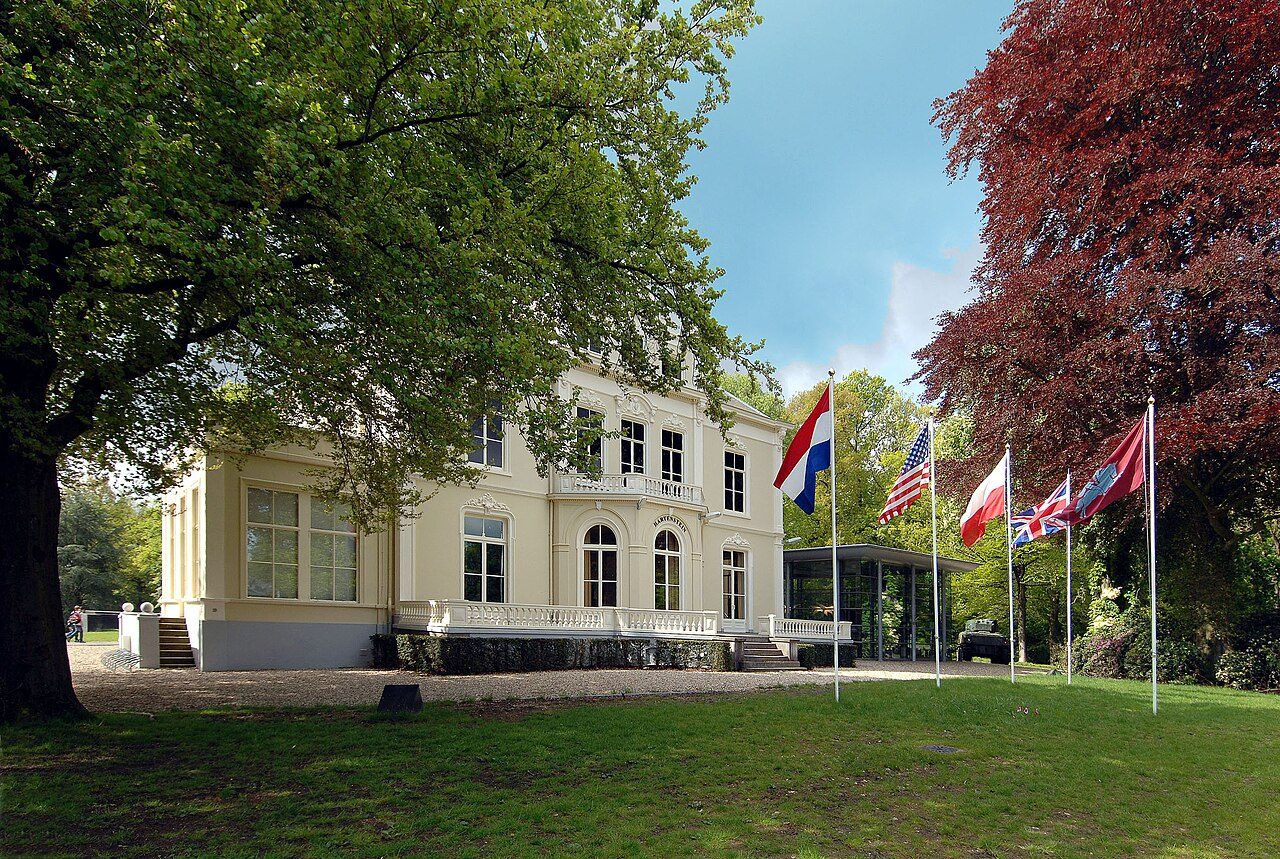
Airborne Museum Hartenstein
A former hotel that served as British headquarters during the Battle of Arnhem, now a museum with weapons, uniforms and personal stories of soldiers and civilians caught in the fighting.
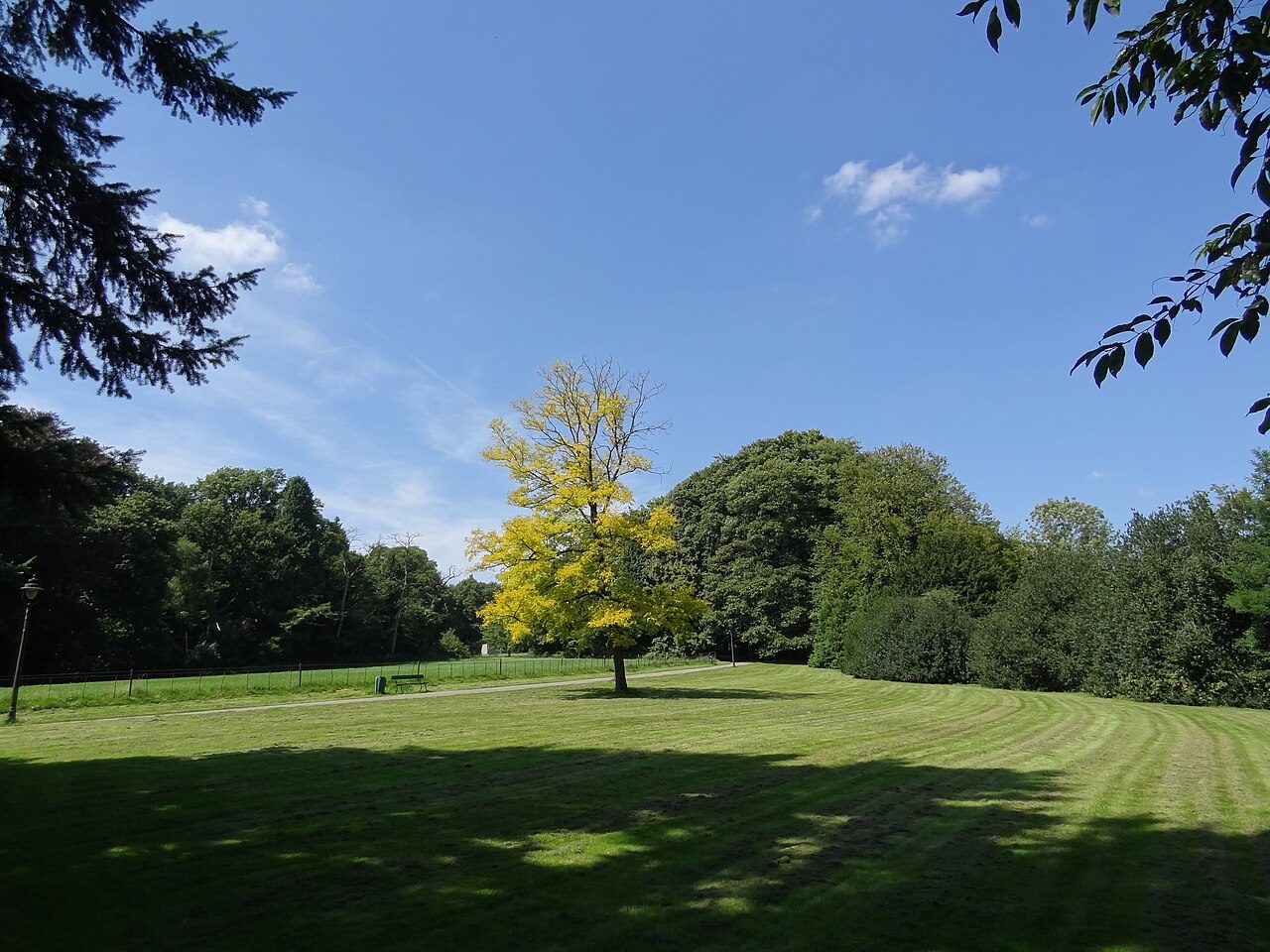
Gulden Bodem
A wooded former country estate in northern Arnhem, with centuries-old sweet chestnuts, a Swiss chalet and a small statue of Paulus the Woodgnome among the trees.
Walk it with a guide or a quest
If you want a story on the way, these walks also live in Arnhem.
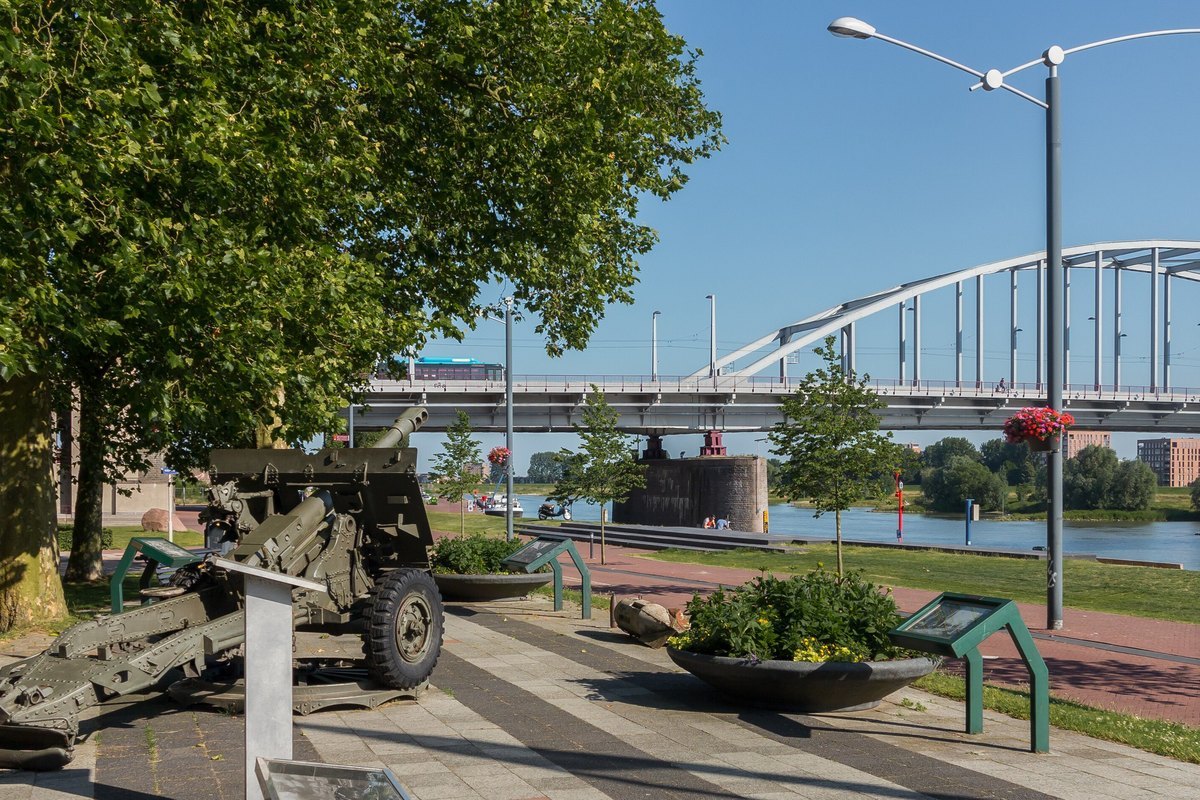 FREE AUDIO TOUR
Four Days at the Bridge
At Arnhem’s John Frost Bridge, British soldiers fought to hold a river crossing while families tried to escape through the same streets. You can stand beneath the approach where people sheltered from gunfire, then look towards the far bank the defenders could not capture.
 CITYQUEST
Arnhem After the Battle
Hunt for traces of Arnhem’s wartime destruction in streets rebuilt after the battle. Real stone memorials and bronze figures hold the clues as you gather letters for a final answer.
 CITYQUEST
The Stone Creature Keeper
Your creature collection is scattered across Arnhem, waiting for you to spot real animals and monsters among the city’s statues and fountains. Hunt for them in the street, fill the keeper’s catalogue and work towards a final answer.