
AUDIO TOUR
Four Days at the Bridge
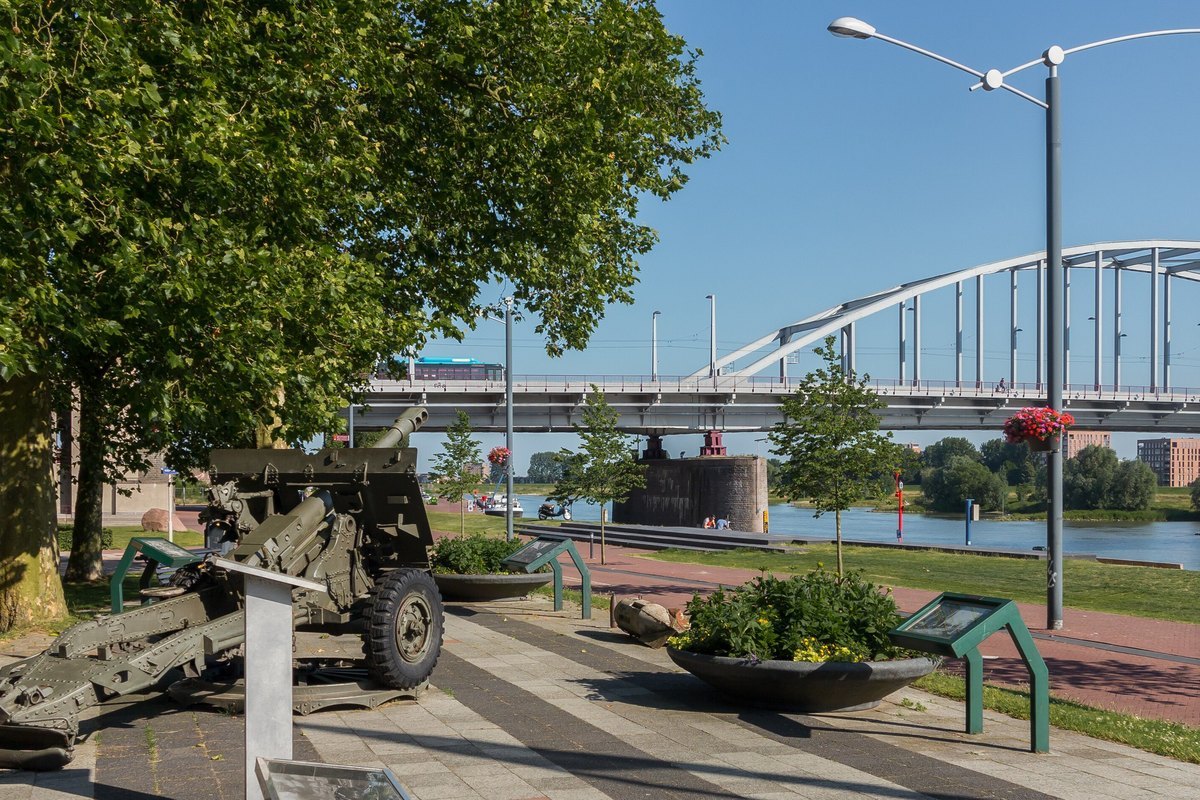
At Arnhem’s John Frost Bridge, British soldiers fought to hold a river crossing while families tried to escape through the same streets. You can stand beneath the approach where people sheltered from gunfire, then look towards the far bank the defenders could not capture. Ten stops take you to a church struck by an aircraft, the bridge supports where a family sheltered with a wheelchair, and a battered courthouse column that became a memorial. If military history and civilian wartime stories interest you, this free, self-guided audio walk is for you, on your own phone.
What you will learn
You’ll hear why holding the northern approach was not the same as controlling Arnhem bridge, and why help failed to reach the defenders. The walk also follows the choices civilians faced when their homes, churches and possible escape routes came under fire.
What you will do
You walk outdoors, and each stop opens on your phone when you reach it, so you can listen in front of the place it describes. You can pause along the way and pick the walk up later.
This walk suits you if you like military history and the stories of people caught in war. Daylight is best for seeing damage on the memorial column and understanding how the streets run beneath the bridge approach.
The route
Only the stops, not the stories. Each story opens when you are there.
-
The street where a patrol searched for help
-
The church caught in the bridge battle
-
The building where a soldier found his wounded enemies
-
The church where the escape attempt began
-
The courthouse column and a family caught in battle
-
The school that became a bridge defence
-
The bridge where gunfire halted a family's escape
-
The bridge where the wounded waited for help
-
The bridge underpass where civilians tried to escape
-
The bridge where British troops waited for help
Where the bridge battle happened
The northern approach to Arnhem’s road bridge was both a British defensive position and a place where people lived. This walk stays around that end of the crossing, through Weerdjesstraat and the Markt to the passages beneath the approach. Churches, streets and the river crossing put the fighting within sight of you.
Why the defenders could not hold
German guns destroyed the buildings that sheltered the defenders, while reinforcements failed to reach them. That is the broad answer; the walk brings you down to street level. At the school site, the bridge approach and the places used by the wounded, you hear what being cut off meant for the people there.
What survives beside the bridge
A damaged column from Arnhem’s courthouse now stands as the Airborne monument. Around it, the streets contain both surviving buildings and places changed by destruction: repaired churches, memorials and offices where homes once stood. The walk helps you tell a wartime location from a surviving wartime building, rather than treating everything as untouched.
When to walk
Daylight makes it easier to see the bridge supports, church roofs and memorial details that connect these accounts to the street. These are also places people use today. Leave doorways and pedestrian passages clear while you listen, and choose a spot out of the way before stopping beside the bridge approach.
How the audio guide works
- Create a free account on your phone — no app to install.
- Put your headphones in and walk to the first stop.
- The story plays when you arrive, read by an AI voice. Then walk on to the next one.
- Pause and resume whenever you like. Your walk stays on your account.
What people say
Loading reviews…
Questions before you walk
What is Four Days at the Bridge?
Four Days at the Bridge is a free self-guided walking audio tour in Arnhem. You walk the route on your phone and hear the story at each stop.
What will I learn?
You’ll hear why holding the northern approach was not the same as controlling Arnhem bridge, and why help failed to reach the defenders. The walk also follows the choices civilians faced when their homes, churches and possible escape routes came under fire.
What will I do?
You walk outdoors, and each stop opens on your phone when you reach it, so you can listen in front of the place it describes. You can pause along the way and pick the walk up later.
Is it free?
Yes. The walk is free. You create a free account to start, so your progress stays with you.
Do I need an app?
No. Open it in your phone browser and walk. DiscoverAround is not a booking site or a ticket shop.
How does the audio work?
Put your headphones in and walk to each stop. The story is there when you arrive. You can also read the text if you prefer.
Does the walk cross John Frost Bridge?
No. It follows the streets and spaces around the northern approach, including the passages beneath it.
Does this cover the whole Battle of Arnhem?
No. It focuses on the fighting at the road bridge and the civilians caught nearby, rather than the wider battle around Arnhem and Oosterbeek.
Do I need to go inside the churches?
No. You listen outdoors, looking at the buildings from the street.
Can I stop and finish the walk later?
Yes. You can pause the walk and pick it up later on your phone.
Start free tour
Headphones in. The story starts at the first stop.