
PARK
Warnsborn
An estate on Arnhem’s northwestern edge, with walks from formal garden terraces into woods, past ponds, heath and eleven prehistoric burial mounds.
Woods with a remembered stay
Warnsborn is an estate of woods, ponds and landscaped gardens on Arnhem’s northwestern edge. In September 1941, Anne Frank stayed at Hotel Groot Warnsborn with her father, Otto. She sent her grandmother in Basel a postcard describing their beautiful lodgings, surrounded by woods. The hotel you see today occupies the same site, but it is not the building she knew.
This is country-house parkland, like Park Zypendaal, rather than a small city garden. Allow time to move between the formal grounds and the woodland. The changing landscape is the reason to walk here: clipped garden terraces give way to trees, water and much older traces of human life.
A landscape saved from building
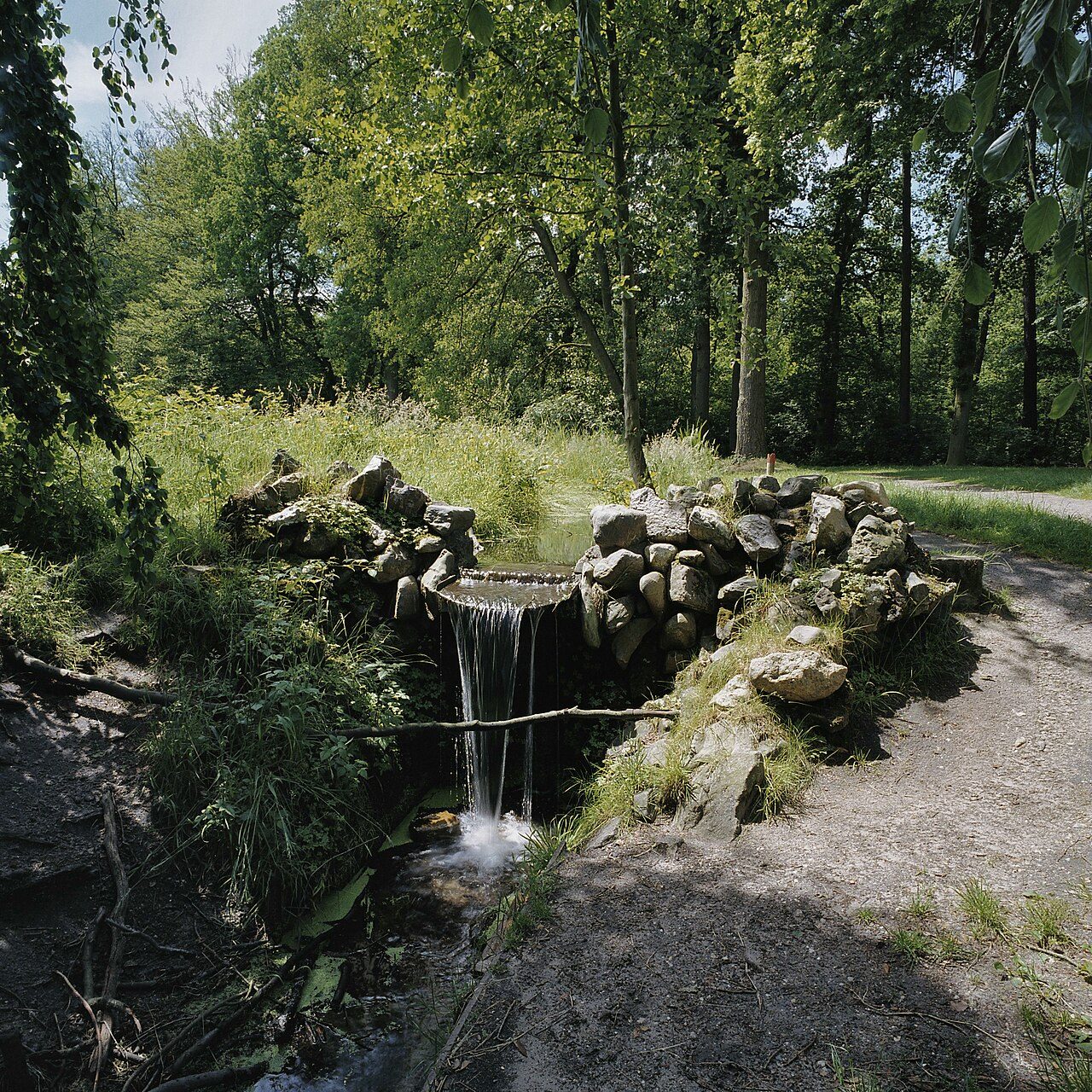
Warnsborn’s name means “pure” or “clear spring”. Watch the streams and ponds as you walk. Unusually, their water flows north, away from the Nederrijn, before disappearing into sandy ground. The estate lies on the Veluwe’s glacial ridge, where wet hollows and dry woodland sit close together.
The woods nearly became a residential development. After acquiring Laag Erf in 1929, the company Thorhem planned to divide it and Vijverberg into villa plots. The newly founded Geldersch Landschap opposed the scheme. With public support, it bought those estates and neighbouring Lichtenbeek. Hoog Erf joined them in 1944, through a bequest from Baroness van Verschuer, reuniting Warnsborn’s three parts. On the approach to the house, look for the replica bronze bust of S. Baron van Heemstra, the conservation foundation’s founder.
Read the buildings and terraces
The original neoclassical house became a hotel in 1932. Occupied by German forces during the war, it burned down in 1945. The present hotel replaced it in 1950. Keep that break in mind when looking back towards the building: Anne Frank’s wooded setting survives, but her hotel does not.
Beside the orangery, look at the garden’s three levels. Landscape architect Hendrik Copijn designed this arrangement in the early 20th century. It later fell into decay. In 2000, Geldersch Landschap began restoring it, using old photographs and physical remains found in the soil. The terraces are a reconstructed piece of the estate’s history, not simply modern hotel landscaping.
The little chapel has changed purpose too. Built as a garden folly in the early 19th century, it later housed a gardener. In 1959, added side wings gave it a cross-shaped plan and turned it into a hotel annex. Its church-like appearance tells only part of its story.
Heath, memorial and burial mounds
On 27 August 1910, aviation pioneer Clément van Maasdijk crashed on Warnsborn’s heath while making a test flight for an air show. His fiancée, Jeanne Ladenius, was watching. A memorial stone still marks the place, giving this stretch of open ground a very particular human history.
The estate also contains eleven prehistoric burial mounds. One, Meelworstenberg, reportedly owes its name to the lunch eaten by the archaeologists who excavated it in 1947. Their work revealed a much older burial practice: around 1200 BC, people placed their dead here in hollowed-out tree trunks. Look for low rises rather than grand monuments. These modest shapes are among Warnsborn’s oldest surviving features.
Things to know
- Head to Arnhem’s northwestern edge; Amsterdamseweg borders the estate to the south.
- Allow time for both the formal gardens and woodland.
- Wear comfortable walking shoes for the estate paths.
- Keep off the burial mounds and view them from the paths.
- Opening hours and prices can change. Check the official website before you go. Official website
What people say
Related spots
More things to do in Arnhem ›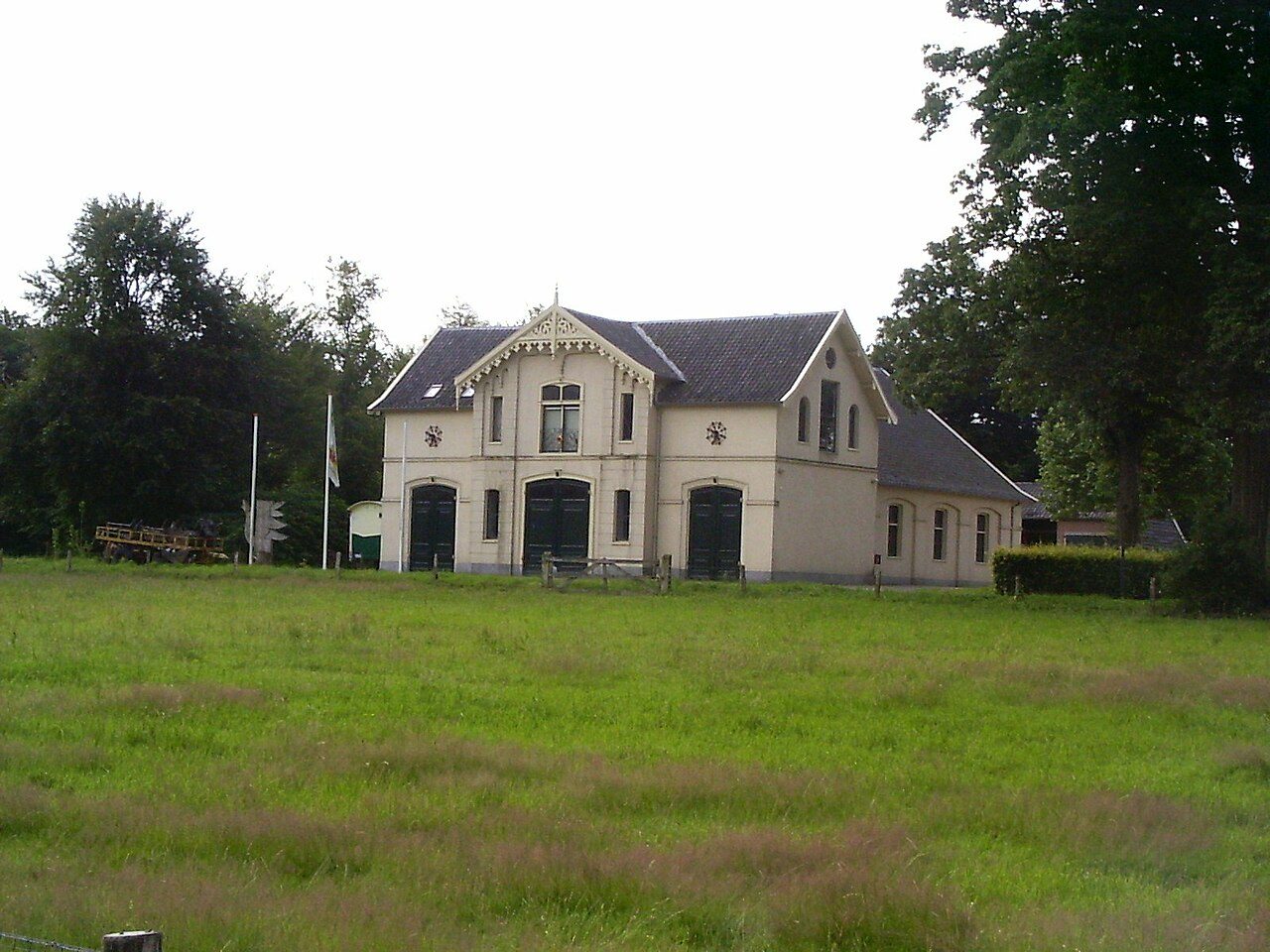
Lichtenbeek
An estate of woods, meadows and farmland between Arnhem and Oosterbeek, with surviving entrance columns, a coach house and an artificial hill enclosed by a beech hedge.
Park Zypendaal
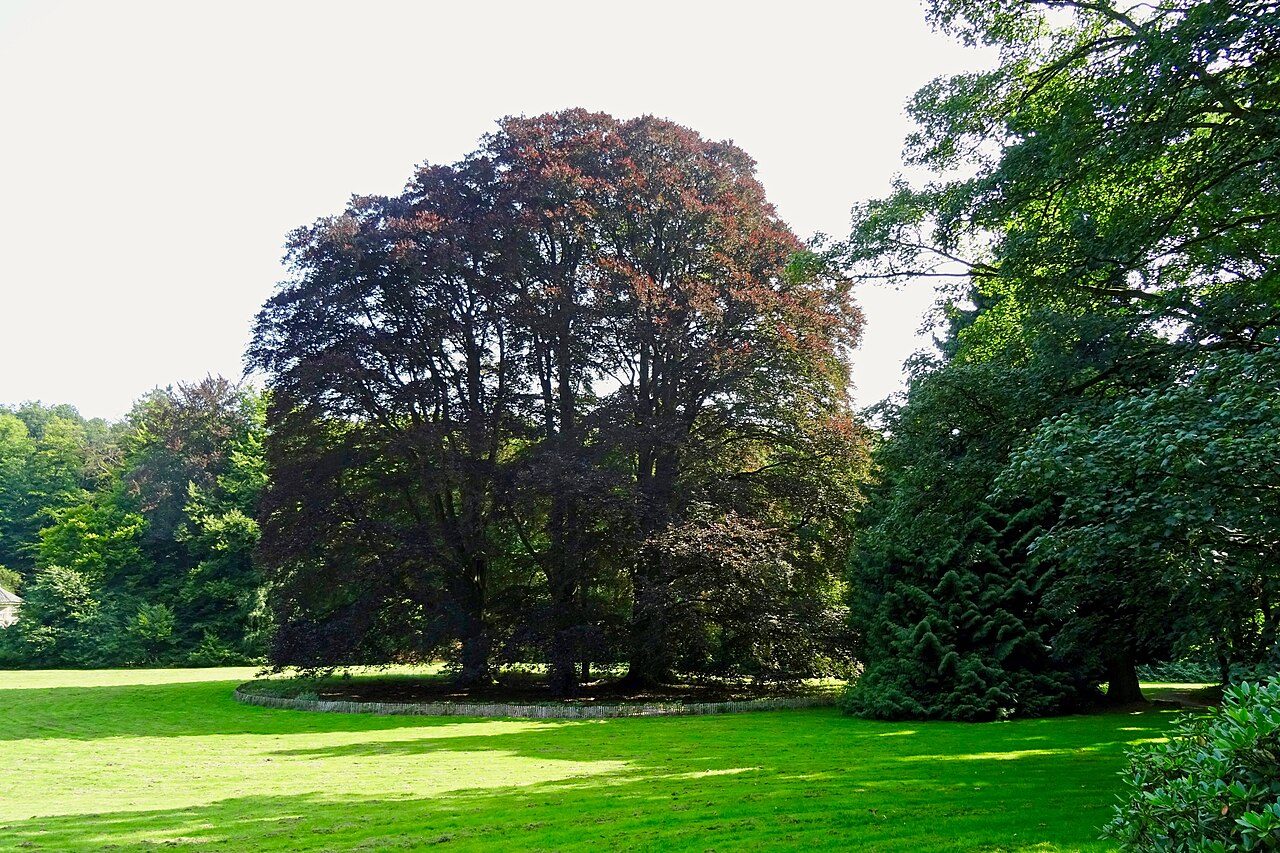
A wooded, rolling estate in northern Arnhem, with quiet paths following the Sint-Jansbeek past ponds and a country house. Marble Greek gods stand between the mirror ponds, with views across the water towards the house.
Gulden Bodem
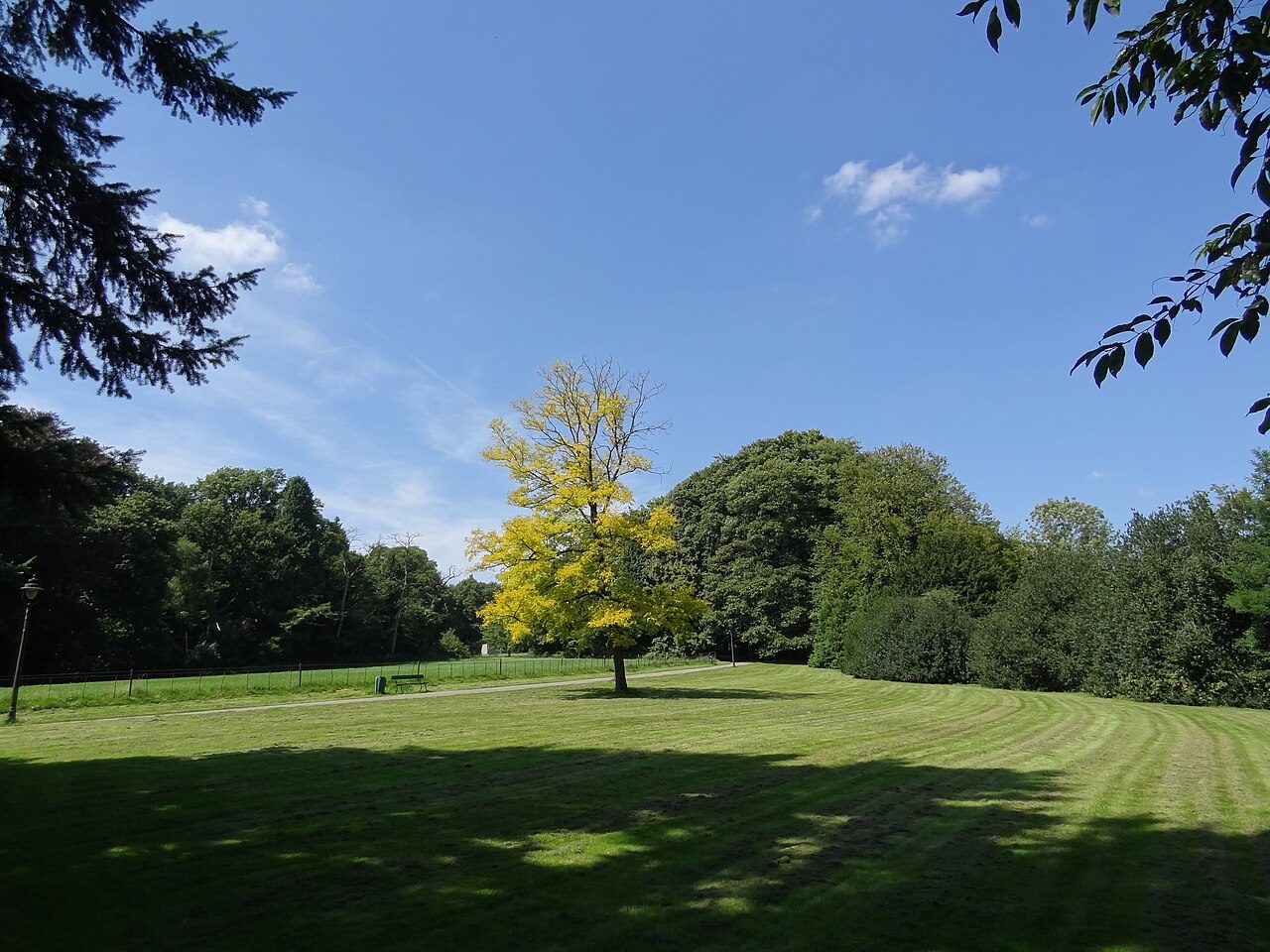
A wooded former country estate in northern Arnhem, with centuries-old sweet chestnuts, a Swiss chalet and a small statue of Paulus the Woodgnome among the trees.
Mariëndaal
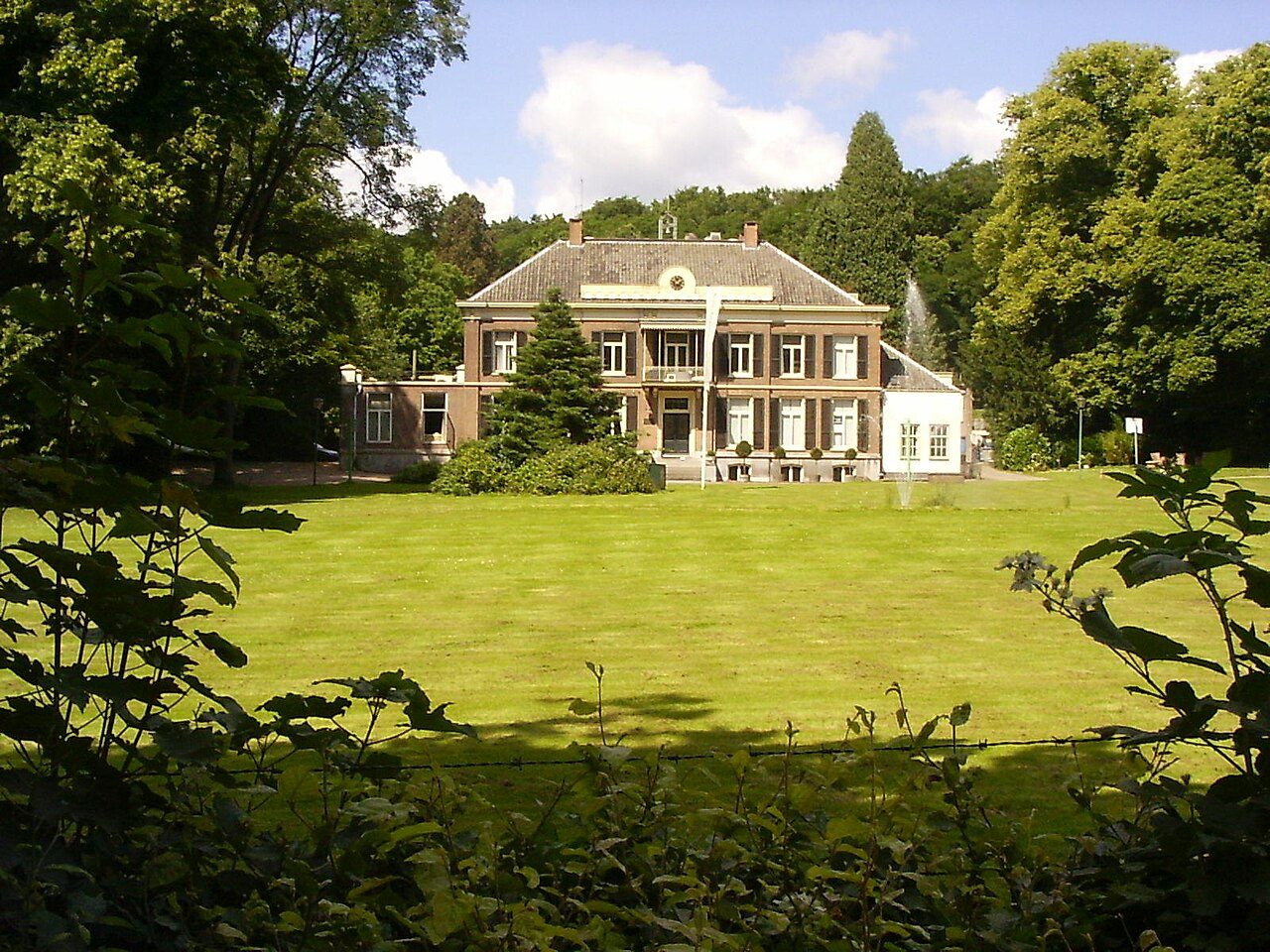
A hilly estate park between Arnhem and Oosterbeek, with wooded slopes, open fields and a stream through the valley. The Groene Bedstee leads beneath a tunnel of clipped beeches planted in 1856.

Arnhem Oosterbeek War Cemetery
A war cemetery with graves of Allied servicemen killed in the Battle of Arnhem and during the liberation, where generations of local children have laid flowers to keep their names remembered.
Huis Zypendaal
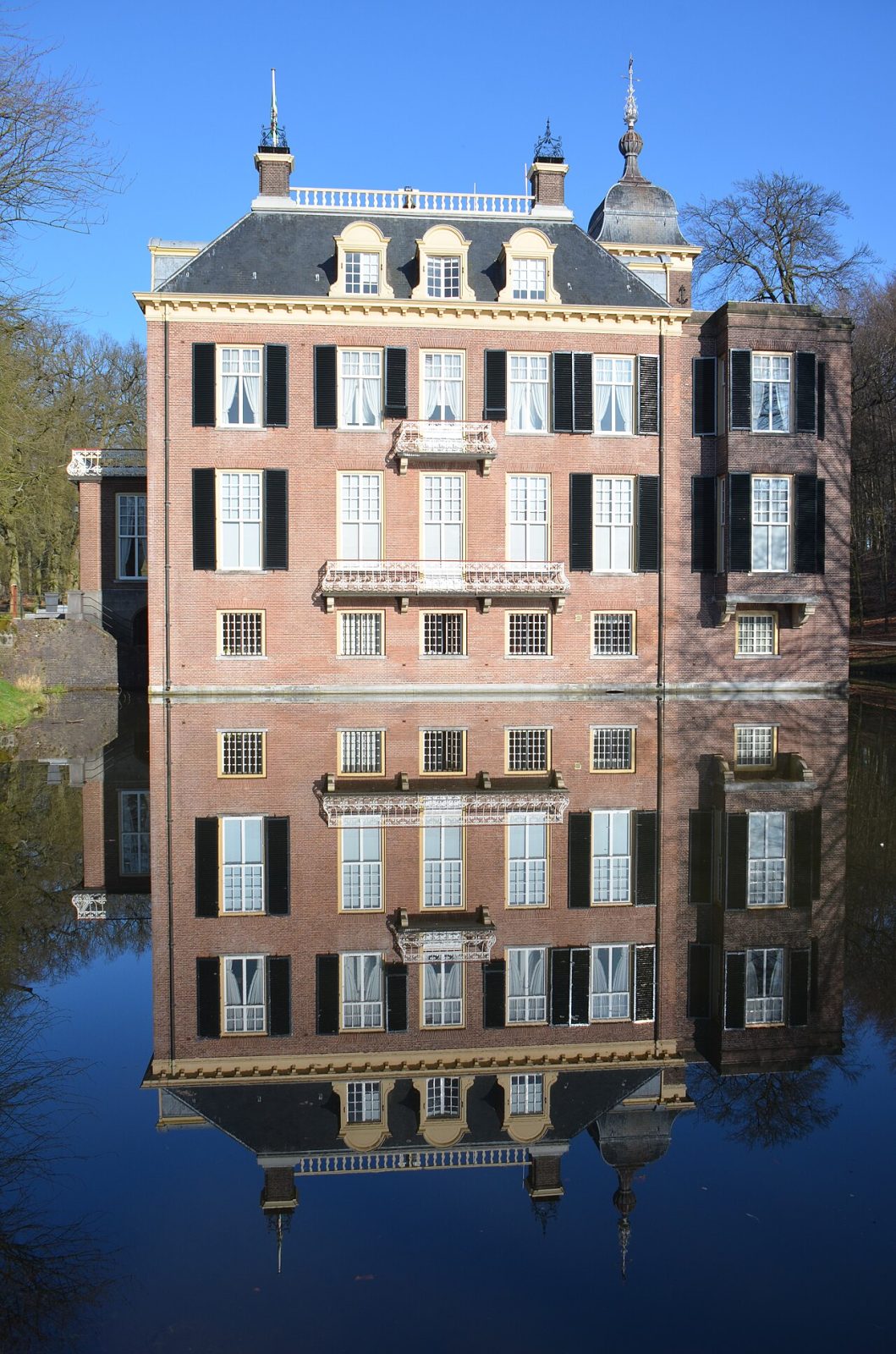
An 18th-century country house in Arnhem’s Park Zypendaal, with a museum displaying Brantsen family portraits and pieces from the original furnishings.
Walk it with a guide or a quest
If you want a story on the way, these walks also live in Arnhem.
 FREE AUDIO TOUR
Four Days at the Bridge
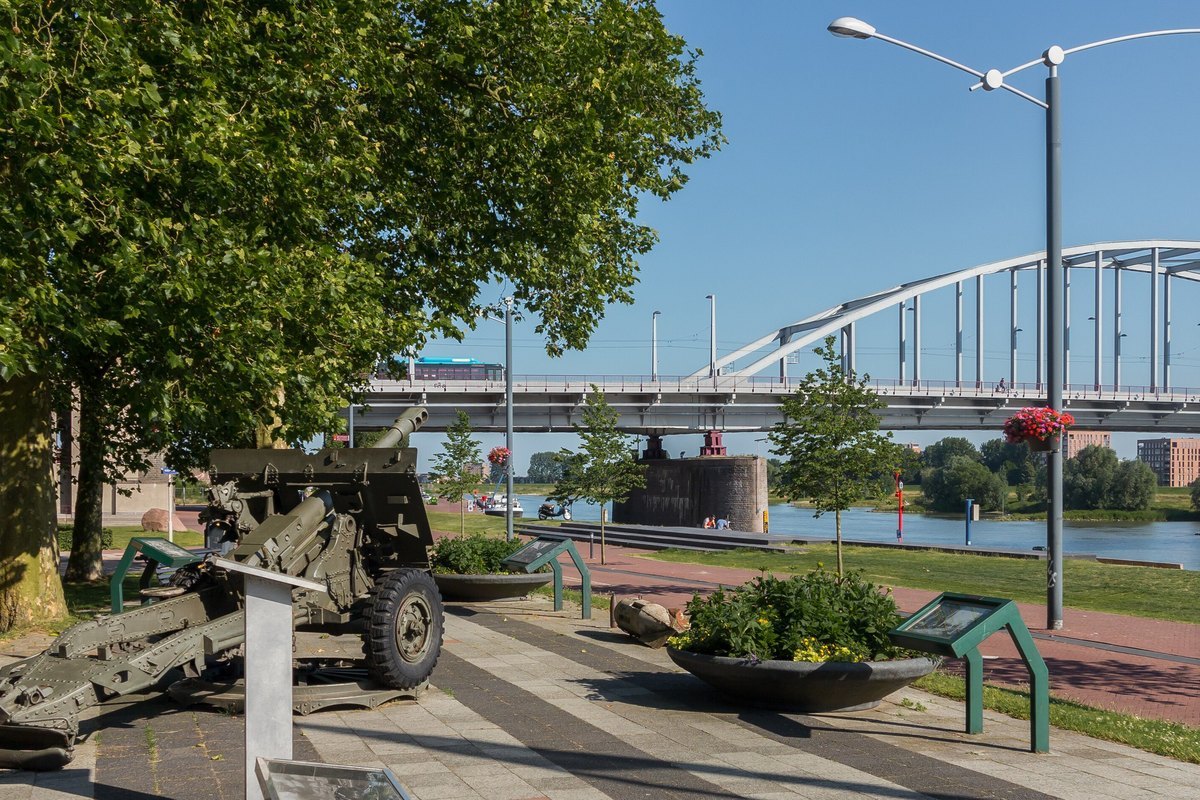
At Arnhem’s John Frost Bridge, British soldiers fought to hold a river crossing while families tried to escape through the same streets. You can stand beneath the approach where people sheltered from gunfire, then look towards the far bank the defenders could not capture.
 CITYQUEST
Arnhem After the Battle
Hunt for traces of Arnhem’s wartime destruction in streets rebuilt after the battle. Real stone memorials and bronze figures hold the clues as you gather letters for a final answer.
 CITYQUEST
The Stone Creature Keeper
Your creature collection is scattered across Arnhem, waiting for you to spot real animals and monsters among the city’s statues and fountains. Hunt for them in the street, fill the keeper’s catalogue and work towards a final answer.