
LANDMARK
Arnhems Oorlogsmuseum 40-45
A Second World War museum in a former school occupied by German soldiers, with weapons, uniforms and dioramas showing the fighting and everyday civilian life under occupation in and around Arnhem.
A school occupied twice over
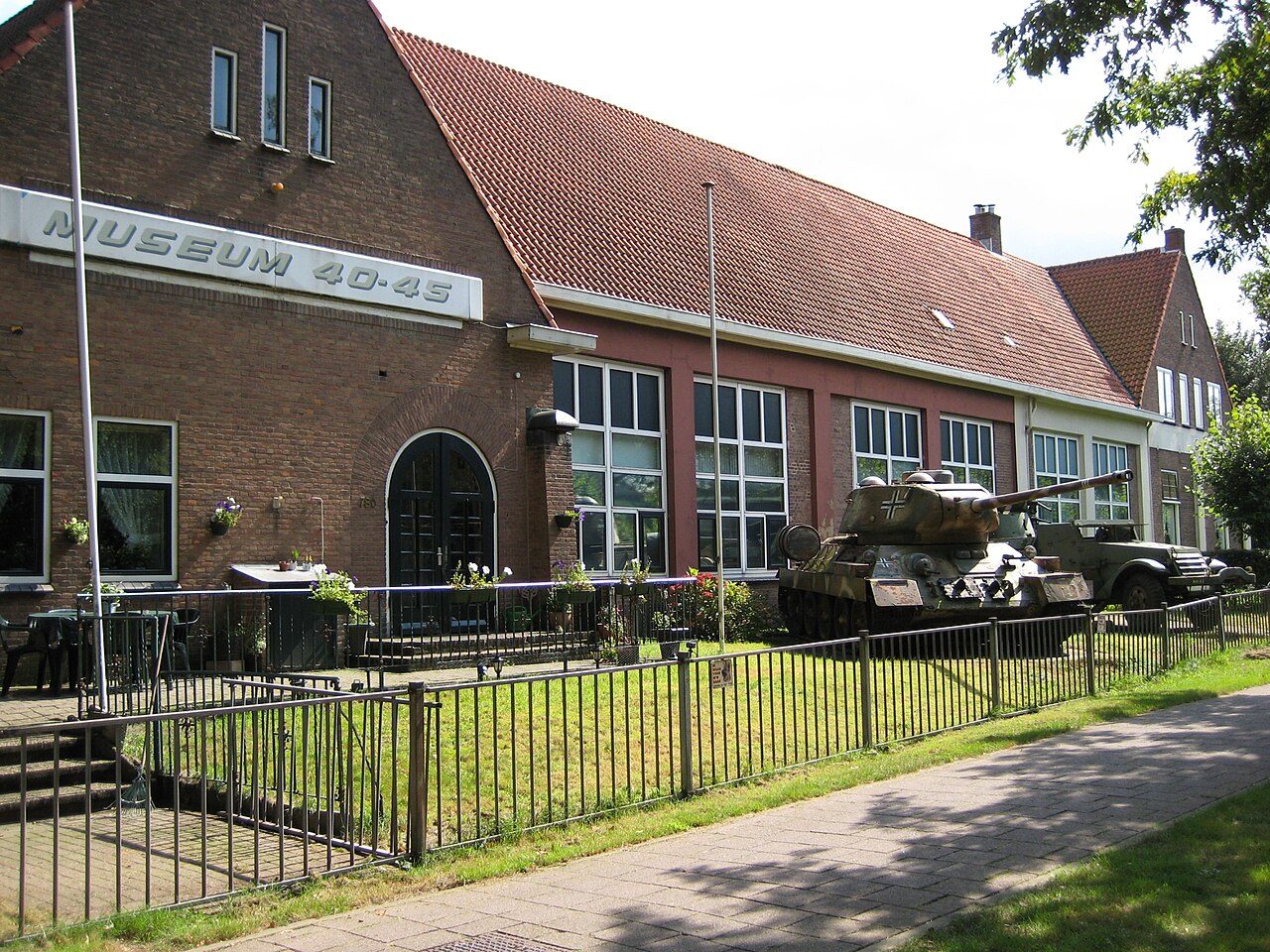
Before Arnhems Oorlogsmuseum 40-45 held wartime objects, its building housed German soldiers. In 1942, German forces requisitioned this village school in Schaarsbergen. Look at the photograph on the Kemperbergerweg façade: it shows a German soldier coming out of the same building. It gives you a direct connection between the collection and the place you are entering.
Eef Peeters founded the museum on 24 May 1994 in the former School met den Bijbel. This is a private collection about the Second World War in and around Arnhem. Unlike the battle-focused Airborne Museum Hartenstein, its scope includes the occupation and everyday civilian life as well as the fighting.
From a tank to a tree trunk
A Soviet T-34 tank stands outside, alongside the museum’s collection of large weapons. Inside, Allied and German weapons, uniforms and documents share space with ration coupons and wartime newspapers. Give those smaller paper objects some attention. They bring the story back from armies and equipment to the practical business of living through an occupation. Dioramas use authentic material to reconstruct wartime scenes.
One of the most unusual objects is a section of tree from Sonsbeek Park, with climbing irons still embedded in it. Peeters played in the tree as a child. An older Arnhem resident later told him that a German sniper had fired from it towards the bridge during the battle. When the tree blew down in the 2000s, the city gave it to the museum. The sniper account is a remembered local story; the ironwork is something you can examine for yourself.
Read the uniforms closely
By 2020, Prince Bernhard’s wartime service dress had been placed in a display case here. Look for two different insignia on the Canadian-green uniform: a Dutch air-force emblem and an RAF pilot’s wing. Wartime photographs show Bernhard wearing it. Those details make this more than an anonymous uniform on a figure.
The polar bear used as the museum’s emblem has a military connection too. It represents the Polar Bear Division, the British formation that helped liberate Arnhem while operating under Canadian command. Between the badges on the clothing and the emblem associated with the museum, there is quite a lot to read without opening a document.
Objects with difficult histories
Peeters also collects material connected with Nazism and Dutch collaboration. In 2026, a bronze bust of Dutch Nazi leader Anton Mussert, weighing nearly 50 kilograms, went on display after being found beneath a basement floor in The Hague. It stands with NSB uniforms and propaganda in the section Peeters calls his “wrong corner”.
Another object has drawn a more physical response. In a 2022 report, a sofa attributed to Adolf Hitler stood behind a barrier. Peeters said it came from Obersalzberg and that some visitors had spat on it. The attribution matters: this is the provenance given by the collector, not something to silently turn into certainty. These displays ask you to look closely at both the objects and the claims attached to them. Their uncomfortable histories are part of what this museum puts in front of you.
Things to know
- Head to the former village school on Kemperbergerweg in Schaarsbergen.
- Before entering, look for the wartime photograph on the façade.
- Allow time for the documents and civilian objects, not just the weapons.
- Look closely at the climbing irons in the Sonsbeek tree section.
- Opening hours and prices can change. Check the official website before you go. Official website
What people say
Related spots
More things to do in Arnhem ›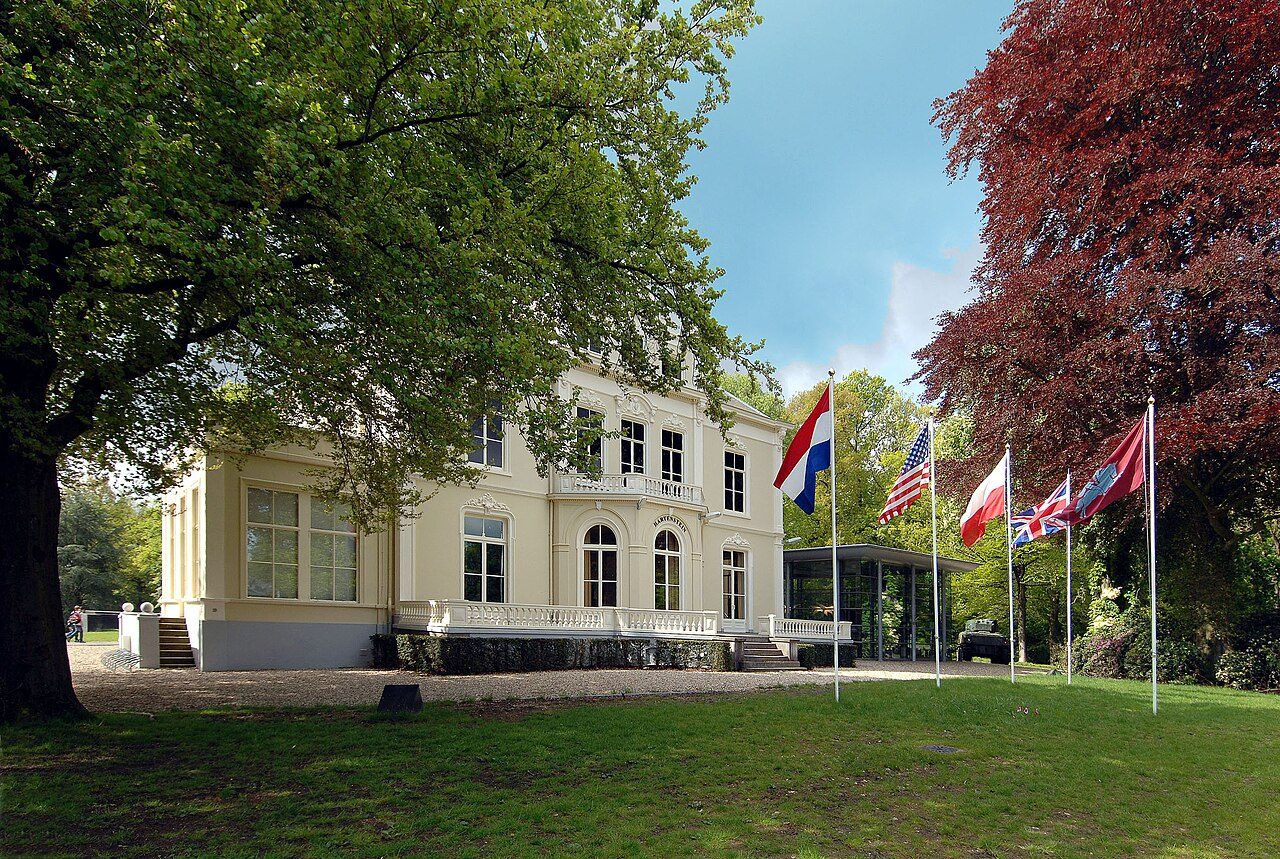
Airborne Museum Hartenstein
A former hotel that served as British headquarters during the Battle of Arnhem, now a museum with weapons, uniforms and personal stories of soldiers and civilians caught in the fighting.
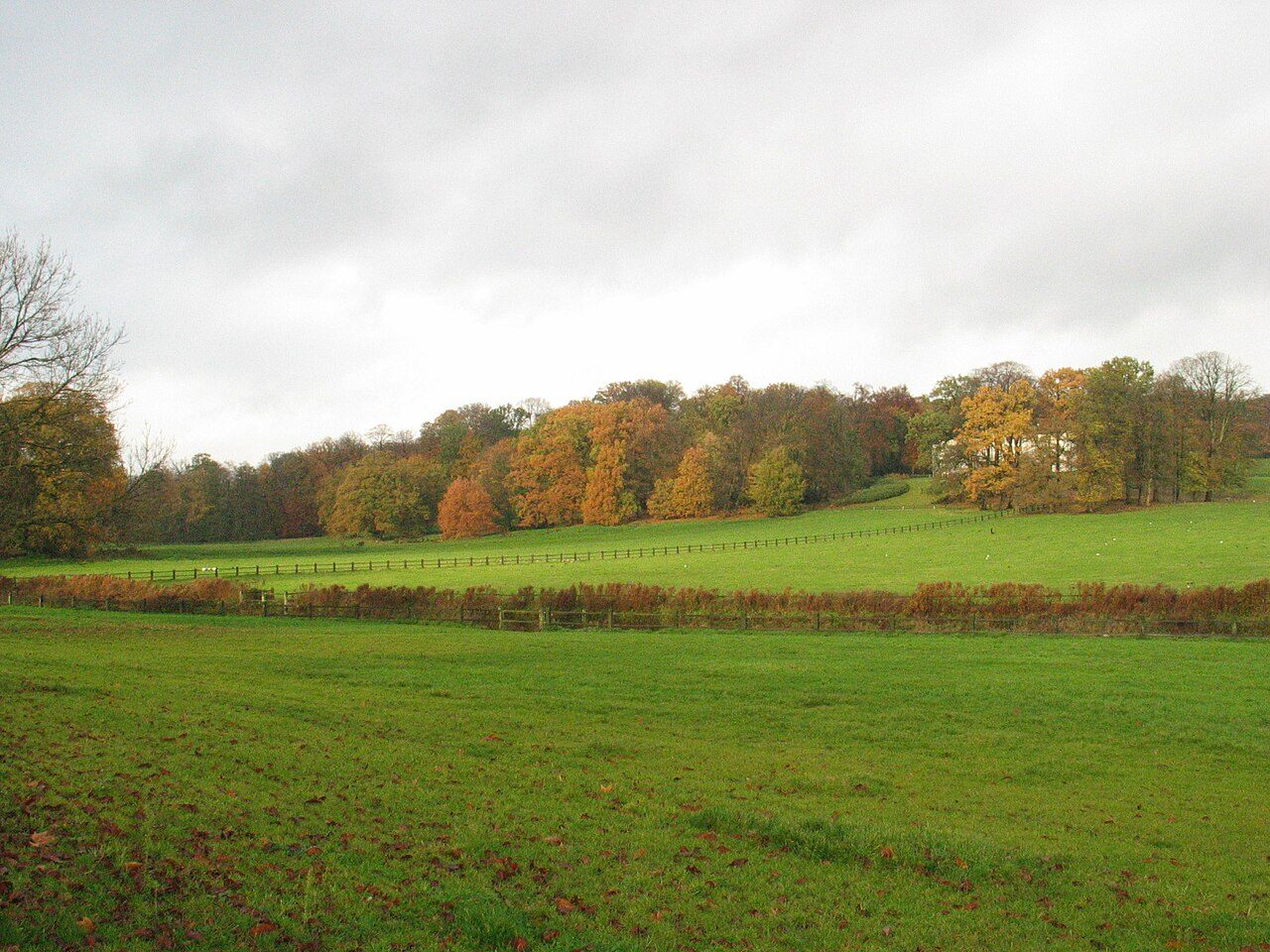
Sonsbeek Park
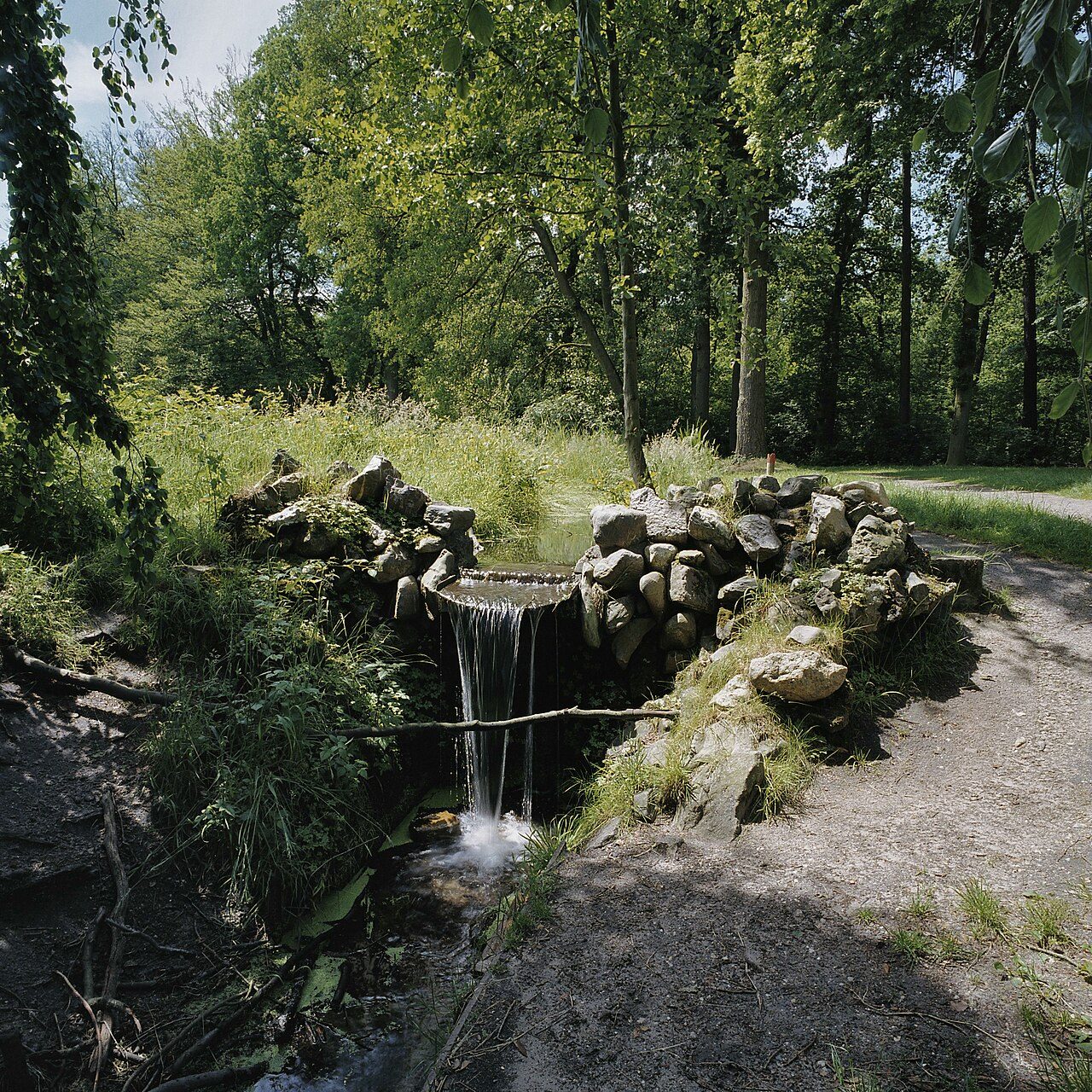
A park in Arnhem with open meadows, wooded slopes and a watermill, where a grotto beneath the waterfall lets you cross the stream and look out through the falling water.
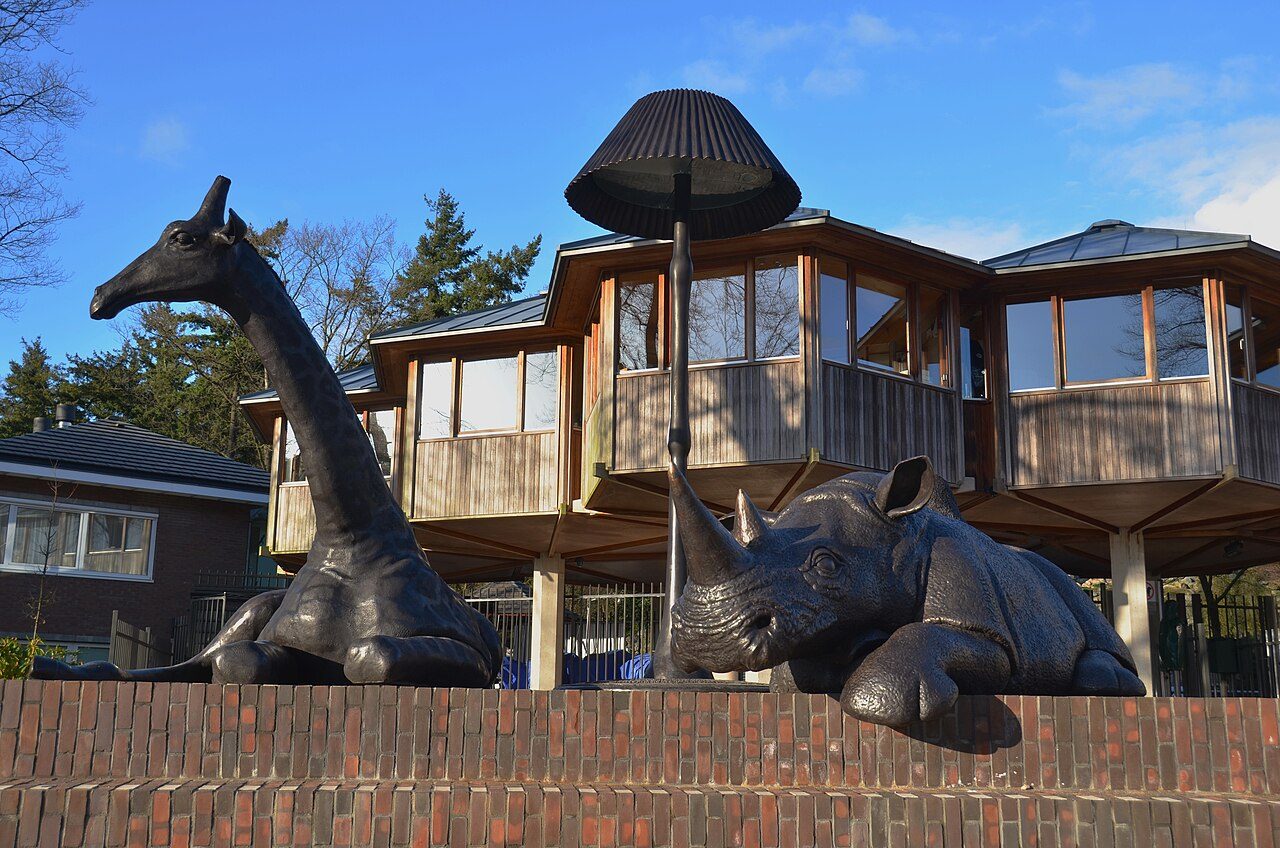
Royal Burgers' Zoo
A zoo on Arnhem’s northern edge, with recreated rainforest, desert and mangrove habitats to walk through, plus sharks and a living coral reef in Burgers’ Ocean.
Warnsborn
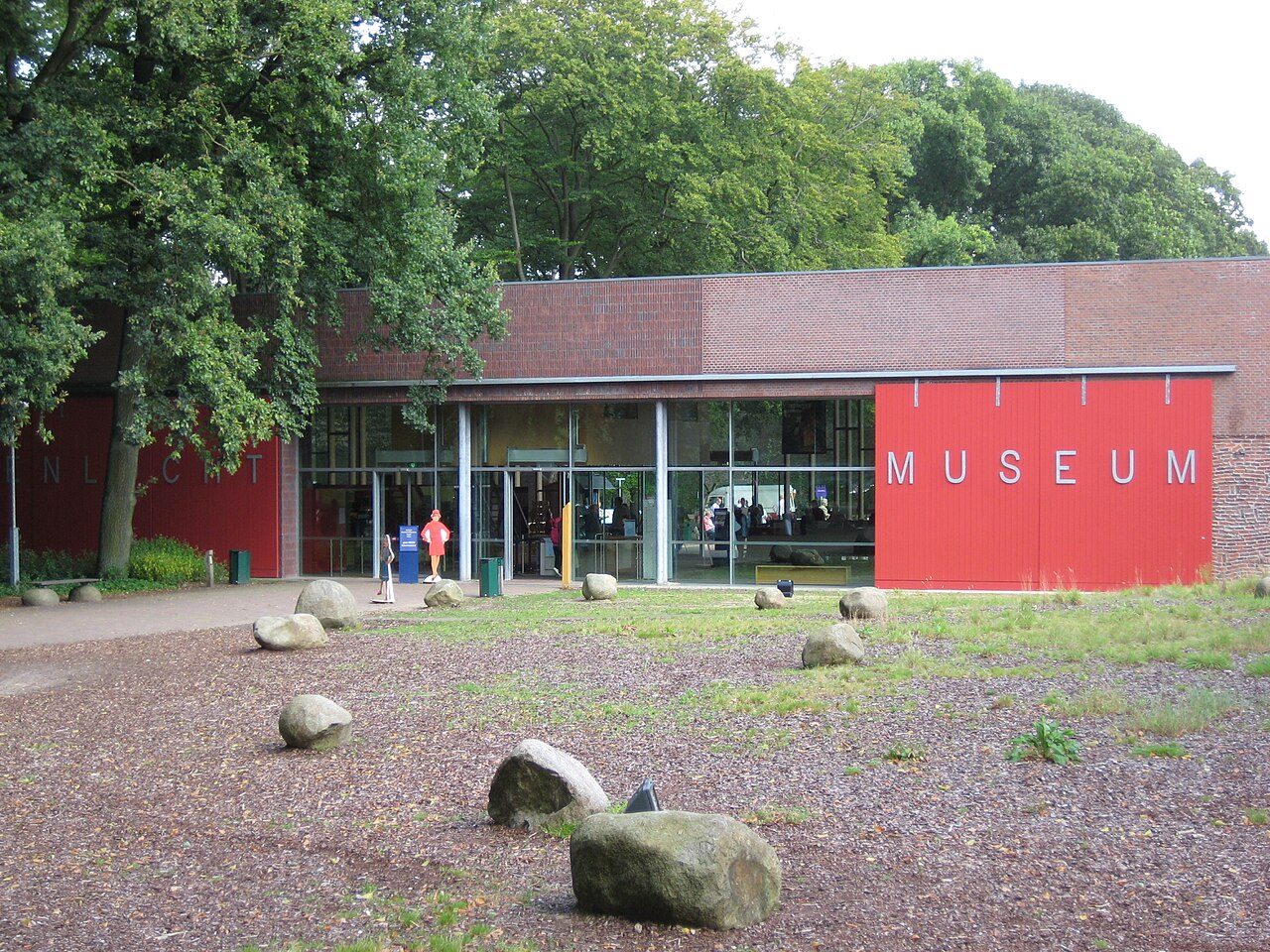
An estate on Arnhem’s northwestern edge, with walks from formal garden terraces into woods, past ponds, heath and eleven prehistoric burial mounds.
Netherlands Open Air Museum
An open-air museum of historic Dutch houses, farms and mills, where furnished rooms, craft demonstrations, a working brewery and heritage trams bring everyday lives and working traditions into view.
Lichtenbeek
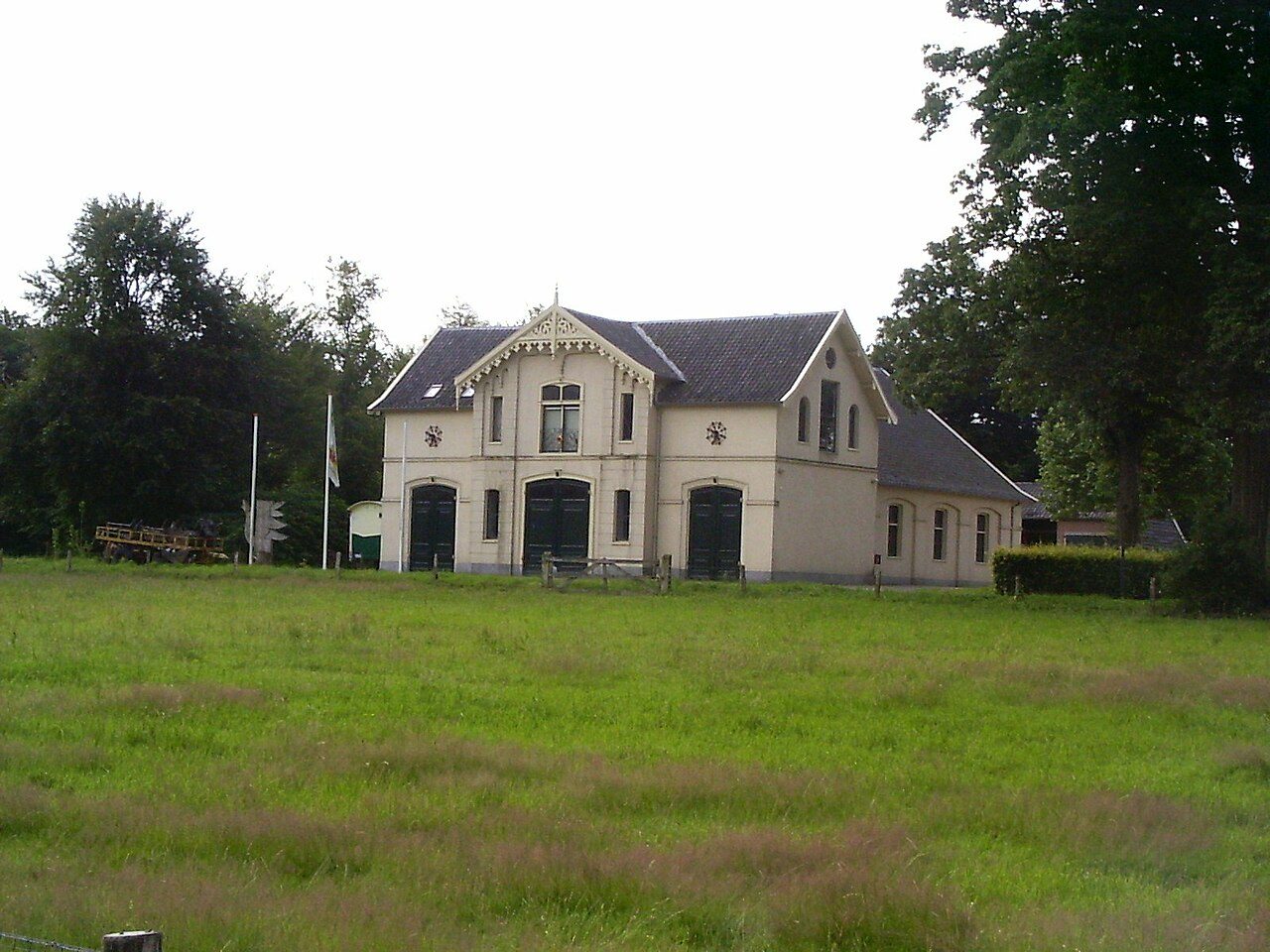
An estate of woods, meadows and farmland between Arnhem and Oosterbeek, with surviving entrance columns, a coach house and an artificial hill enclosed by a beech hedge.
Walk it with a guide or a quest
If you want a story on the way, these walks also live in Arnhem.
 FREE AUDIO TOUR
Four Days at the Bridge
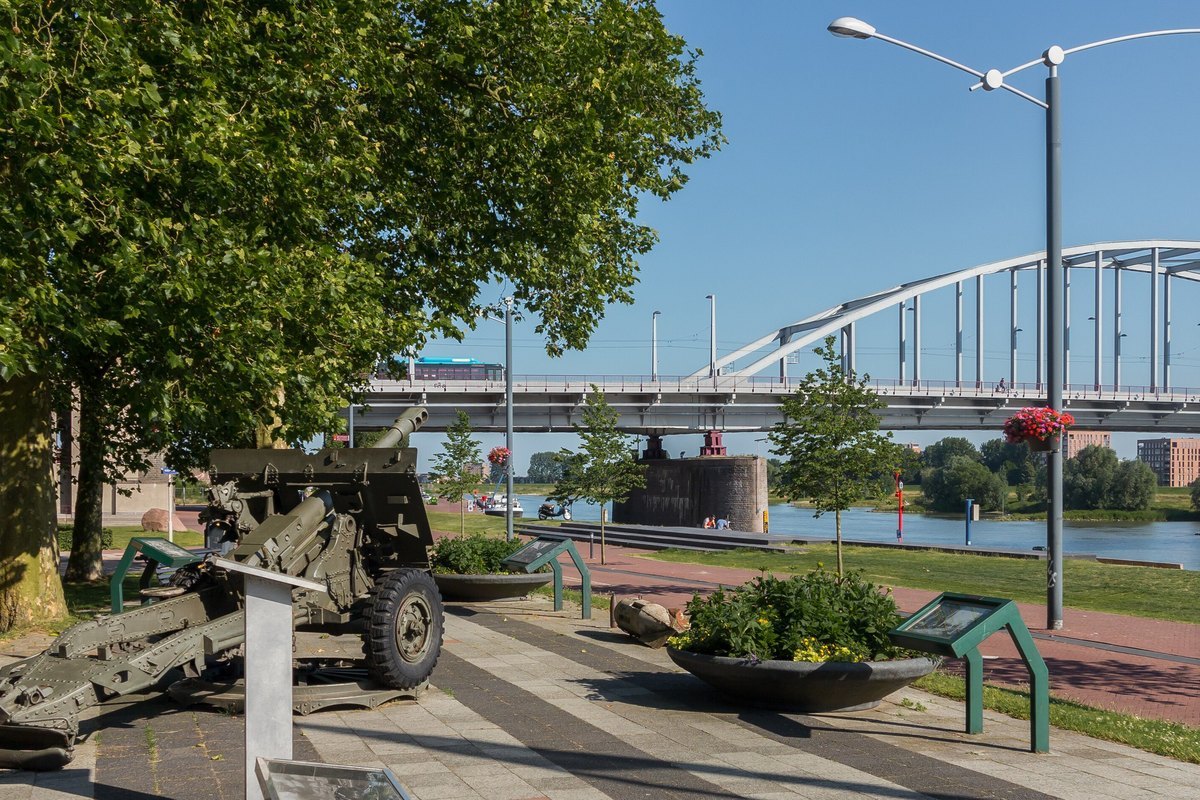
At Arnhem’s John Frost Bridge, British soldiers fought to hold a river crossing while families tried to escape through the same streets. You can stand beneath the approach where people sheltered from gunfire, then look towards the far bank the defenders could not capture.
 CITYQUEST
Arnhem After the Battle
Hunt for traces of Arnhem’s wartime destruction in streets rebuilt after the battle. Real stone memorials and bronze figures hold the clues as you gather letters for a final answer.
 CITYQUEST
The Stone Creature Keeper
Your creature collection is scattered across Arnhem, waiting for you to spot real animals and monsters among the city’s statues and fountains. Hunt for them in the street, fill the keeper’s catalogue and work towards a final answer.