
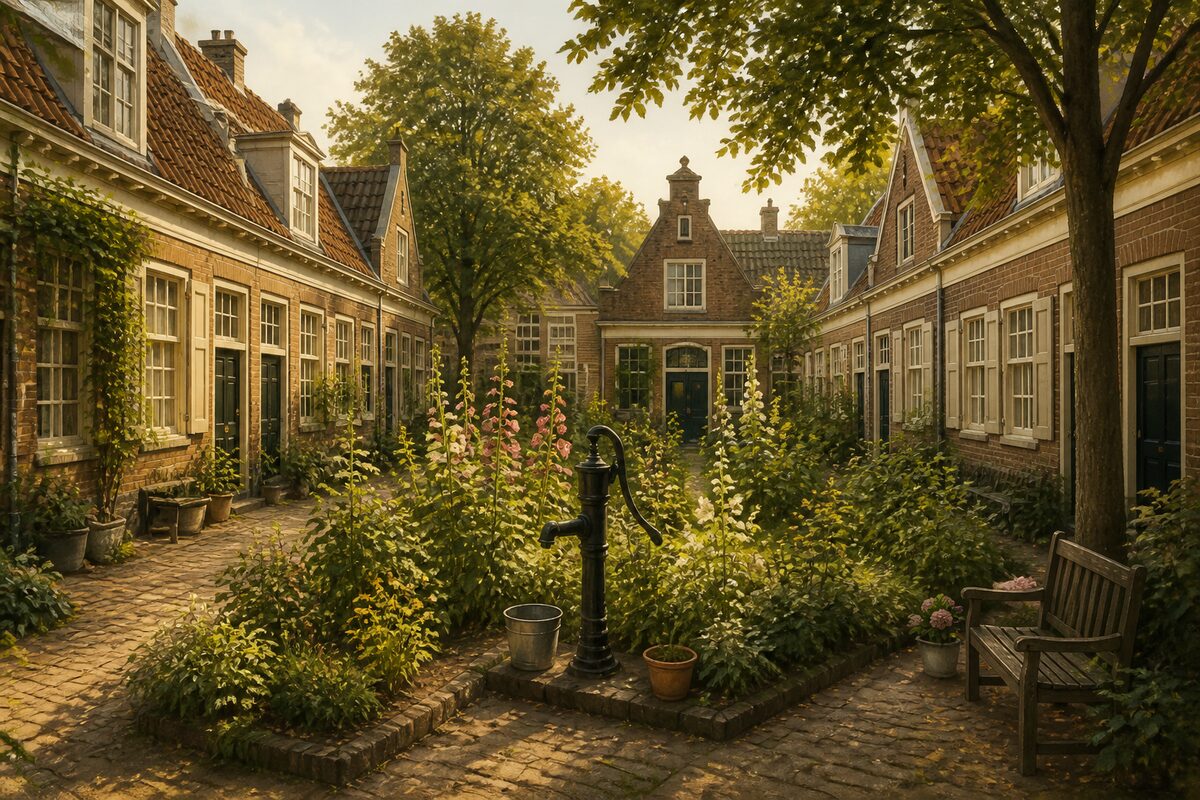
 Photo: DiscoverAround
HIDDEN COURTYARD
Sint-Andrieshofje
Behind a plain door on the Egelantiersgracht, a passage lined with blue Delft tiles leads into one of Amsterdam's oldest almshouse courtyards. Only the Begijnhof is older.
Behind the canal door
In 2014, art historian Annemarie Vels Heijn reported in Ons Amsterdam that residents of Sint-Andrieshofje were forbidden to hang washing outside. A woman also needed written permission from the board for a man to stay overnight. How strictly that second rule was followed, the magazine left open. This quiet courtyard is still a place where women live, with traditions that reach well beyond its old brickwork.
Look for the name above a plain door on the Egelantiersgracht. Behind it, a passage lined with blue-and-white Delft tiles leads into the garden. That change from canal street to enclosed courtyard is worth slowing down for. Opened in 1617, this is one of Amsterdam’s oldest almshouse courtyards. Only the Begijnhof is older.
A bequest and a claimed ancestor
In 1614, cattle farmer Ivo Gerritsz left almost his whole fortune to provide homes for elderly Catholic women. His nephew, Jan Jansz Oly, supplied the land. Catholic institutions were forbidden in Protestant Amsterdam at the time, and the hofje was established without a founding charter.
The land came with a much older story. According to a report in Jordaan & Gouden Reael in 2013–2014, Oly gave it as penance for a crime committed by his claimed ancestor, Gerard van Velsen. In 1296, Van Velsen killed Count Floris V. The family connection is a reported claim, rather than something to take as proven, but it gives this modest courtyard an unexpected link to medieval politics.
A Catholic chapel opened here in 1623. It was later demolished and replaced by homes. Its disappearance was not quite complete: when Corrie Hoogland came to view her future home before moving in during 1983, she found remnants of the chapel’s stained-glass windows lying on the grass.
Bread, prayers and penalties
The original support went beyond housing. Residents received peat, linen, beans and groats, with extras on feast days. These provisions were treated as a privilege, not a right.
In the late 1600s, regent Anna de Magistris insisted on rules of virtue. Women received a loaf each Tuesday, but could be fined for coming back after closing time or missing Monday prayers. Set beside the rules reported in 2014, this makes the hofje’s history feel less distant. Shelter came with supervision.
Since 1699, the courtyard has been managed by the same foundation as the Begijnhof. The houses are still rented to women living alone. Keep that residential purpose in mind as you look around.
Peace in carved stone
Pause at the tiled corridor, then look for the garden’s 18th-century water pump. Find the carved stone showing Christ and bearing the words “VREDE SY MET V”: “Peace be with you.” Like the rescued examples on the gable-stone wall in Sint Luciënsteeg, it rewards a closer look.
This stone once stood above the canal entrance. It was moved in the late 19th century. After permission for cleaning was granted in 2005, restorer Wil Abels used surviving traces of colour to repaint it. What you see is not simply bare old carving, but colour recovered through careful observation. Look at the figure and lettering, then let your attention settle back on the small garden. Keep voices low and cameras away from residents’ windows.
Things to know
- Look for the name above the entrance on Egelantiersgracht.
- Allow about 15 minutes for the passage and courtyard.
- Keep your voice low; the houses are occupied.
- Photograph the tiles, pump and carved stone rather than residents’ windows.
- Opening hours and prices can change. Check the official website before you go. Official website
What people say
Related spots
More things to do in Amsterdam ›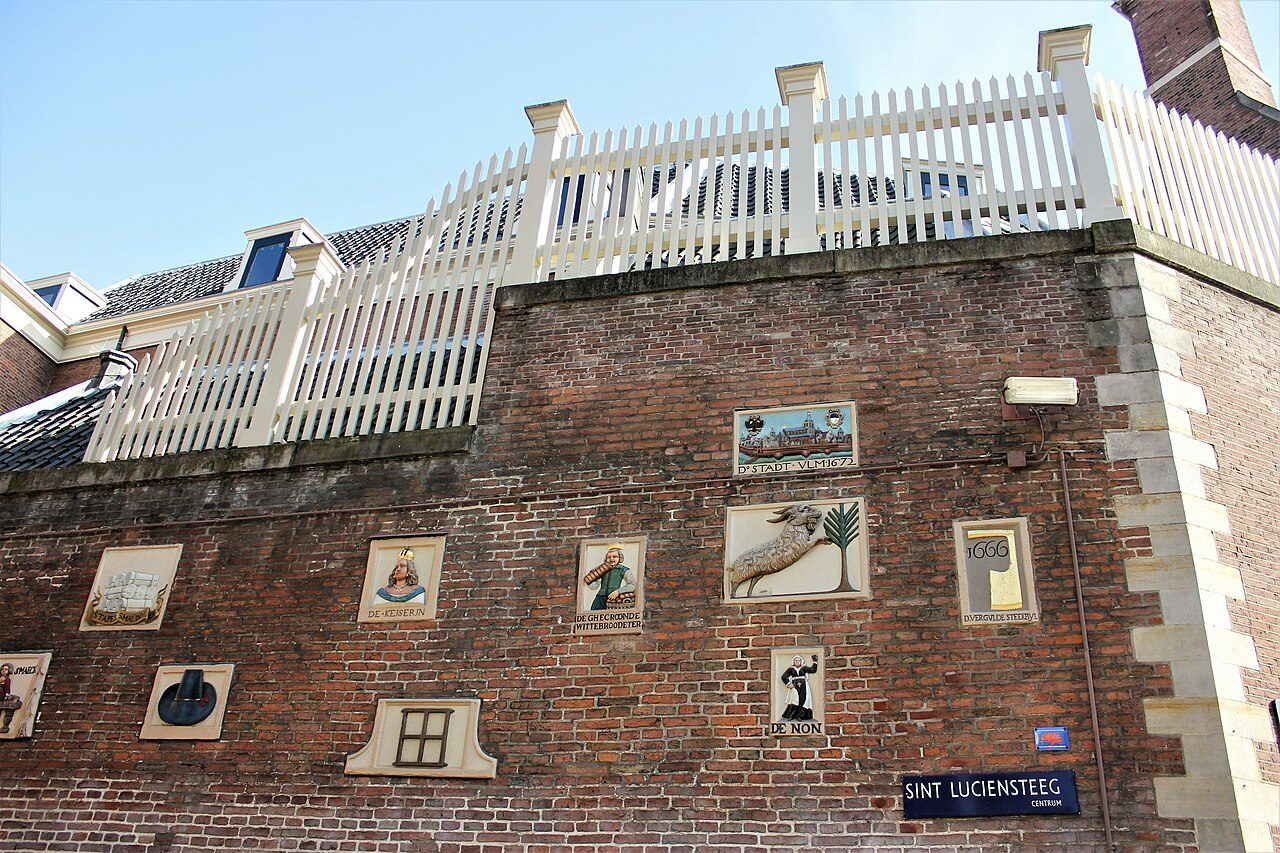
Gable stone wall (Sint Luciënsteeg)
A whole wall of rescued gable stones, the picture house numbers Amsterdam used before street numbers.
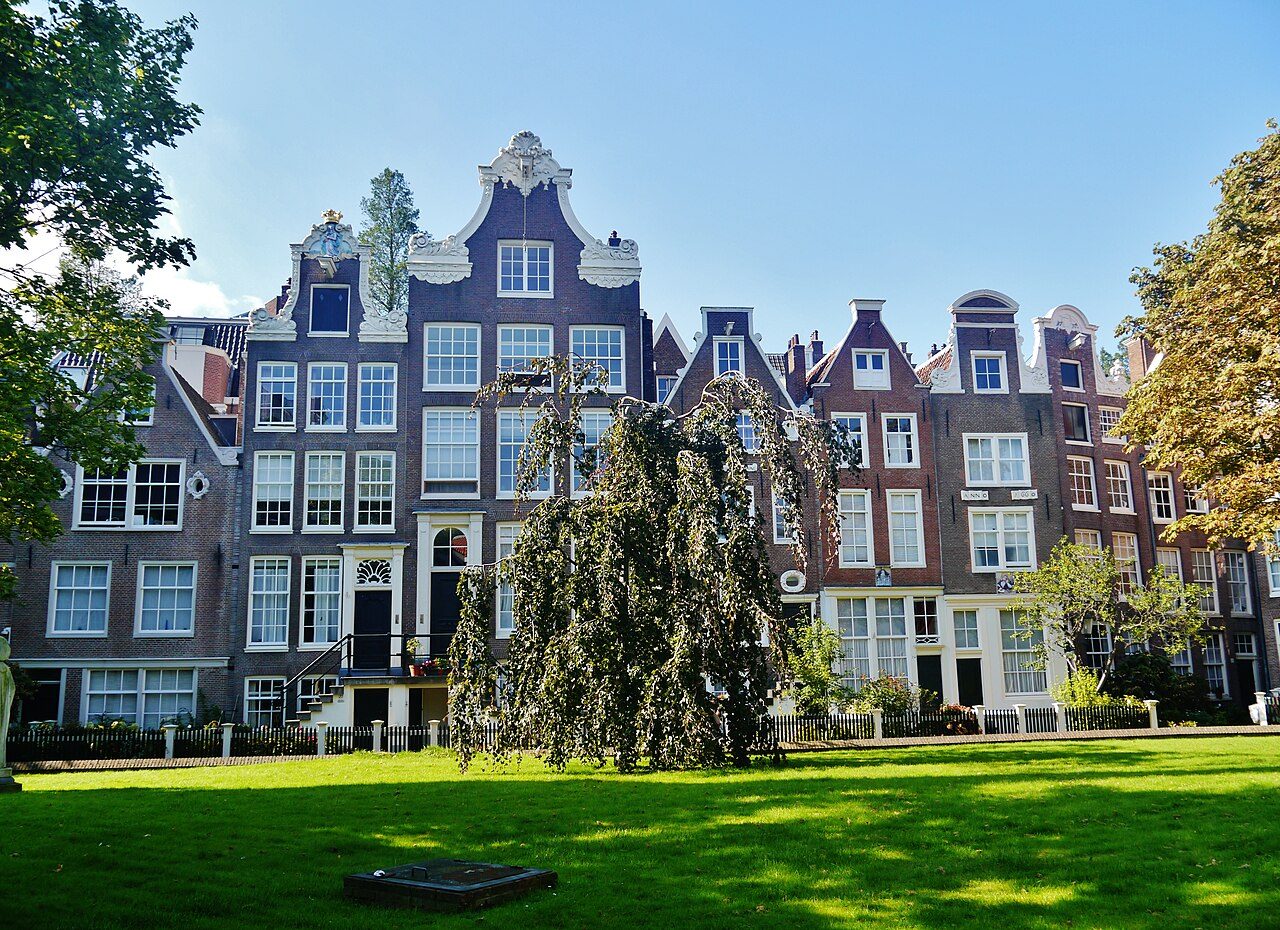
Begijnhof
A walled medieval courtyard in the middle of the old centre, home to single women for more than 600 years. Step through the gate on the Begijnensteeg and the city noise drops away.
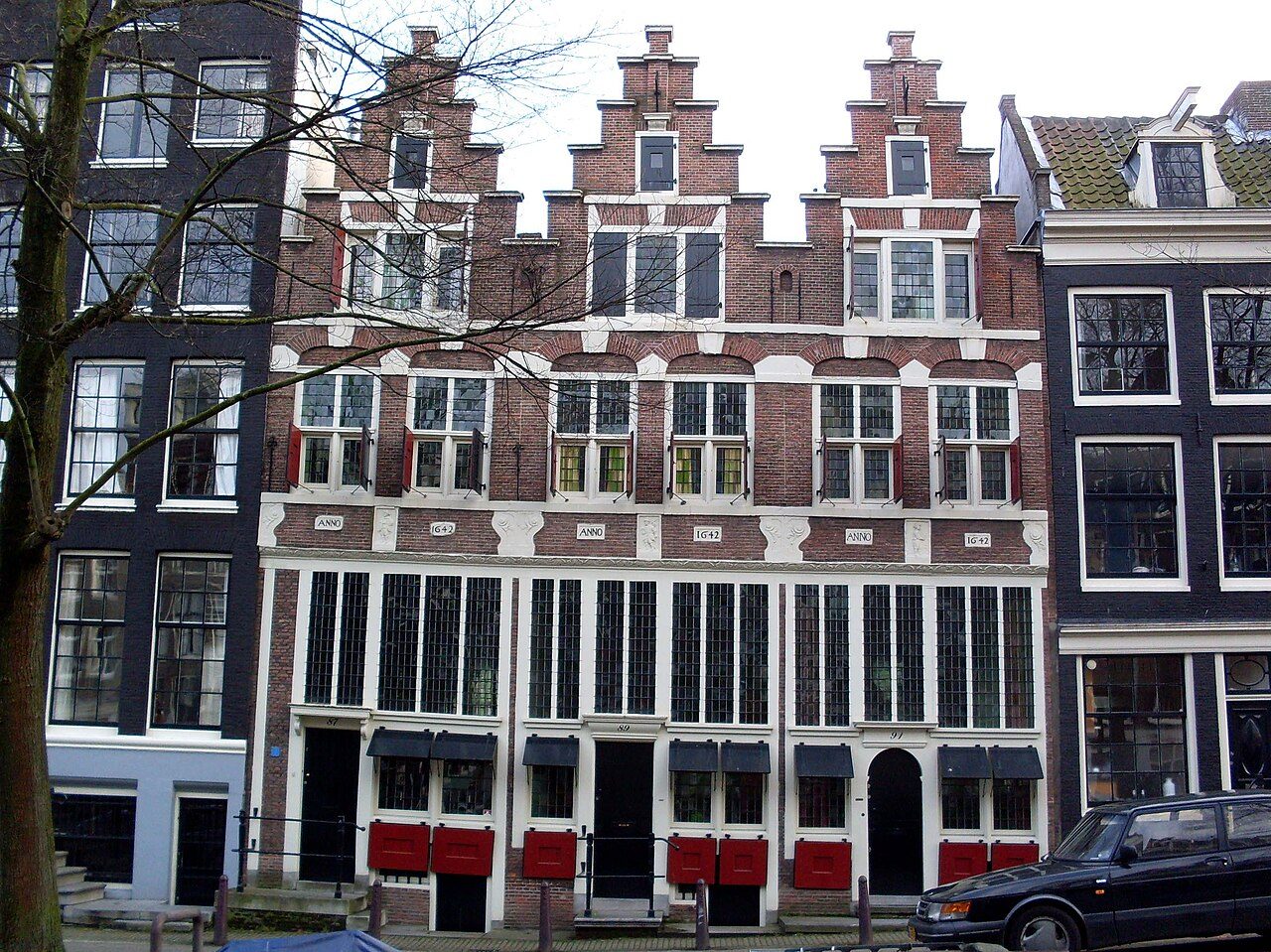
De Drie Hendricken
Three 1642 houses on the Bloemgracht with gable stones of a townsman, a farmer and a sailor.
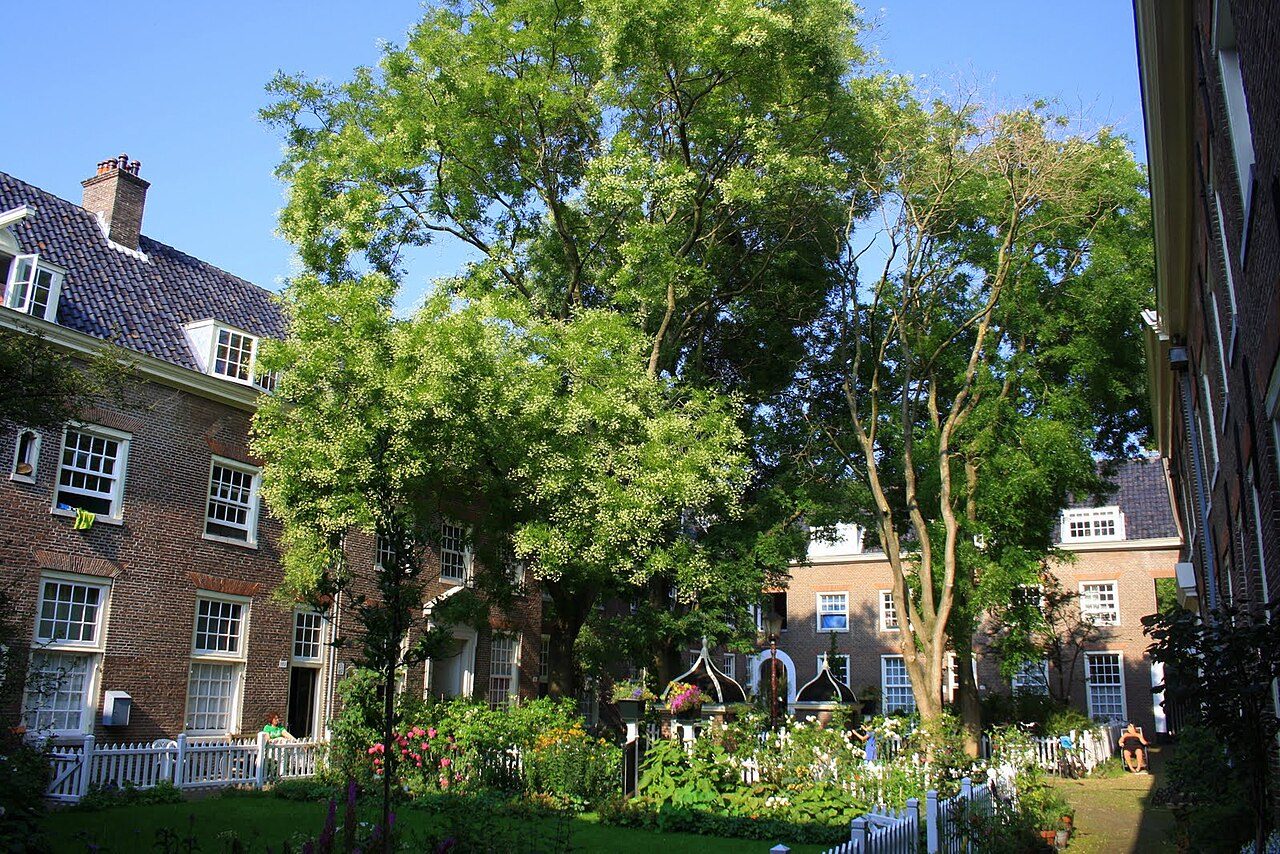
Karthuizerhof
A large 17th-century almshouse courtyard in the Jordaan, built for widows on the grounds of a vanished monastery. Most people in the street outside never notice the gate.
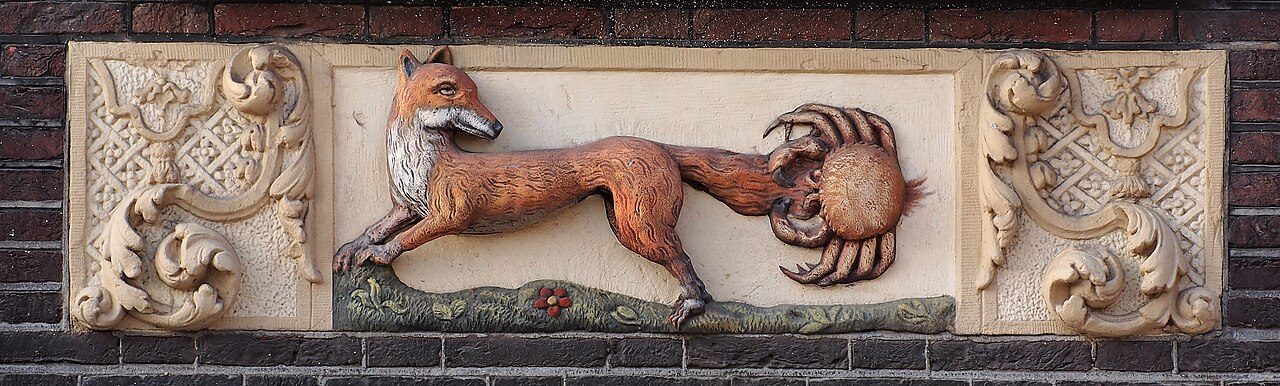
Noordermarkt
A Jordaan square with Saturday organic produce and second-hand finds, a Monday flea market and a powerful wartime memory.
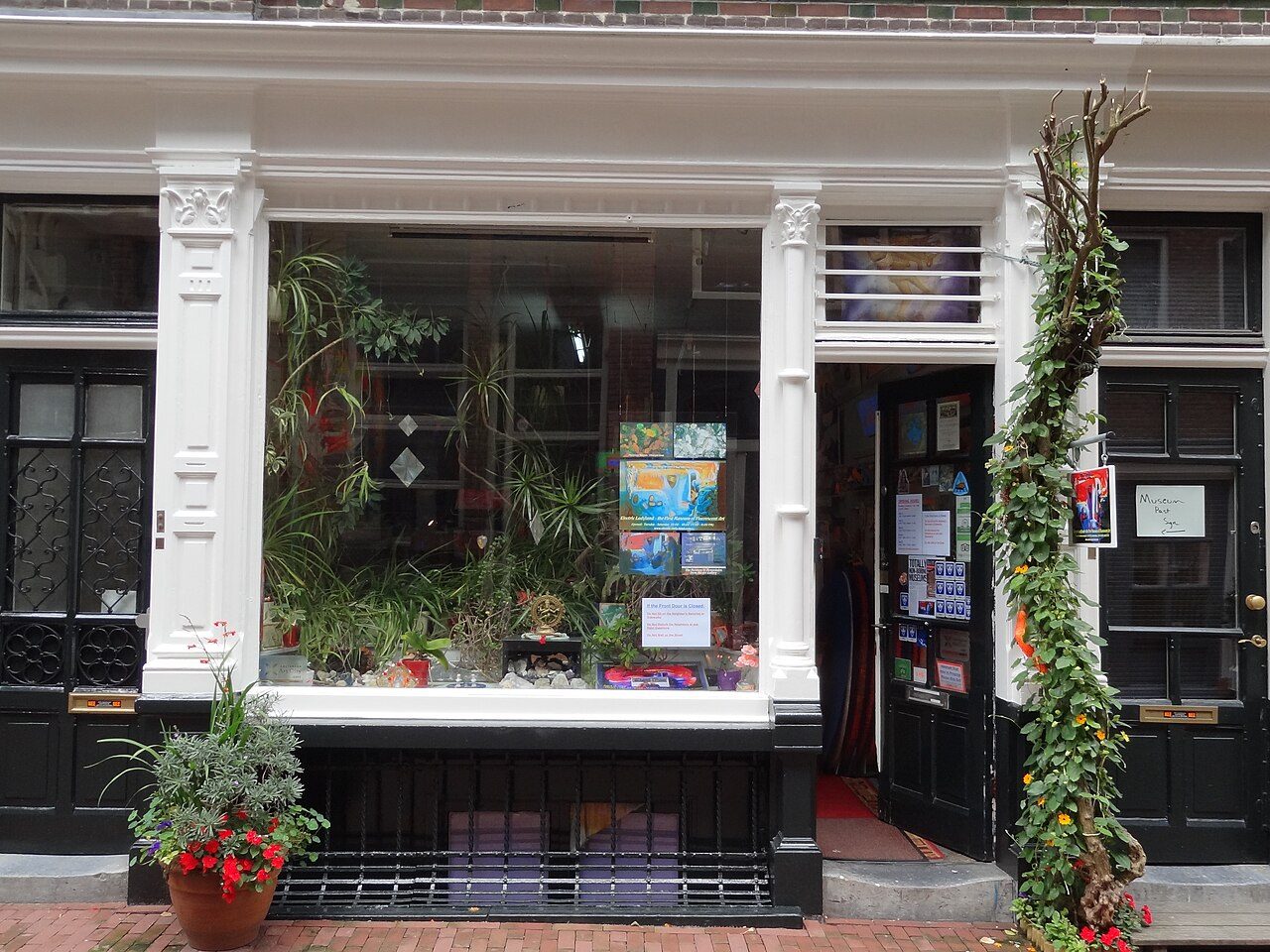
Electric Ladyland
The world's first museum of fluorescent art, in a Jordaan basement.
Tours and quests that pass here
These walks have a stop a few minutes from Sint-Andrieshofje. Free, on your phone, start any time.
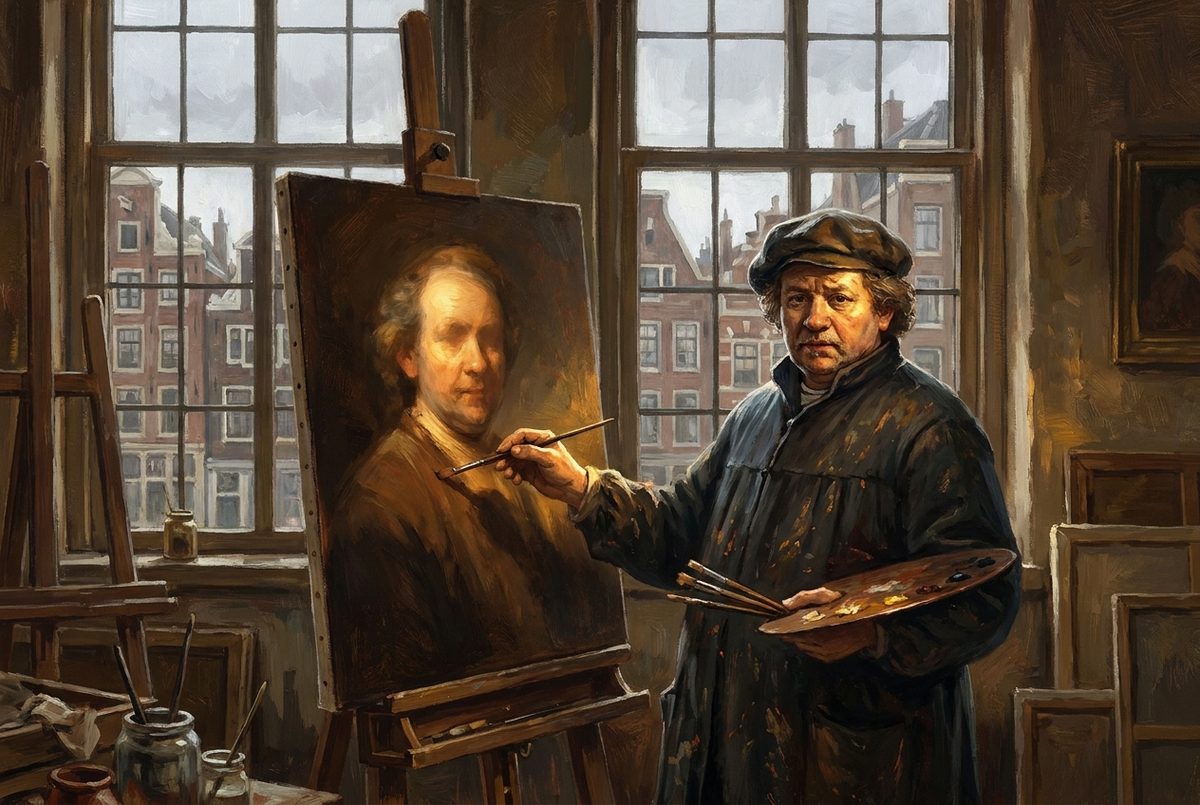 FREE AUDIO TOUR
In Rembrandt's Footsteps
The painter of The Night Watch lived and worked in Amsterdam, and his house is still standing. From the early 1630s until his death in 1669, Rembrandt made his life in streets you can walk today.
 CITYQUEST
The Canal Cipher
A merchant’s missing fortune is waiting to be traced through Amsterdam’s canals in The Canal Cipher. Follow his coded will, gather clues and work out a final answer to claim the treasure.
 FREE AUDIO TOUR
Amsterdam in a Day: Highlights Walk
Amsterdam’s canals and grand houses tell you how a trading city grew rich, but that is only half the story. If you have one day in Amsterdam, spend it on the streets where merchants, workers and people in hiding lived within walking distance of each other.