
LANDMARK
Scheepvaarthuis
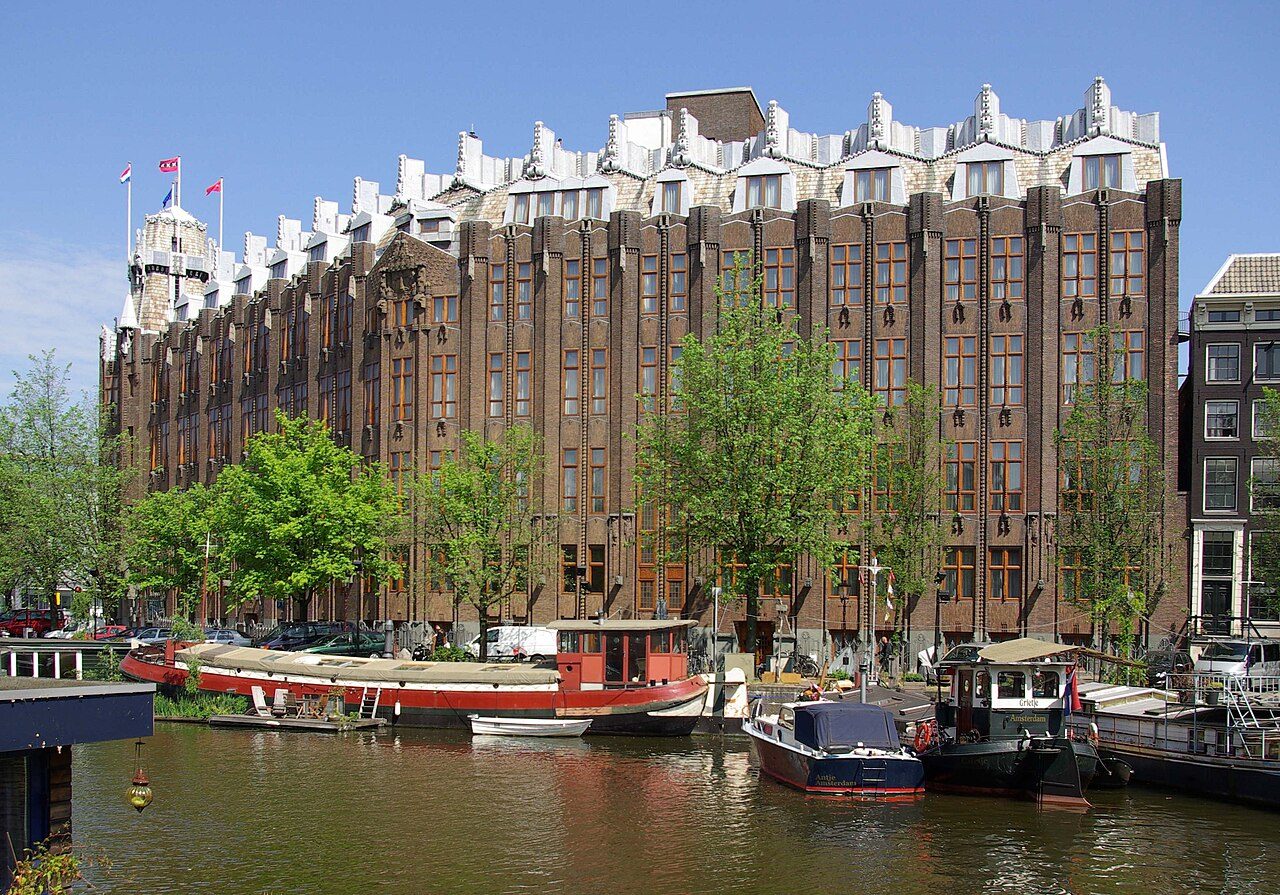
The 1916 shipping house, a sea-themed Amsterdam School masterpiece, now a hotel; the lobby can be visited.
A shipping house built to impress
Six shipping companies commissioned the Scheepvaarthuis in 1912. Their shared headquarters, dating from 1916, made the sea part of the building itself. Look up inside and you find shipping routes and zodiac signs in stained glass, rather than an ordinary office ceiling. This is an Amsterdam School building designed to make an impression, now occupied by the Grand Hotel Amrâth Amsterdam.
It is worth slowing down here rather than treating it as another large hotel. The sea-themed design belongs to the companies that worked here, not to a later hotel makeover. Where the Oost-Indisch Huis tells an earlier chapter of Amsterdam’s shipping business, this building brings that story into the twentieth century.
The directors’ door and the world overhead
Start by looking at the grand main entrance. In the shipping-company days, this door was reserved for directors. It was an architectural statement with a practical rule behind it: your position in the company determined whether you could use it.
NRC reported in 2014 that the directors’ boardrooms, at the building’s prow, had become hotel suites. Guests could still sit on original chairs. That survival matters here. The building has changed its business, but not every object has lost its original setting.
Inside, look up for glazier Willem Bogtman’s stained-glass skylight. Its design draws on seventeenth-century world maps, setting shipping routes alongside zodiac signs. Give yourself time to distinguish the routes from the celestial imagery. Like the Sint Olofskapel, another historic building incorporated into a hotel, the Scheepvaarthuis rewards attention to what the new use has preserved.
Secret preparations for liberation
The building also sheltered a very different kind of meeting. In March and April 1945, Amsterdam was still under occupation. Feike de Boer, who would become mayor, met secretly here with his unofficial city government to prepare for liberation.
This was not a public council conducting ordinary business. These were preparations made before the occupation had ended, with the city’s future still uncertain. Keep that episode in mind as you look at the former corporate headquarters. Behind the formal entrance and shipping imagery, rooms in this building briefly served people planning how Amsterdam would be governed after liberation.
A returned clock and a moving lift
Not everything that survives here stayed in the building all along. Speaking to De Telegraaf in 2025, curator Louise de Blécourt told the story of a man who had impulsively taken a clock from the Scheepvaarthuis in the early 1980s. Eventually, he brought it back. It is a small, very human counterpoint to the building’s grand corporate history.
Another survivor is still moving. The hotel’s historical tour shows a paternoster lift dating from 1928, operating behind glass. Its open cabins circulate continuously instead of stopping at each floor. Passengers no longer ride it.
If you see it, watch the sequence rather than waiting for a conventional lift to arrive. The moving cabins make the old office building feel less remote: this was machinery for a working day, and it still turns inside the hotel.
Things to know
- From Sint-Nicolaasbasiliek, allow about five minutes on foot.
- Pause outside first to take in the entrance and the building’s prow.
- At reception, ask which historic interior spaces you can visit.
- The historical tour includes the paternoster lift; passengers cannot ride it.
- Bring glasses if you use them: the skylight rewards a close look.
- Opening hours and prices can change. Check the official website before you go. Official website
What people say
Related spots
More things to do in Amsterdam ›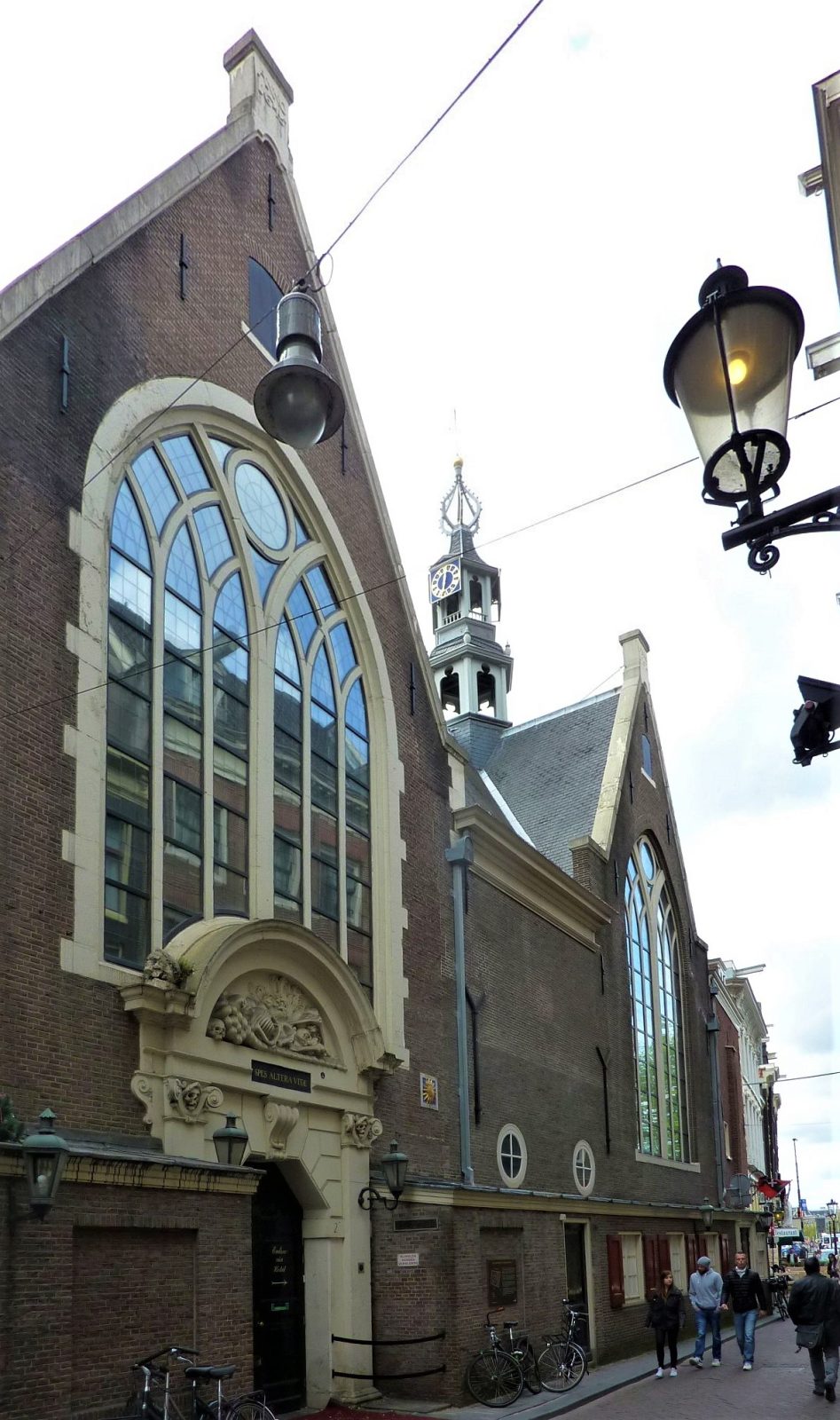
Sint Olofskapel
A 15th-century chapel swallowed by a hotel, with a skull-and-bones gable stone over the old door.
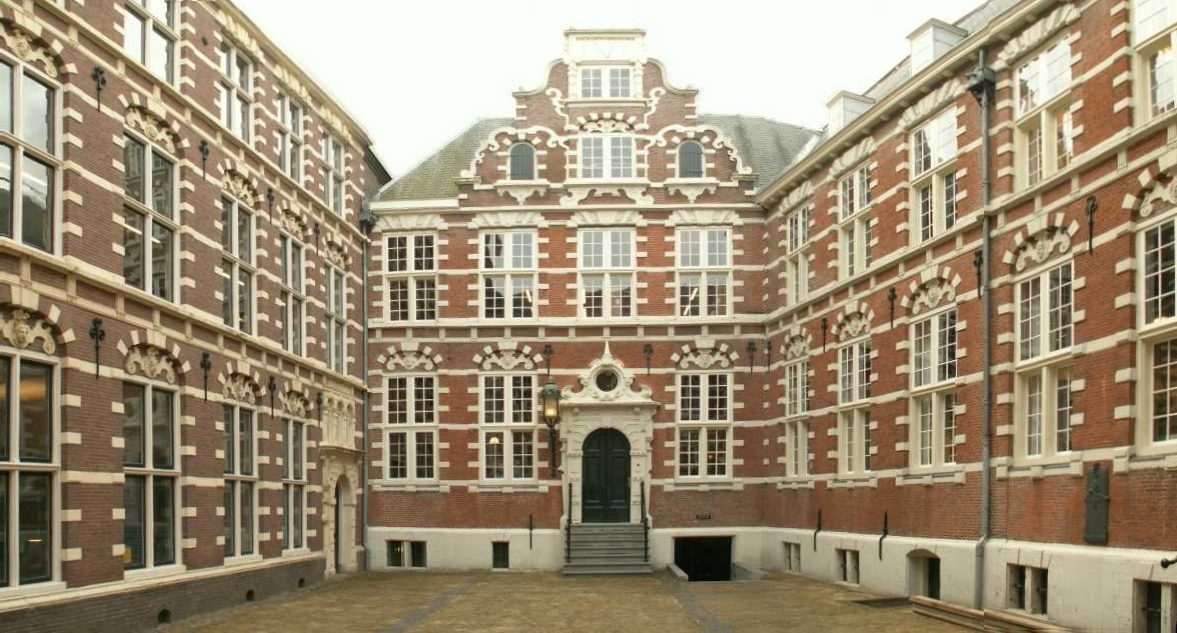
Oost-Indisch Huis courtyard
The headquarters of the Dutch East India Company, now university; walk into the courtyard where the world's first multinational was run.
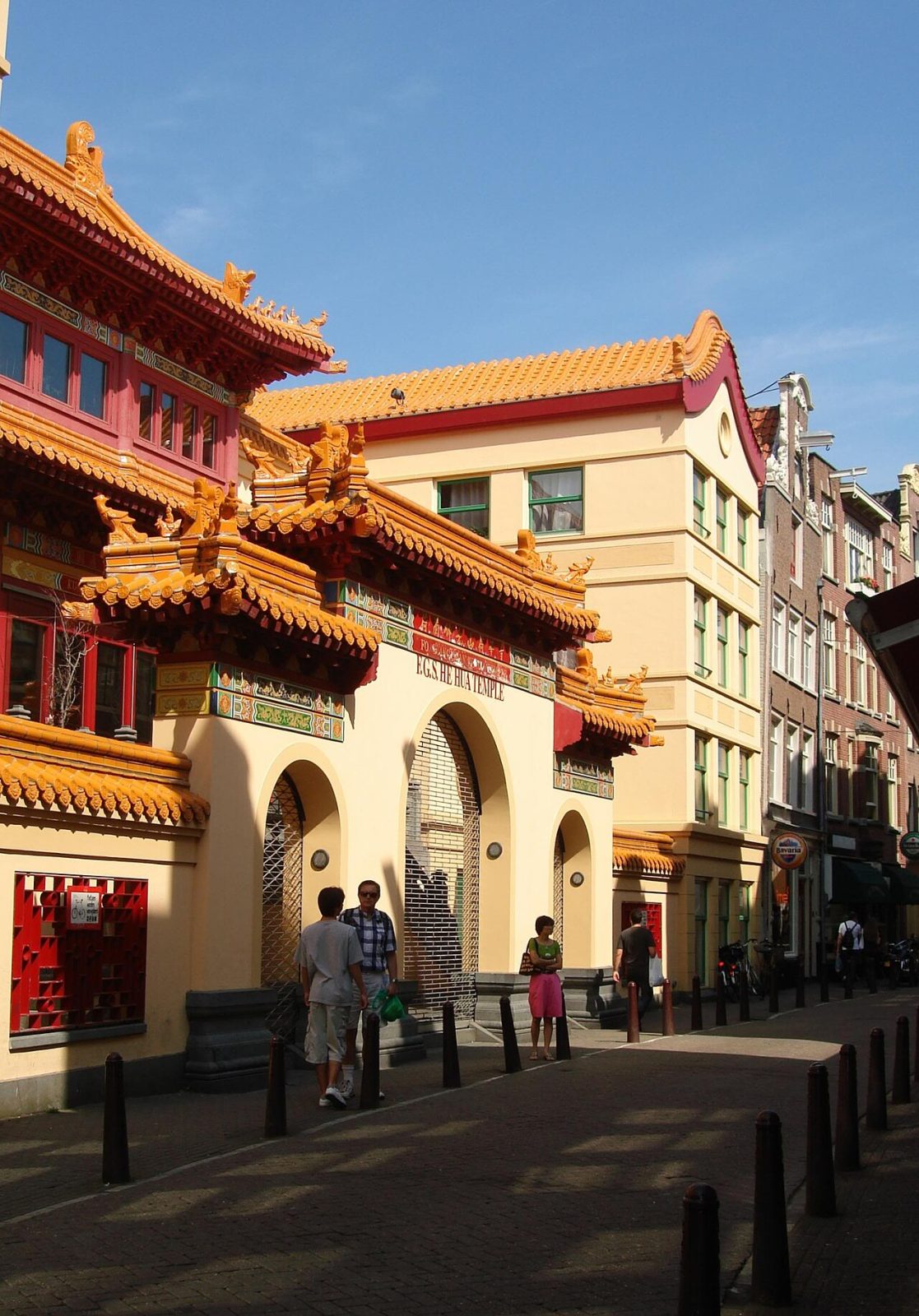
Chinatown (Zeedijk)
Follow the Zeedijk from old sailors' lodgings to Chinese shops and the He Hua Buddhist temple near Nieuwmarkt.
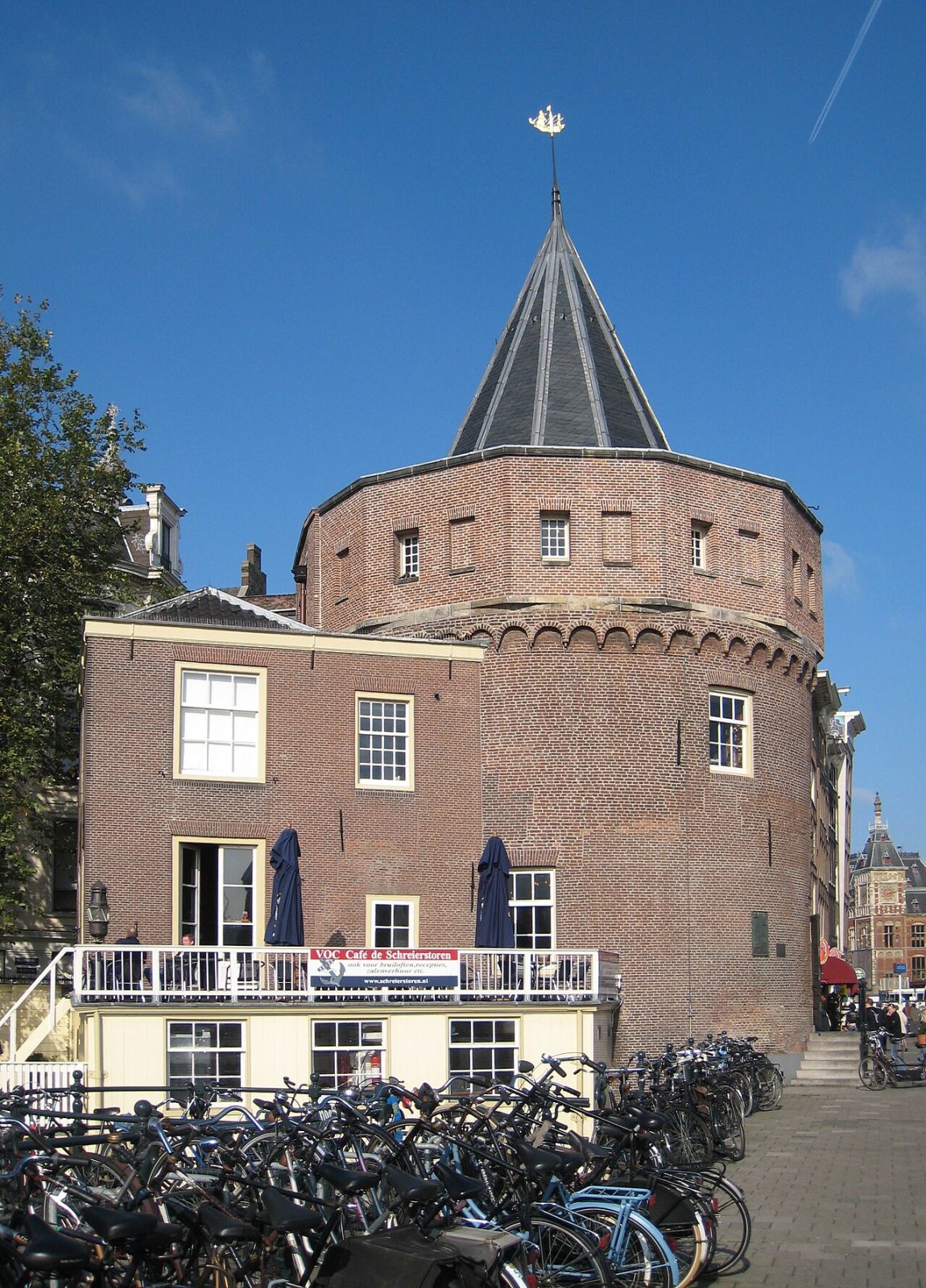
Schreierstoren
The 1480s harbour tower where, legend says, sailors' wives wept as the ships left; Henry Hudson sailed from here.
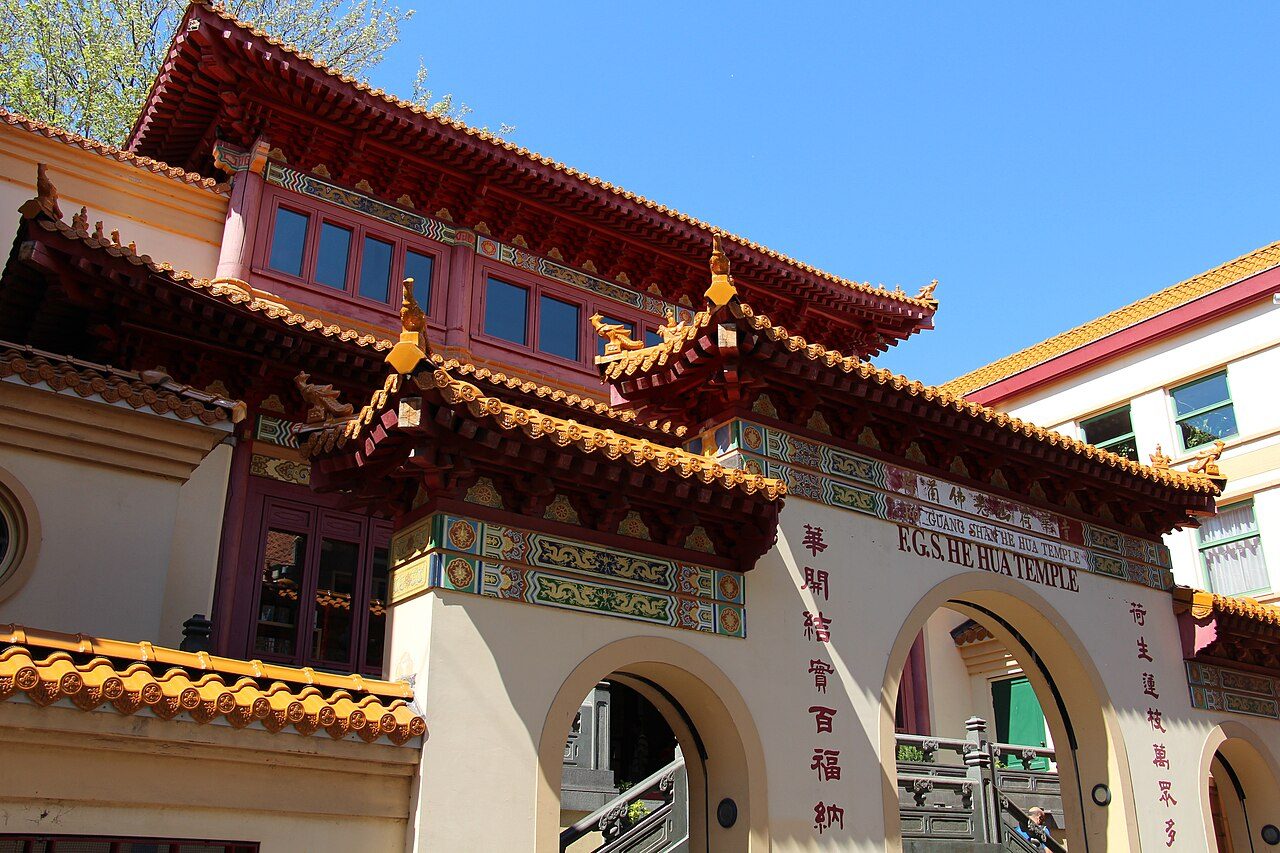
Fo Guang Shan He Hua Temple
Europe's largest palace-style Buddhist temple, squeezed between canal houses; free to enter.
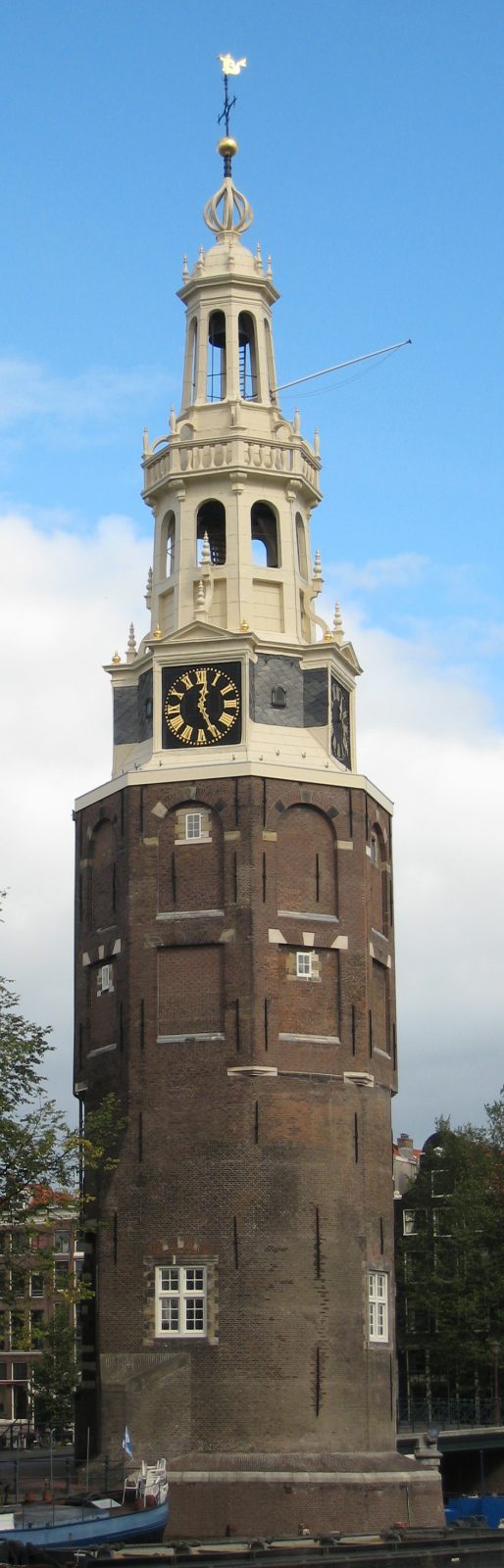
Montelbaanstoren
The leaning tower on the Oudeschans that Rembrandt drew.
Tours and quests that pass here
These walks have a stop a few minutes from Scheepvaarthuis. Free, on your phone, start any time.
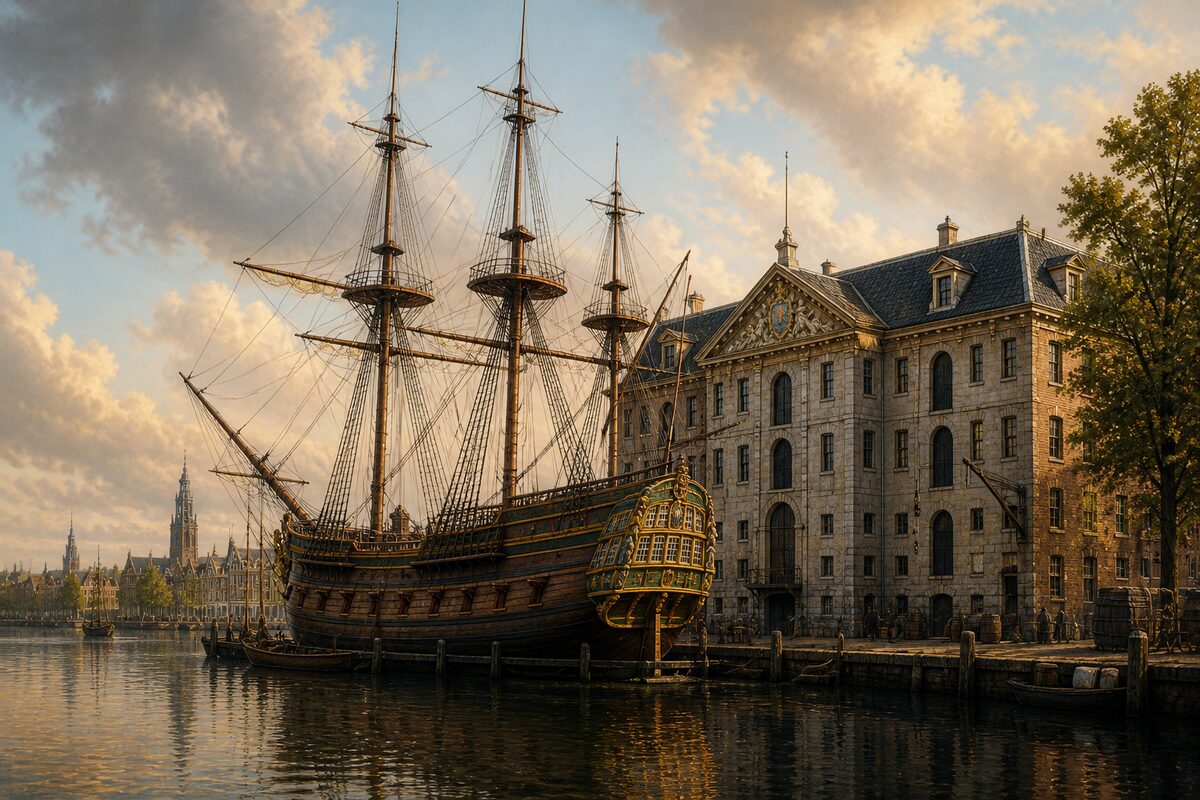 FREE AUDIO TOUR
Maritime Amsterdam
Amsterdam’s maritime quarter sent ships across the world and filled warehouses with everything from timber to whale oil. You can still stand on the quay where sailors left for Asia, beside buildings that helped run overseas trade and enslavement.
 FREE AUDIO TOUR
Red Light District
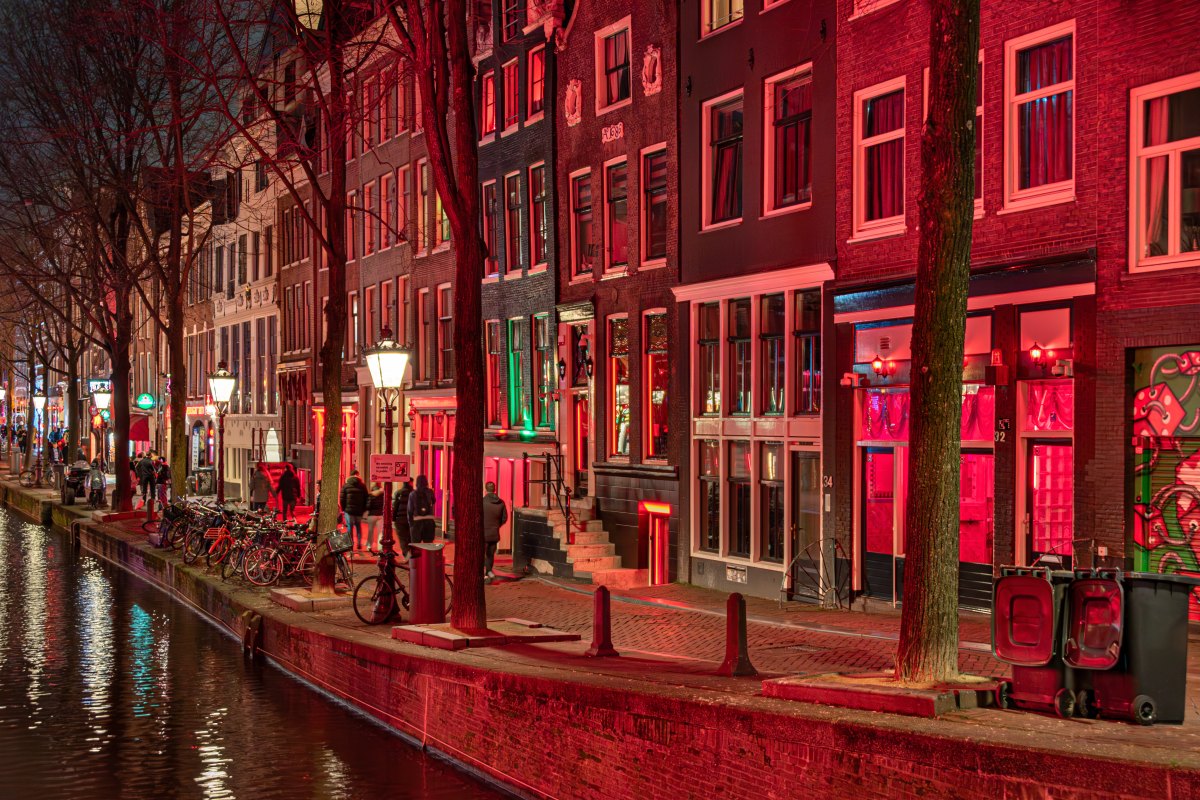
Amsterdam’s Red Light District is a neighbourhood where sex workers work behind street-level windows, right beside a church. Walk these lanes and you’ll stand where the city has made room for the sex trade while punishing people who worked in it.
 FREE AUDIO TOUR
Amsterdam Ghost Tour
Amsterdam’s ghost stories belong to real streets, where crowds waited for spirits and families went out to look at hanging bodies. You can stand in those places today, with canal water beside you and old church towers overhead.