
LANDMARK
Schreierstoren
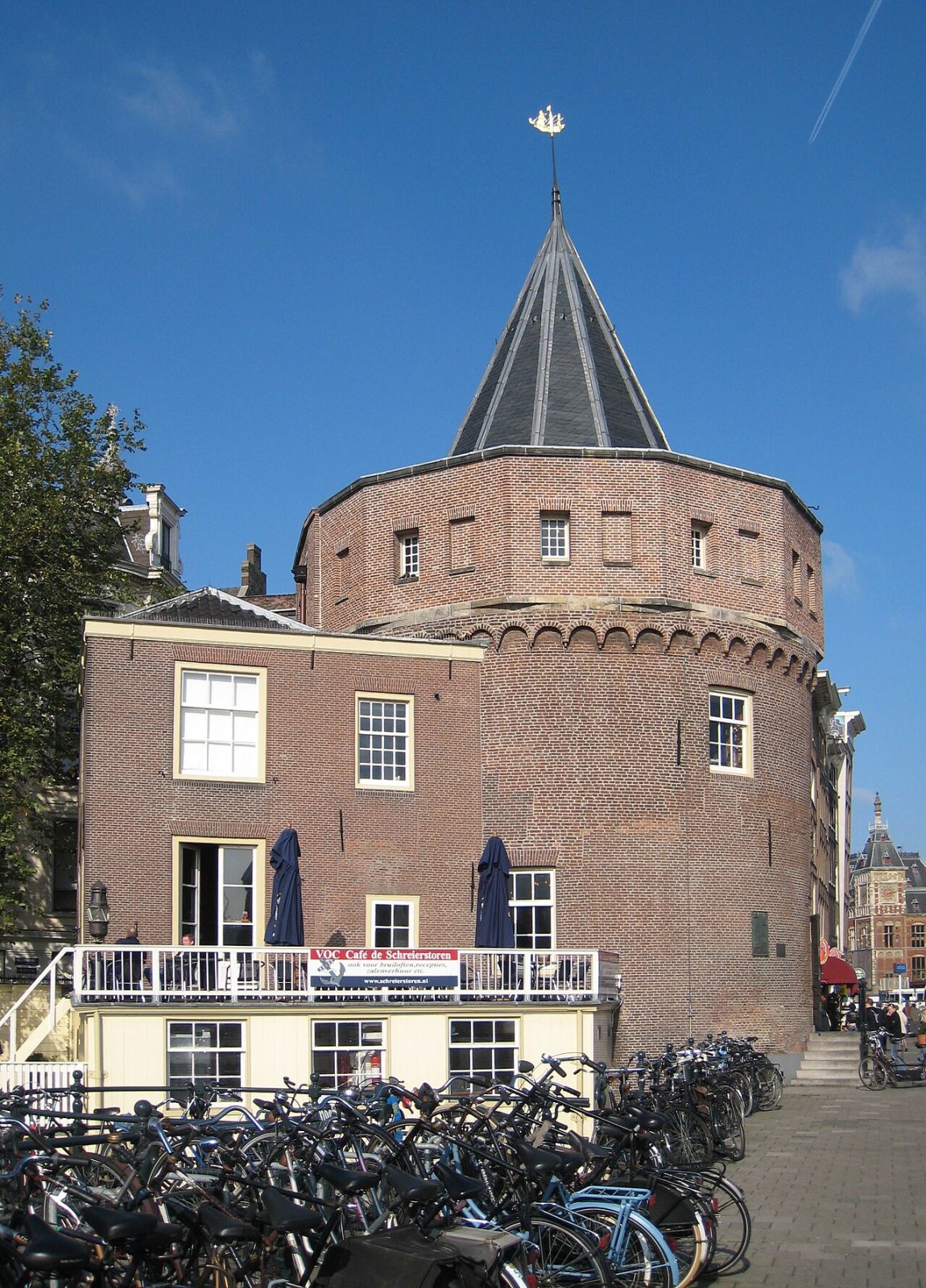
The 1480s harbour tower where, legend says, sailors' wives wept as the ships left; Henry Hudson sailed from here.
A tower with a misleading name
The weeping woman on the Schreierstoren is not quite who the familiar story says she is. Look for the facade stone dated 1569: she points towards a ship among waves and sea monsters. Sailors’ wives supposedly cried here as their husbands left. But Amsterdam’s city government explained in 2024 that the woman represents Amsterdam itself. The tower’s name refers to a sharp corner, not to weeping wives.
This late-medieval harbour tower stands at the corner of Geldersekade and Prins Hendrikkade, close to Sint-Nicolaasbasiliek. Its brick walls and pointed roof belong to a much older waterfront than the streets around it suggest. Like the nearby Sint Olofskapel, it rewards a pause to read the old stones rather than just photograph the outline.
Hudson’s departure, and a late plaque
Beside the entrance, a plaque connects the tower with Henry Hudson’s voyage of 1609. It is an appealing place to picture a ship setting out. Keep one distinction in mind, though: in a 2009 investigation, Ons Amsterdam found no concrete evidence that this exact spot was Hudson’s departure point.
The plaque also gets its own arrival date wrong. Its inscription says it was installed in September 1927. In fact, it arrived from New York on 3 November and was put up the following day, 4 November 1927. You are looking at a memorial to a voyage, but also at a small lesson in reading memorials critically. Even a date cast into a plaque can need checking.
Another voyage above the door
Now look above the main entrance. A separate commemorative stone recalls Cornelis de Houtman and Pieter Dirkszoon Keyser’s first voyage to the East Indies, begun in 1595. Sculptor Wilhelmus Ludovicus Reyers made it. The stone was placed here on 23 July 1945, as documented by Stadsherstel Amsterdam in 2021.
These memorials were added centuries after the voyages they describe. The tower itself preserves a different kind of evidence. In 2007, Ons Amsterdam reported that building historians had examined its roof timbers. The frame had been assembled on the ground, marked, dismantled and then reassembled on top of the tower. Wood samples suggested completion in 1499. Look up at the roof and imagine that carefully numbered wooden structure being fitted together overhead.
A figure at the window
There is a more recent story to carry round the outside. In a 2026 Rodi report, former bartender Lisa Wolffenbuttel recalled seeing a shadow behind a barred window. It appeared to be a figure bent over maps, holding a quill. Locals, she said, told her it was the ghost of a cartographer who had died at his desk.
That is a reported ghost story, not an established event. Still, it gives the windows another association with maps and voyages. Standing outside, take in the tower in layers: the roof timbers, the weeping city maiden, the later maritime memorials and the windows where someone thought she saw a mapmaker still at work.
Things to know
- Walk from Amsterdam Centraal towards Sint-Nicolaasbasiliek, then continue to the corner of Prins Hendrikkade and Geldersekade.
- Go in daylight to make out the carved figures and inscriptions.
- Walk around the exterior; the stories here can be followed from outside.
- Use your phone’s zoom to inspect the higher stonework without standing in the road.
What people say
Related spots
More things to do in Amsterdam ›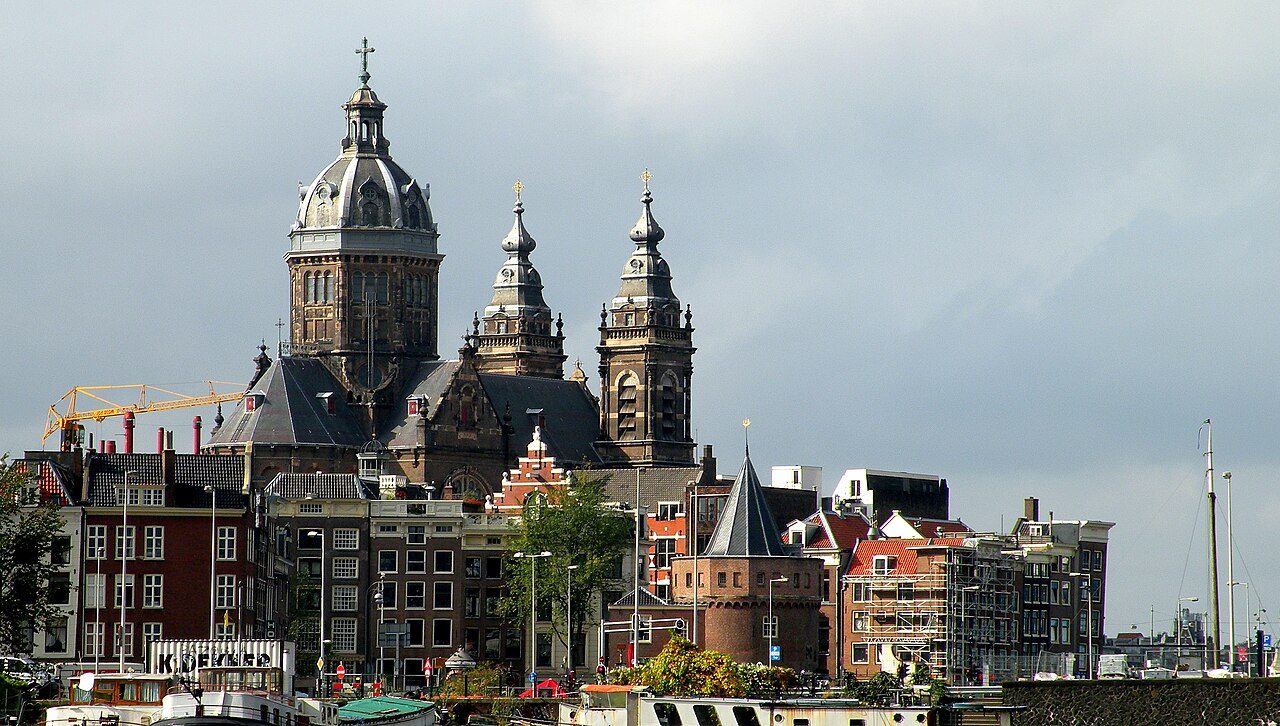
Sint-Nicolaasbasiliek
The big domed basilica opposite Centraal Station, free to walk into.
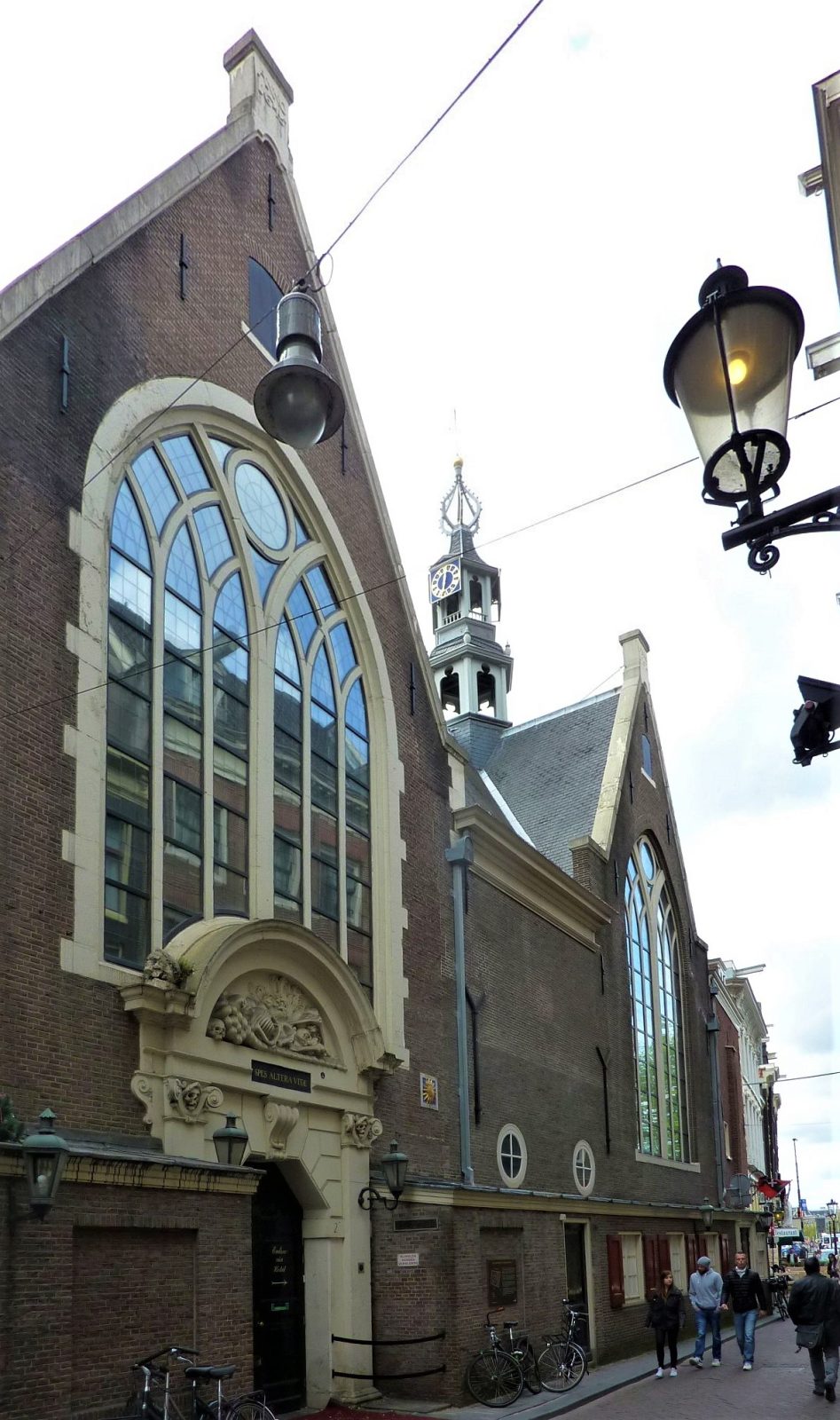
Sint Olofskapel
A 15th-century chapel swallowed by a hotel, with a skull-and-bones gable stone over the old door.
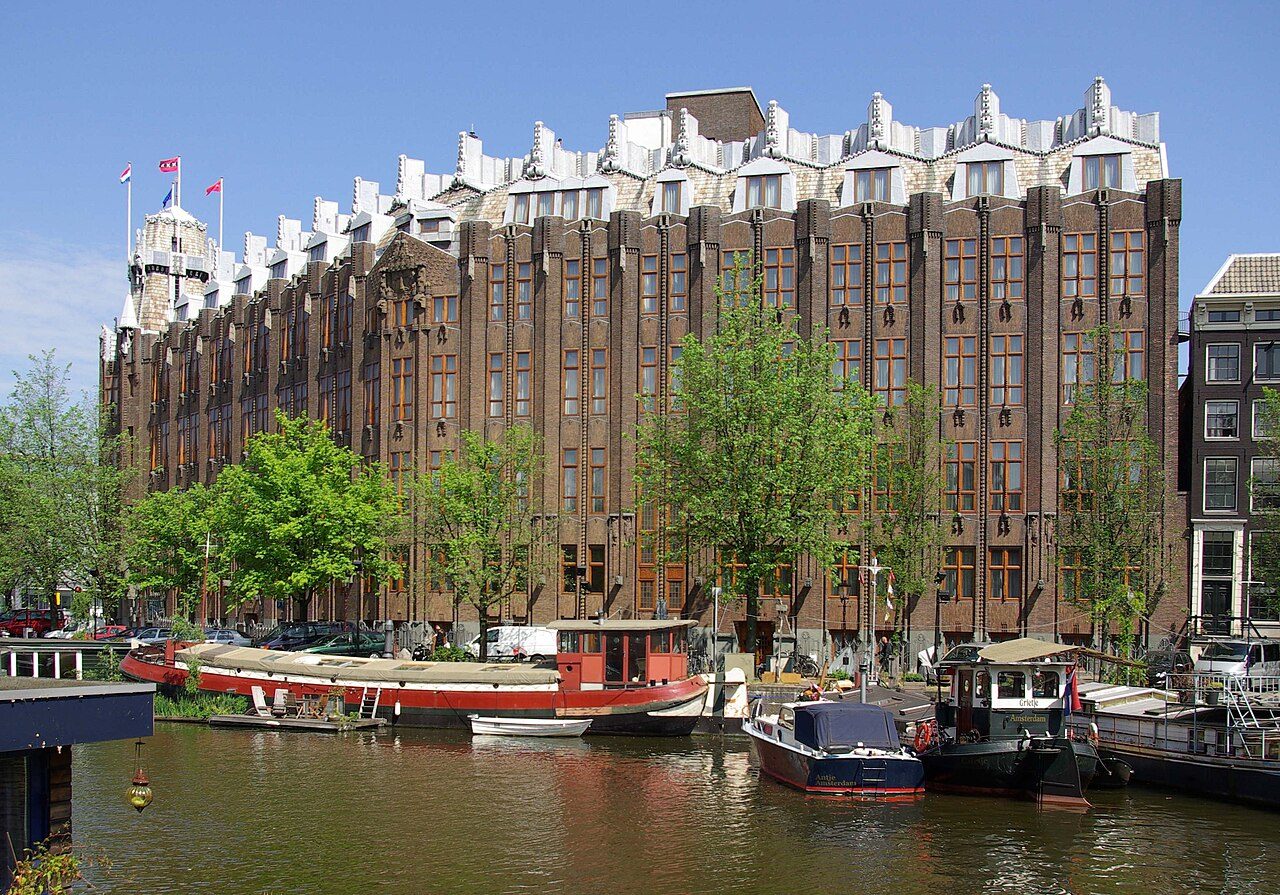
Scheepvaarthuis
The 1916 shipping house, a sea-themed Amsterdam School masterpiece, now a hotel; the lobby can be visited.
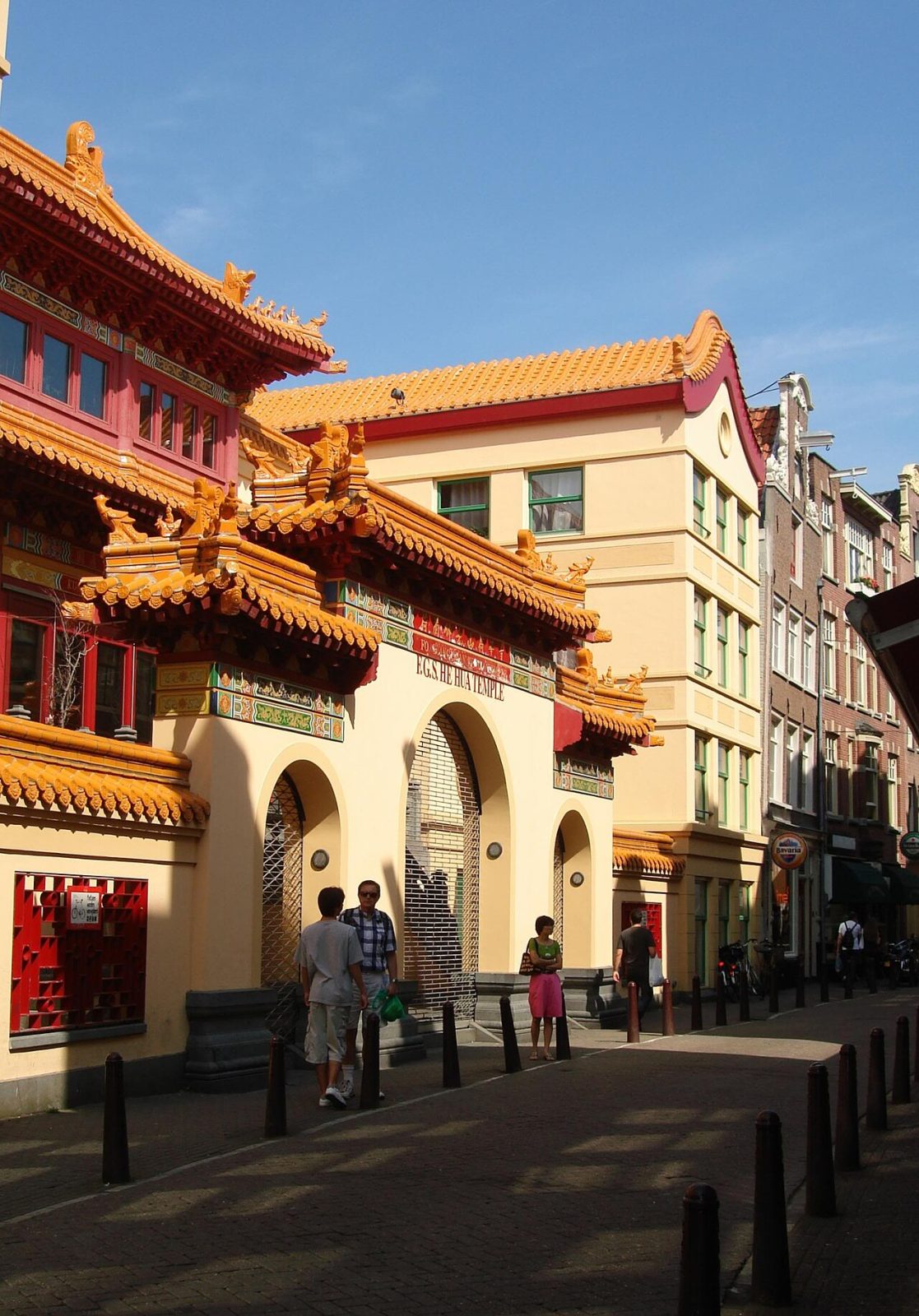
Chinatown (Zeedijk)
Follow the Zeedijk from old sailors' lodgings to Chinese shops and the He Hua Buddhist temple near Nieuwmarkt.
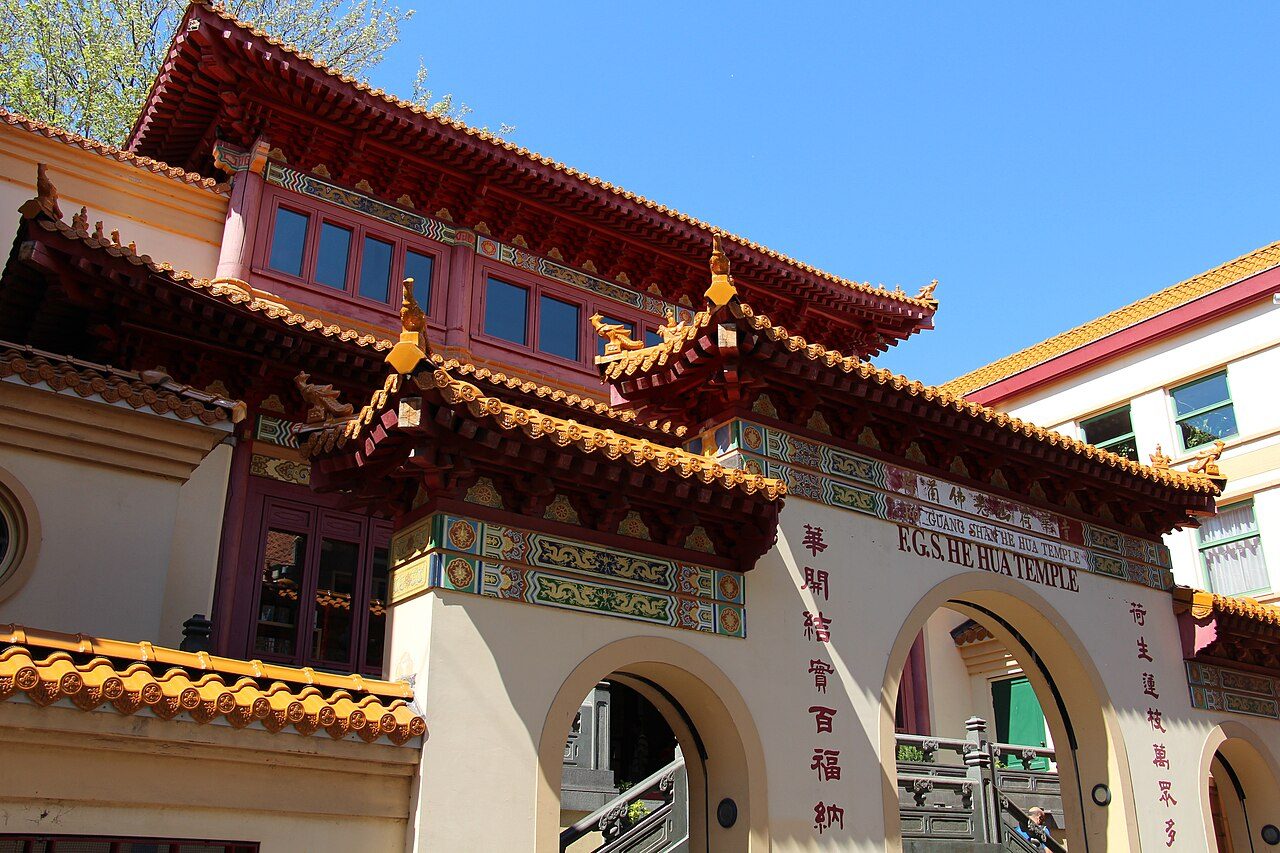
Fo Guang Shan He Hua Temple
Europe's largest palace-style Buddhist temple, squeezed between canal houses; free to enter.
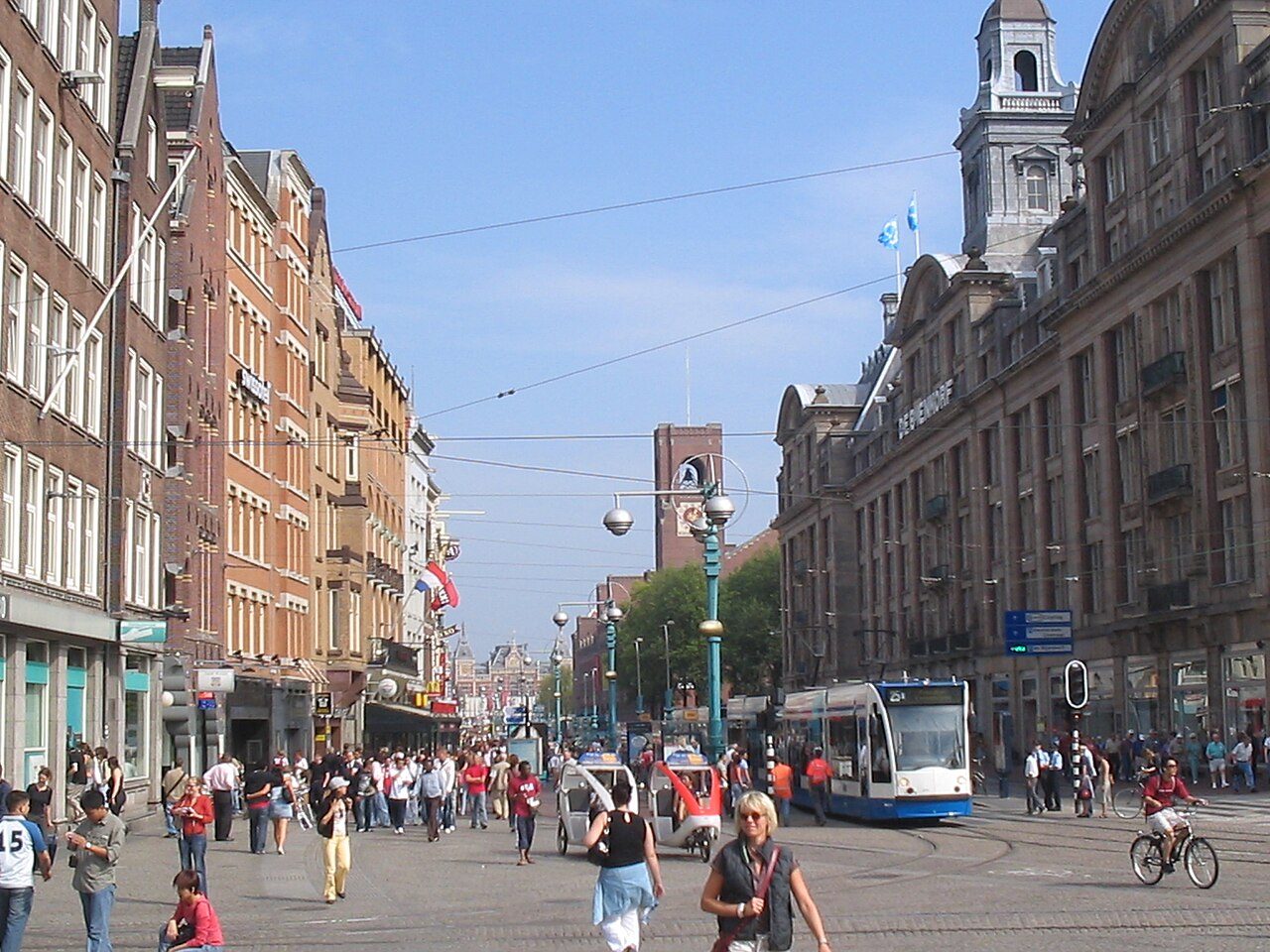
Dancing houses (Damrak)
The row of leaning canal houses on the Damrak water, the classic first photo out of Centraal Station.
Tours and quests that pass here
These walks have a stop a few minutes from Schreierstoren. Free, on your phone, start any time.
 FREE AUDIO TOUR
Maritime Amsterdam
Amsterdam’s maritime quarter sent ships across the world and filled warehouses with everything from timber to whale oil. You can still stand on the quay where sailors left for Asia, beside buildings that helped run overseas trade and enslavement.
 FREE AUDIO TOUR
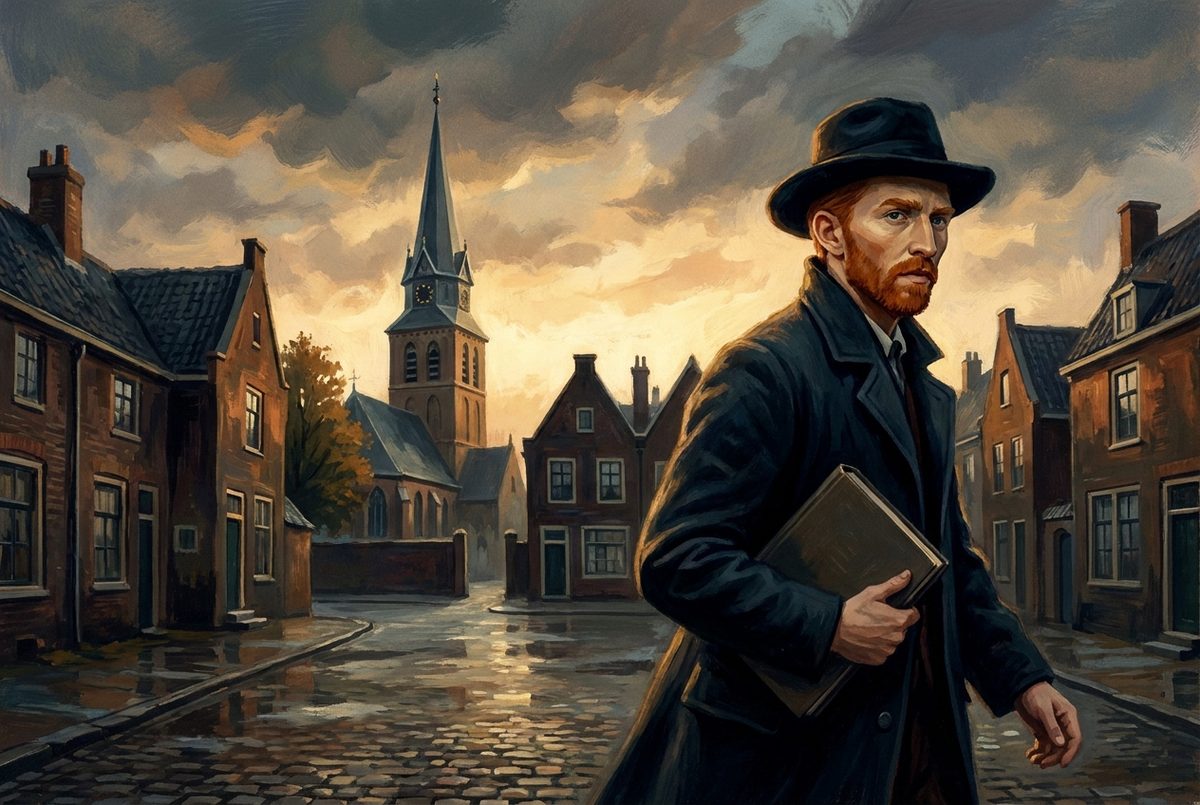
Van Gogh's Amsterdam
The man who painted Sunflowers lived in Amsterdam for just over a year, before he became an artist. You can still stand at the naval yard he called home and follow his Sunday walks across the city.
 FREE AUDIO TOUR
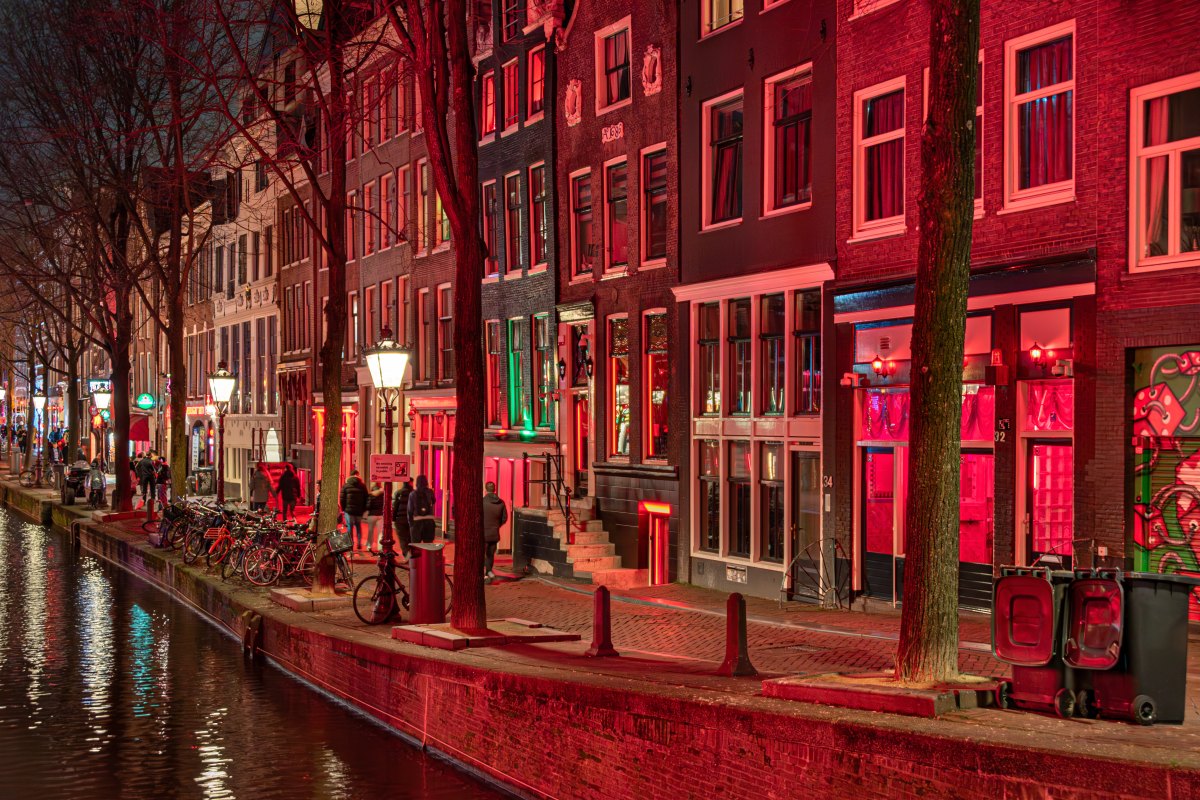
Red Light District
Amsterdam’s Red Light District is a neighbourhood where sex workers work behind street-level windows, right beside a church. Walk these lanes and you’ll stand where the city has made room for the sex trade while punishing people who worked in it.