
LANDMARK
Dancing houses (Damrak)
The row of leaning canal houses on the Damrak water, the classic first photo out of Centraal Station.
A row worth looking at slowly
The Dancing houses on Damrak are the leaning waterside houses that draw cameras almost as soon as visitors leave Centraal Station. But look beyond the roofline. Between the windows on the Damrak side of Warmoesstraat 16 is a little carved white dog. From 1455, Jan Beth Jansz ran the White Dog inn here and handled Baltic goods for Hanseatic merchants. That small animal connects today’s photograph to a waterfront of traders and lodgings.
Stand across the water to take in the row. Follow the upright edges of the windows, then compare them with the neighbouring walls and gables. The uneven lines are what give the houses their dancing appearance. These waterside facades belong to Warmoesstraat, on the edge of De Wallen, with the old streets leading inland towards Oude Kerk. From here, though, it is the water-facing side of the neighbourhood that holds your attention.
Dogs, wine and merchants’ dinners
Warmoesstraat 16 has another sign to read. Above the white dog, look for a wine barrel flanked by sea goddesses and topped by a crown. Wine merchant Christiaan Lankhorst had the facade rebuilt in 1740. The barrel advertised his trade. The dog and barrel belong to different chapters of the same address, so do not assume that all its decoration tells one story.
There was another inn beside Guldehandsteeg. By 1502, brewer and innkeeper Claes Gaeff ran De Gulden Hand there. Hamburg merchants gathered for an annual meal, and guests arriving by boat could use the alley’s steps up from the water. Picture that arrival while looking across Damrak: a boat coming alongside, then a short climb into the narrow alley. The waterfront was a working entrance to the city, not simply a view from the street.
The fire that reached the ships
Those tightly packed buildings also shared danger. In 1597, fire swept along Guldehandsteeg, burning front and rear houses and an inn. Even some ships on Damrak caught fire. A smouldering baker’s oven was suspected as the starting point; it was not established as a certainty.
Keep that story in mind as you look at the close spacing of the houses and the water immediately below them. Water did not put the ships beyond the fire’s reach. The account ties the alley, the buildings and the boats into one event.
A gable with another address
Now find the ornate gable on the waterside facade of Warmoesstraat 18. Its carving was not made for this house. In 2006, conservationist Theo Rouwhorst arranged for an eighteenth-century gable saved from Prins Hendrikkade 38 to be placed here.
That makes this row more than a collection of old houses preserved unchanged. One facade advertises a wine merchant’s business; another carries carving rescued from elsewhere. Take your wide photograph, then look again at those individual details. The little dog, the crowned barrel and the relocated gable each tell you something the leaning roofline cannot.
Things to know
- From Centraal Station, walk onto Damrak and stop opposite the waterside row.
- Go in daylight to make out the carved dog and facade decoration.
- Use your camera’s zoom to inspect the details across the water.
- Keep the pavement clear when stopping for photographs.
What people say
Related spots
More things to do in Amsterdam ›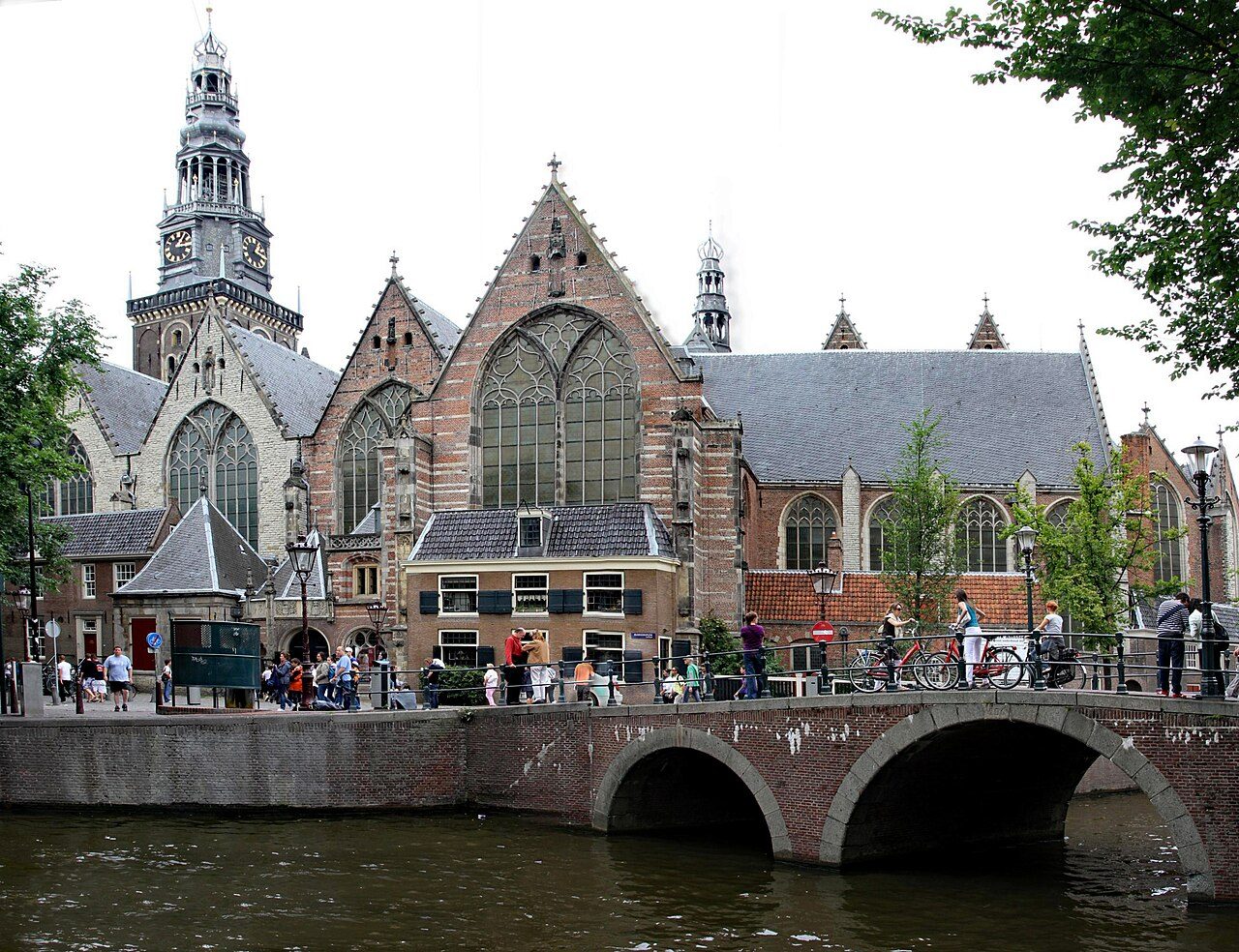
Oude Kerk
Amsterdam’s oldest building holds centuries of graves, stained glass and art made for its vast interior.
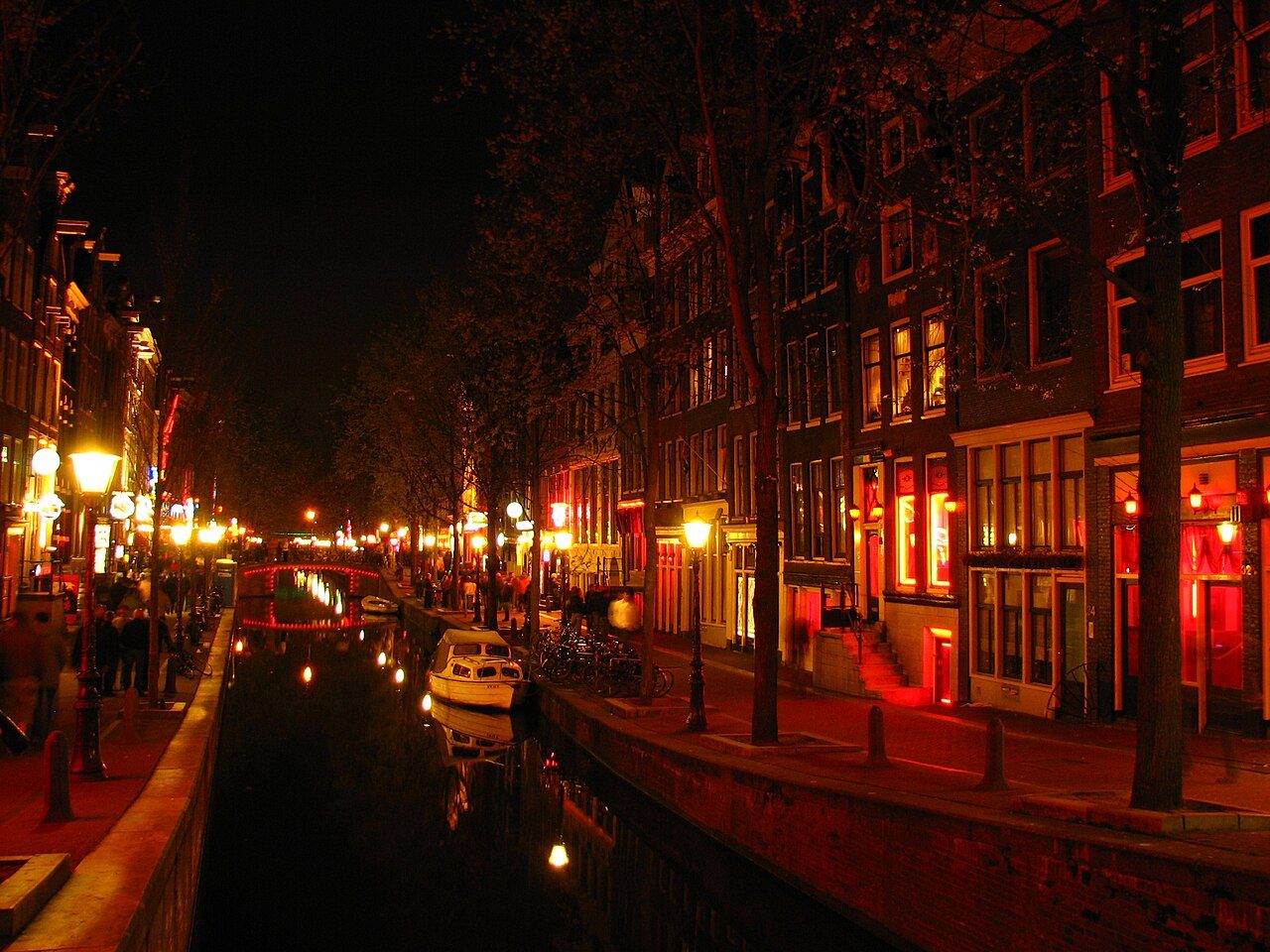
Red Light District (De Wallen)
Walk De Wallen for the canals, the city's oldest building and a neighbourhood with more stories than its red windows suggest.
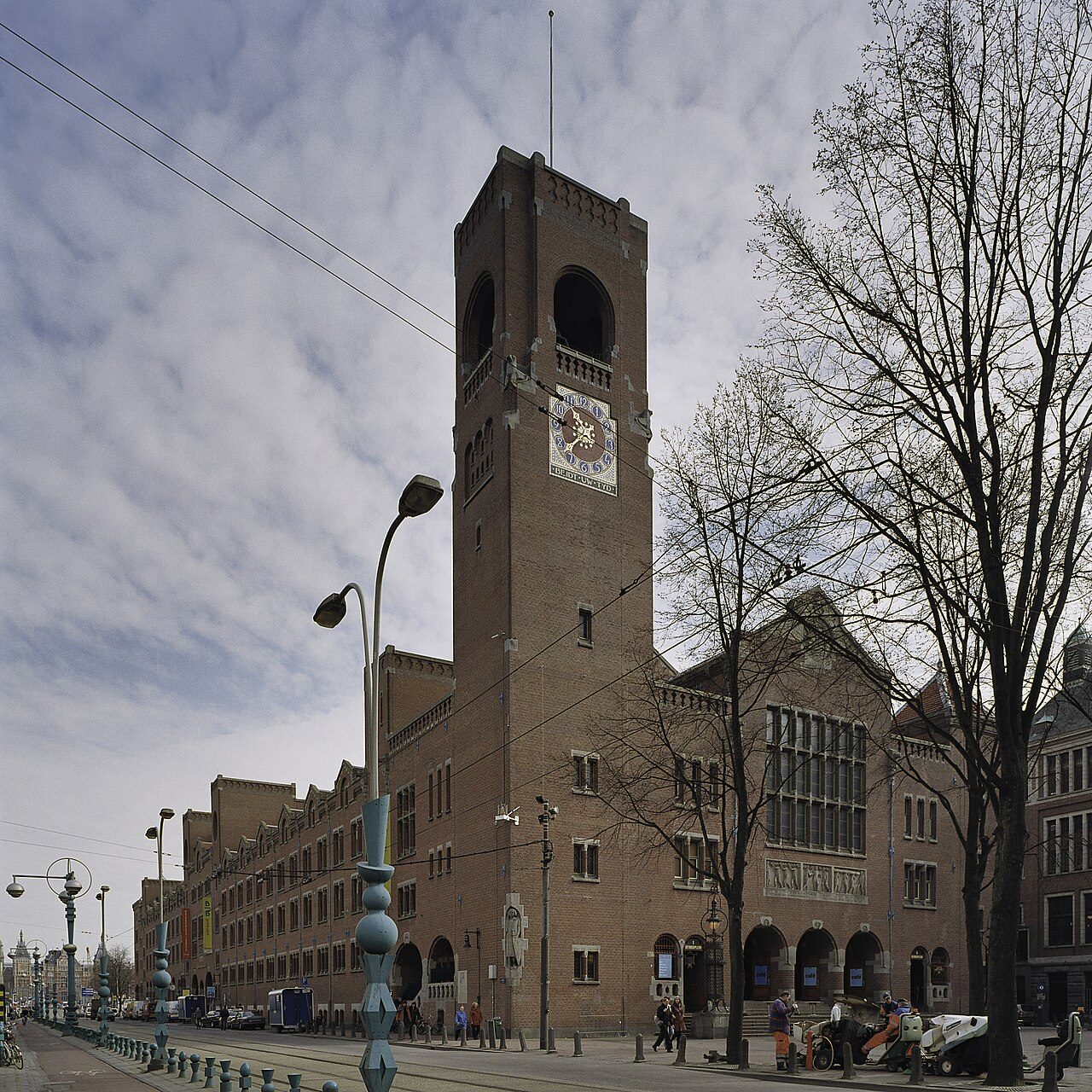
Beurs van Berlage
The old stock exchange on the Damrak that started modern Dutch architecture.
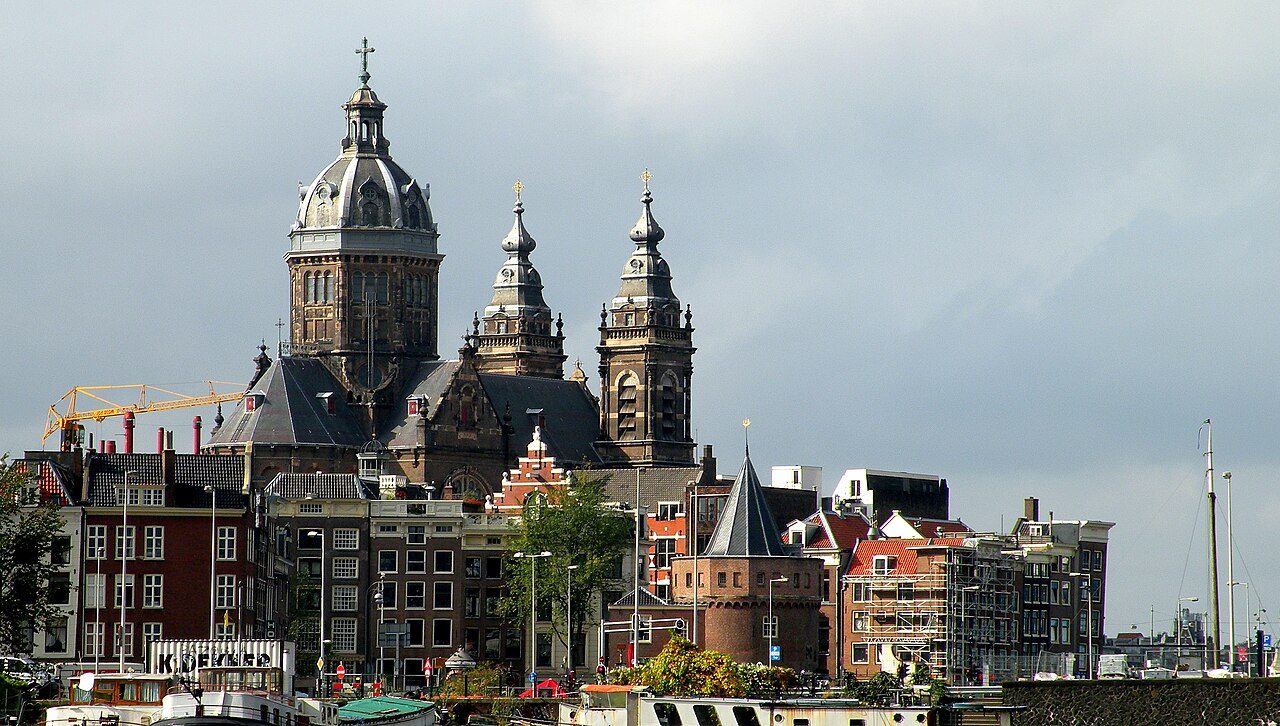
Sint-Nicolaasbasiliek
The big domed basilica opposite Centraal Station, free to walk into.
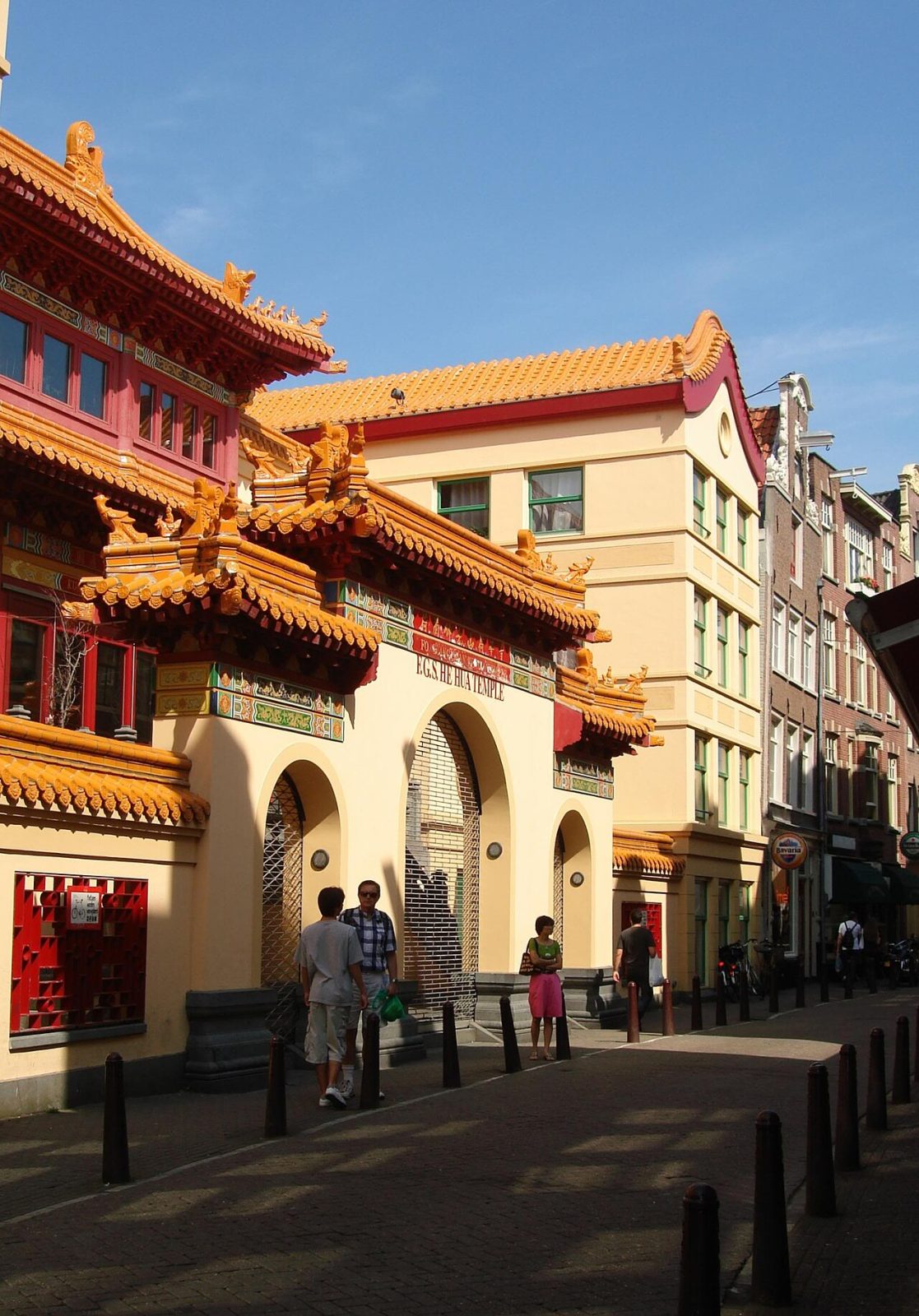
Chinatown (Zeedijk)
Follow the Zeedijk from old sailors' lodgings to Chinese shops and the He Hua Buddhist temple near Nieuwmarkt.
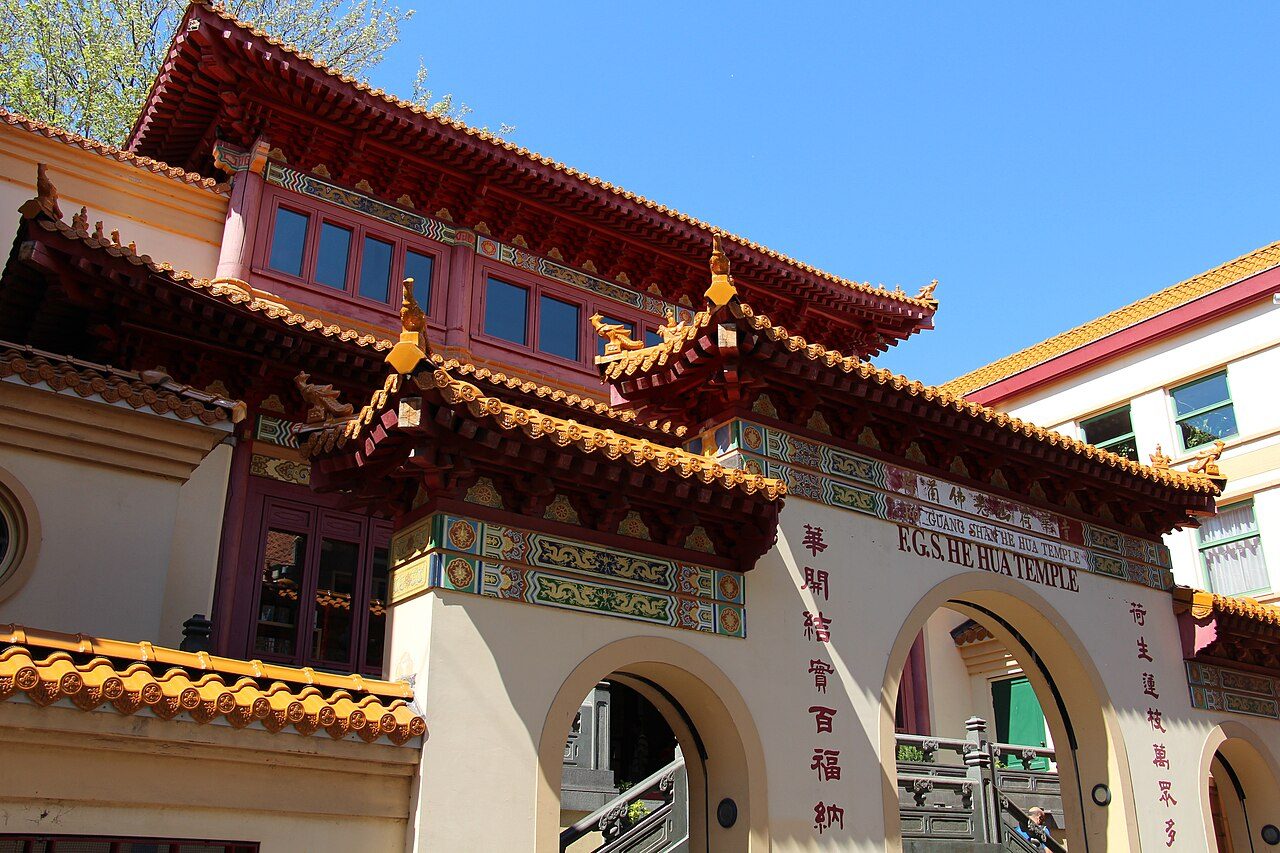
Fo Guang Shan He Hua Temple
Europe's largest palace-style Buddhist temple, squeezed between canal houses; free to enter.
Tours and quests that pass here
These walks have a stop a few minutes from Dancing houses (Damrak). Free, on your phone, start any time.
 FREE AUDIO TOUR
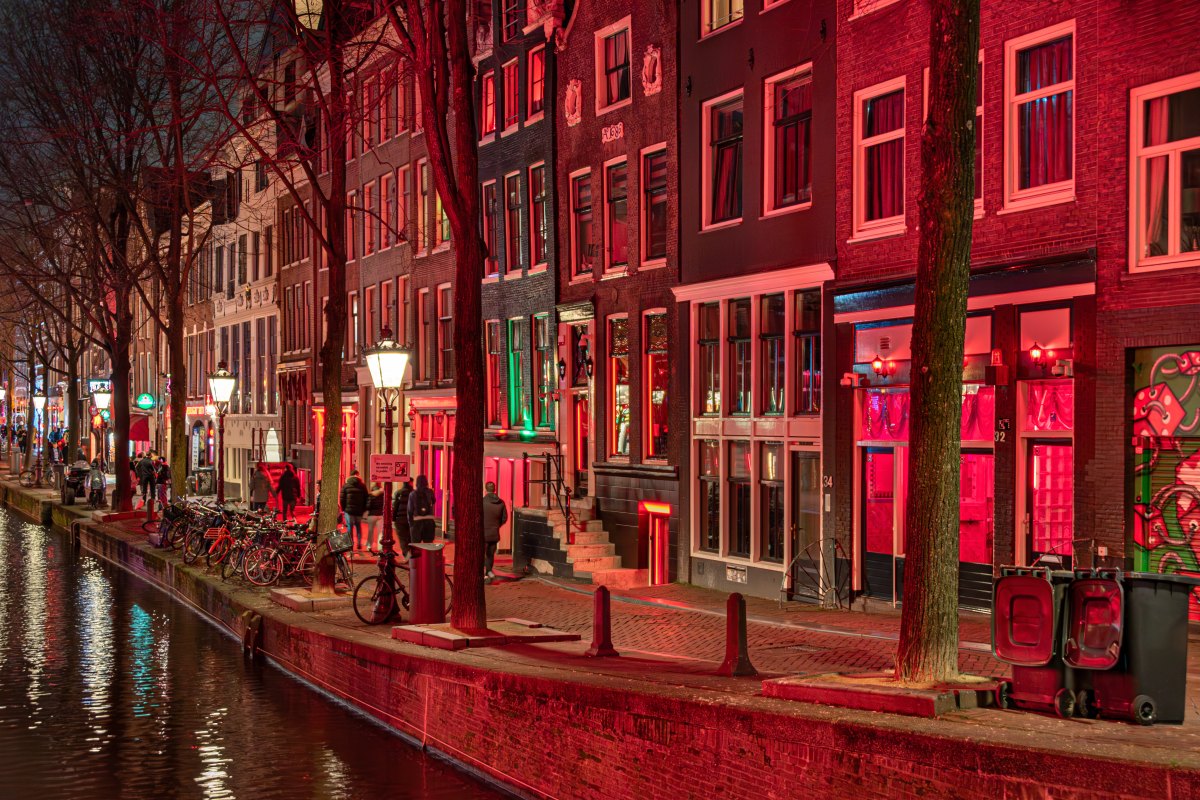
Red Light District
Amsterdam’s Red Light District is a neighbourhood where sex workers work behind street-level windows, right beside a church. Walk these lanes and you’ll stand where the city has made room for the sex trade while punishing people who worked in it.
 FREE AUDIO TOUR
Amsterdam Ghost Tour
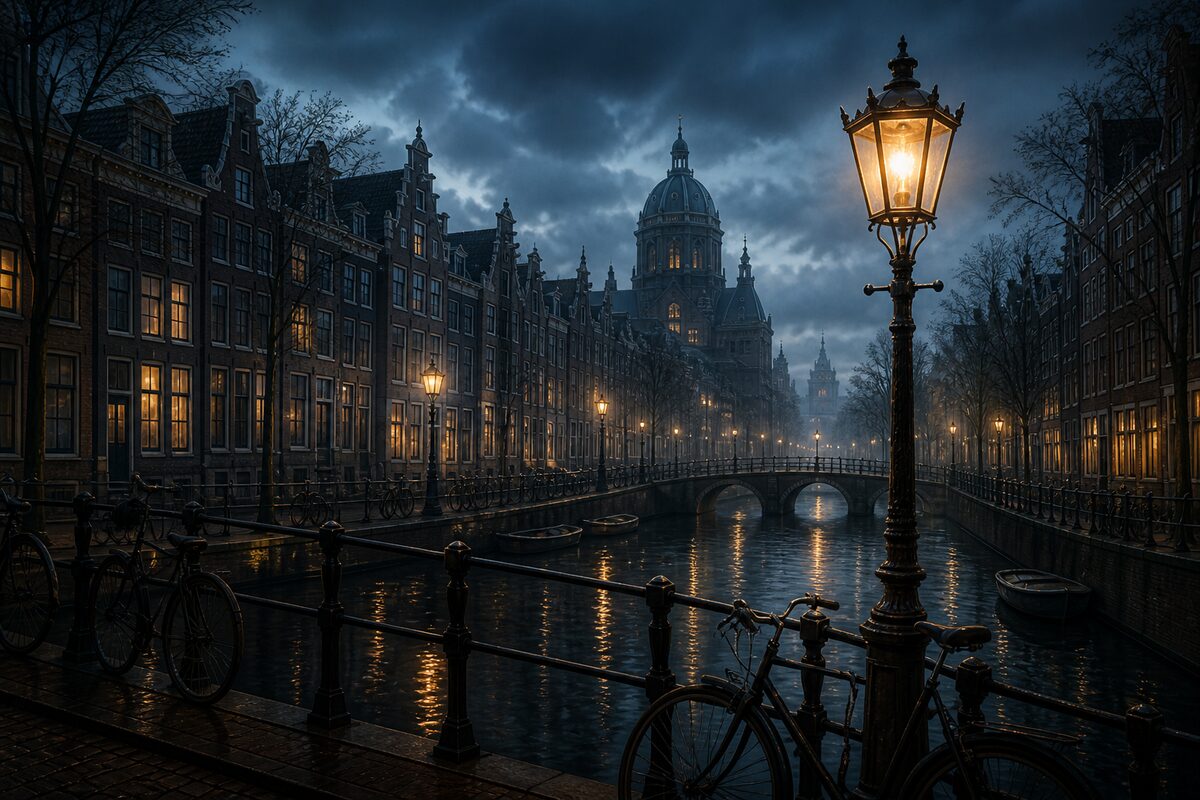
Amsterdam’s ghost stories belong to real streets, where crowds waited for spirits and families went out to look at hanging bodies. You can stand in those places today, with canal water beside you and old church towers overhead.
 FREE AUDIO TOUR
In Rembrandt's Footsteps
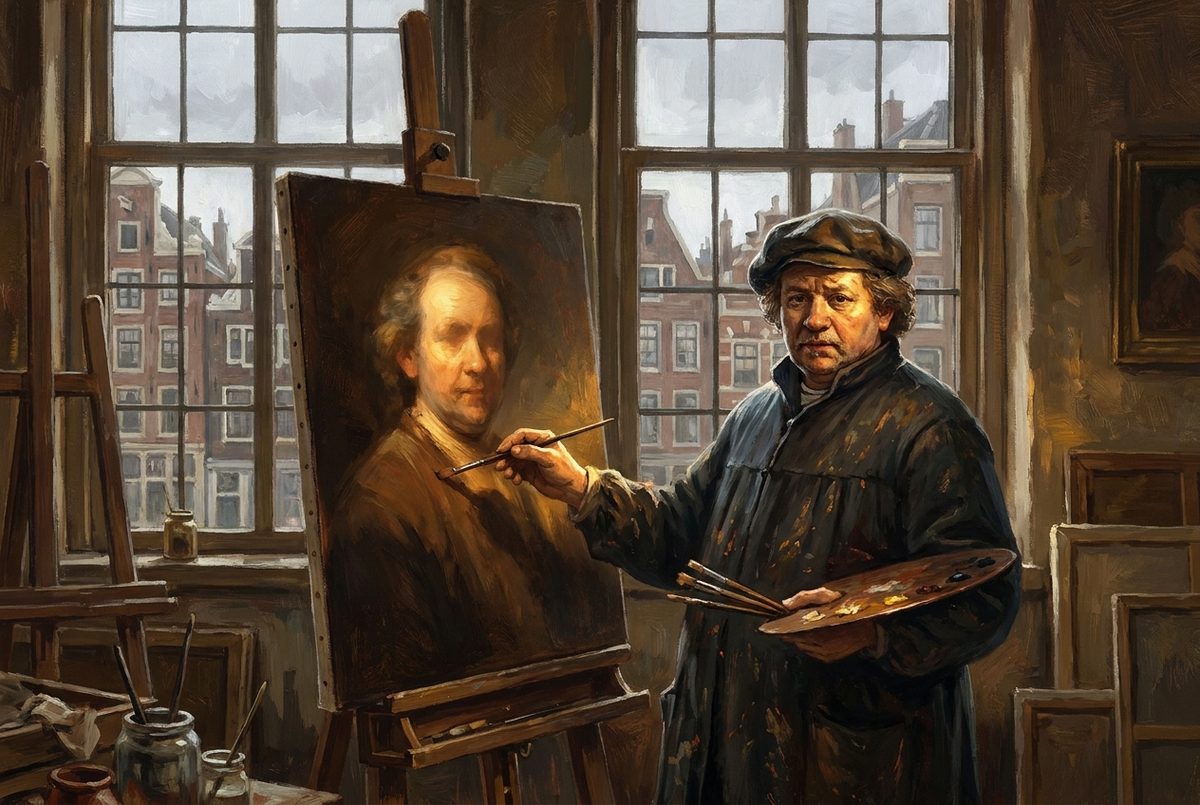
The painter of The Night Watch lived and worked in Amsterdam, and his house is still standing. From the early 1630s until his death in 1669, Rembrandt made his life in streets you can walk today.