
ODD FIND
Pintohuis
A 17th-century merchant's mansion with painted ceilings, now a free reading room and café.
A mansion on a street, not a canal
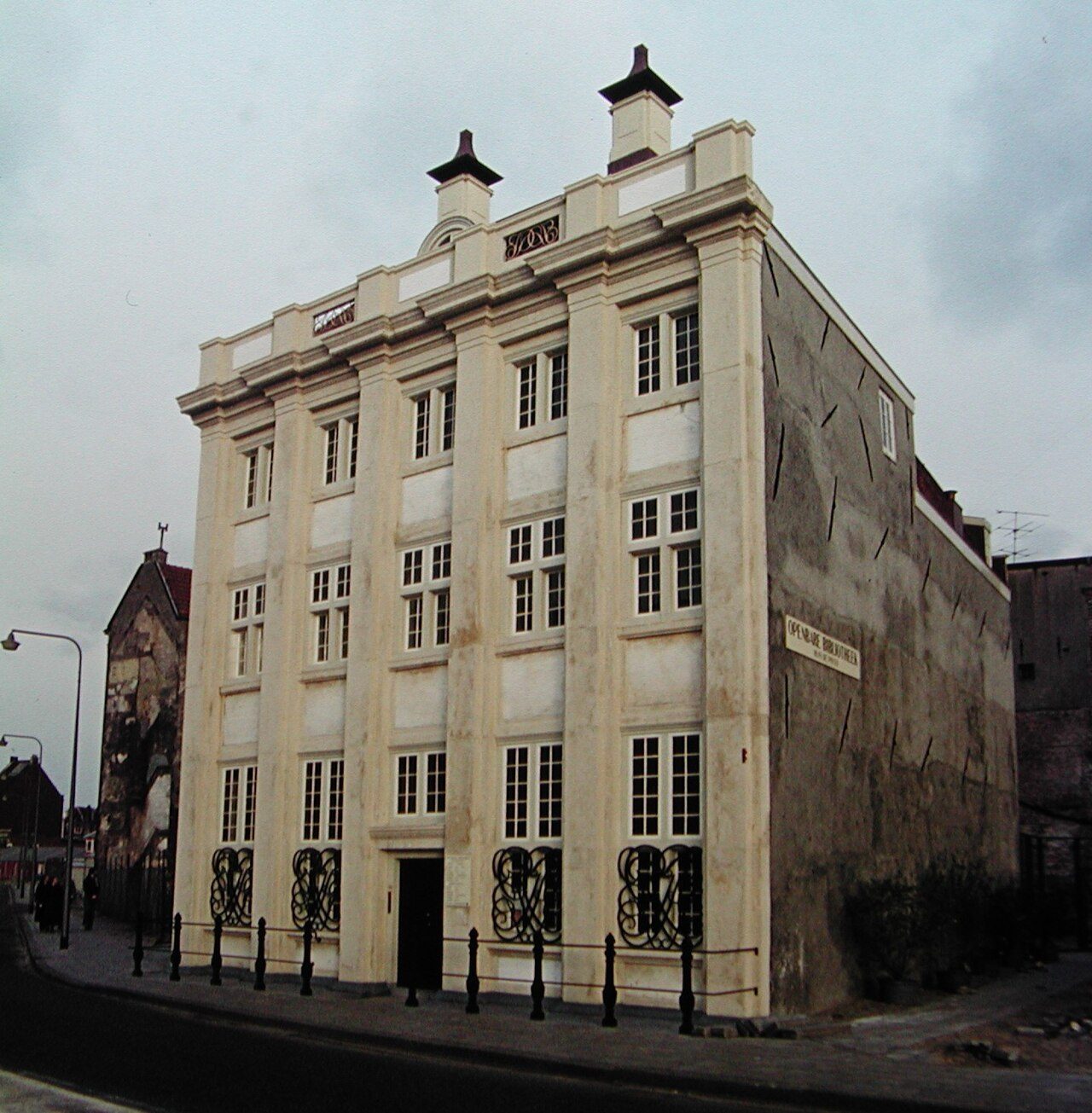
Pintohuis stands on the Sint Antoniesbreestraat, a couple of minutes on foot from Nieuwmarkt square. In Amsterdam, grand merchant houses usually face a canal. This one faces a street, and that is the first thing that makes it unusual.
Today the ground floor is open to everyone as a reading room and café, and you can simply walk in. The upper floors are offices of the Waag, so the public part is downstairs. It is a good place to sit with a coffee and a book, in a room that has had a long and rough life.
Merchants, a riot and a motorway
The house dates from around 1605 to 1607. It was built for Jan Jansz. Carel, one of the first directors of the Dutch East India Company, founded in 1602. He bought six plots to make room for it. The Company itself ran its business from the Oost-Indisch Huis, a few minutes away.
In 1651 the house was bought by Isaack de Pinto, a banker and merchant from Antwerp. The De Pintos were a rich Portuguese-Jewish family of merchants and bankers. In 1686 his son David bought the house next door and had everything rebuilt. The design is probably by Elias Bouman, who also designed the Portuguese Synagogue. The old double stepped gable gave way to a sandstone front in Dutch Classical style, and people talked about it.
Not everyone admired it. In 1696, during the Aansprekersoproer, a riot, the richly decorated house was plundered and twenty-seven people were arrested. The attic once held an oak sukkah, the booth used at the Jewish festival of Sukkot. The family sold the house in 1756, to an apothecary.
The street lay in the old Jewish quarter. After the war most residents never came back, and the empty houses decayed. By the late 1960s the buildings around Pintohuis had been torn down, and it stood alone on a bare field. The city bought it in 1968 to demolish it, because a four-lane road and a metro line were planned through the area.
Neighbours, squatters and a preservation foundation fought to keep it. On 5 January 1972 the city council voted by a single vote not to build the road. In March and April 1975 the Nieuwmarkt riots broke out over the demolition of homes for the metro tunnel. The metro was built, but the motorway was not, and new homes went up along the old street lines between 1975 and 1984. The restored house served as a library branch from late 1975 until 2012. The reading room opened in 2014.
What to look for
Stand across the street first and look at the sandstone front. It is wider and more ornate than anything around it, and the newer housing on either side makes it stand out even more.
Inside, look up. The painted ceilings on the ground floor are not original. They were added during the restoration of 1975. They are still a good reason to come in, and a reminder that the building was rescued rather than kept untouched.
Then walk down the alley beside the house and look at the back. You can see the wide main building on the right and the narrow side house on the left.
Before you go
- Nieuwmarkt metro station is at the end of the street, and Pintohuis is a couple of minutes on foot from there.
- Entry to the ground floor is free. Opening times are shorter on Saturday and it is closed on Sunday, so check before you go.
- Go on a weekday morning if you want the reading room to yourself.
- Only the ground floor is open to visitors. The upper floors are offices.
- Walk down the alley beside the house to see the back and the narrow side house.
What people say
Related spots
More things to do in Amsterdam ›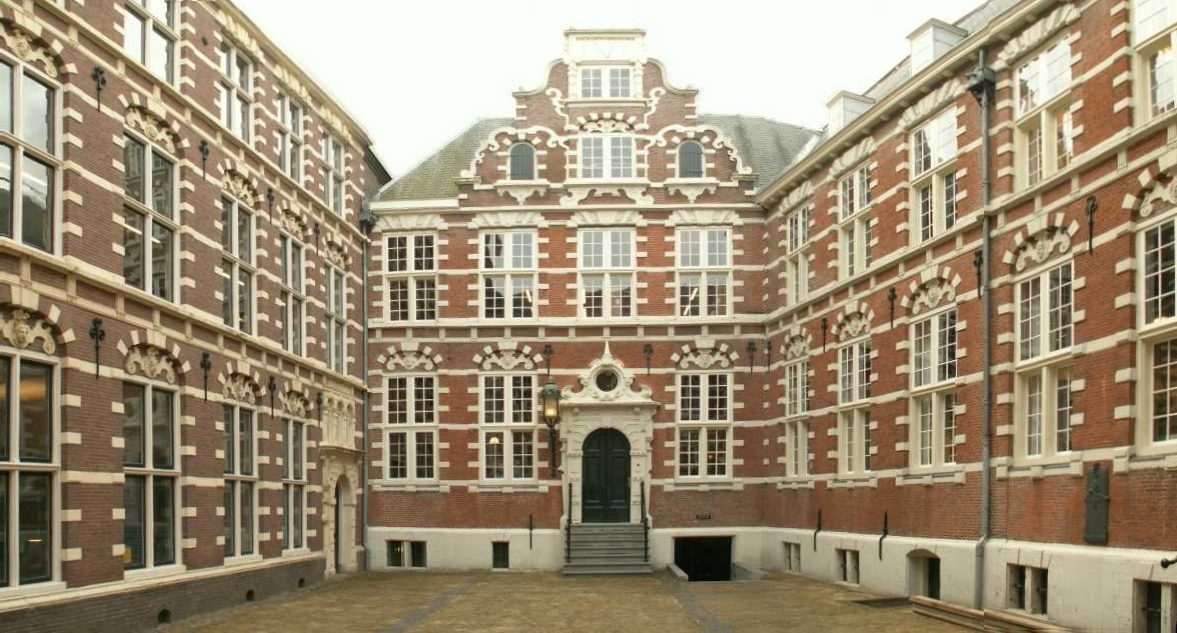 ODD FIND
Oost-Indisch Huis courtyard
The headquarters of the Dutch East India Company, now university; walk into the courtyard where the world's first multinational was run.
 ODD FIND
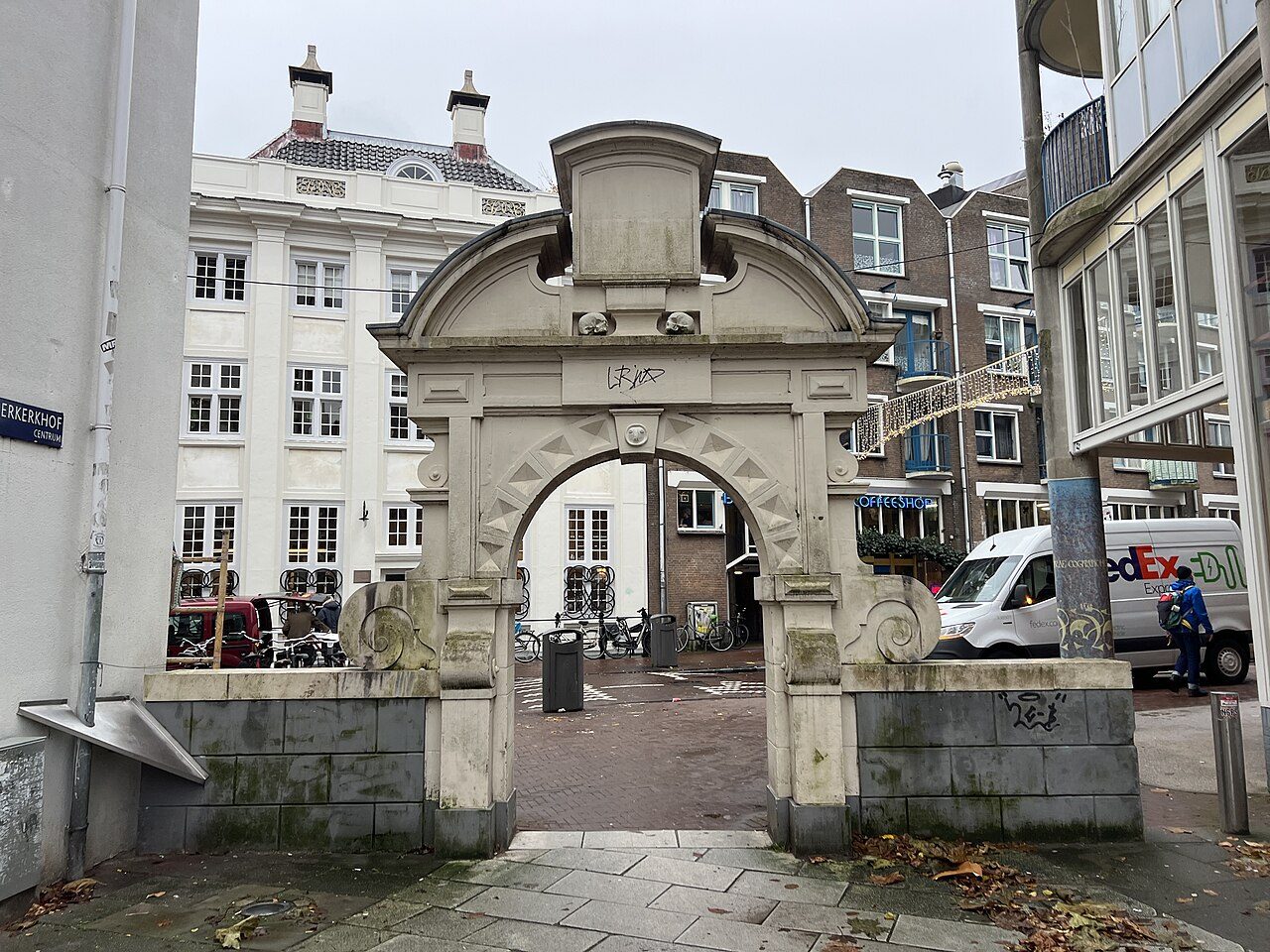
Skull gate of the Zuiderkerkhof
The old graveyard gate on the Sint Antoniesbreestraat, crowned with skulls.
 ODD FIND
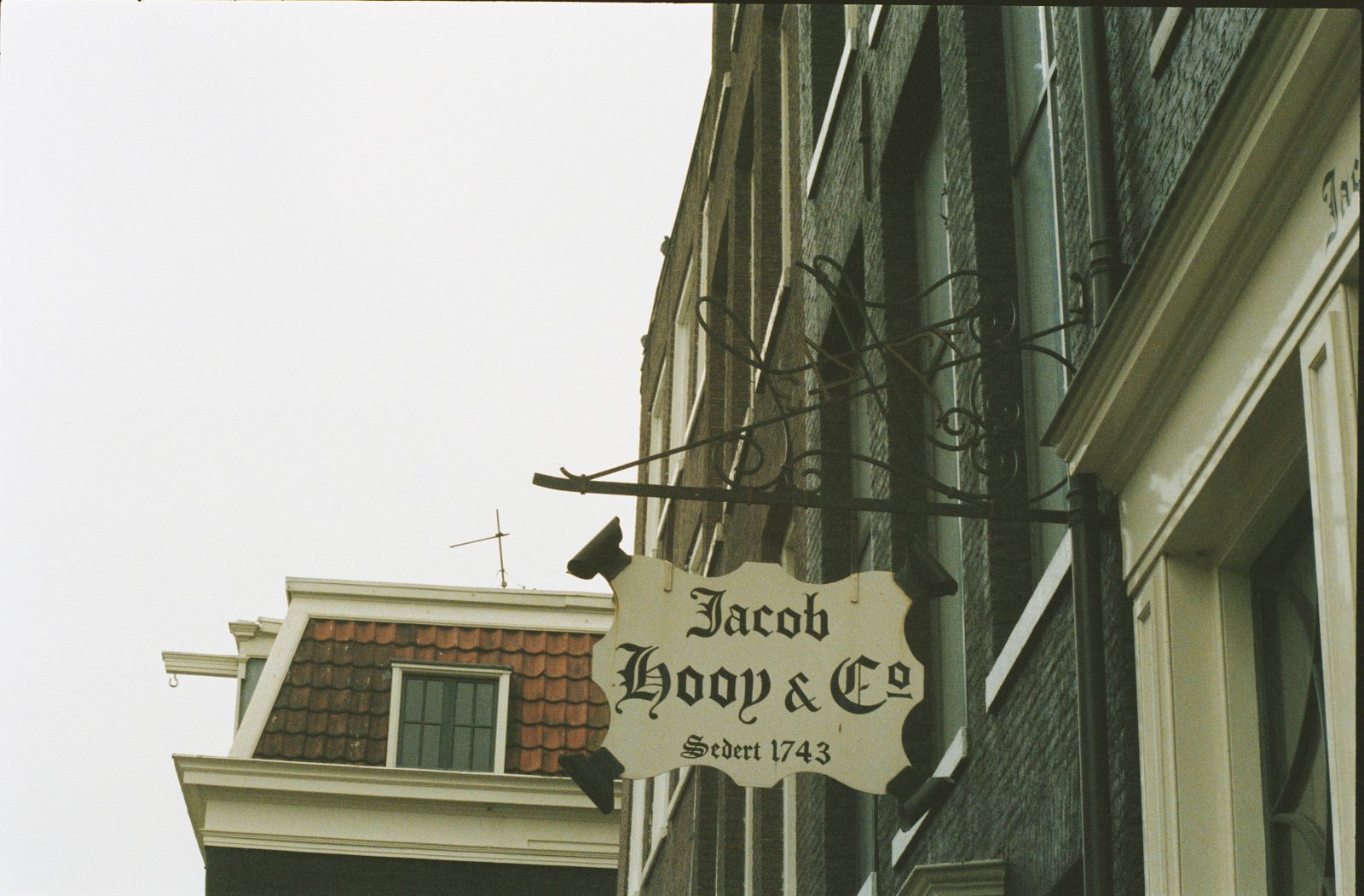
Jacob Hooy & Co
An apothecary shop unchanged since 1743: wooden drawers of herbs, liquorice jars and a 'gaper' head over the door.
 ODD FIND
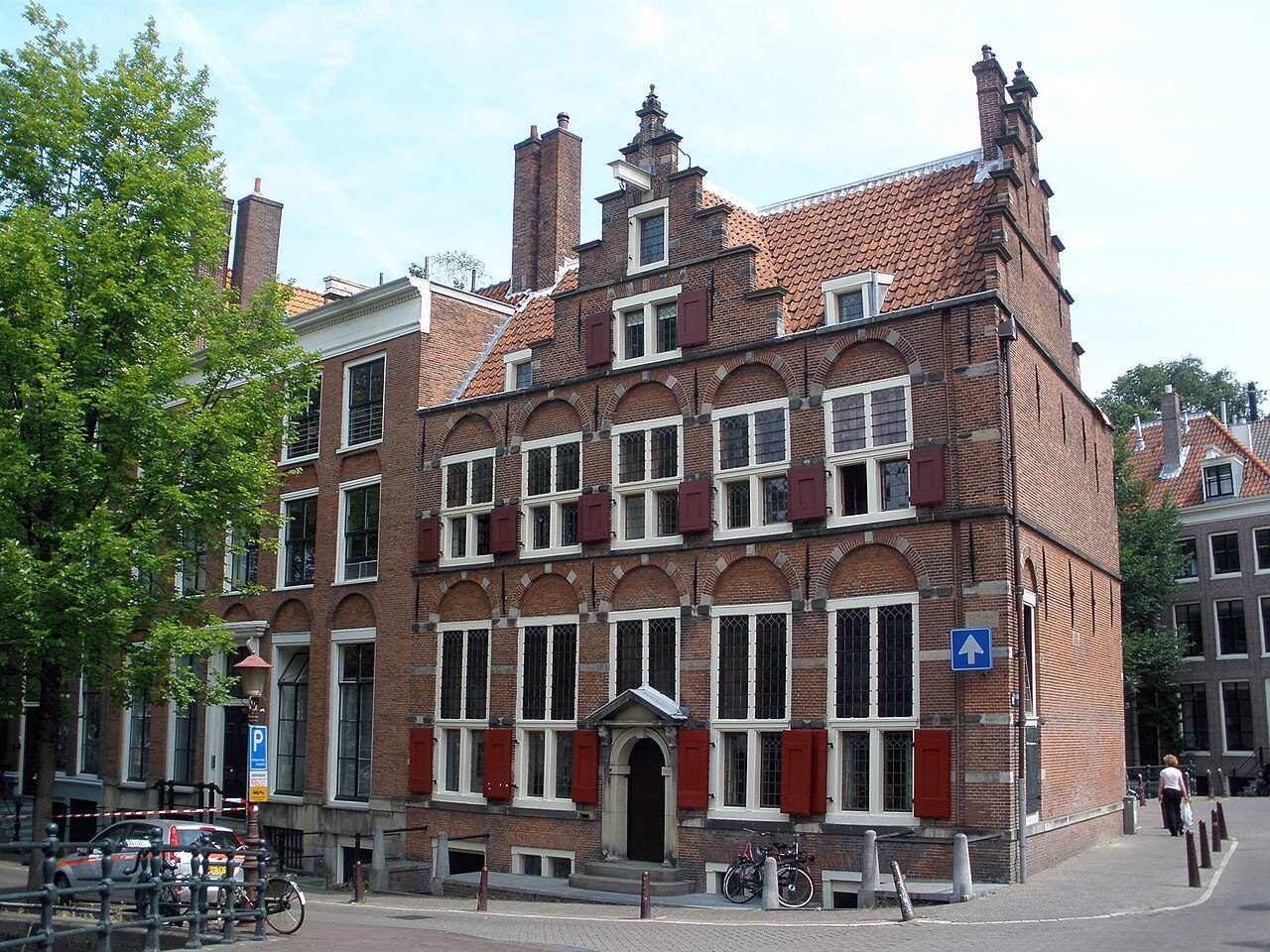
Huis aan de Drie Grachten
A 1610 house with a canal on three sides, one of the most photographed corners nobody can name.
 ODD FIND
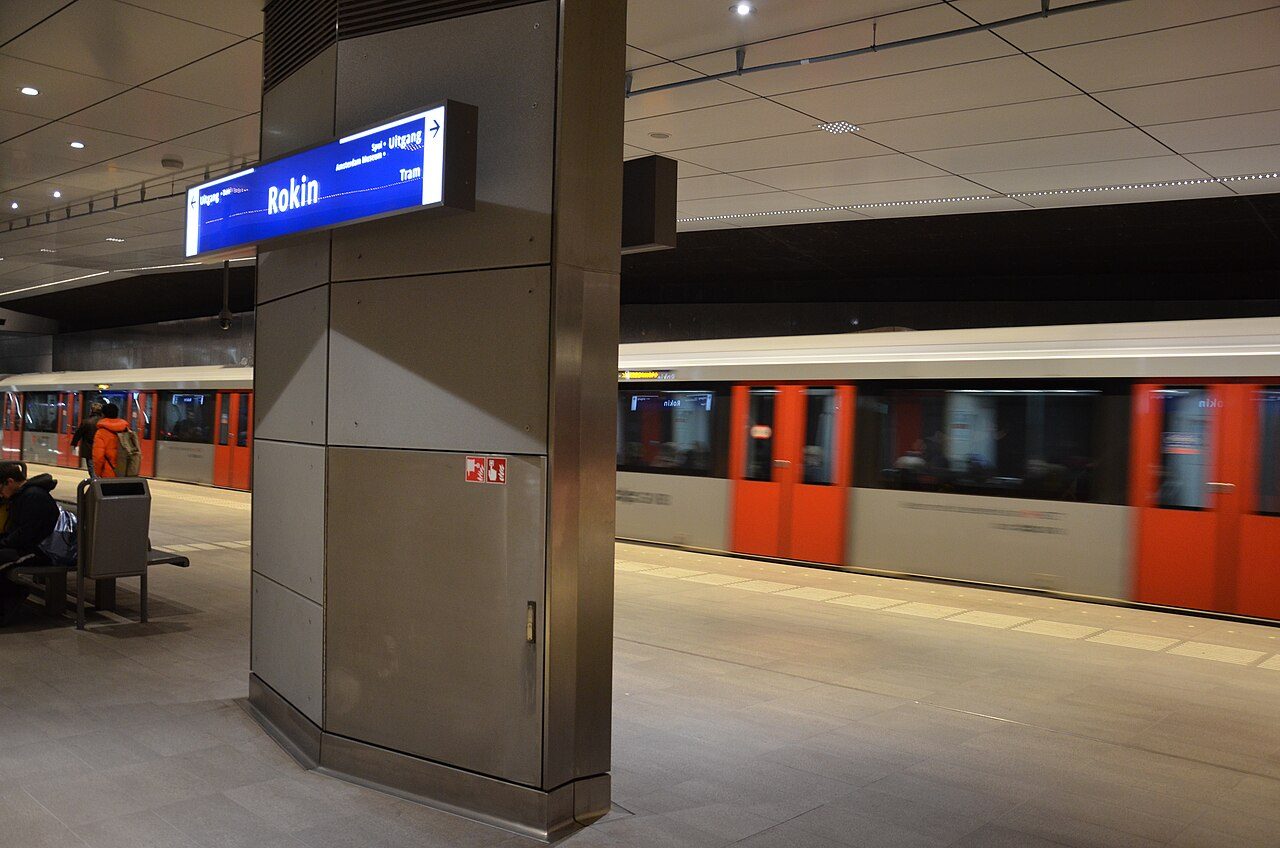
Below the Surface (Rokin metro)
Display cases in Rokin metro station with finds dug up for the line: keys, coins, toys and a 17th-century trumpet.
 ODD FIND
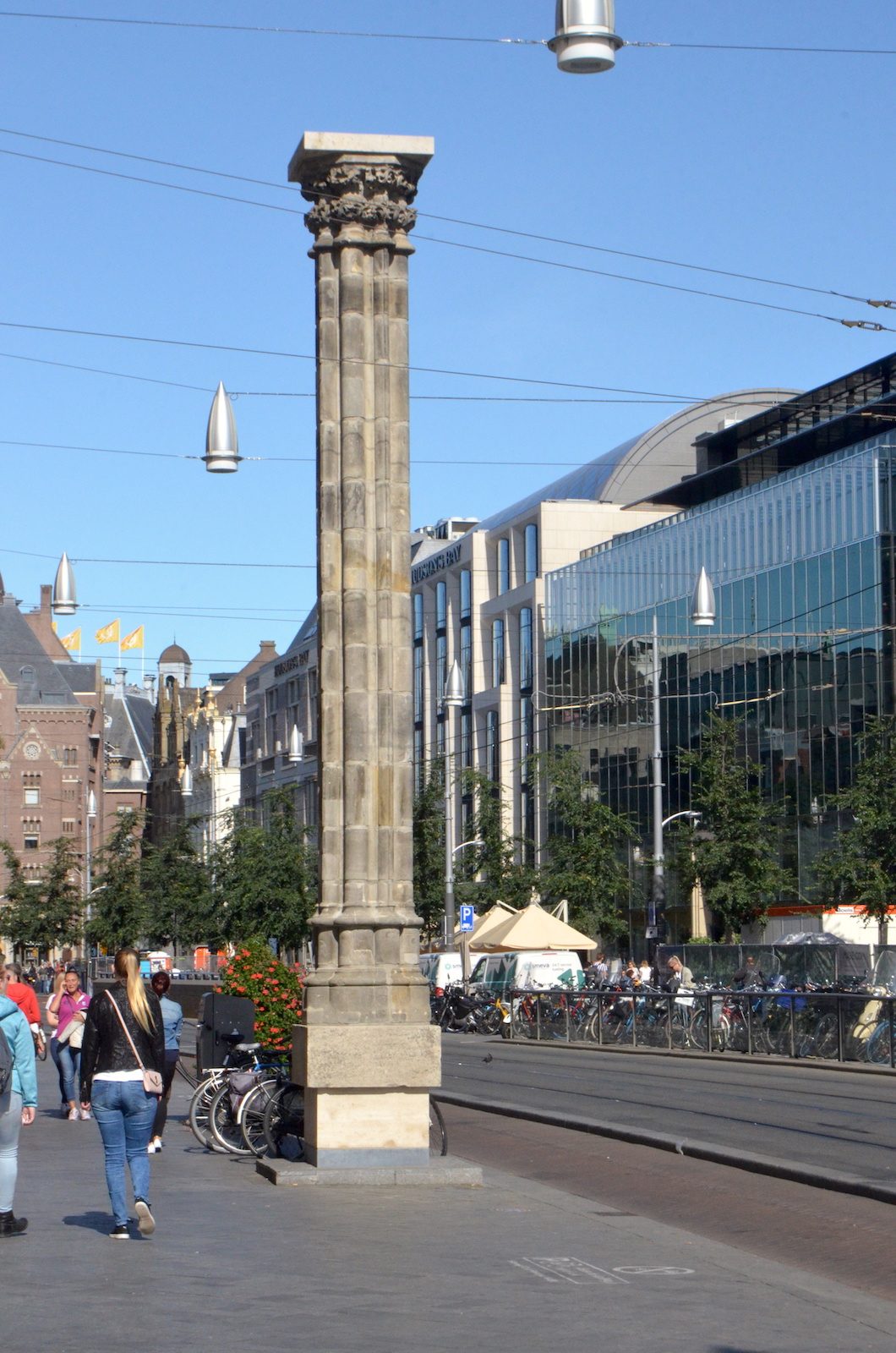
Mirakelkolom
A column on the Rokin for the Miracle of Amsterdam (1345), when a host thrown in the fire would not burn.
Tours and quests that pass here
These walks have a stop a few minutes from Pintohuis. Free, on your phone, start any time.
 AUDIO TOUR
In Rembrandt's Footsteps
From the biggest house on the street to bankruptcy and an unmarked grave. His Amsterdam, in the order he lived it.
 CITY QUEST
Rembrandt's Missing Panel
Count steps, columns and a missing piece of skyline. Rembrandt's city, looking closely.
 AUDIO TOUR
Van Gogh's Amsterdam
The years before the fame: a failed bookshop clerk walking these same streets. Ends at the museum door.