
MUSEUM
Cobra Museum
The museum of the post-war Cobra art movement, in Amstelveen.
Art beneath the foundations
The Cobra Museum in Amstelveen has art you will never see. In 1993, ten Cobra artists signed and painted colourful messages on its first foundation pile before it was driven into the ground. That is a fitting start for a museum devoted to artists who wanted creative freedom to reach beyond the picture frame.
Come for expressive painting, sculpture and experiments with everyday objects. The collection includes Karel Appel, Constant, Corneille and Lucebert, alongside less familiar names. It also covers the related groups Vrij Beelden and Creatie. Collection displays change, and temporary exhibitions bring in other national and international avant-garde artists. This is a focused place to get to know Cobra, rather than a survey of modern art.
A short movement, a long afterlife
Cobra was founded in Paris on 8 November 1948. In the aftermath of the Second World War, its artists and poets sought spontaneity and artistic freedom. Colourful, expressive painting became its best-known language, but collaboration between writers and painters mattered too. Its members did not agree on everything. Those differences were part of the movement, which lasted until 1951.
The museum opened on 8 November 1995, deliberately sharing Cobra’s birthday. Its collection began with works owned by collector J. Karel P. van Stuijvenberg. Karel Appel did not attend the opening. From a distance, he complained that he deserved a museum of his own in Amsterdam.
There is another Amsterdam connection in the address. Sandbergplein is named after Willem Sandberg, the former director of the Stedelijk Museum, who was responsible for Cobra’s controversial first major exhibition in 1949. Here, architect Wim Quist gave the art light-filled rooms and restrained white and grey surroundings. Let the paintings supply the colour.
Appel’s bird and Brands’s bicycle
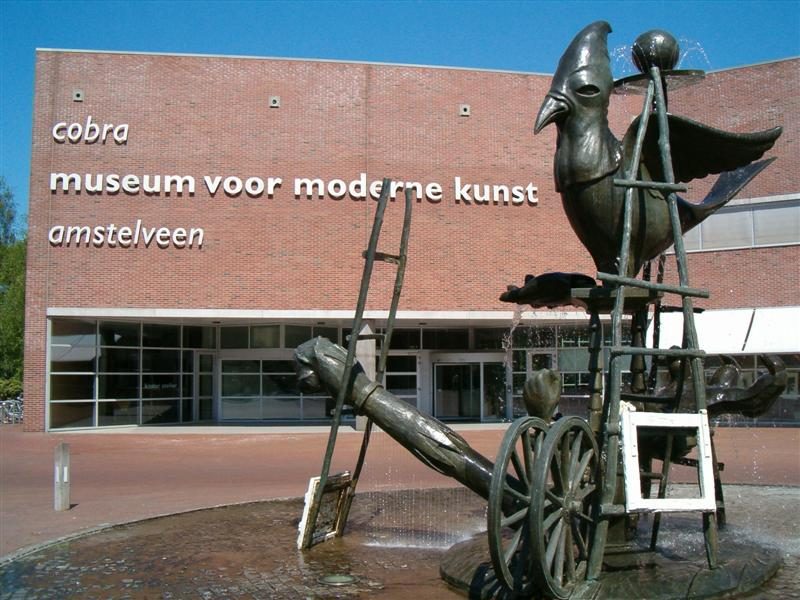
Before going inside, take a proper look at Appel’s fountain outside the entrance. Unveiled in 2001 for his eightieth birthday, it brings together a bird, a fist, a bowler hat and a wagon wheel. Appel gave the bird the meaning of freedom and the fist that of strength. It is the only fountain he ever made. Like Picasso’s sculpture in the Vondelpark, it rewards a pause rather than a passing glance.
Everyday things also became art for Eugène Brands. For *The Fine Bicycle Ride*, made in 1966–67, he combined a door from his family’s built-in cupboard with a wheel, pedal and saddle found at Amsterdam’s Waterlooplein. The museum connects the assembly with his youthful bicycle rides along the Amstel, Gein and Vecht. If it is on display, look for how those separate objects suggest both a bicycle and a remembered journey.
A garden seen from all sides
Look into the central garden, too. Shinkichi Tajiri designed this circular Zen garden, *Karesansui*, for the museum in 1995. Its sculptural forms suggest plants and elements of the landscape. Unlike dry gardens composed for a single viewpoint, Tajiri’s can be seen from every side.
You cannot enter the garden. Instead, change your viewing position around it. Watch how the upright forms overlap, and how their shapes sit against the raked pebbles. After the colour and gestures of the galleries, this is a quieter way to look, but still an encounter with an artist’s carefully made world.
Things to know
- Head to Sandbergplein in Amstelveen, not central Amsterdam.
- Allow around 90 minutes for the galleries and garden.
- Check the current exhibitions before setting out; collection displays change.
- Pause at Appel’s fountain before going inside.
- View Tajiri’s garden from several sides; it cannot be entered.
- Opening hours and prices can change. Check the official website before you go. Official website
What people say
Related spots
More things to do in Amsterdam ›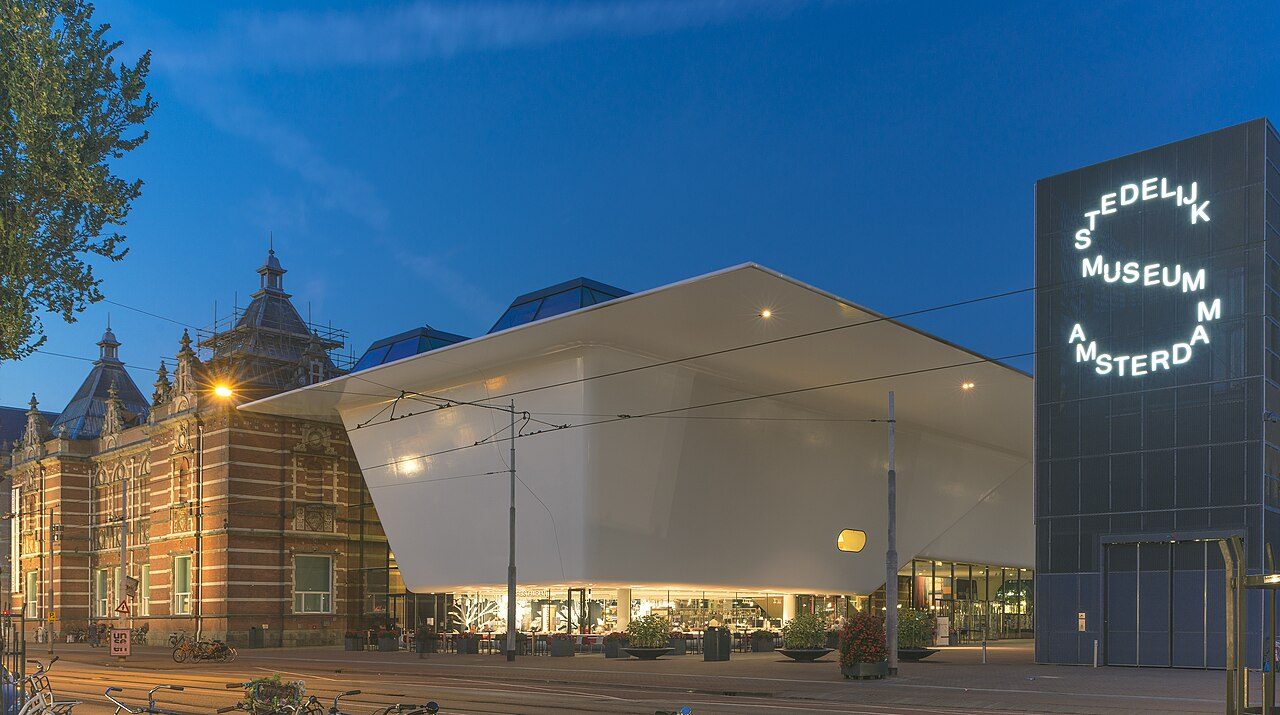
Stedelijk Museum
Modern and contemporary art and design fill a red-brick museum and its white extension on Museumplein.
Picasso in the Vondelpark
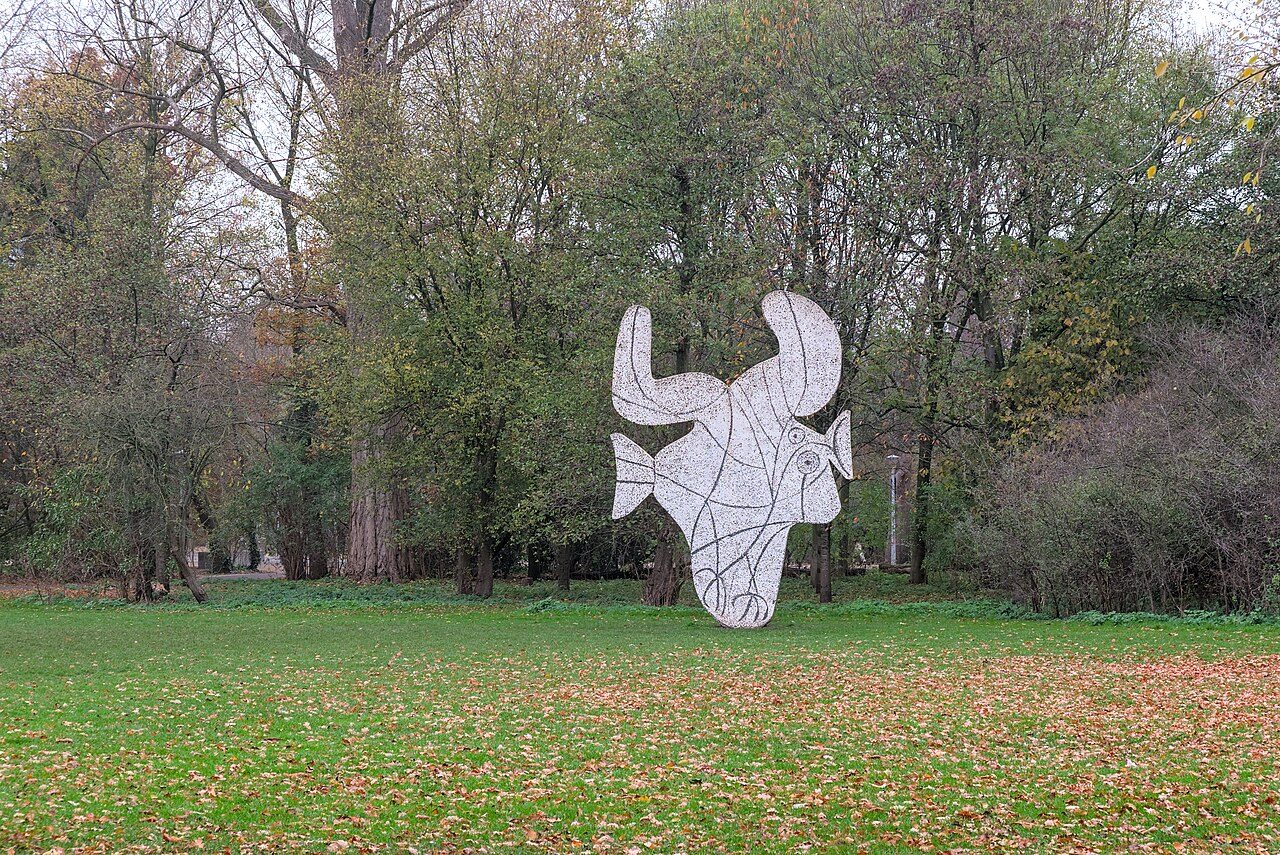
A real Picasso, 'Figure découpée' (the fish), standing on a lawn in the Vondelpark since 1965. Joggers pass it without looking.
Museum Jan
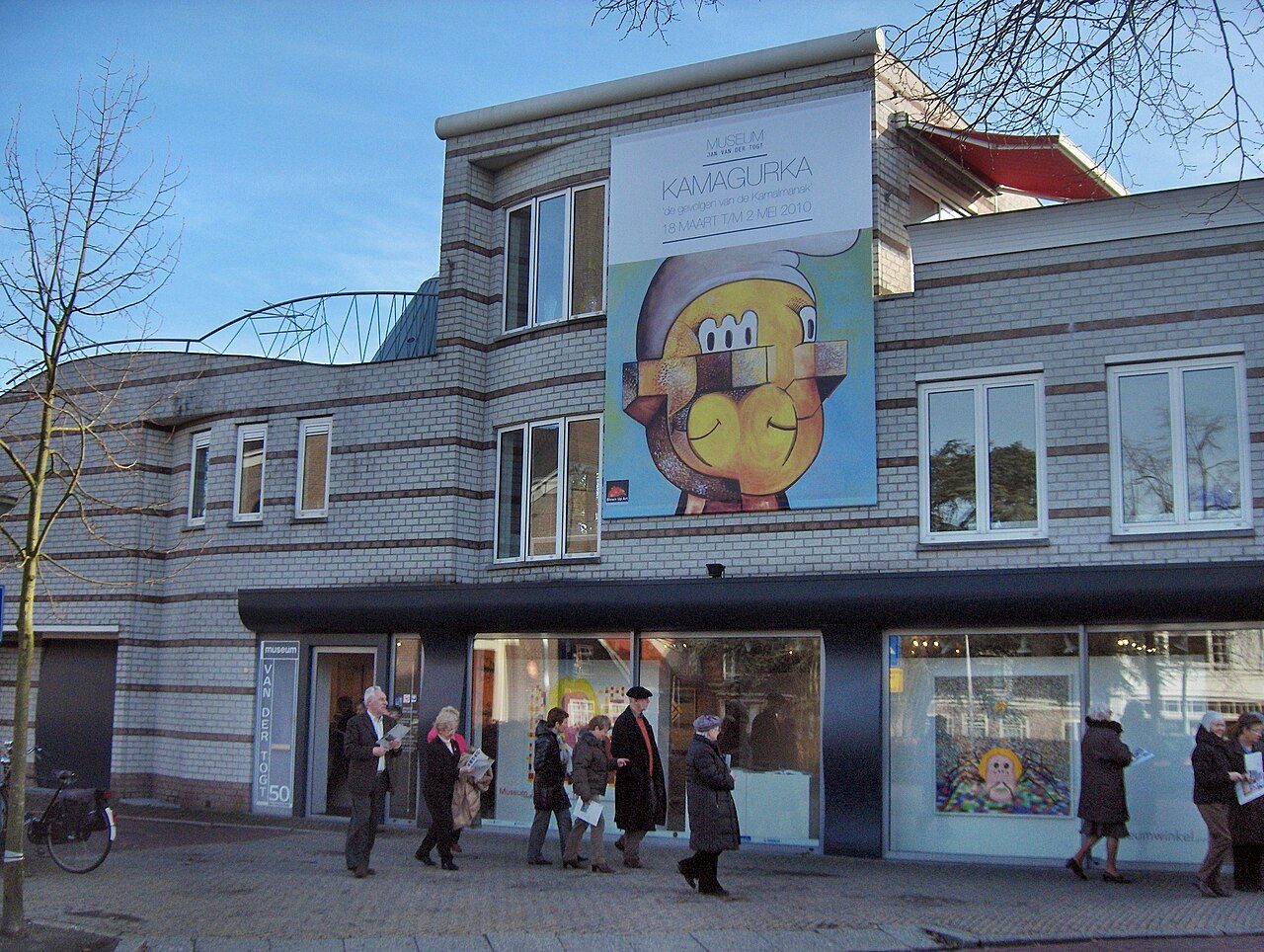
Modern art and glass in Amstelveen.
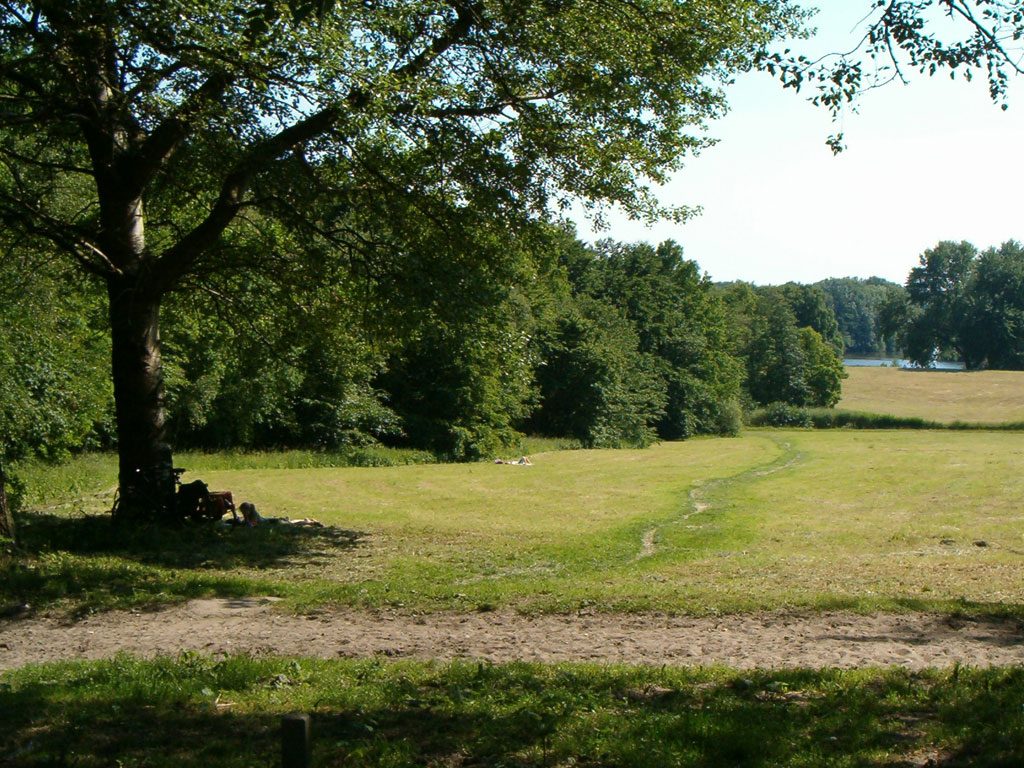
Amsterdamse Bos
A vast designed forest for walks, cycling and rowing, with a cherry grove that briefly blooms each spring.
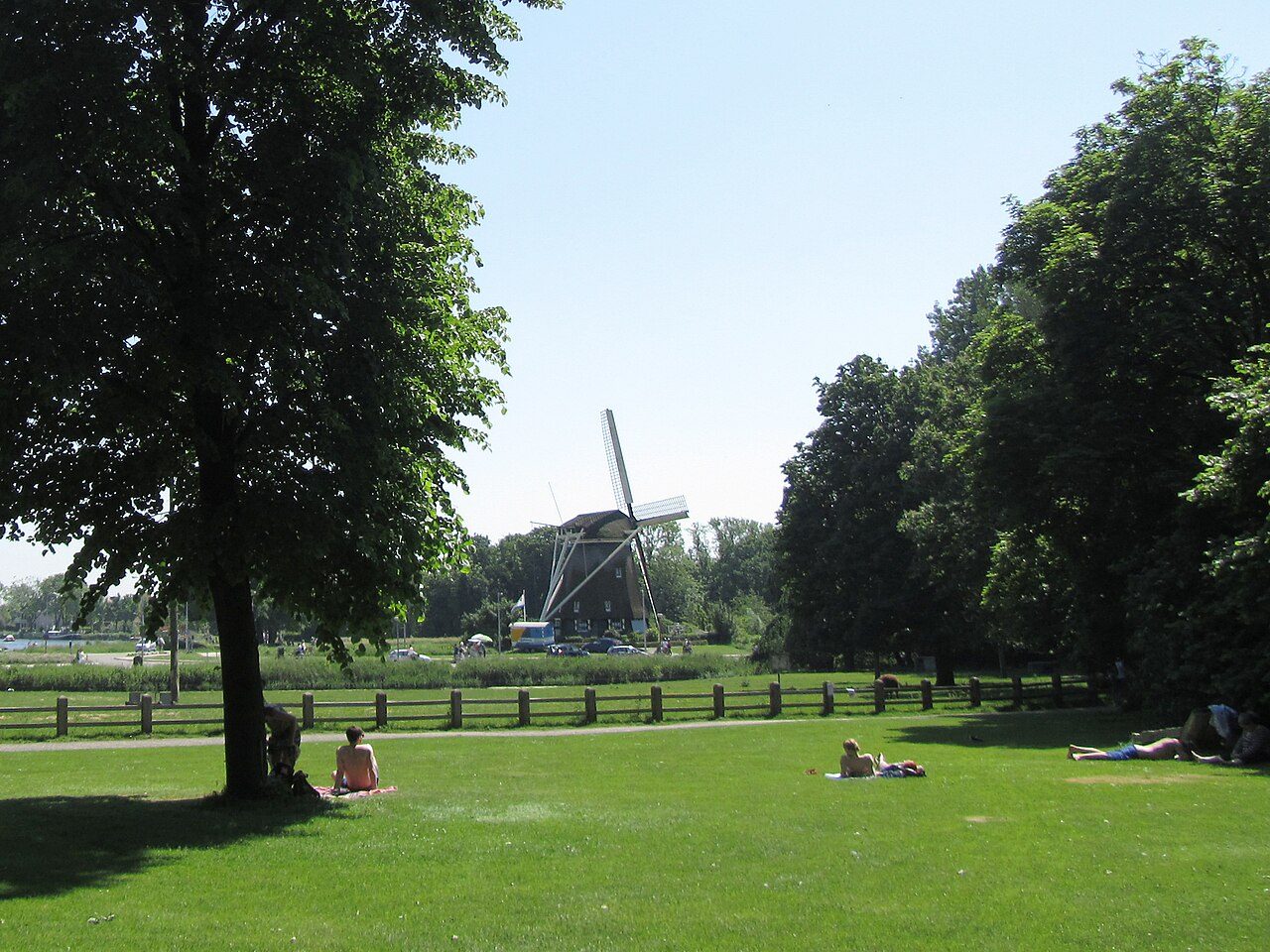
Riekermolen
The windmill on the Amstel that Rembrandt drew, with his statue beside it.
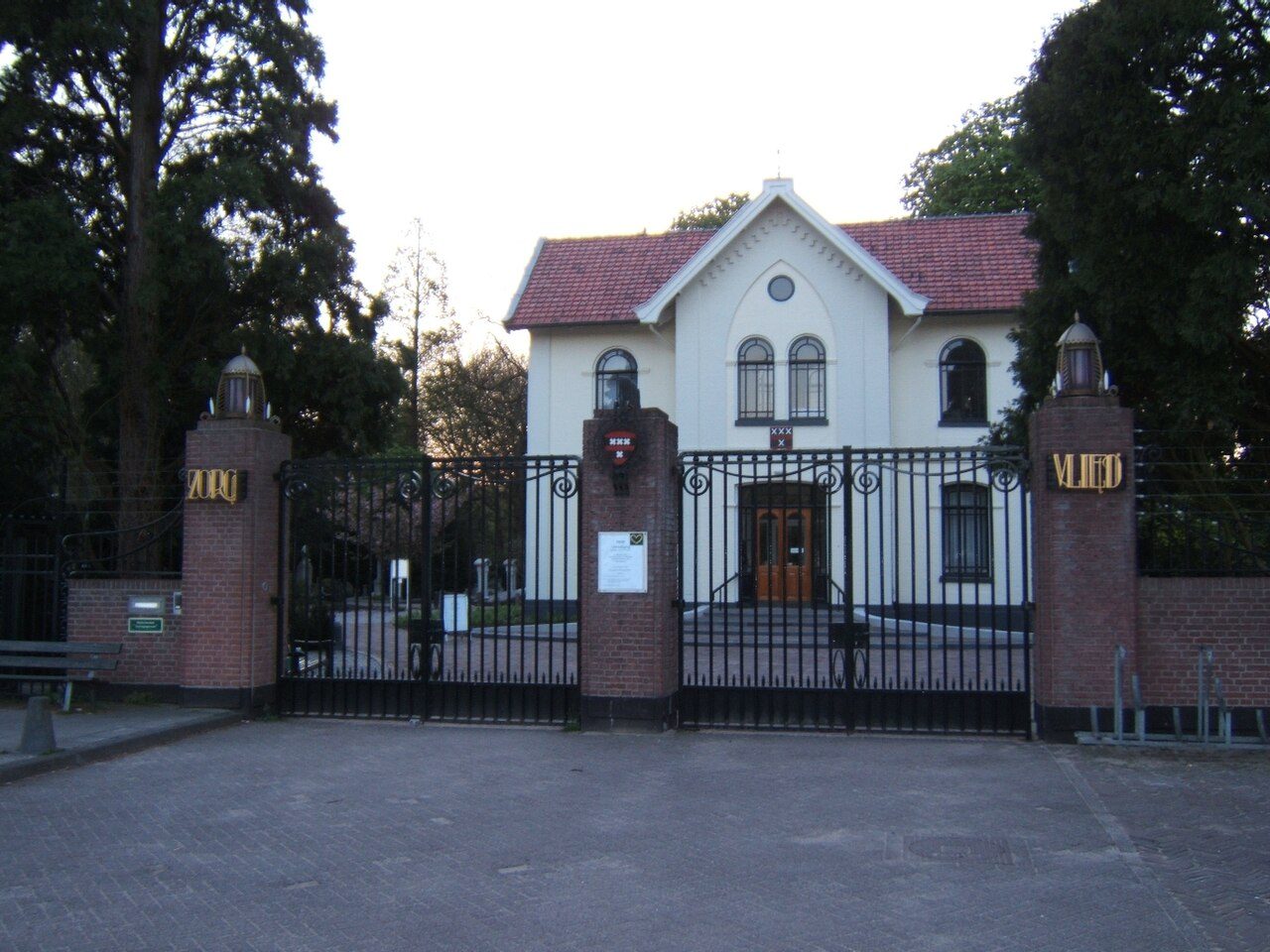
Zorgvlied
A working memorial park beside the Amstel, where winding paths lead past old trees and distinctive graves.
Walk it with a guide or a quest
If you want a story on the way, these walks also live in Amsterdam.
 FREE AUDIO TOUR
Amsterdam Ghost Tour
Amsterdam’s ghost stories belong to real streets, where crowds waited for spirits and families went out to look at hanging bodies. You can stand in those places today, with canal water beside you and old church towers overhead.
 FREE AUDIO TOUR
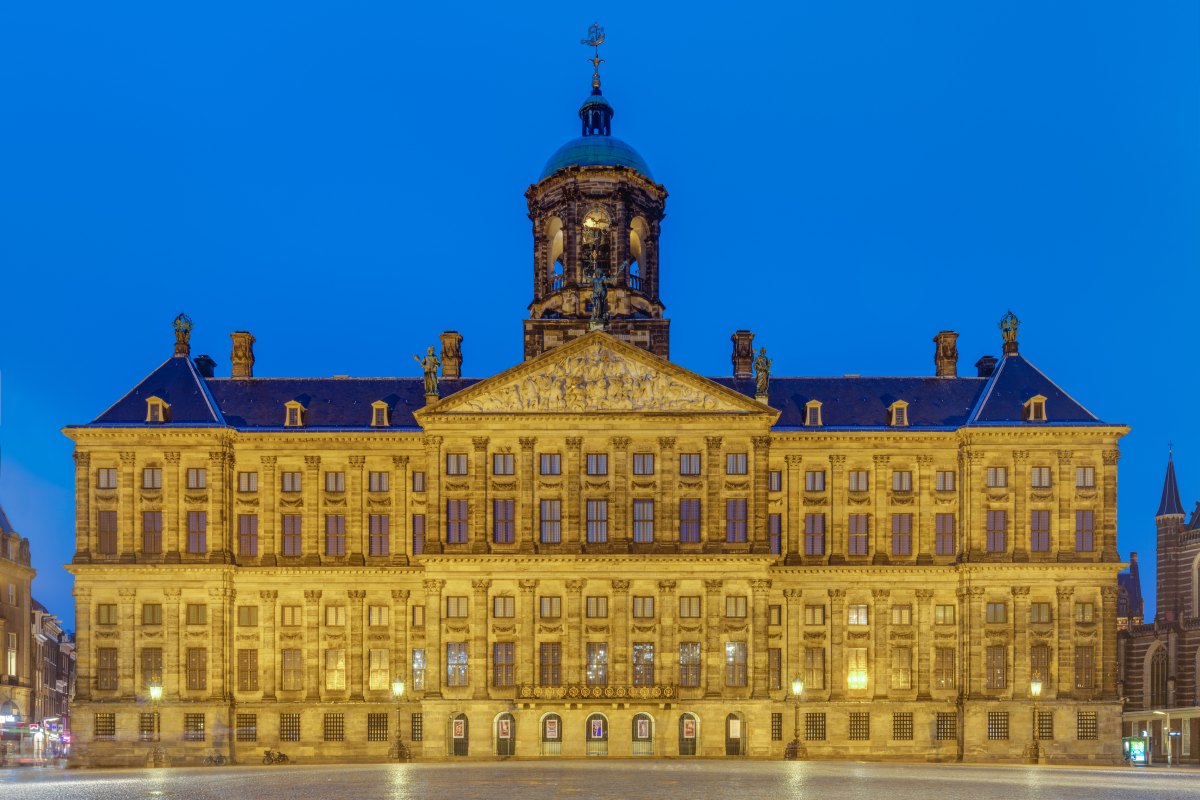
Amsterdam in a Day: Highlights Walk
Amsterdam’s canals and grand houses tell you how a trading city grew rich, but that is only half the story. If you have one day in Amsterdam, spend it on the streets where merchants, workers and people in hiding lived within walking distance of each other.
 FREE AUDIO TOUR
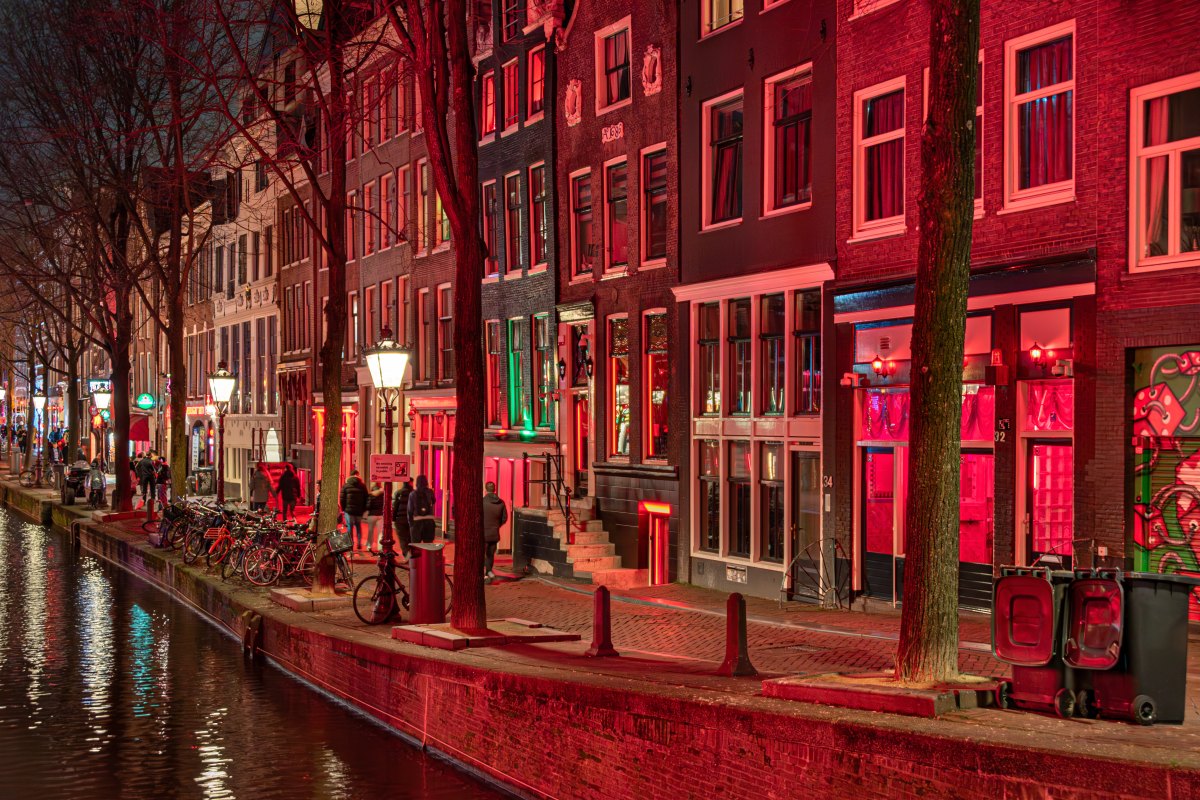
Red Light District
Amsterdam’s Red Light District is a neighbourhood where sex workers work behind street-level windows, right beside a church. Walk these lanes and you’ll stand where the city has made room for the sex trade while punishing people who worked in it.