
ODD FIND
Zevenlandenhuizen
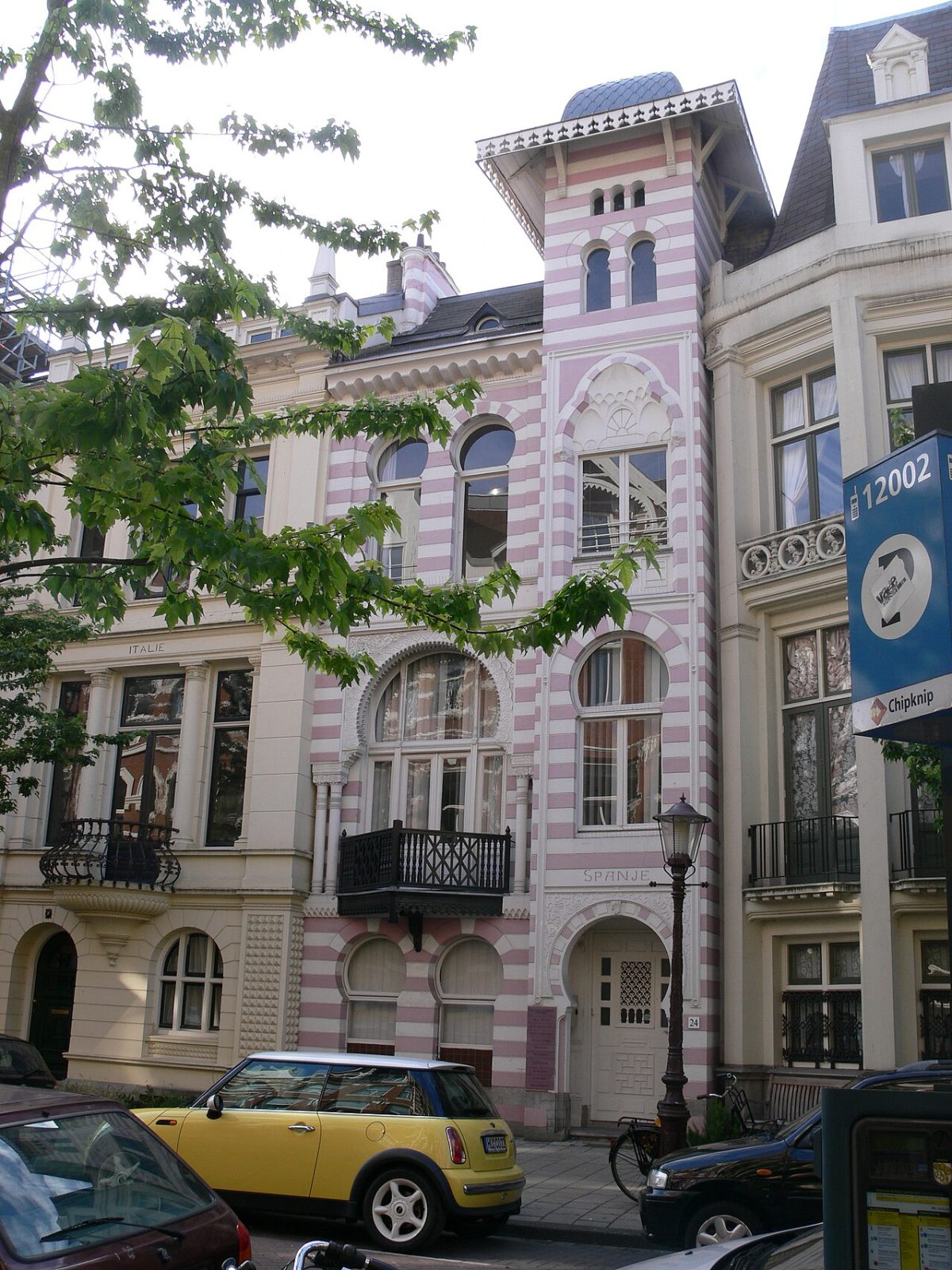
Seven houses in a row, each built in the style of a different country (1894), on the Roemer Visscherstraat.
Seven countries, one pavement
On the Roemer Visscherstraat, in the Vondelpark neighbourhood, seven houses stand side by side. Each one is built in the style of a different European country. Walk along the pavement and the facade changes every few steps.
This is a short visit. Give it ten or fifteen minutes and a slow look. Rooflines, windows, brickwork and decoration all shift from one house to the next. It costs nothing, and it shows you how playful Amsterdam's architects could be when a client gave them room.
How it came about
The row dates from 1894. It is one of the best-known works of the Dutch architect Tjeerd Kuipers, who designed it for an Amsterdam client, Sam van Eeghen. The style is called eclecticism. You borrow from the past and from abroad, and you mix freely.
There is a reason this happened in the nineteenth century. Architects then had a romantic longing for whatever was far away. The word for it is exoticism. A row of homes that each borrowed from a different country put that longing into brick and stone.
The street is named after Roemer Visscher, a Dutch writer of the Golden Age. The name is thoroughly local, and the houses look abroad.
What to look for
Start at number 20 and walk along to 30A. Take one house at a time.
Number 20 is Germany, in the romantic style, with pointed-arch windows. Number 22 is France, influenced by the look of a Loire castle. Number 24 is Spain, a villa inspired by the architecture of Granada, with Moorish touches.
Number 26 is Italy, built as a palazzo. Number 28 is Russia, and this is the one that makes people stop. It is dressed as a cathedral, with an onion-shaped dome. Number 30 is the Netherlands, a house in Renaissance style. Number 30A is England, in the manner of a typical English cottage.
Look up first, because the top of a facade says the most. Then lower your eyes to the windows and doors, then to the materials. After that, cross to the opposite pavement and take in all seven together.
These are people's homes. Photograph from the street, keep your voice down and stay out of the doorways.
Before you go
- Walk from Leidseplein or Museumplein. It is five or six minutes on foot from either.
- It is an ordinary street, so it is free and you can look at any time.
- Go in daylight, when the details on the facades show best. Mornings are usually quietest.
- Cross to the opposite pavement to see all seven houses in one view.
- The houses are private homes, so stay on the street and keep noise down.
What people say
Related spots
More things to do in Amsterdam ›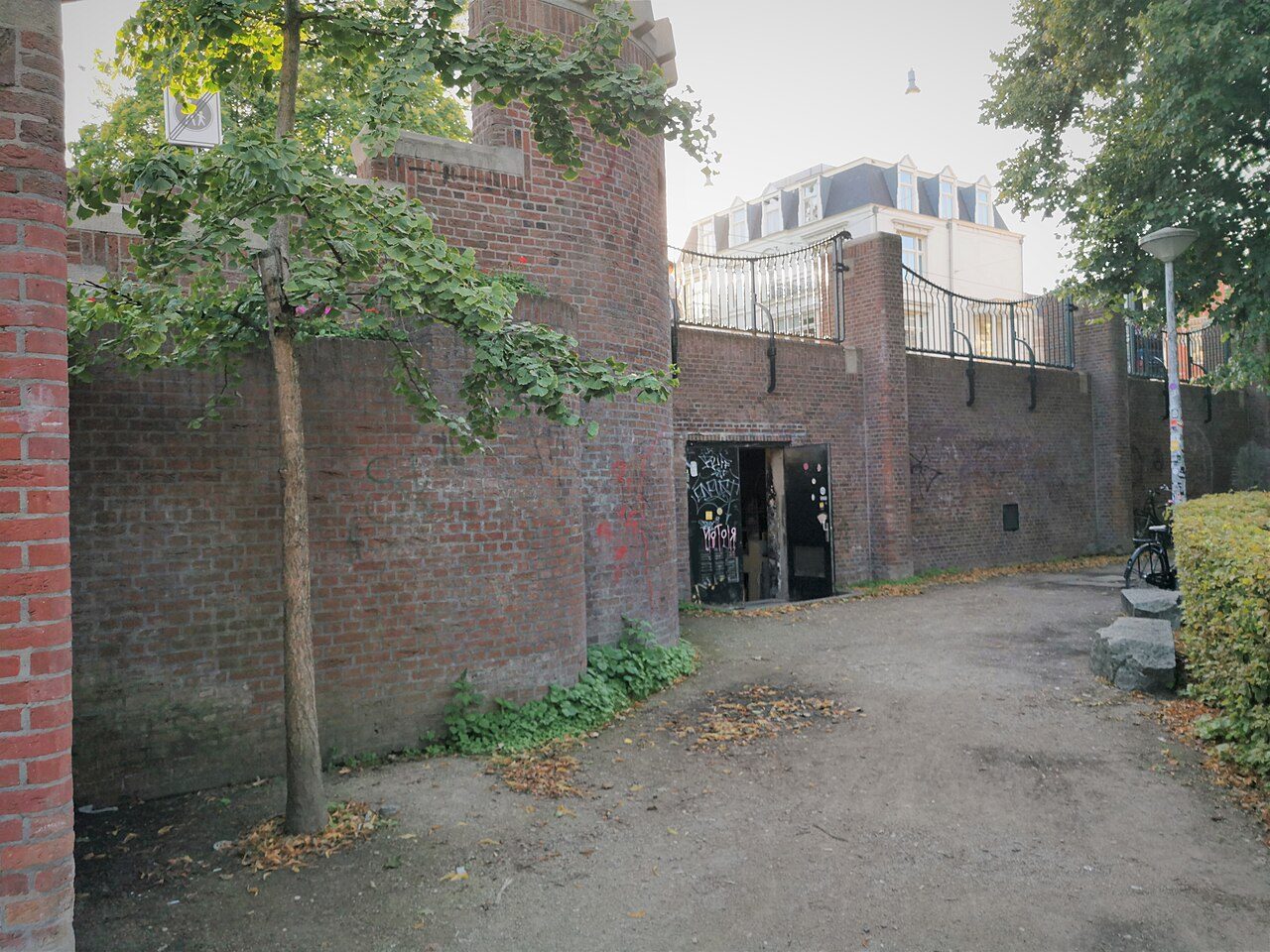 ODD FIND
Vondelbunker
A Cold War nuclear shelter under a Vondelpark bridge, now an underground cultural venue.
 ODD FIND
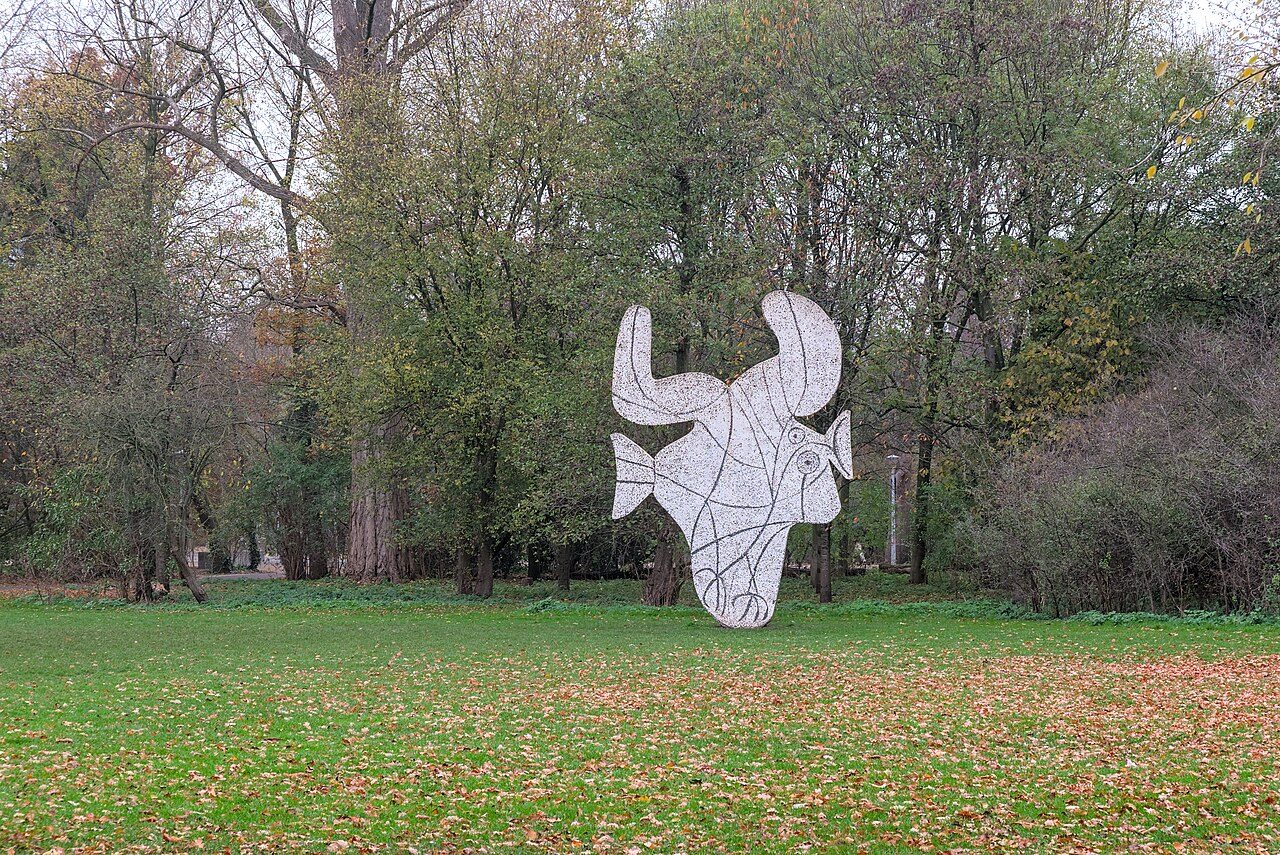
Picasso in the Vondelpark
A real Picasso, 'Figure découpée' (the fish), standing on a lawn in the Vondelpark since 1965. Joggers pass it without looking.
 FILM SPOT
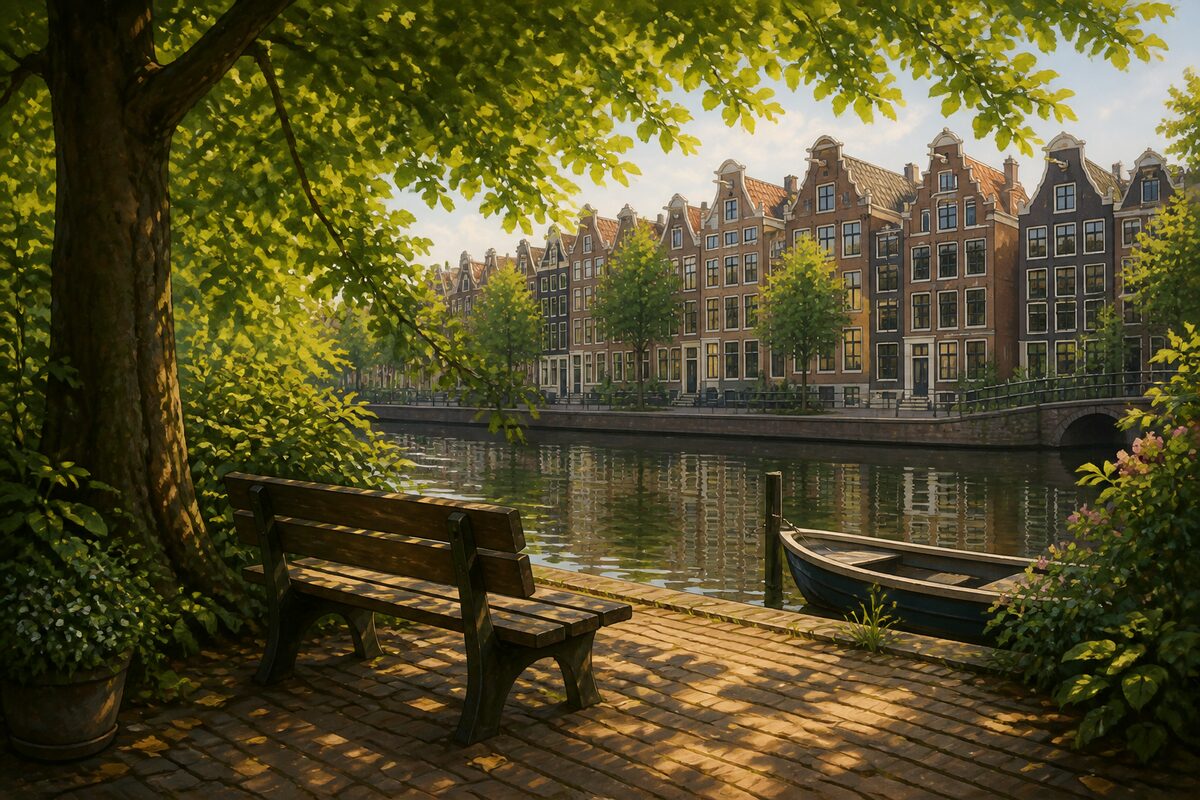
The Fault in Our Stars bench
The bench on the Leidsegracht where Hazel and Augustus sit in The Fault in Our Stars (2014). Fans of the film still come from all over the world for a photo.
 MUSEUM
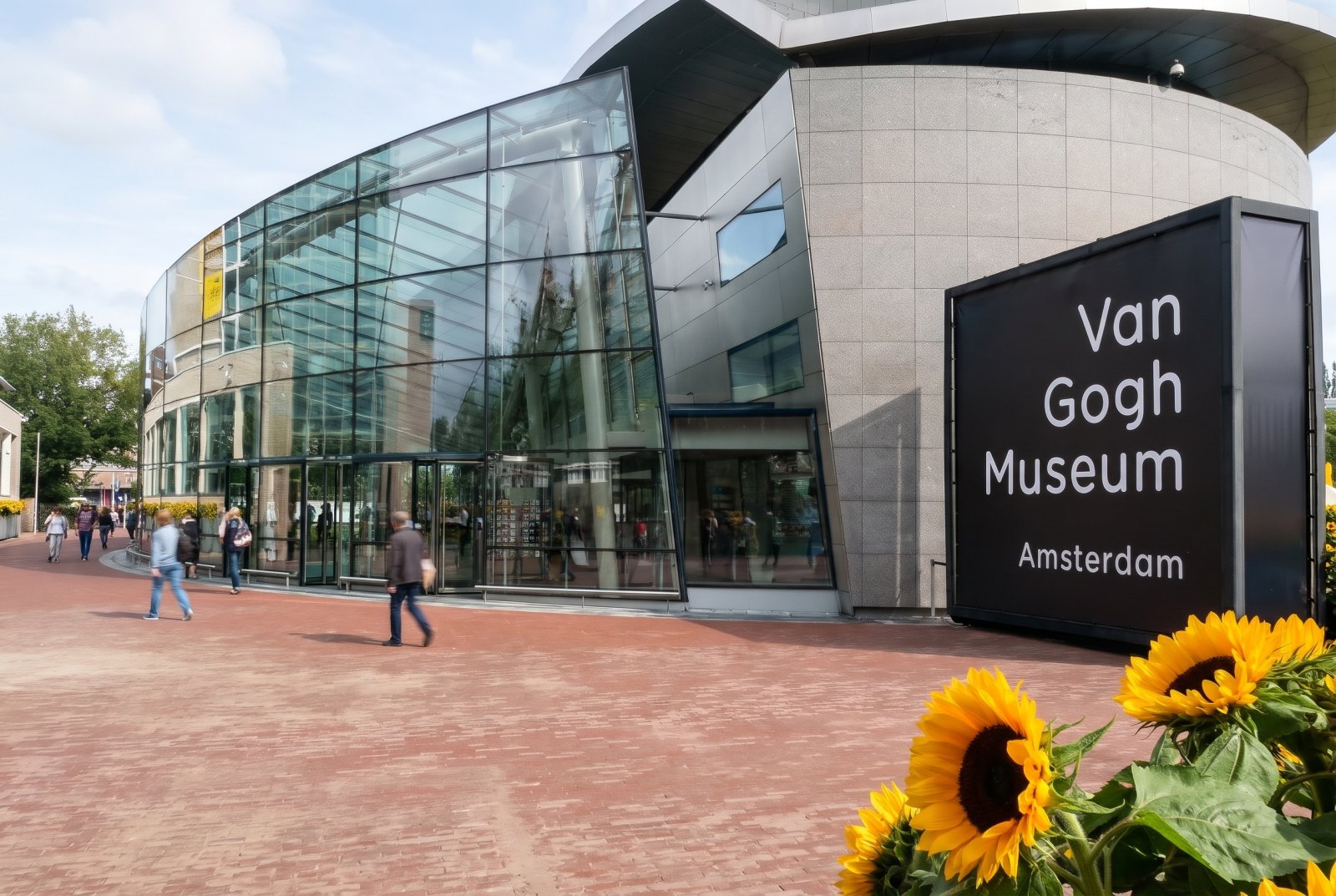
Van Gogh Museum
The world's largest Van Gogh collection: the Sunflowers, the bedroom and his letters.
 MUSEUM
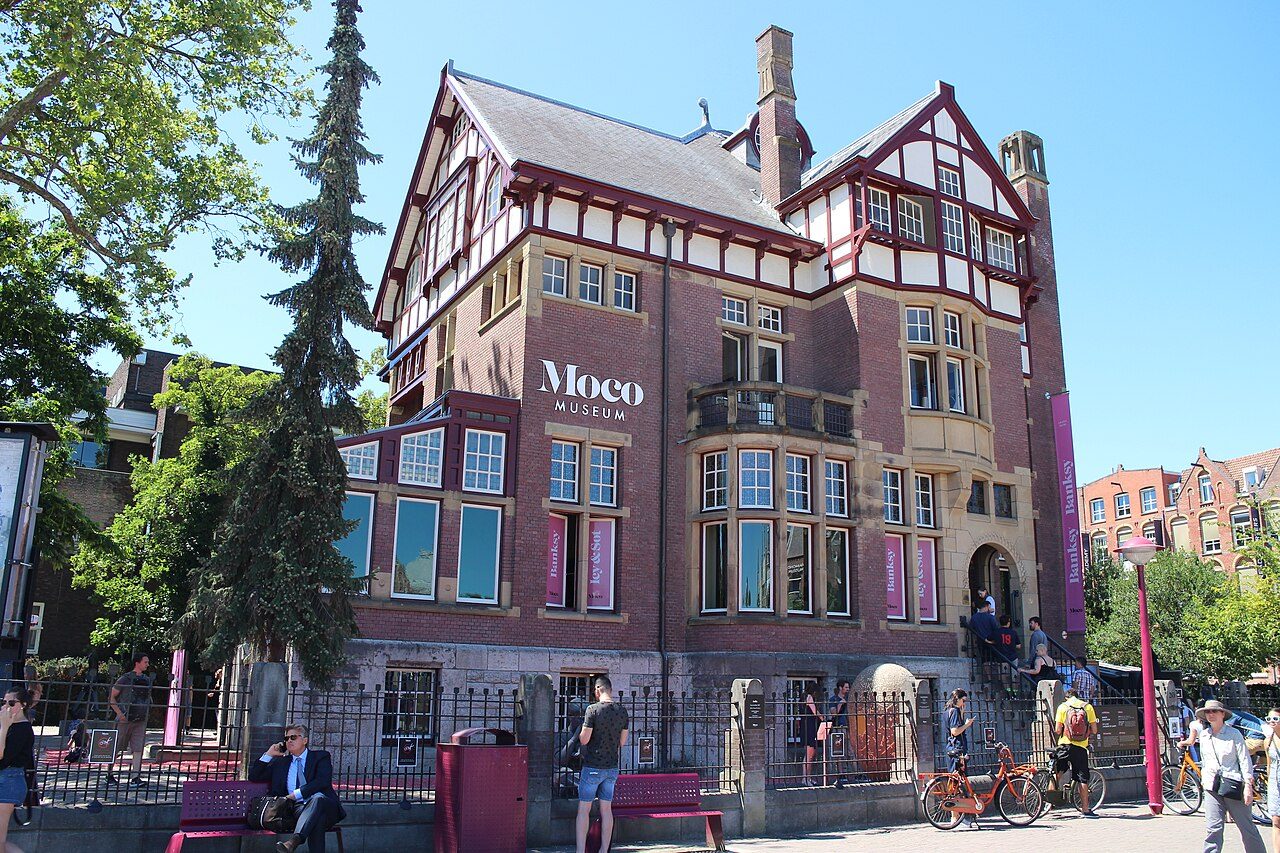
Moco Museum
Banksy, Warhol and digital art in a villa on Museumplein.
 MUSEUM
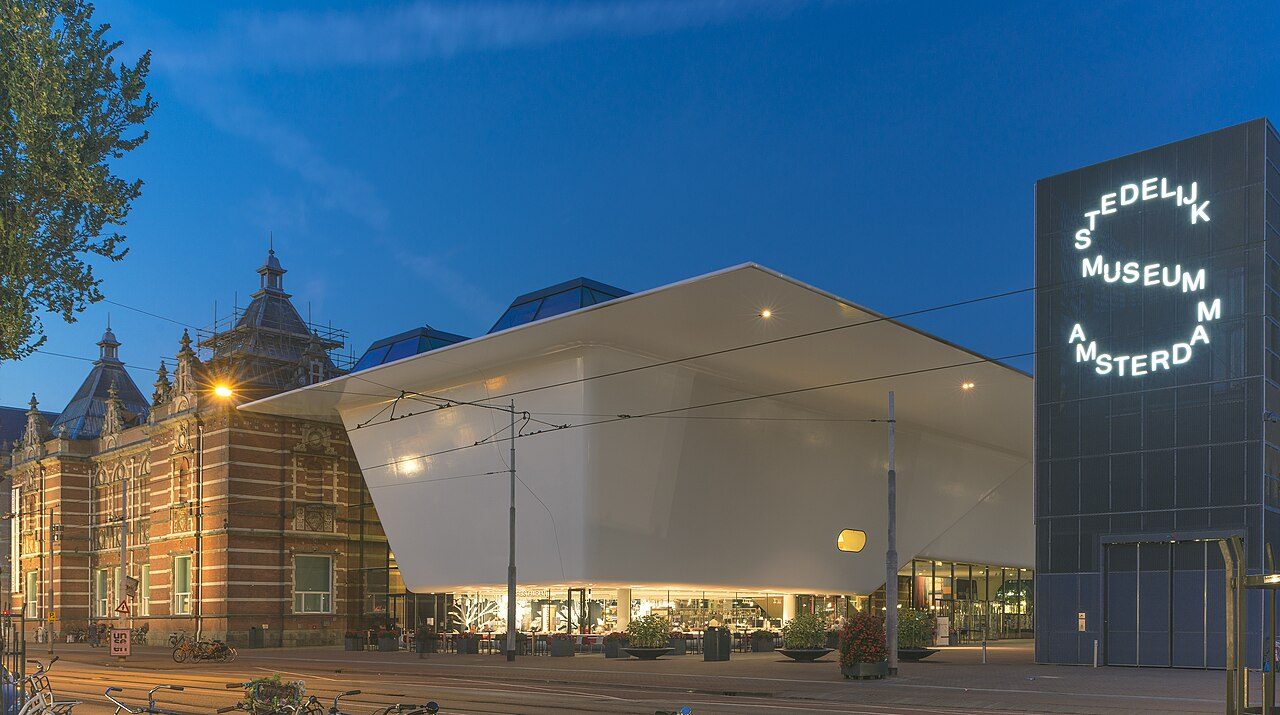
Stedelijk Museum
Modern and contemporary art and design in the 'bathtub' building on Museumplein.
Tours and quests that pass here
These walks have a stop a few minutes from Zevenlandenhuizen. Free, on your phone, start any time.
 AUDIO TOUR
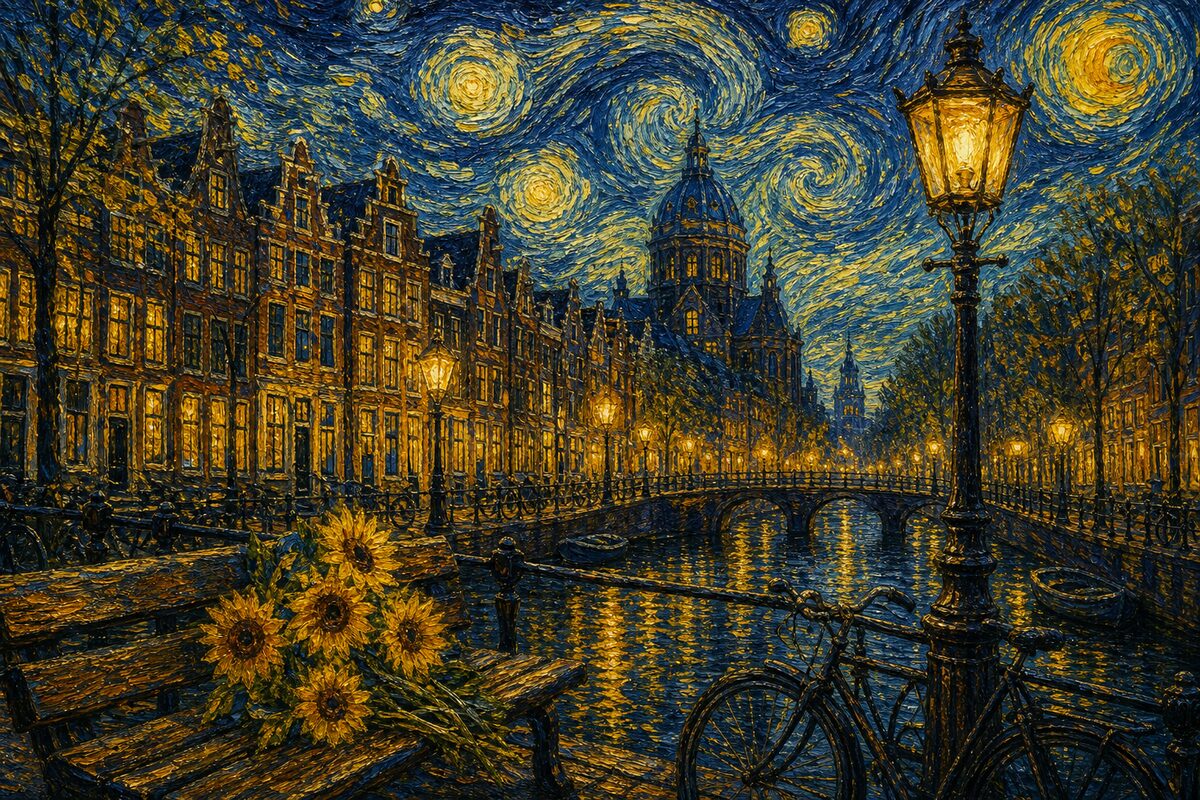
Van Gogh's Amsterdam
The years before the fame: a failed bookshop clerk walking these same streets. Ends at the museum door.
 AUDIO TOUR
In Rembrandt's Footsteps
From the biggest house on the street to bankruptcy and an unmarked grave. His Amsterdam, in the order he lived it.
 CITY QUEST
Rembrandt's Missing Panel
Count steps, columns and a missing piece of skyline. Rembrandt's city, looking closely.