
LANDMARK
Rembrandtplein
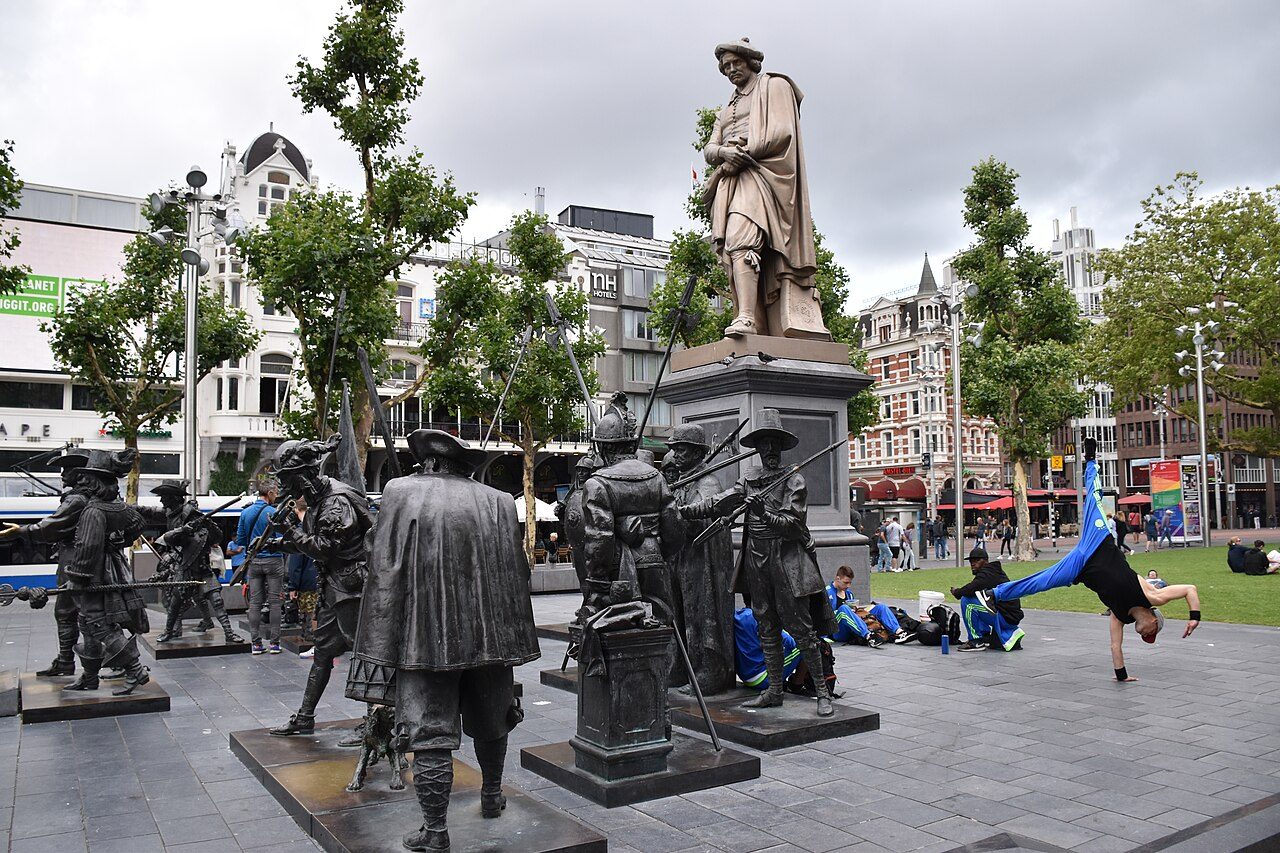
A lively Amsterdam square centred on Louis Royer’s cast-iron Rembrandt statue. The Night Watch bronzes shown in older photos were removed in 2020.
An iron painter above the square
Rembrandtplein centres on Louis Royer’s cast-iron statue of Rembrandt, unveiled by King Willem III in 1852. Not everyone greeted it solemnly. That year, Amsterdam schoolmaster Jan Schenkman wrote a poem imagining two unimpressed local women discussing the monument. Told that Rembrandt was a painter, one jokes that her son might get a statue too: he is learning to be a glazier. It is a fitting introduction to a square where public celebration and everyday amusement have long shared the same ground.
The figure was cast in one piece and is Amsterdam’s oldest surviving public statue. Rembrandt himself lived nearby from 1639 to 1656, in what is now the Rembrandt House Museum. Here, you get a different view of his reputation: the painter turned into a public monument, surrounded by café terraces and nightlife.
Butter, fairs and an imperial encounter
If you approach from the Munttoren, about three minutes on foot away, imagine arriving with goods rather than a camera. Before it became Rembrandtplein, this was the Botermarkt, or butter market. The former Regulierspoort became a weigh house in 1668. Farmers sold dairy products and poultry, while autumn fairs brought dance orchestras and circus tents. In 1876, the statue moved into a central position and the square took Rembrandt’s name.
Its crowds could also provide unwelcome attention. In 1885, Empress Elisabeth of Austria, known as Sisi, was crossing the square when Leon Bindshuyden struck the fan concealing her face with his umbrella. He said he wanted to see her face and had not known who she was. Police arrested him. Sisi continued her walk unharmed.
Terraces, musicians and a rescued mosaic
The terraces have a long history. In March 1884, the Algemeen Handelsblad noticed customers sitting outside Café Mille Colonnes as though it were midsummer. Inside, mirrors multiplied the iron columns to suggest a hall with a thousand of them. The café occupied numbers 11–15; that address later became the nightclub Escape.
Another nightclub, Femina, received the Beatles and their stand-in drummer Jimmy Nicol in 1964. Nicol reportedly sat in with the house band. Accounts differ on whether the other Beatles played too, so do not picture a confirmed full-band concert.
At Café Schiller, look for Joop Sjollema’s glass mosaic. During restoration in 2005, pieces fell out of their leadwork. Regulars were invited to help save it by adopting a whole character. The little monkey at the far right is Sjollema’s self-portrait. It is a wonderfully personal detail in a square so often associated with large crowds.
What remains around Rembrandt
Older photographs can be misleading. They show 22 bronze figures from The Night Watch gathered around the monument. Mikhail Dronov and Alexander Taratynov created them for the celebrations of Rembrandt’s 400th birthday in 2006. First installed in 2005, they later travelled abroad and returned in December 2012.
On 12 February 2020, the figures were removed after the square’s business association and the artists failed to agree on a rental or purchase. The cast-iron Rembrandt remains, but that bronze company does not.
Walk around the monument rather than stopping for one photograph. Look at the iron figure, then the replica of Rembrandt’s signature on the grey granite base. Step back to see how the solitary painter sits within the open square. The missing figures make the distinction clearer: this is Royer’s nineteenth-century tribute to Rembrandt, not a sculpture of The Night Watch.
Things to know
- Walk from the Munttoren in about three minutes.
- Come in the morning for a quieter look at the monument.
- Watch for trams when crossing the tracks around the square.
- Do not use older photographs to locate the Night Watch figures; they were removed in 2020.
- Opening hours and prices can change. Check the official website before you go. Official website
What people say
Related spots
More things to do in Amsterdam ›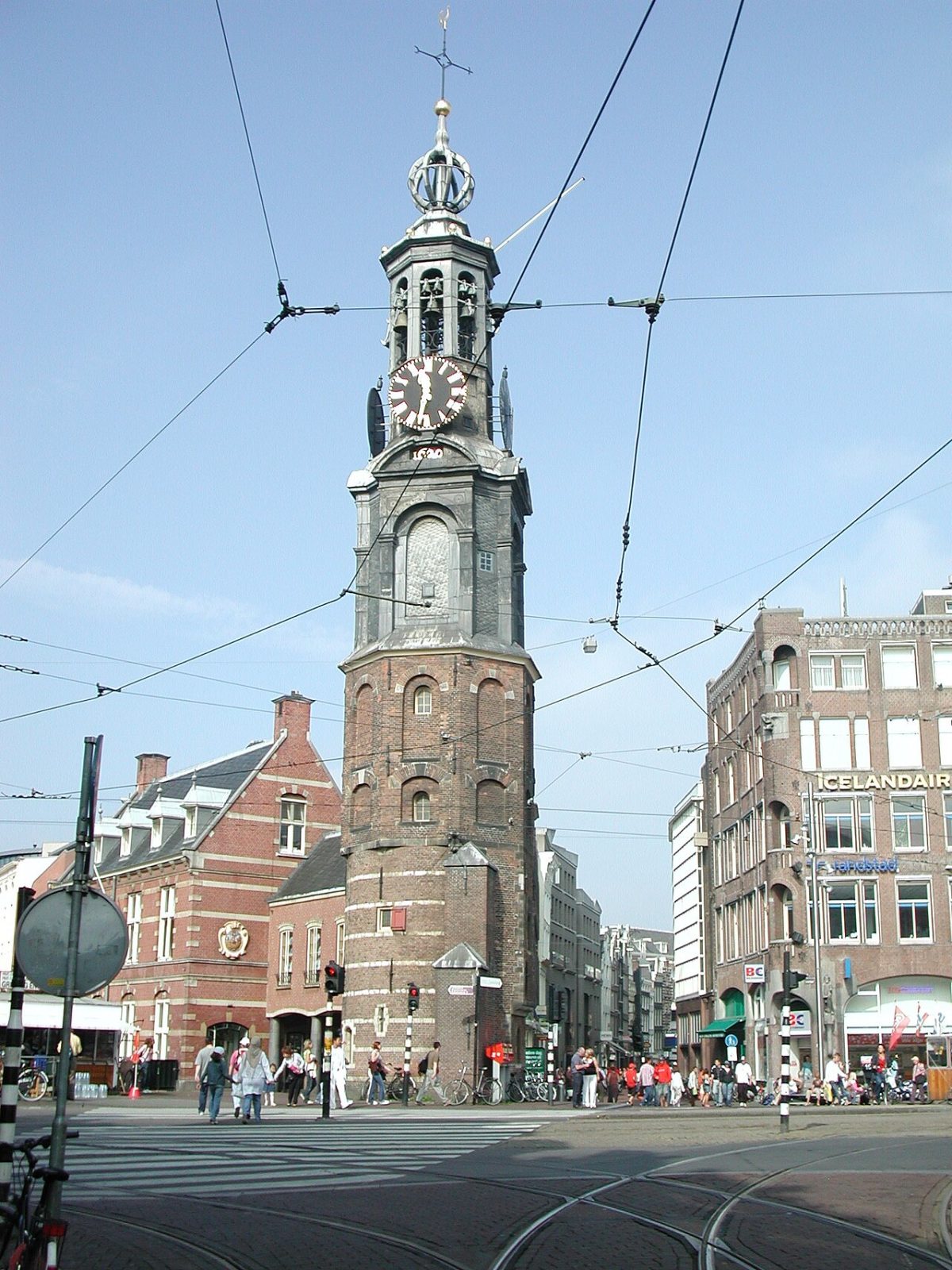
Munttoren
The tower where Amsterdam minted its own coins in 1672, by the flower market.
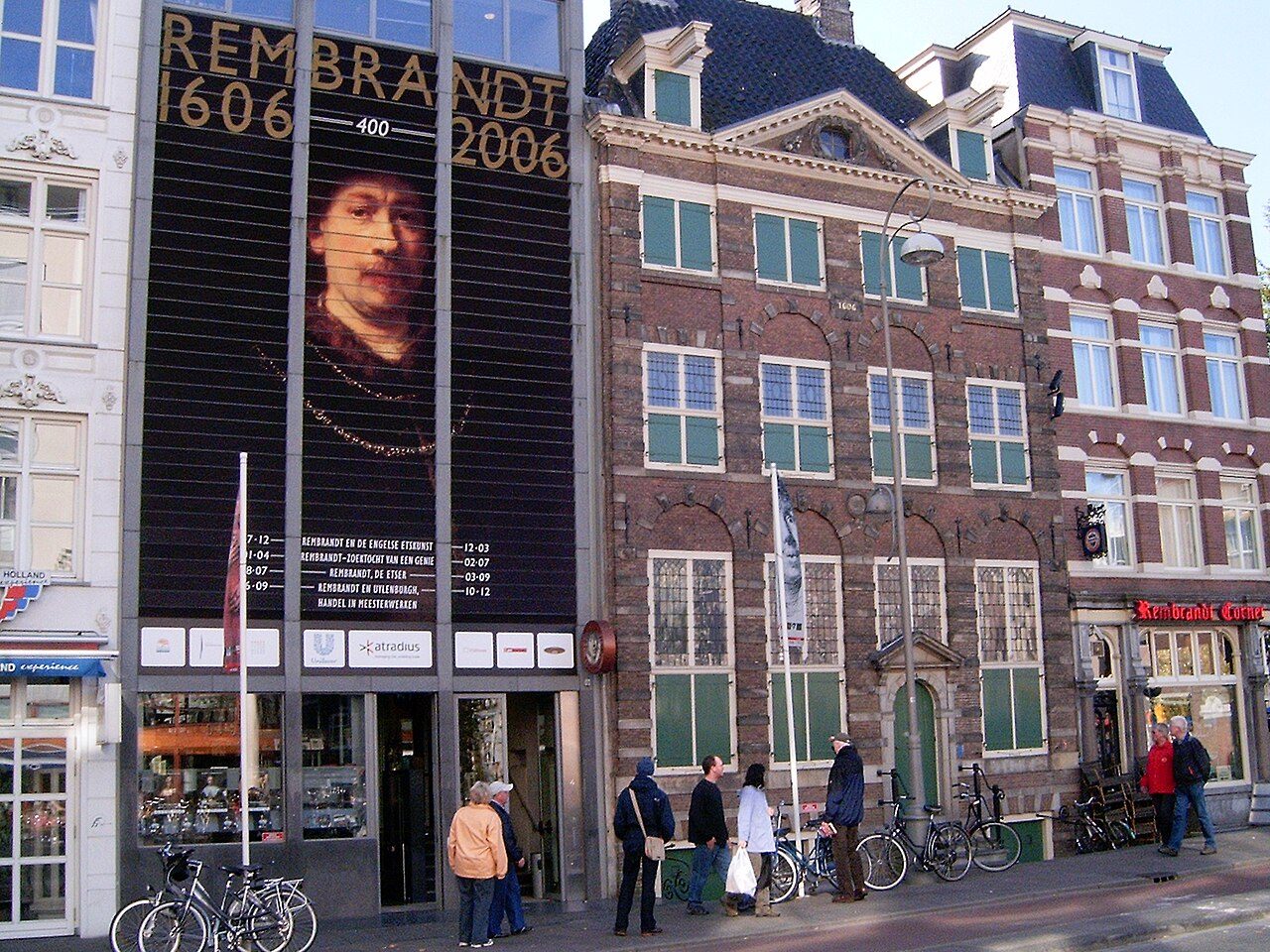
Rembrandt House Museum
Step into the house where Rembrandt lived and worked, with a studio shaped by the inventory left after his bankruptcy.
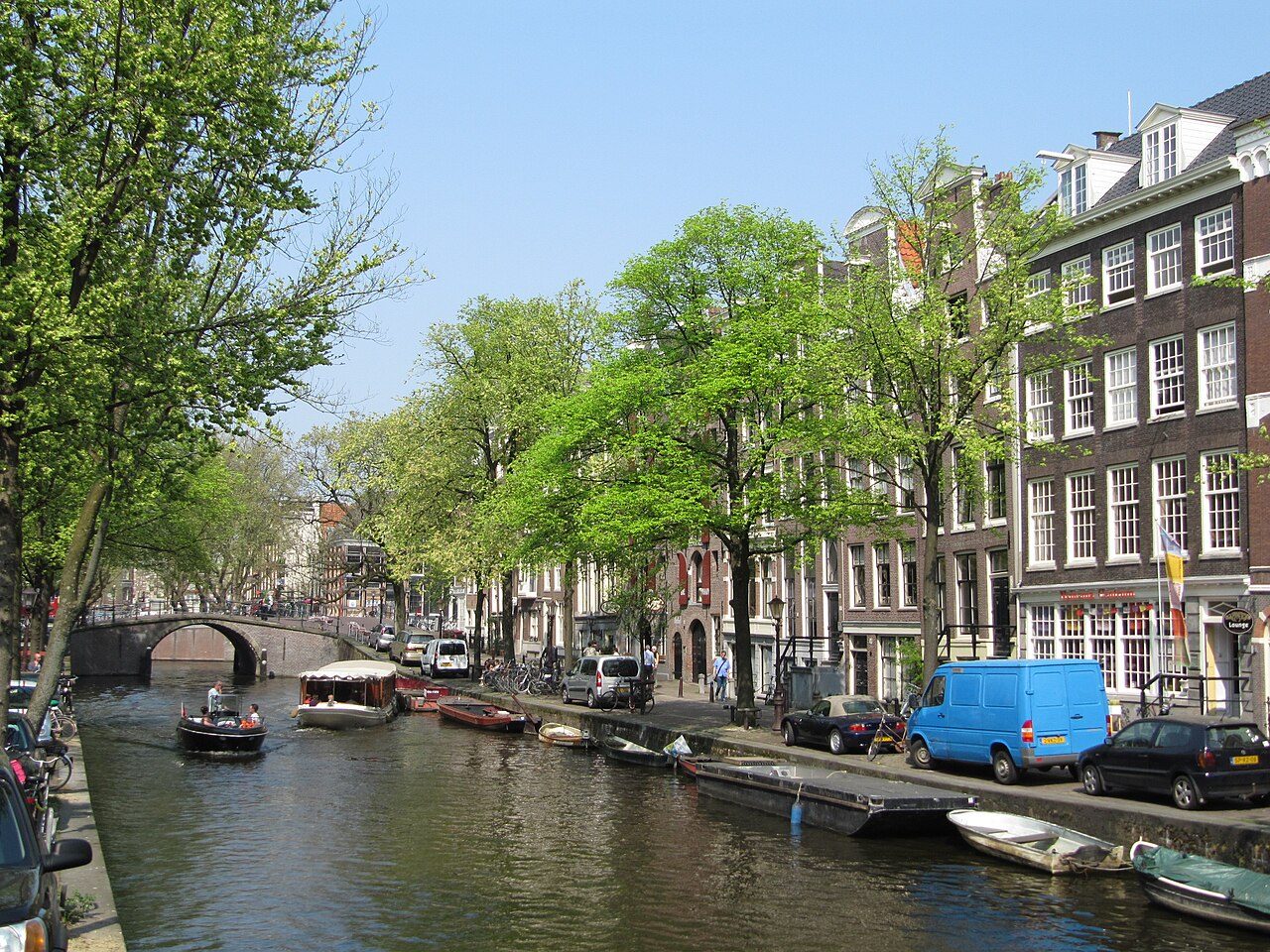
Seven bridges view (Reguliersgracht)
Stand on the right bridge and you see seven arched bridges in a row.
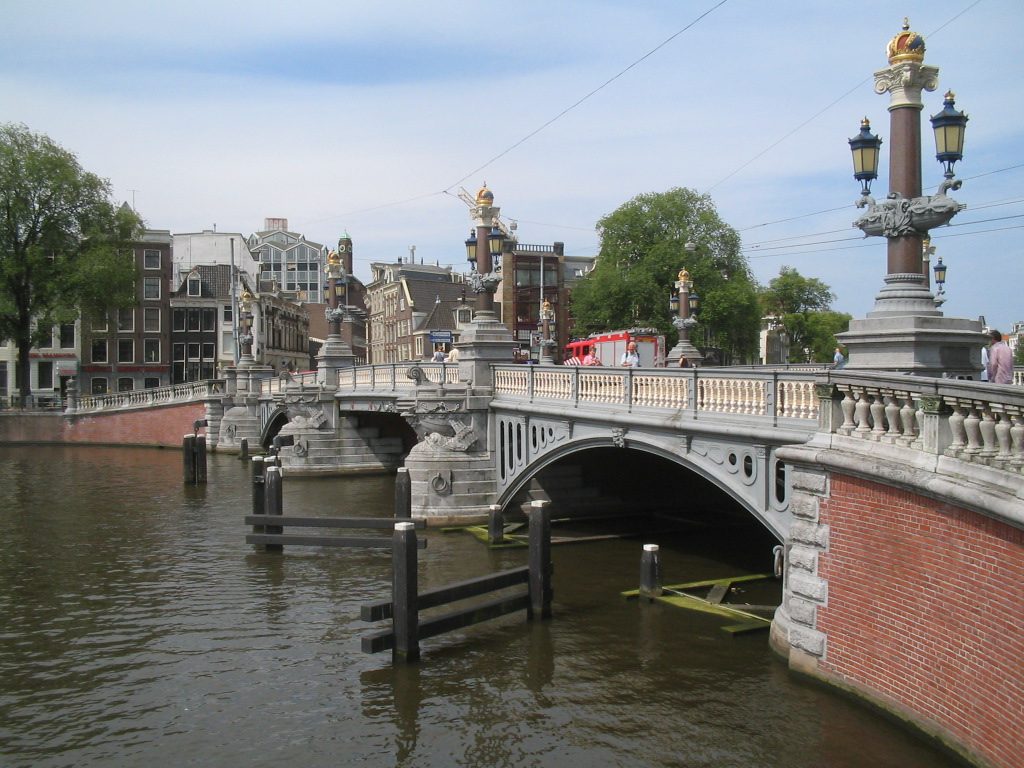
Blauwbrug
The ornate stone bridge over the Amstel, modelled on the Pont Alexandre III in Paris.
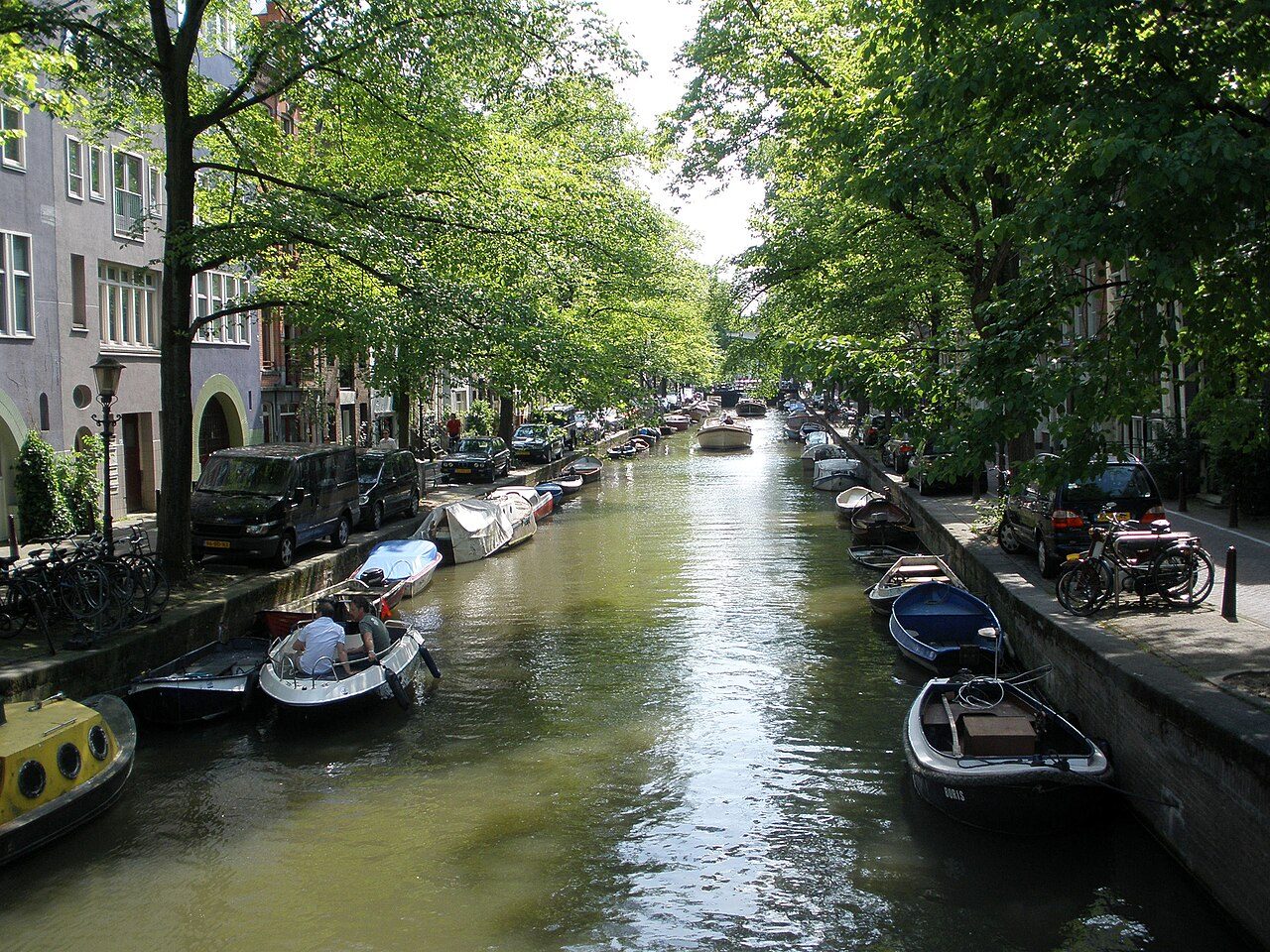
Groenburgwal
The quiet canal Monet painted, with the Zuiderkerk tower at the end.
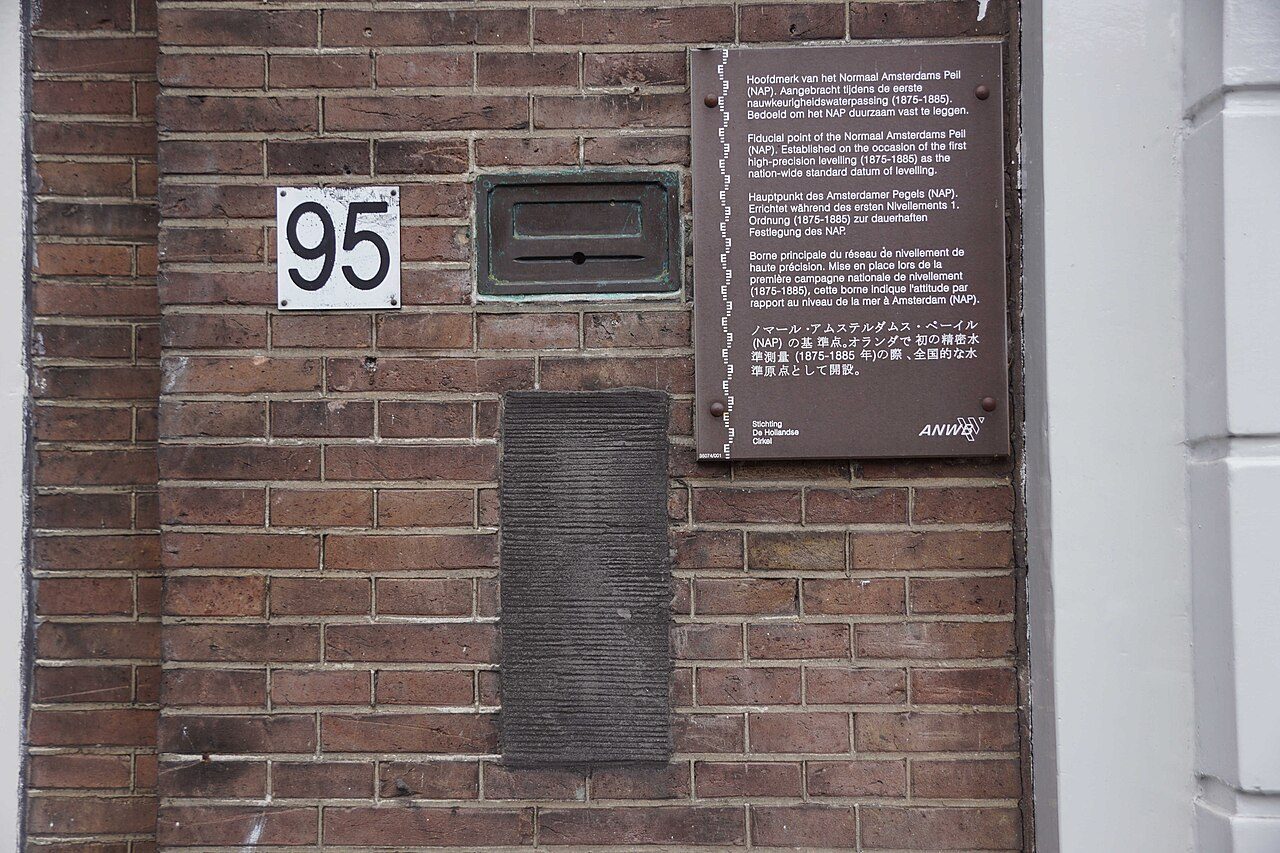
NAP (Amsterdam Ordnance Datum)
In the Stopera passage: the zero point all European heights are measured from, with water columns showing flood levels.
Tours and quests that pass here
These walks have a stop a few minutes from Rembrandtplein. Free, on your phone, start any time.
 FREE AUDIO TOUR
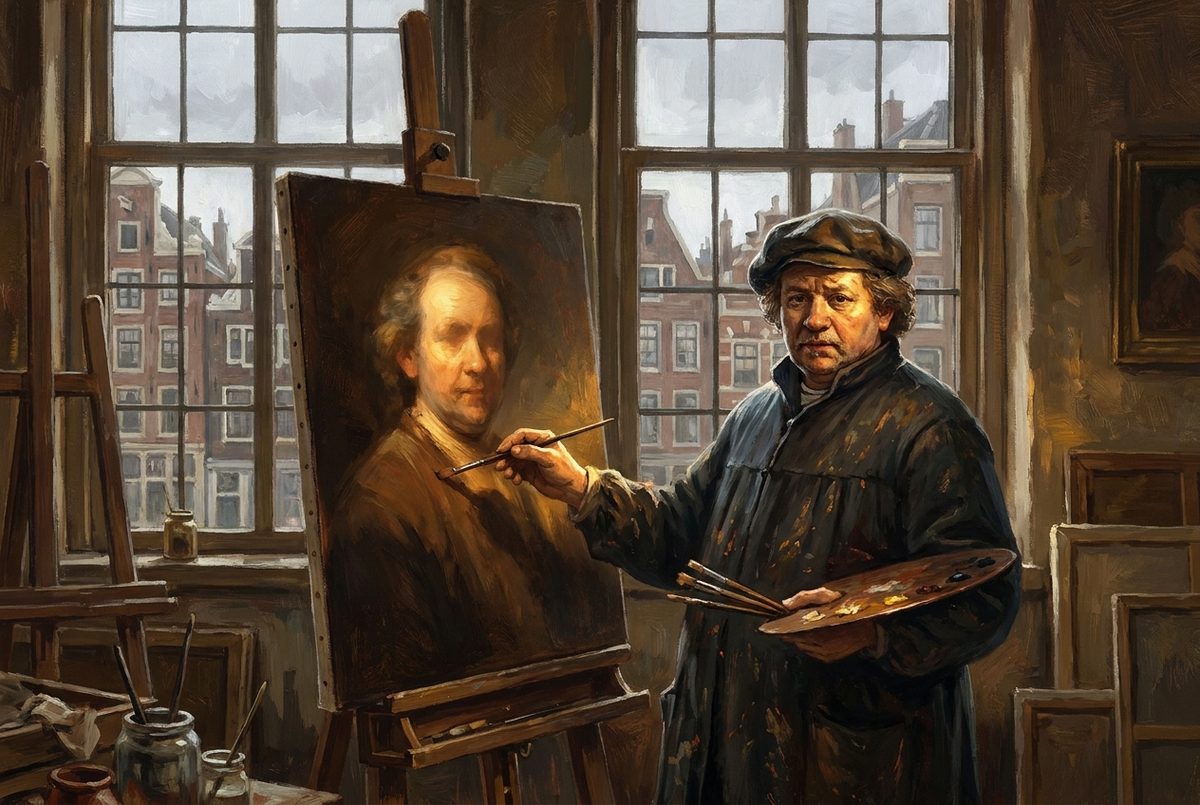
In Rembrandt's Footsteps
The painter of The Night Watch lived and worked in Amsterdam, and his house is still standing. From the early 1630s until his death in 1669, Rembrandt made his life in streets you can walk today.
 CITYQUEST
Rembrandt's Missing Panel
Your Rembrandt puzzle is missing a panel, and the hunt for its missing letters takes you into Amsterdam. You’ll piece it together among the real buildings and river views connected to his pictures.
 CITYQUEST
The Canal Cipher
A merchant’s missing fortune is waiting to be traced through Amsterdam’s canals in The Canal Cipher. Follow his coded will, gather clues and work out a final answer to claim the treasure.