
CASTLE
Kasteel Duurstede
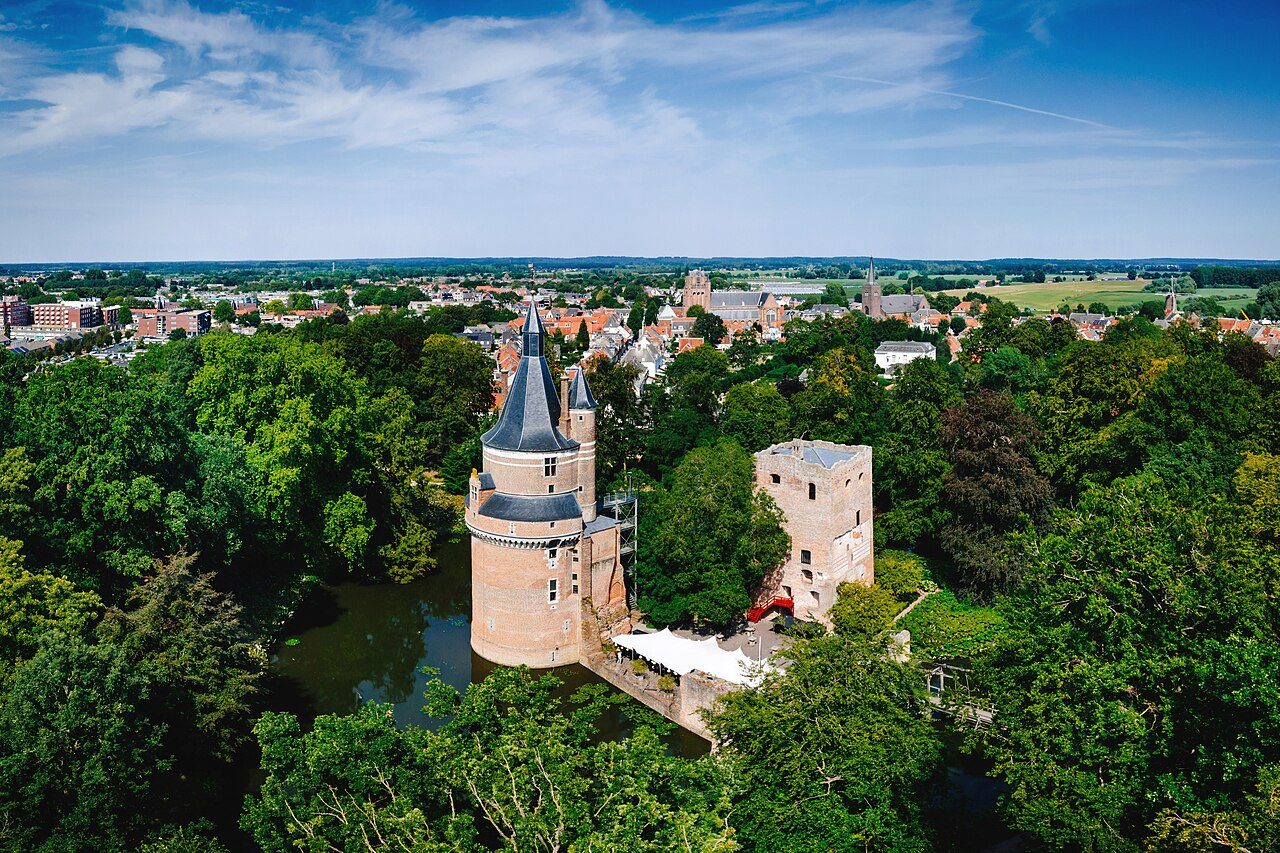
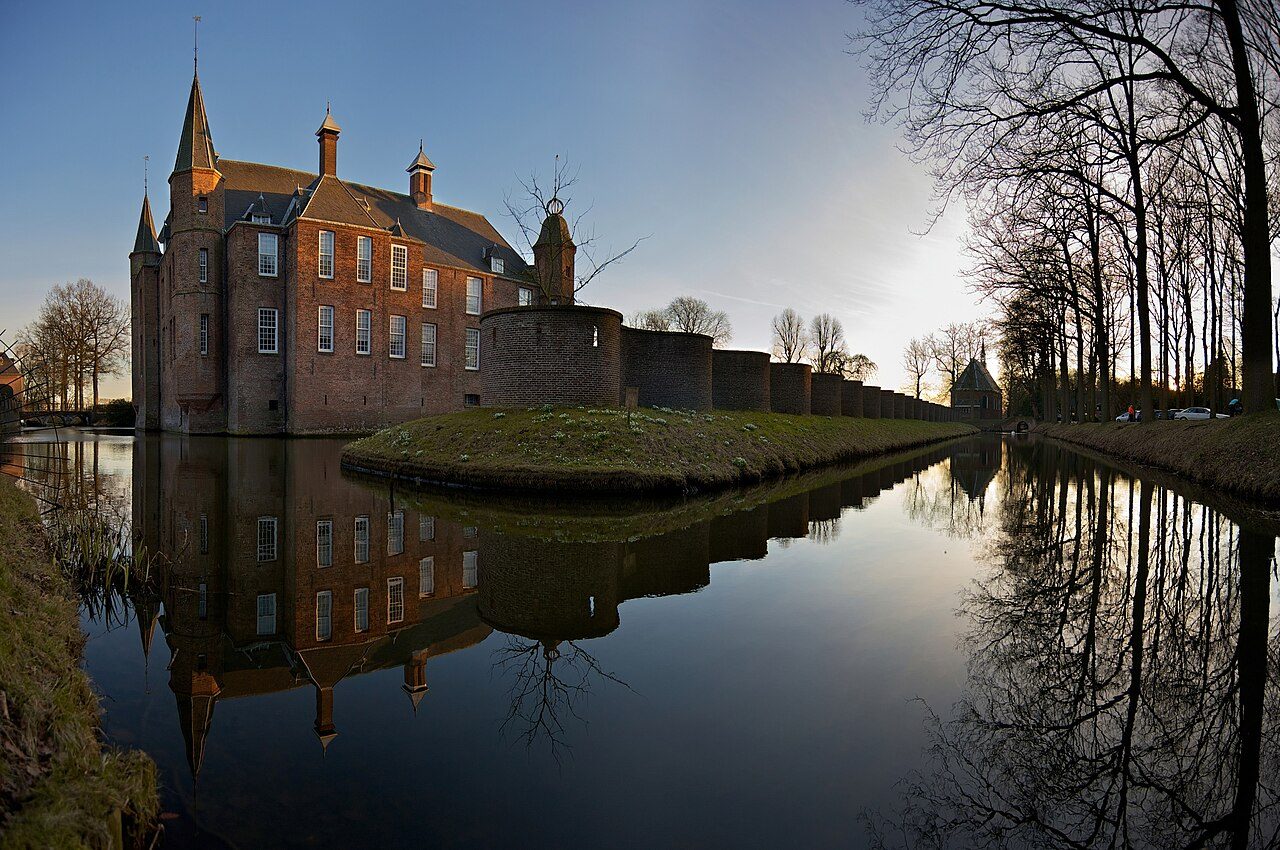
A medieval castle in Wijk bij Duurstede, with two surviving towers, low walls and a moat. Its surviving outlines show how much larger the castle once was.
Two towers and an escape
Kasteel Duurstede is a medieval castle in Wijk bij Duurstede, with two surviving towers, low walls and a moat. In 1470, Bishop David of Burgundy imprisoned members of the Brederode family here. According to a contemporary chronicle, Walraven van Brederode picked his shackles with straws, made a rope from clothing and swam the moat to escape. Look across the water and that account becomes rather less abstract.
The castle rewards a slow circuit rather than a quick photograph. Its two towers belong to different stages of its history, while the low masonry marks buildings that have disappeared. If your castle travels also include Huis Doorn or Kasteel Amerongen, allow time here to read those surviving outlines.
A stronghold becomes a residence
The square brick keep was built between 1220 and 1240 by the Van Zuylen van Abcoude family. Its original entrance was on the second floor, reached by a wooden stair that could be removed or burned in an emergency. From outside, look up rather than assuming that the lowest doorway tells the whole story.
This was also a prison before David's time. Knight Jan van Brederode was held here from 1410 to 1412 after besieging the convent where his wife, Johanna, lived. He had left his own monastery and wanted her help in pressing a claim to her family's lands. His attempt brought him confinement rather than the inheritance he sought.
The Abcoude family was forced to sell the castle to the bishop of Utrecht in 1449. David of Burgundy, who held it from 1459 to 1496, rebuilt it extensively. New buildings enclosed the old keep, and the surviving Burgundian Tower took shape. Compare its rounded bulk with the older square tower. Despite the increasingly luxurious residence around it, this tower retained a clear military purpose.
Scholars, soldiers and missing stone
After Bishop Philip of Burgundy moved in during 1517, the castle became a centre of Renaissance art and scholarship. Painter Jan Gossaert worked in a studio on the same floor as the study of humanist Gerard Geldenhouwer. These were not just defensive walls: they enclosed rooms where paintings and ideas were being made.
The earthwork defences were enlarged in 1577. Yet the castle's later disappearance was not simply the result of a siege. French troops spared it in 1672, although Wijk bij Duurstede suffered badly. Afterwards, townspeople took stones from the already declining castle to rebuild their damaged homes, first secretly and then openly. Much of what is missing went back into the town.
Reading the ground
The remaining walls were consolidated and raised slightly above ground level in the early 20th century. Follow them with your eyes to understand how much larger the castle once was. Beside the former gateway, taller fragments survive from the outer wall and a corner tower. The surrounding bastioned earthworks became a park in the 19th century.
During the German occupation, archaeologist Jaap Renaud excavated here from 1943 to 1945. His workmen were over 65, making them too old for forced labour in Nazi Germany. In their first year alone, they moved more than 35,000 wheelbarrows of soil and rubble. The outlines you study today also carry the story of that patient wartime labour. Give the low walls some attention before returning your gaze to the towers.
Things to know
- Head for Kasteel Duurstede in Wijk bij Duurstede.
- Choose daylight to make out the low walls and earthworks.
- Wear comfortable shoes for a slow circuit of the grounds.
- Look up at the keep: its original entrance was on the second floor.
- Opening hours and prices can change. Check the official website before you go. Official website
What people say
Related spots
More things to do in Utrecht Province ›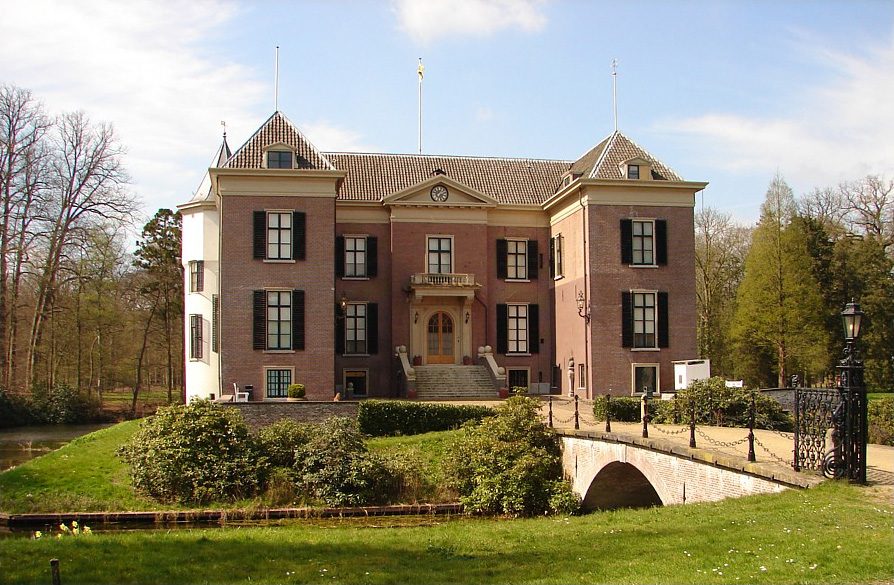
Huis Doorn
A manor house and national museum with rooms still largely furnished as they were when Germany’s last emperor lived here, and a wooded park with his mausoleum.
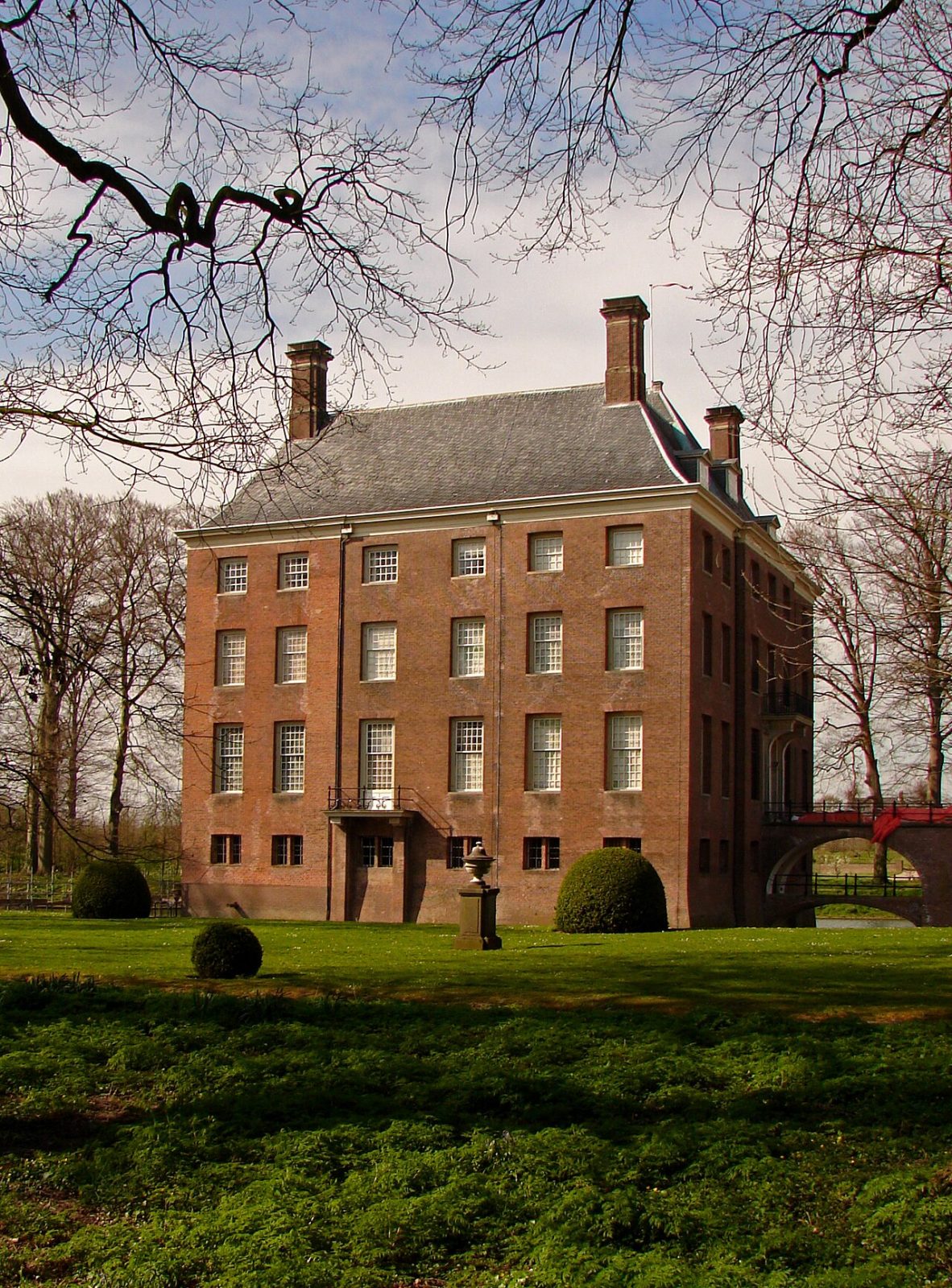
Kasteel Amerongen
A country house beside Amerongen village, with family portraits, gardens and the desk where Wilhelm II signed his abdication.
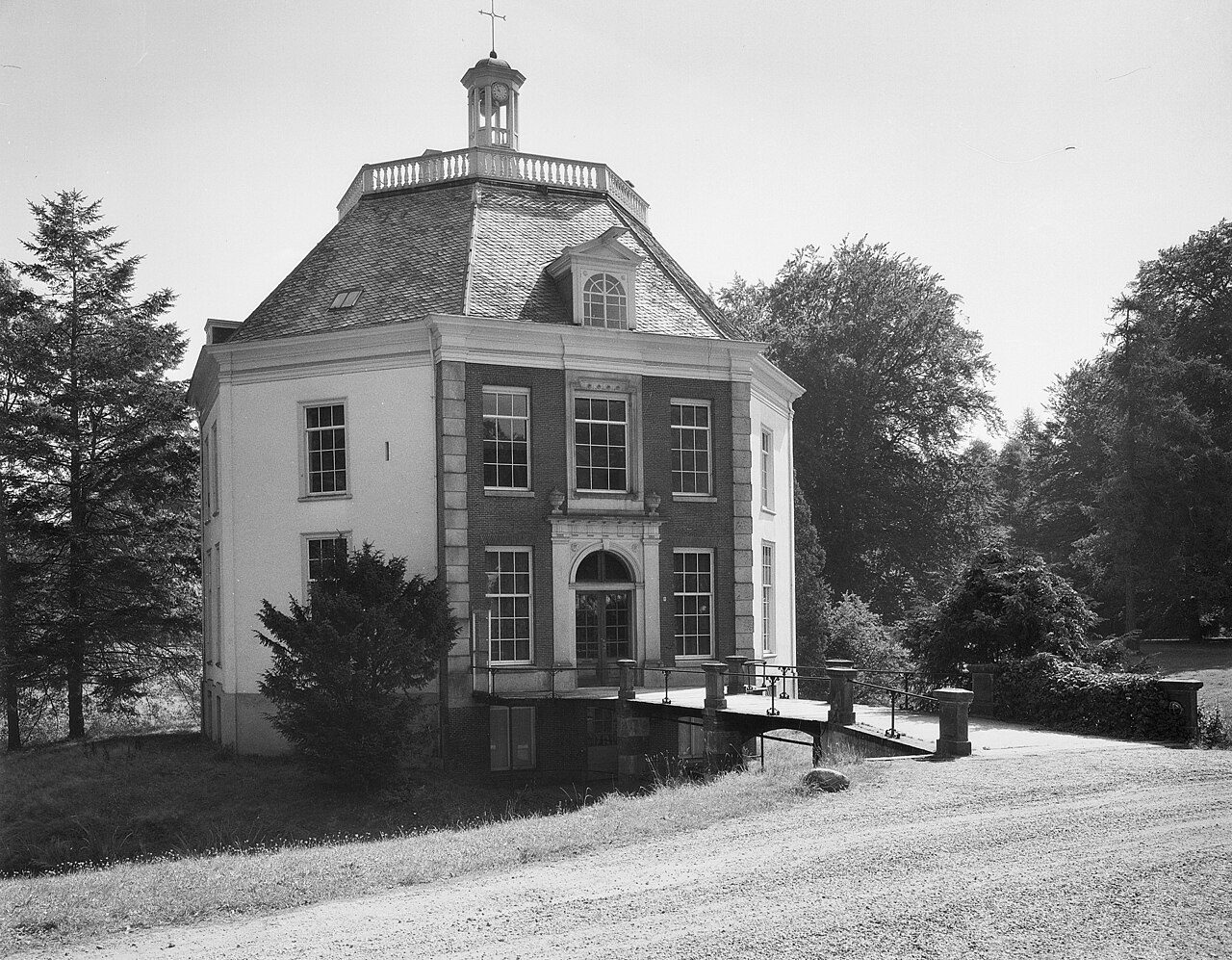
Drakensteyn
Princess Beatrix’s private, octagonal castle in Lage Vuursche, surrounded by a moat. Come for the setting and its connection with the village.
Slot Zuylen
A castle museum near Utrecht with furnished rooms, family possessions and a garden enclosed by a curving brick wall. Once home to the writer Belle van Zuylen.