
CASTLE
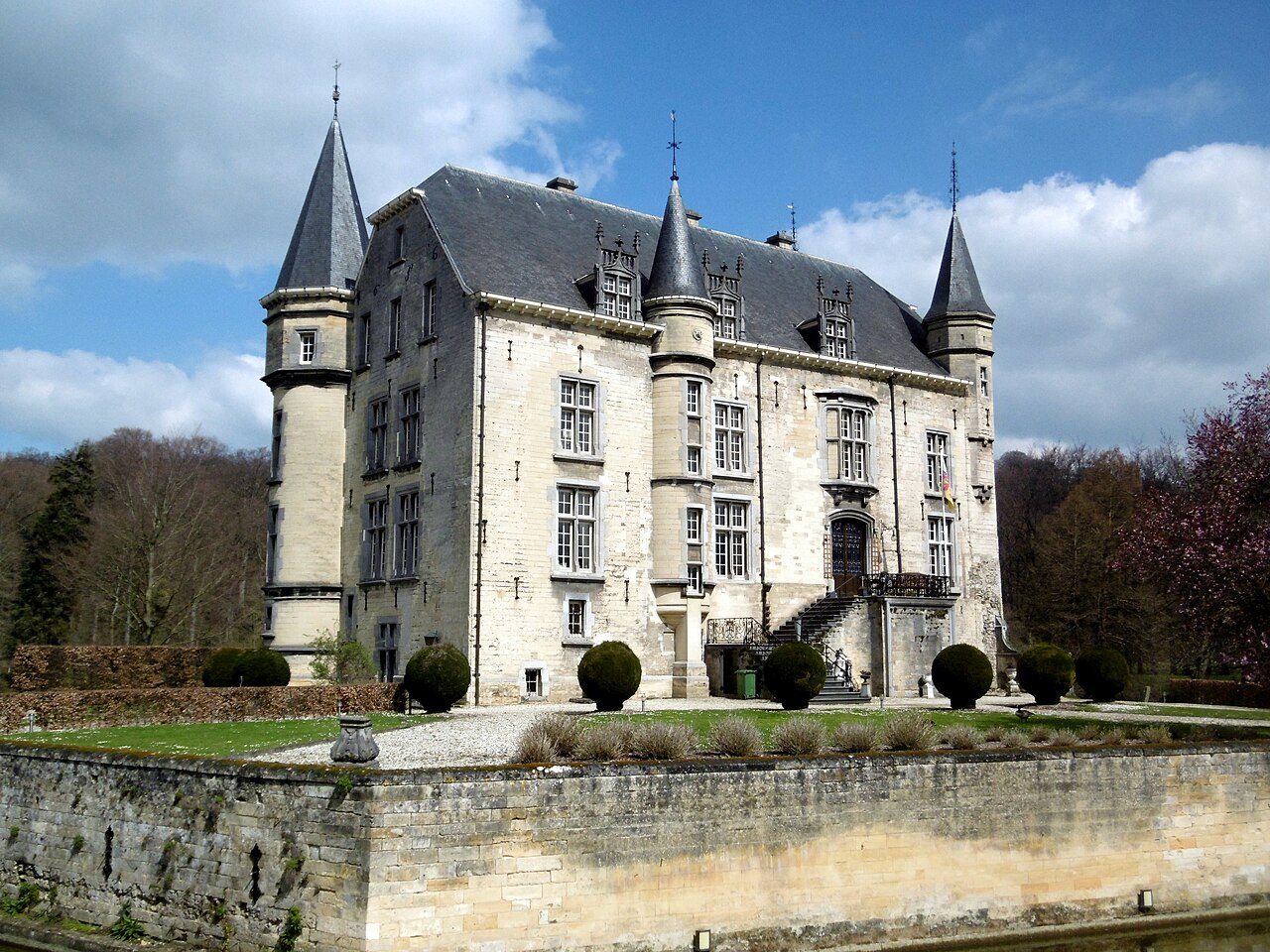
Kasteel Schaloen
A moated marlstone castle in Oud-Valkenburg, with pale stone, towers and a watermill. Come for the exterior and the surrounding landscape.
A castle beside the Geul
Kasteel Schaloen is a moated marlstone castle in Oud-Valkenburg, set among trees in the Geul valley. In October 1944, its occupants included more than 3,000 military pigeons. The US Army’s 278th Signal Pigeon Company moved into the castle and its outbuildings, using the birds for communications. They remained until February 1945.
Today, the approach is quieter. The drive leads past a watermill to a gatehouse, with the castle and its outer buildings beyond. Come for the pale stone, the moat and the relationship between the buildings and the surrounding landscape. The main house is not open for visits, so this is an exterior-focused stop rather than a castle-interior visit such as Kasteel Hoensbroek in Heerlen.
Fire, rebuilding and pointed towers
The earliest written records of Schaloen date from 1381, although the building’s origins go back further. Fire almost destroyed it in 1575. In 1656, Johan Reinier Hoen van Cartils restored the house with Johanna Maria van der Merwijck. A Latin inscription records their work. Look at the different kinds of marl in the walls: materials were reused through successive restorations.
Much of the silhouette you see now comes from Pierre Cuypers’s remodelling in 1894. He added the western tower and a staircase tower at the front, raised the projecting corner turrets and rearranged the façades. The result is a medieval building reshaped through a 19th-century idea of a castle.
Schaloen also has a family connection with Kasteel Valkenburg. Count Maximiliaan Hendrik Laurens Hoen de Cartils, who inherited Schaloen in 1782, bought the Valkenburg ruins. They stayed in the family until 1919.
Trees, water and a working estate
In 1943, architect and furniture designer Gerrit Rietveld visited Schaloen during a tour of Limburg castles. He drew the building, paying particular attention to its surrounding trees. That is a useful way to look at it yourself: step back enough to see the house as part of the landscape, rather than concentrating only on its towers.
The moat is fed by the Molenbeek, a branch that was the Geul’s main channel in the 16th century. The marlstone Schaloensmolen dates from 1699 and now serves as a demonstration mill. On the outer buildings, look for brickwork striped with marl and wall anchors forming the date 1701.
This watery setting also brings danger. During the July 2021 floods, water filled Schaloen’s cellars to considerable depth. Joke Bot sent hotel guests upstairs with candles in case the electricity failed.
Three figures by the bridge
The bridge-side religious monuments known as the Drie Beeldjes carry a local legend. In 1739, Schaloen’s lord, Maximilianus Henricus Hoen de Cartils, supposedly erected them to drive away Ruprecht, a spirit that frightened his horse. The hermit Arnoldus Haessen had advised him to do so. Treat the spirit as folklore, but the monuments as a real part of the estate’s history.
Their figures are replacements. In June 1968, the wooden Mary and John disappeared overnight. Christ was stolen a few weeks later. Maastricht artist Sjef Eymael made new figures in reinforced concrete in 1973. Standing here, you are looking at a devotional group whose story includes both an 18th-century legend and a very practical response to theft.
Things to know
- Aim for Oud-Valkenburg, on the road between Valkenburg and Schin op Geul.
- Allow about twenty minutes on foot from Kasteel Valkenburg.
- The main house cannot be visited; plan around the exterior and estate setting.
- Wear comfortable walking shoes for the approach and paths.
- In wet weather, check local conditions around the Geul.
- Opening hours and prices can change. Check the official website before you go. Official website
What people say
Related spots
More things to do in Limburg ›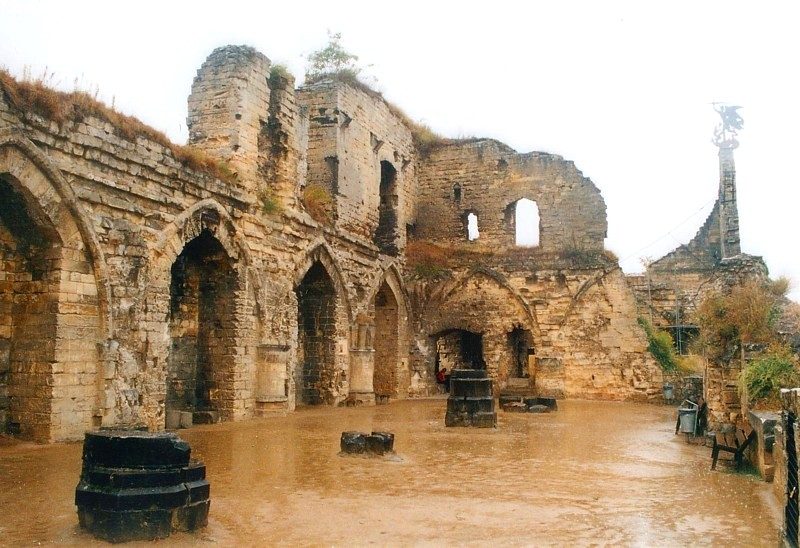
Kasteel Valkenburg
A ruined hilltop castle above the Geul valley, with defensive walls, fragments of living quarters and passages beneath the hill.
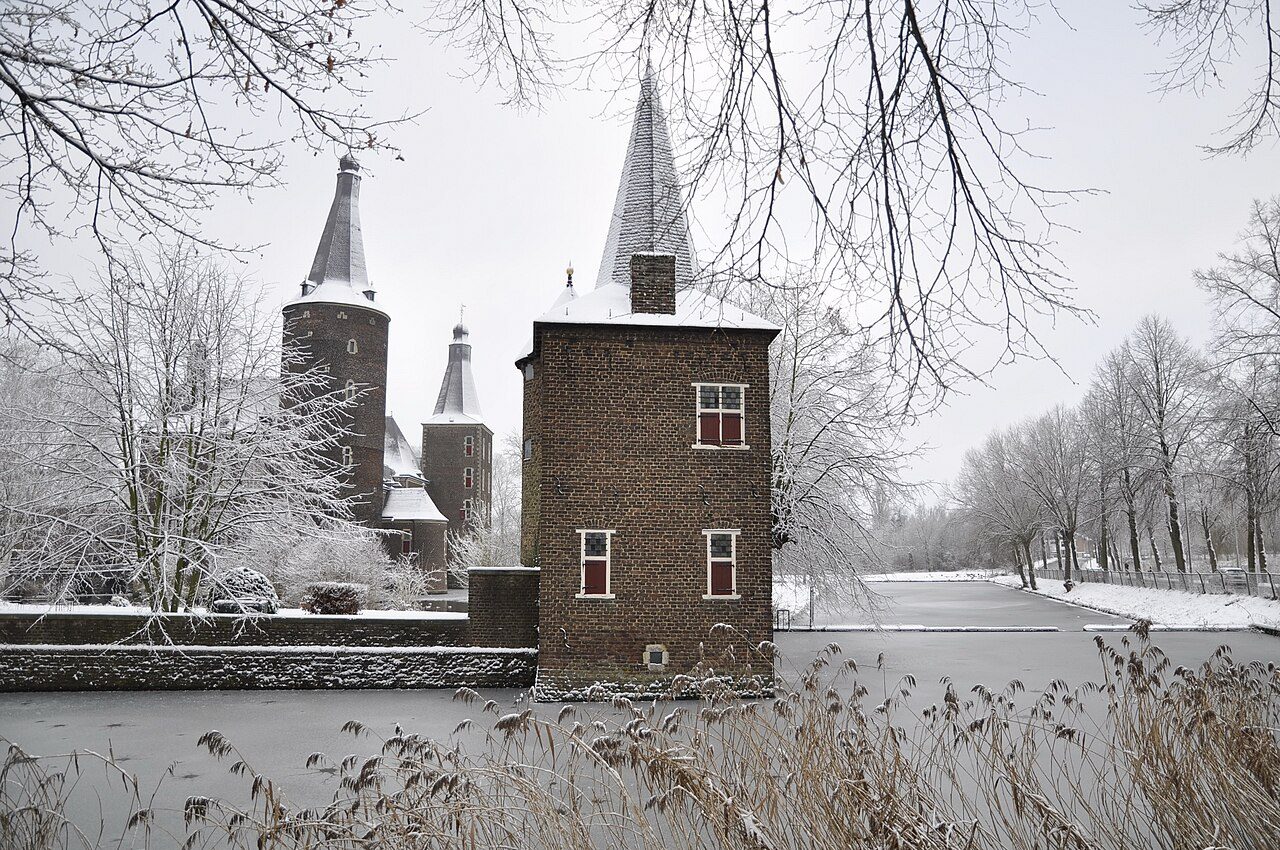
Kasteel Hoensbroek
A moated castle with towers, courtyards and 67 rooms. Its medieval stronghold and aristocratic interiors span centuries of building and rebuilding.
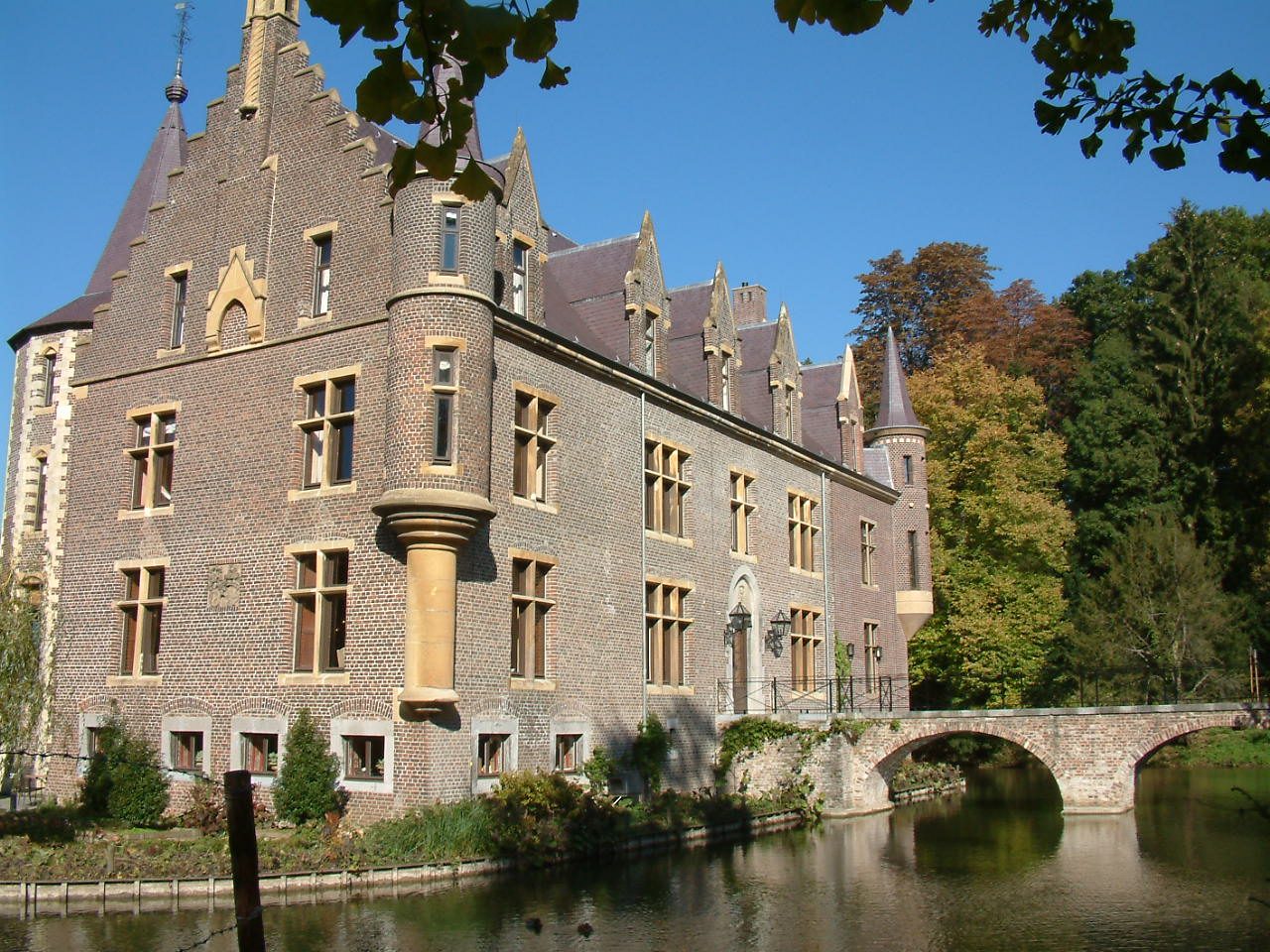
Kasteel Ter Worm
A castle in Heerlen with stories of rebuilding, wartime soldiers and local children. Its surrounding landscape brought thousands of people onto the streets.
Kasteel Bleijenbeek
A moated castle ruin in northern Limburg, with a doorway dated 1688 and surviving fragments of a hall wing around a courtyard.