
HIDDEN GEM
Het Aepgen
A rare timber-fronted Amsterdam house with a pile-free foundation and a monkey story its owner treats as legend.
Old timber, younger café
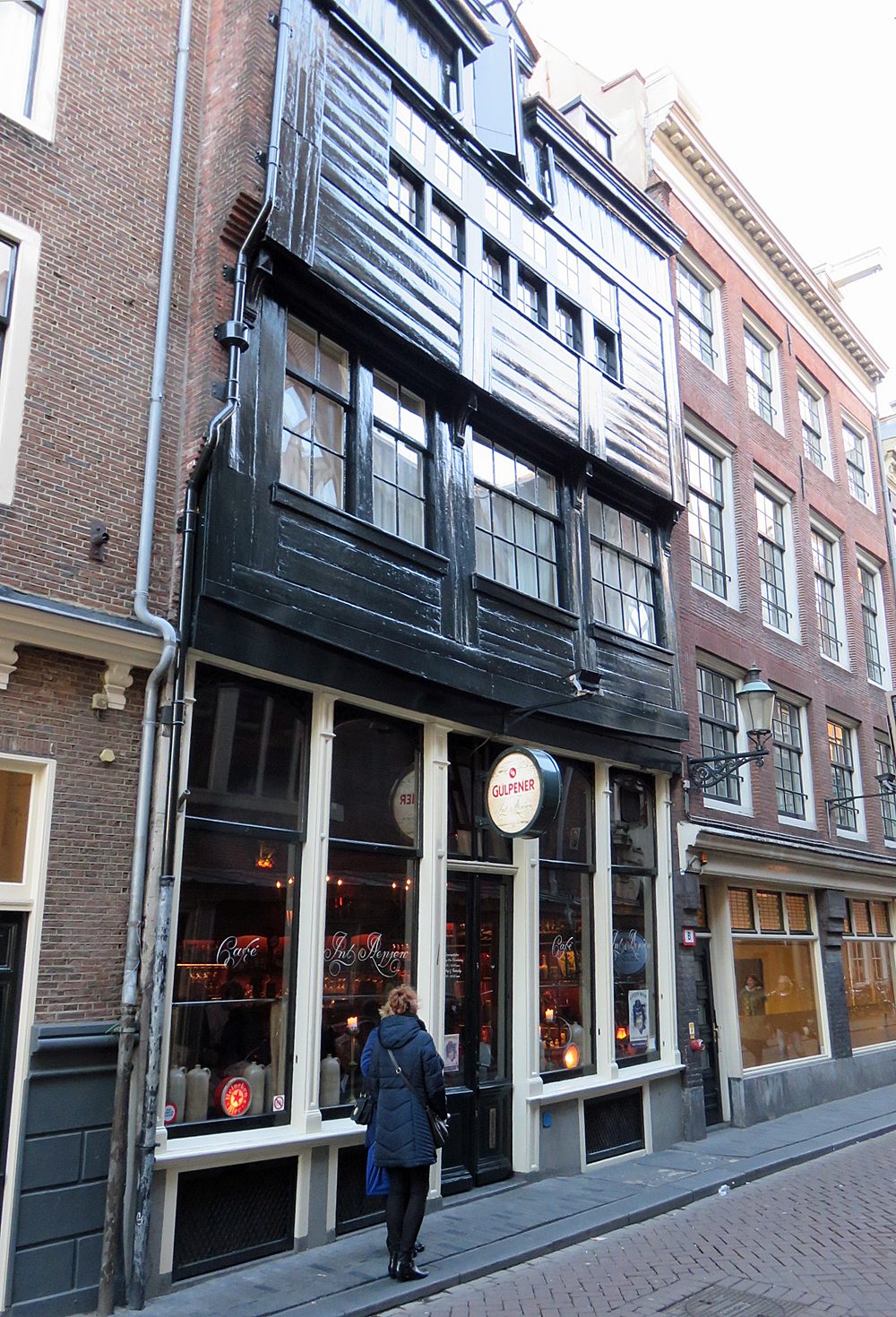
Het Aepgen, at Zeedijk 1, is one of only two wooden houses left in Amsterdam’s old centre. But its old-looking café tells a much younger story. When Café In ’t Aepjen appeared in 1991, Hans Wolffenbuttel furnished it with fittings from a defunct cigar shop in Zutphen. He also installed a beer pump billed as the oldest in the Netherlands. The atmosphere was deliberately aged; it is not evidence of an unchanged sailors’ tavern.
The house itself is genuinely old. Tree-ring research dates the present structure to about 1545–50. Much of medieval Amsterdam was timber-built, but repeated fires pushed the city towards brick and stone. Here, at the station end of the Zeedijk, you can still see the wooden frontage that largely vanished elsewhere.
A house without piles
Most Amsterdam houses stand on piles driven into soft ground. Het Aepgen does not. During restoration in 1986 and 1987, excavators found that its walls rested directly on heavy planks, well below today’s street level. That unseen foundation is one of the most unusual things about the building in front of you.
The excavation also uncovered a plastered water cellar, a well and a cesspit. Documents from 1599 and 1608 had already mentioned the cesspit. The dig therefore brought to light something recorded centuries earlier. The owner, Hendrick de Keyser Monumenten, recounts these findings in its history of the house.
Monkeys, sailors and residents
The familiar monkey story needs a little caution. According to local tradition, sailors returning with exotic monkeys sometimes used them to settle their inn bills. The owner treats this as a possible legend. The name more probably comes from the first known owner, Jan Claesz ’int Aepgen.
There is another complication. Historian Maarten Hell argues that the sailors’ inn belonged to the other Aap, at Zeedijk 15, rather than this house. From 1755, the landlord there lodged German and Scandinavian sailors. The two addresses should not be folded into one picturesque history.
The documented residents offer stories of their own. In 1622, the sick notary Gerrit Albertsz Ruyl made his will at Het Aepgen. He was trying to protect his son Albert’s inheritance from creditors. Albert died that August in Virginia, probably without knowing what his father had arranged.
Barbara van Campen also lived here, with her sister Maria. She was one of the lay religious women who supported the priest at the nearby attic church, now Our Lord in the Attic. Barbara died in 1681 and was buried in a prominent position in the Oude Kerk.
Read the front
Stand across the street, where space allows, and compare the timber front with the surrounding brick façades. The horizontal boards were renewed around 1800. Parts of the sixteenth-century timber frame survive behind them, so you are looking at several periods rather than an untouched original.
Look up for the hoist hook, probably added around 1800. This was a trading house as well as a home. Hatches inside allowed goods to be lifted through the floors to the attic. Carved Renaissance timber brackets also survive beneath the first-floor beams, though you cannot see those from the pavement. The hook is the visible clue: imagine goods rising past those upper windows.
Things to know
- Find Zeedijk 1 at the Centraal Station end of the street, a short walk from the station.
- Go in the morning for a quieter look at the façade.
- View it from across the street where there is room; keep clear of passing bikes.
- Look up for the hoist hook and the horizontal timber boards.
- Opening hours and prices can change. Check the official website before you go. Official website
What people say
Related spots
More things to do in Amsterdam ›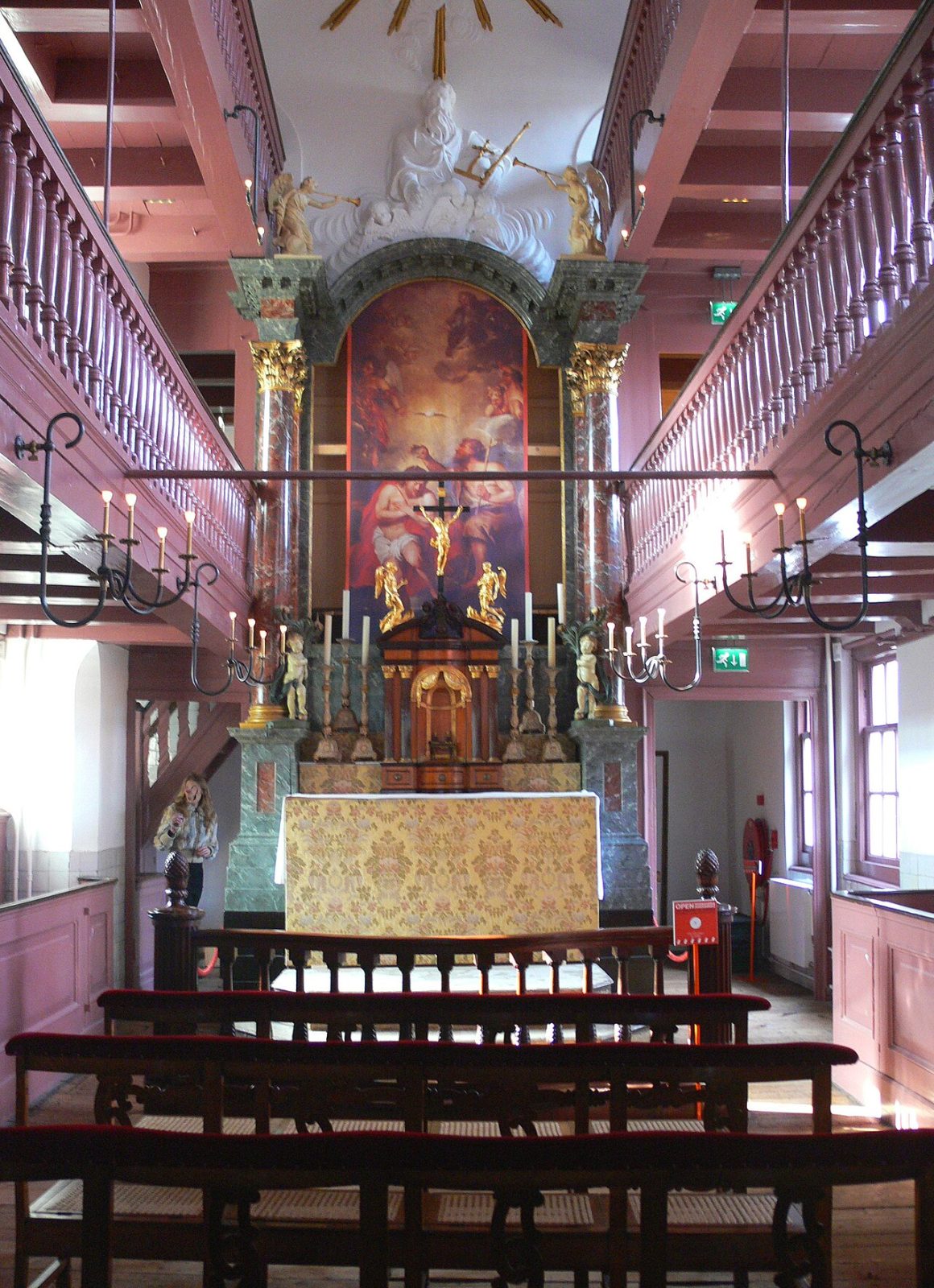
Our Lord in the Attic
Climb through a 17th-century canal house into a complete church hidden across three attics, then see the clever details that made it work.
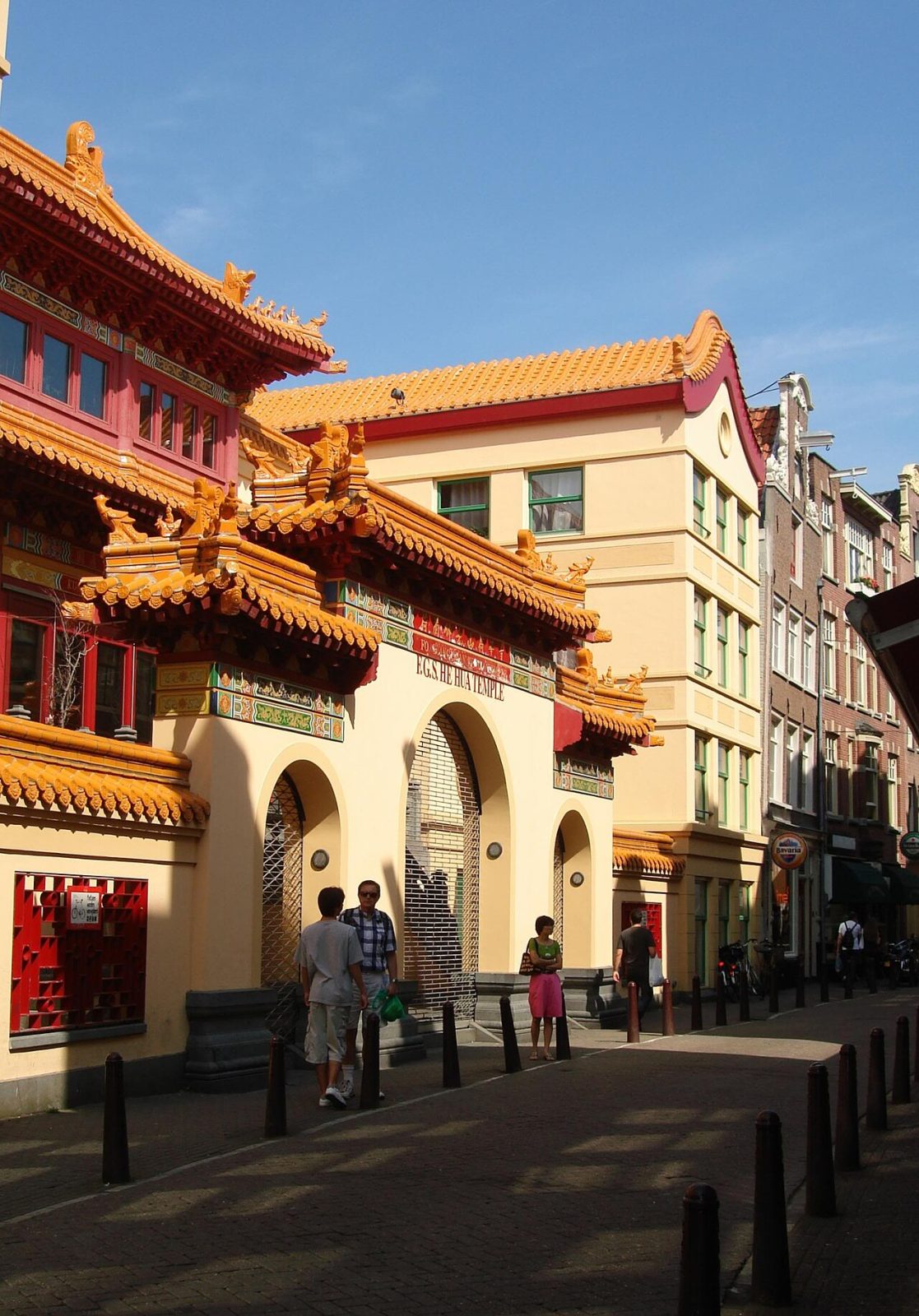
Chinatown (Zeedijk)
Follow the Zeedijk from old sailors' lodgings to Chinese shops and the He Hua Buddhist temple near Nieuwmarkt.
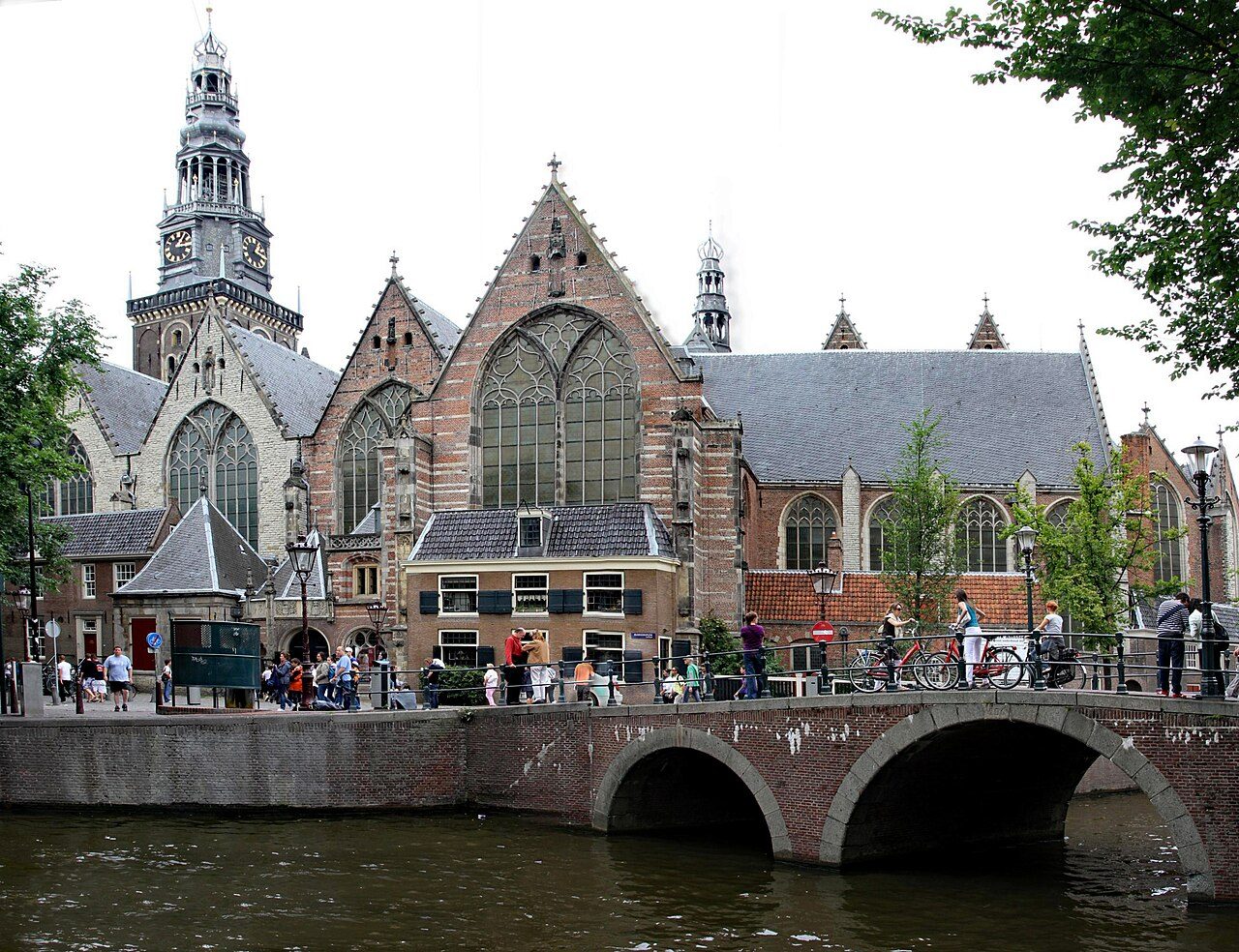
Oude Kerk
Amsterdam’s oldest building holds centuries of graves, stained glass and art made for its vast interior.
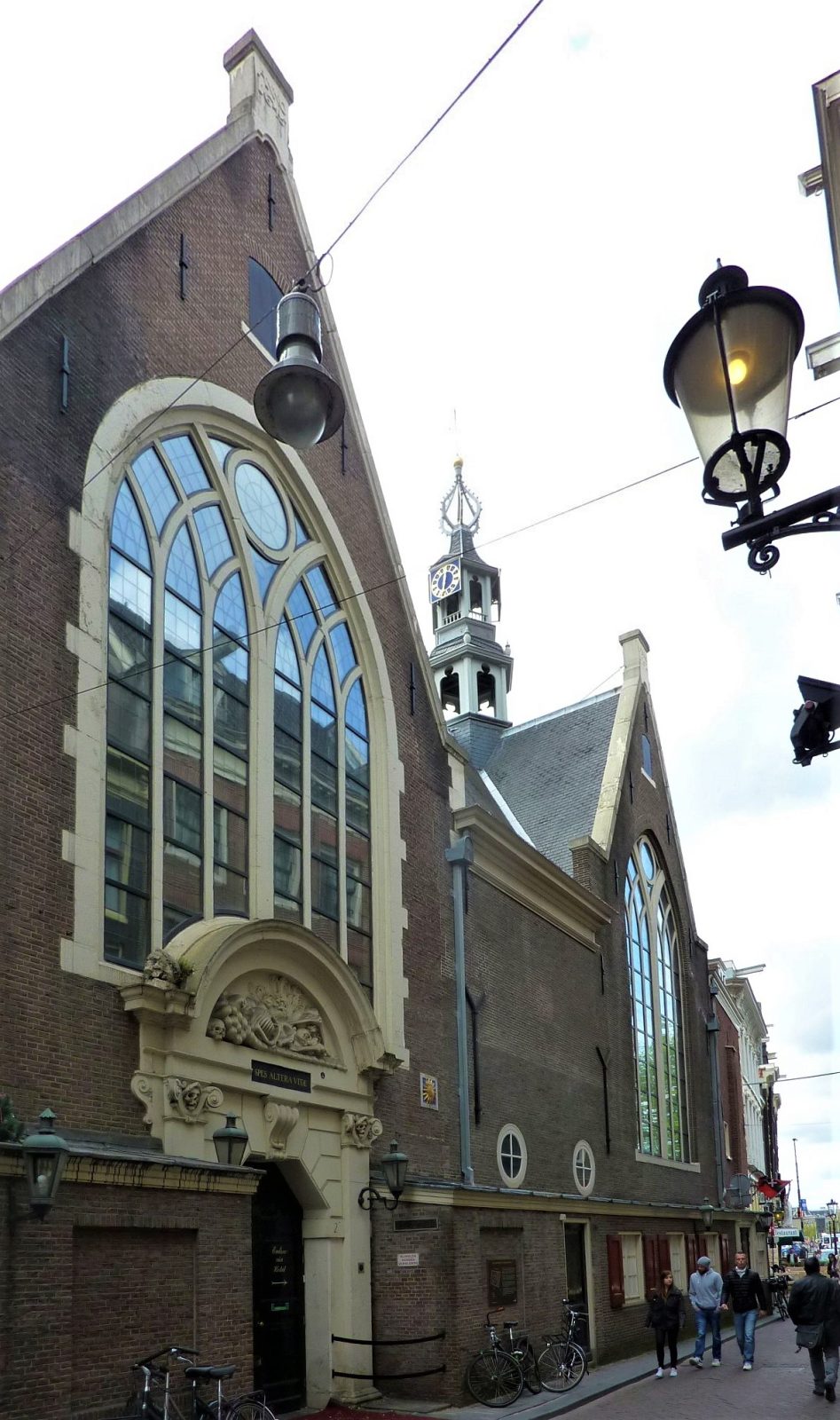
Sint Olofskapel
A 15th-century chapel swallowed by a hotel, with a skull-and-bones gable stone over the old door.
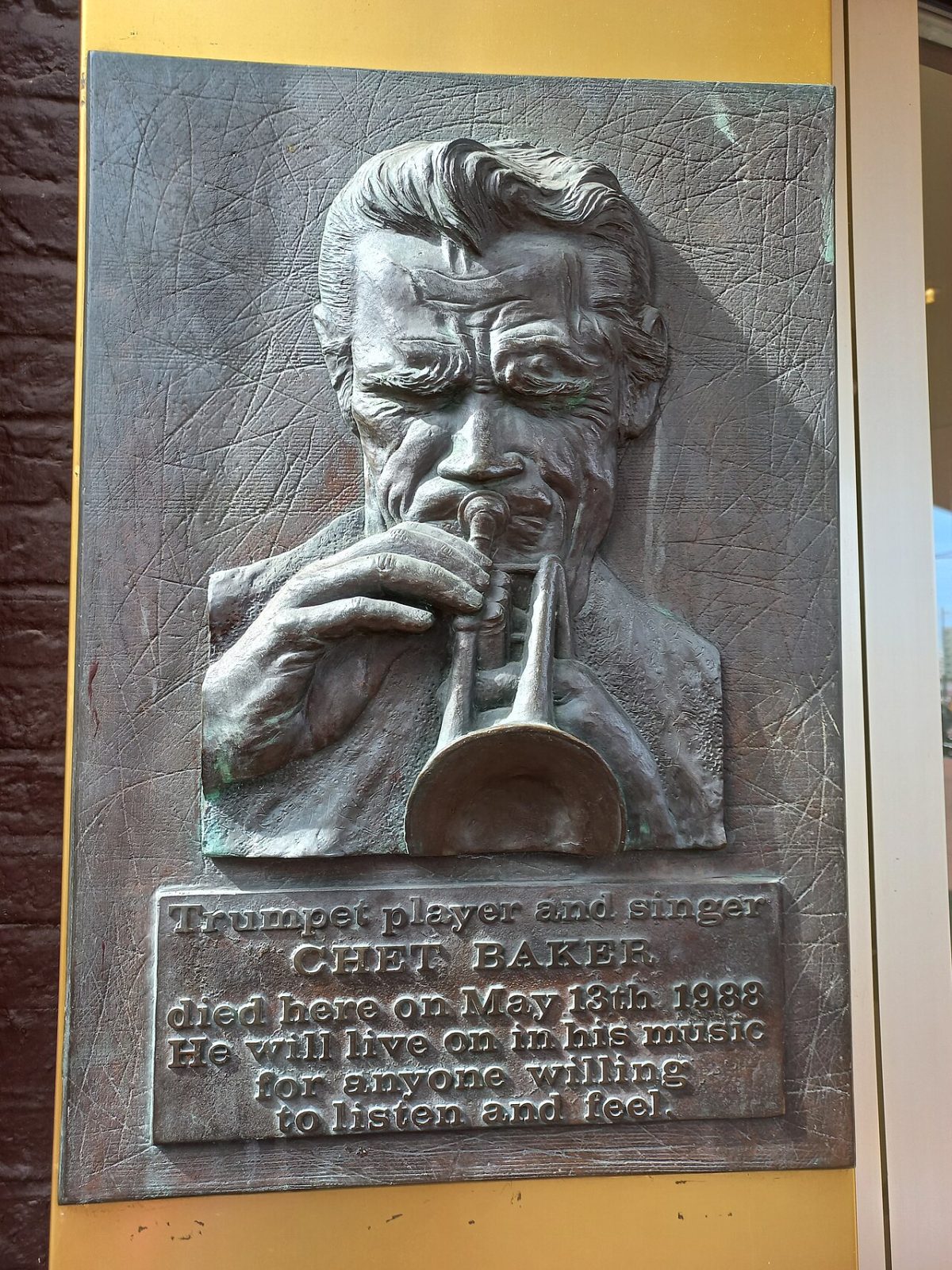
Chet Baker plaque
On the hotel where the jazz trumpeter fell from a window in 1988. 'He will live on in his music.'
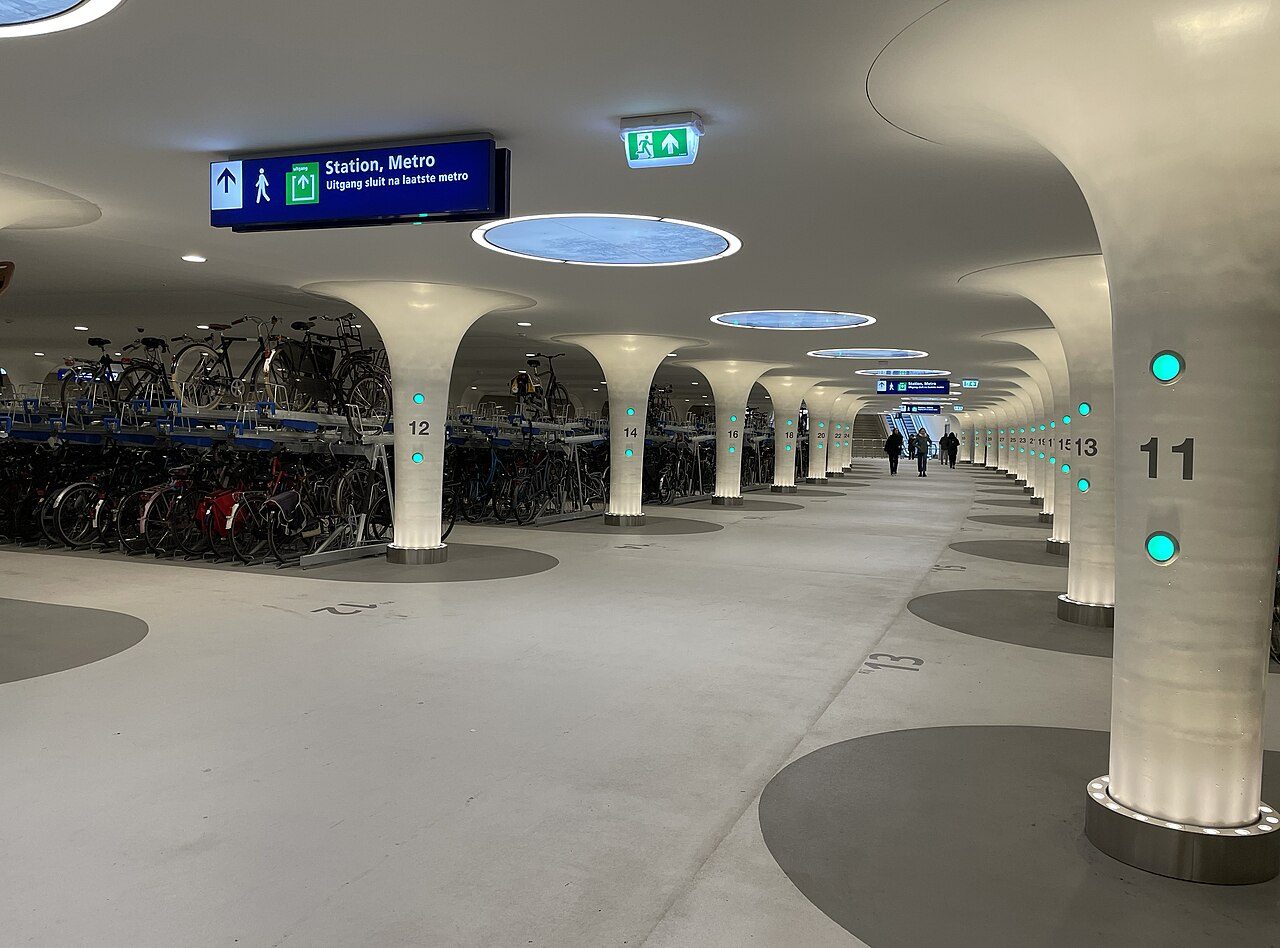
Underwater bike parking
Thousands of bikes parked in a garage under the water in front of Centraal Station, with an aquarium-like view of the IJ.
Tours and quests that pass here
These walks have a stop a few minutes from Het Aepgen. Free, on your phone, start any time.
 FREE AUDIO TOUR
Van Gogh's Amsterdam
The man who painted Sunflowers lived in Amsterdam for just over a year, before he became an artist. You can still stand at the naval yard he called home and follow his Sunday walks across the city.
 FREE AUDIO TOUR
Red Light District
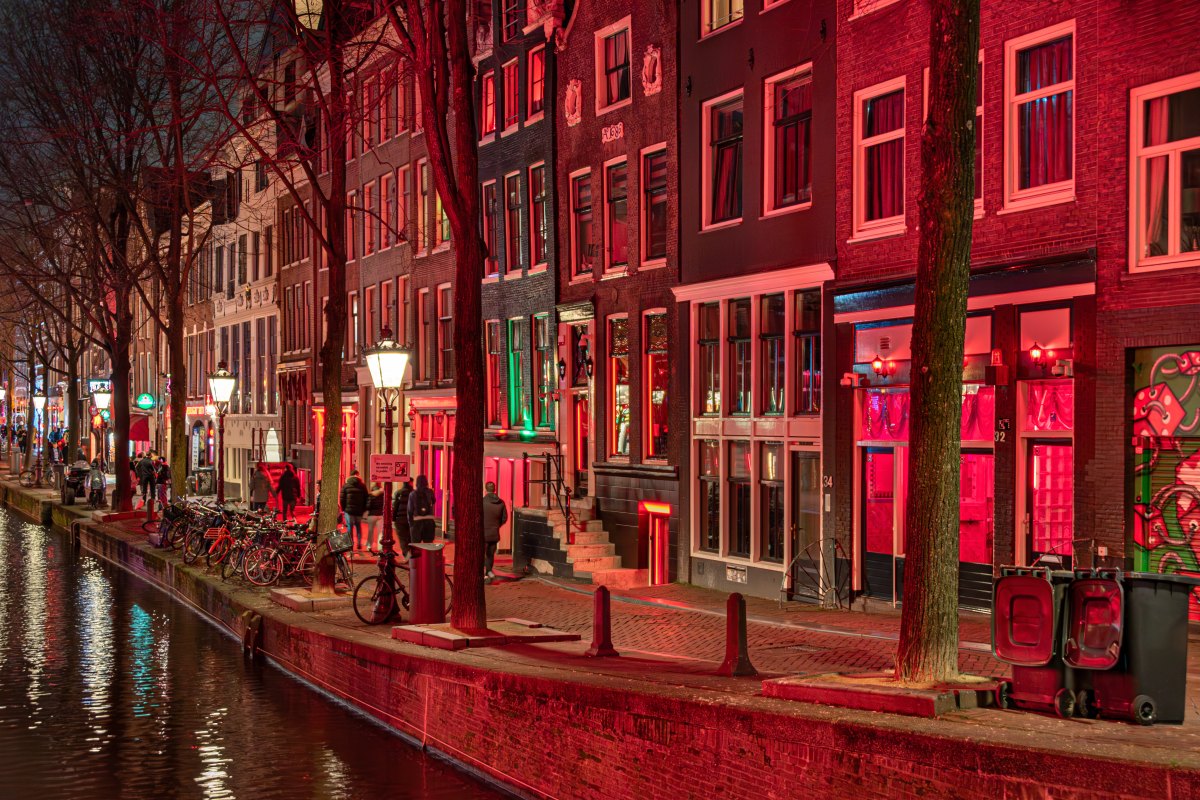
Amsterdam’s Red Light District is a neighbourhood where sex workers work behind street-level windows, right beside a church. Walk these lanes and you’ll stand where the city has made room for the sex trade while punishing people who worked in it.
 FREE AUDIO TOUR
Amsterdam Ghost Tour
Amsterdam’s ghost stories belong to real streets, where crowds waited for spirits and families went out to look at hanging bodies. You can stand in those places today, with canal water beside you and old church towers overhead.