
LANDMARK
Dam Square
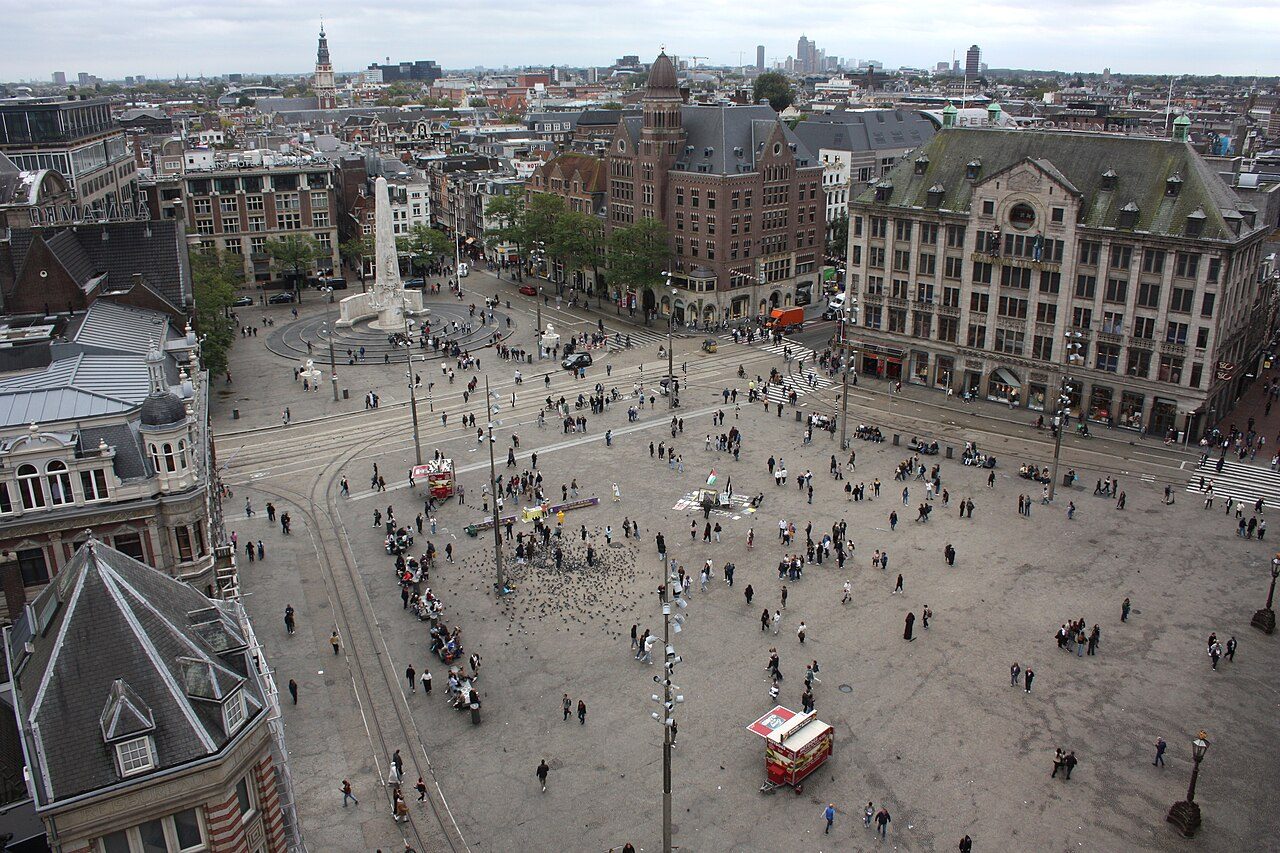
The square where Amsterdam began: Royal Palace, Nieuwe Kerk and the National Monument.
A square with names underfoot
Dam Square brings together Amsterdam’s Royal Palace, Nieuwe Kerk and National Monument. But start by looking down between Nieuwendijk and Damrak. Here, name stones remember people killed on 7 May 1945, when German servicemen fired from the Groote Club balcony into a crowd celebrating liberation. In 2016, relatives unveiled the stones, including one for Willem Cieraad, who was shot that day. These small markers bring an enormous event down to individual lives.
The square takes its name from the dam across the Amstel around which Amsterdam grew. Today, its broad open space can feel like somewhere to cross rather than somewhere to stop. Give it a little time. The buildings, balconies and paving record very different versions of the city.
A town hall becomes a palace
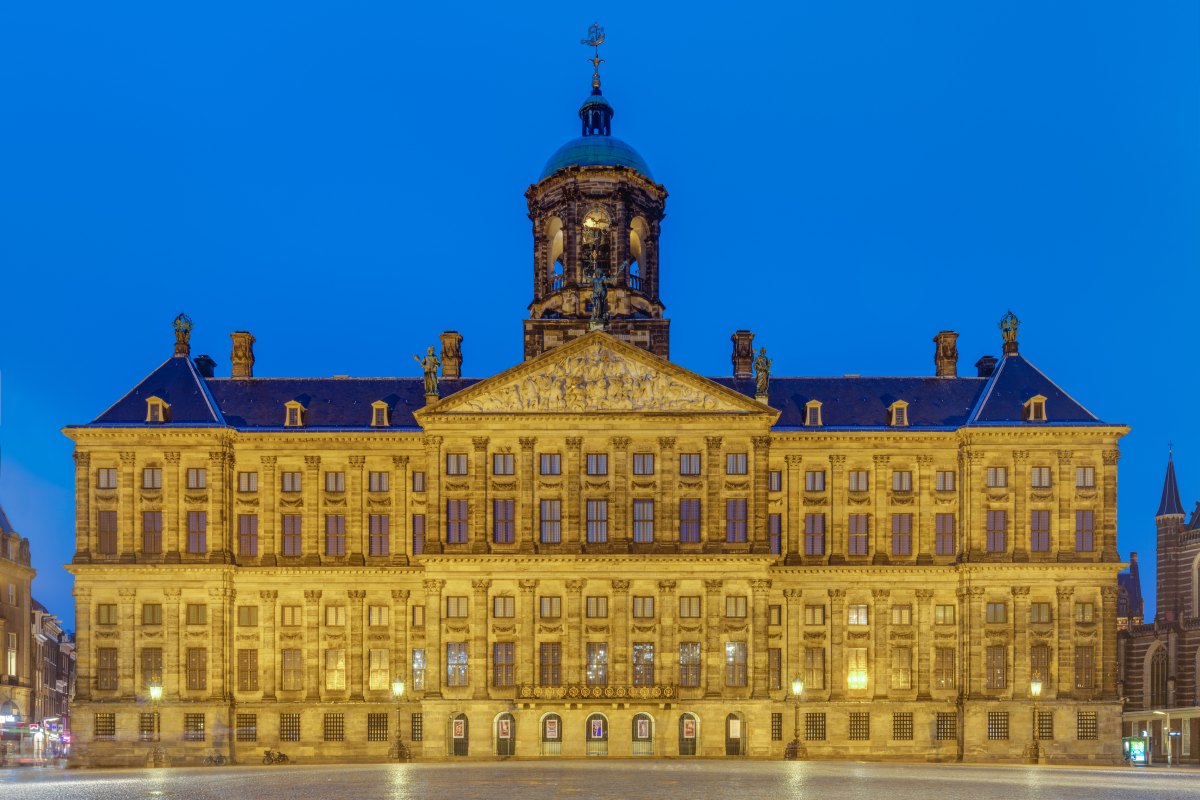
The great stone building on the western side is the Royal Palace, built in the 17th century as Amsterdam’s town hall. Its scale was a statement of civic power before it became a royal residence. Stand back far enough to take in the central entrance, balcony and dome together.
On 20 April 1808, King Louis Napoleon received the city’s tributes from a new balcony he had requested for the former town hall. The balcony was later made smaller, but it remains on the palace. What looks like a single architectural detail marks a change from city government to monarchy.
The building also appears in Jan van Kessel’s 1668 painting of the Dam, alongside a busy fish market. Van Kessel left the clock face off its dome. The Amsterdam City Archives says nobody knows why. Look up at the dome yourself: the painting is a useful reminder that this ceremonial-looking square was also a place of everyday trade.
Prophets and sleepers
Not everyone who gathered here came to buy fish or greet a king. In 1535, a group of Anabaptists ran naked across the Dam, shouting about the “naked truth”. Their prophet was the tailor Hendrick Hendrickz. They were arrested, and some were burned at the stake on the square. It is a harsh story to hold against the ordinary foot traffic around you.
In the summer of 1970, another group made the Dam their own in a very different way. Hippies slept here, burned incense and listened to Janis Joplin and the Grateful Dead. Marines cleared the square, and the sleepers moved to Vondelpark. The episode belongs to the Dam’s long history as a place where public space, authority and personal freedom meet.
Read the square from its edges
Beside the palace stands the Nieuwe Kerk, a medieval church now used for exhibitions and royal inaugurations. Across the square, the white National Monument commemorates the Second World War. Look at its sculpted figures rather than treating it only as a meeting point.
Try standing at the edge before crossing through the middle. From there, you can take in the palace’s formal frontage, the church and the monument without losing them among the passing crowds. Then return to the name stones. The grand buildings tell you who held power here; the names in the paving ask you to remember who stood below.
Things to know
- Walk down Damrak from Amsterdam Centraal to reach the square.
- Come early in the morning for a quieter look at the buildings.
- Look for the name stones between Nieuwendijk and Damrak.
- Bring a rain layer; the broad square offers little shelter.
What people say
Related spots
More things to do in Amsterdam ›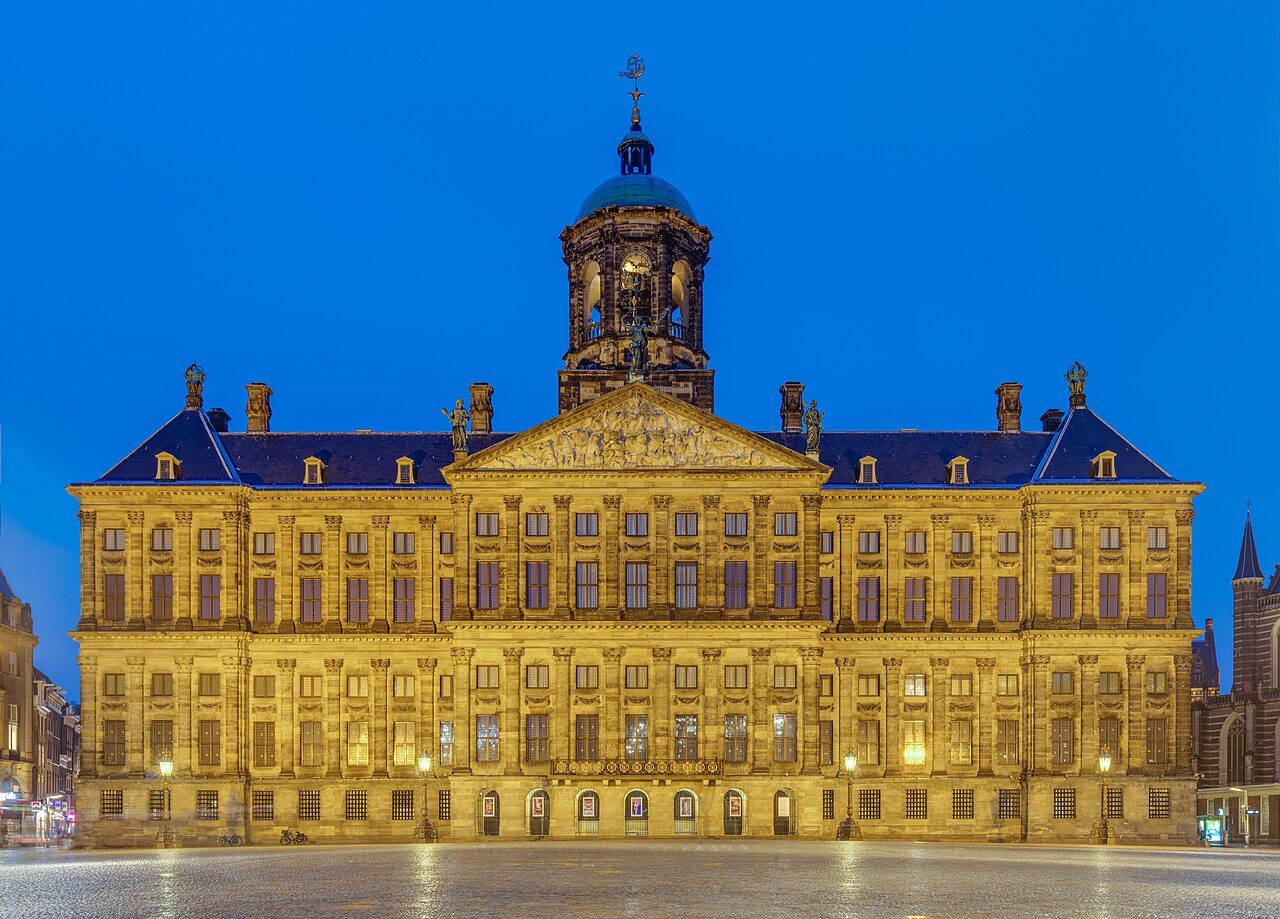
Royal Palace Amsterdam
The 17th-century city hall on Dam Square that became a royal palace; the citizens' hall inside is open to visit.
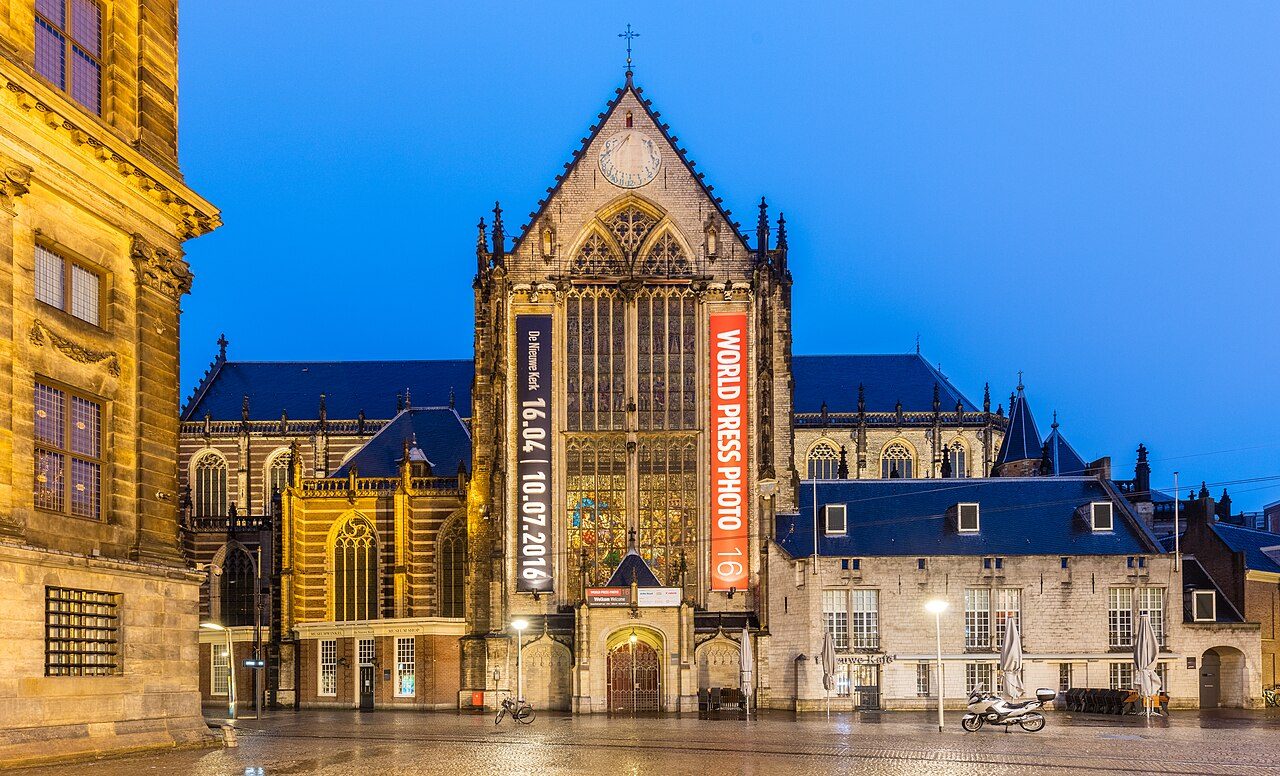
Nieuwe Kerk
A medieval church on Dam Square, now an exhibition venue and setting for royal inaugurations.
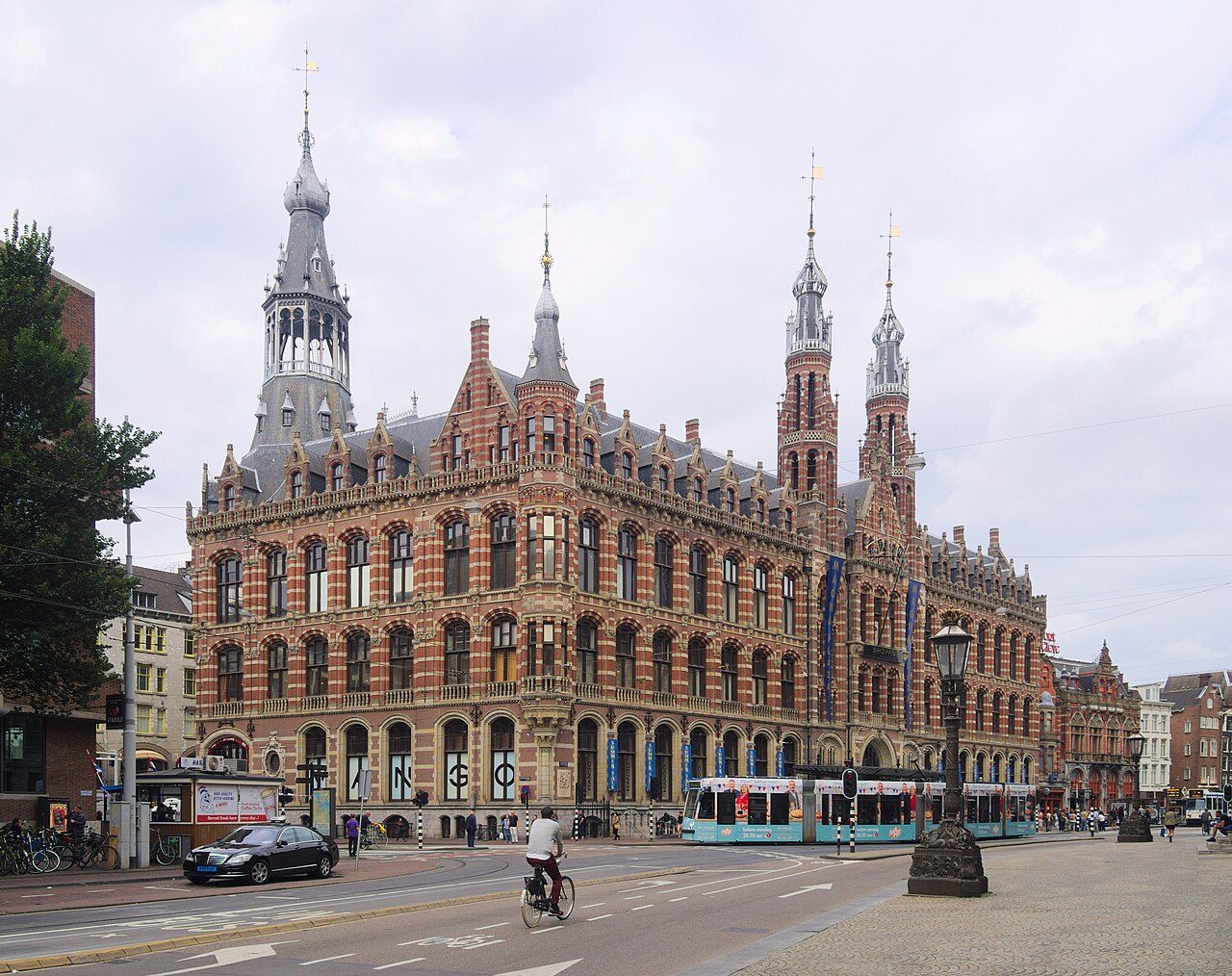
Magna Plaza
The former main post office behind the palace, a neo-Gothic shopping hall.
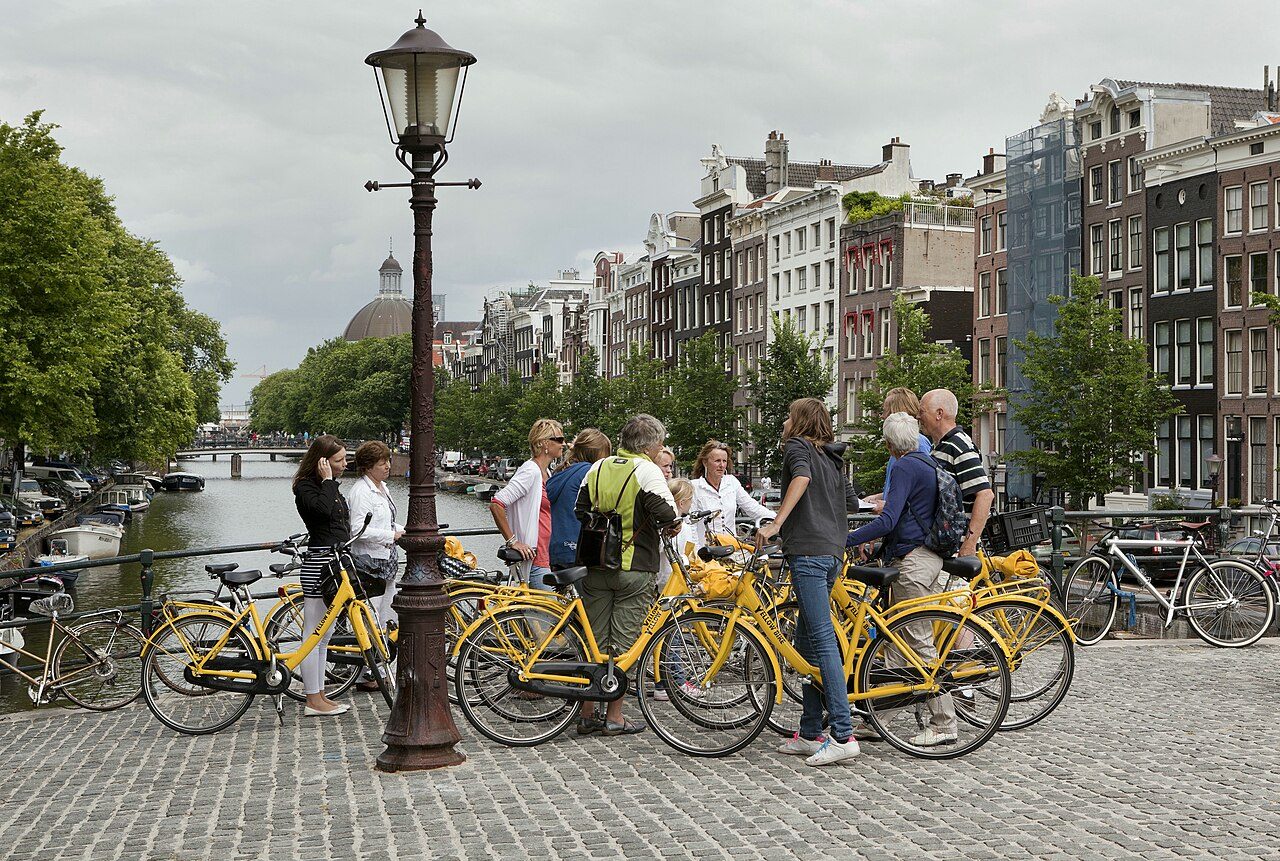
Torensluis
The widest bridge in Amsterdam, with old jail cells hidden inside it and a Multatuli statue on top.
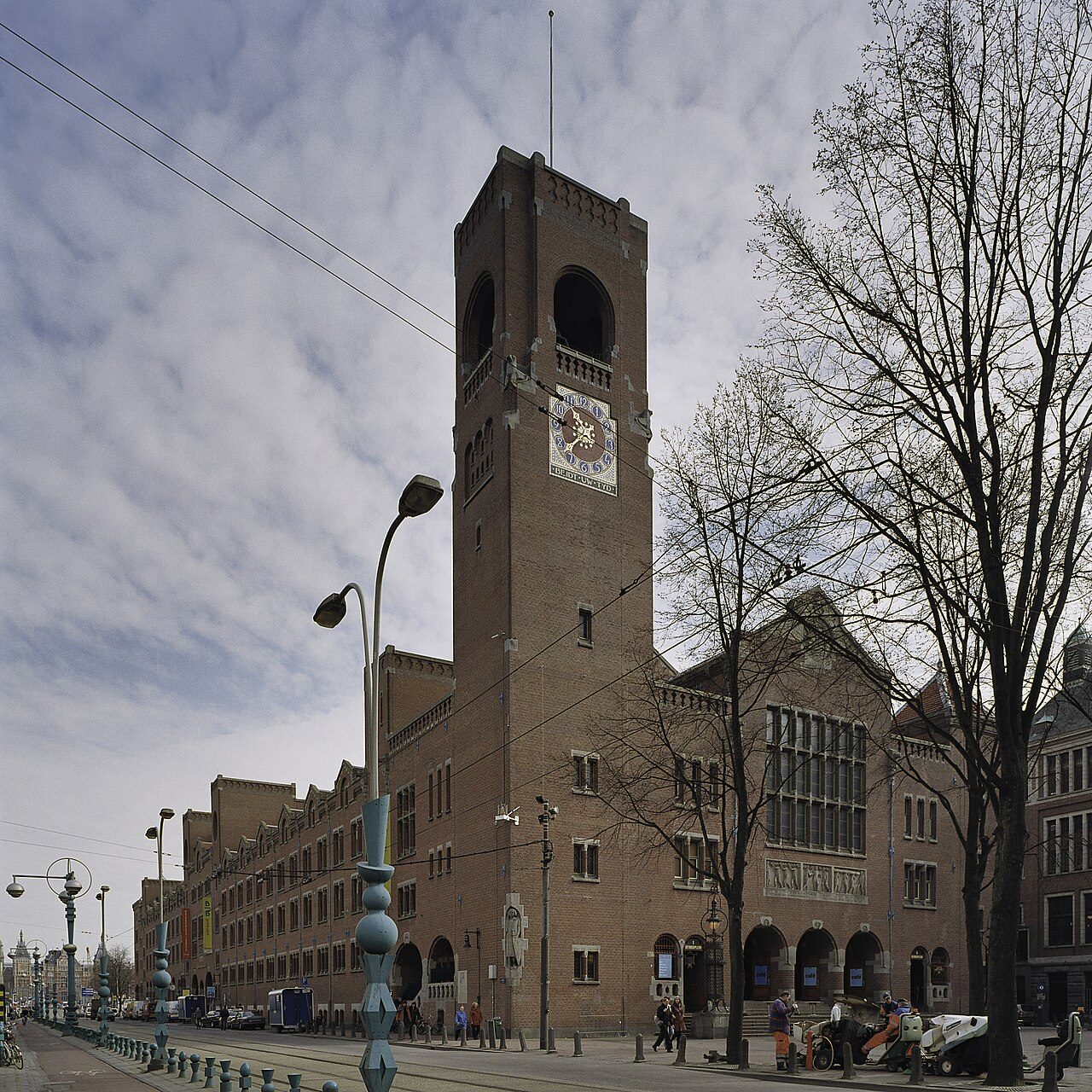
Beurs van Berlage
The old stock exchange on the Damrak that started modern Dutch architecture.
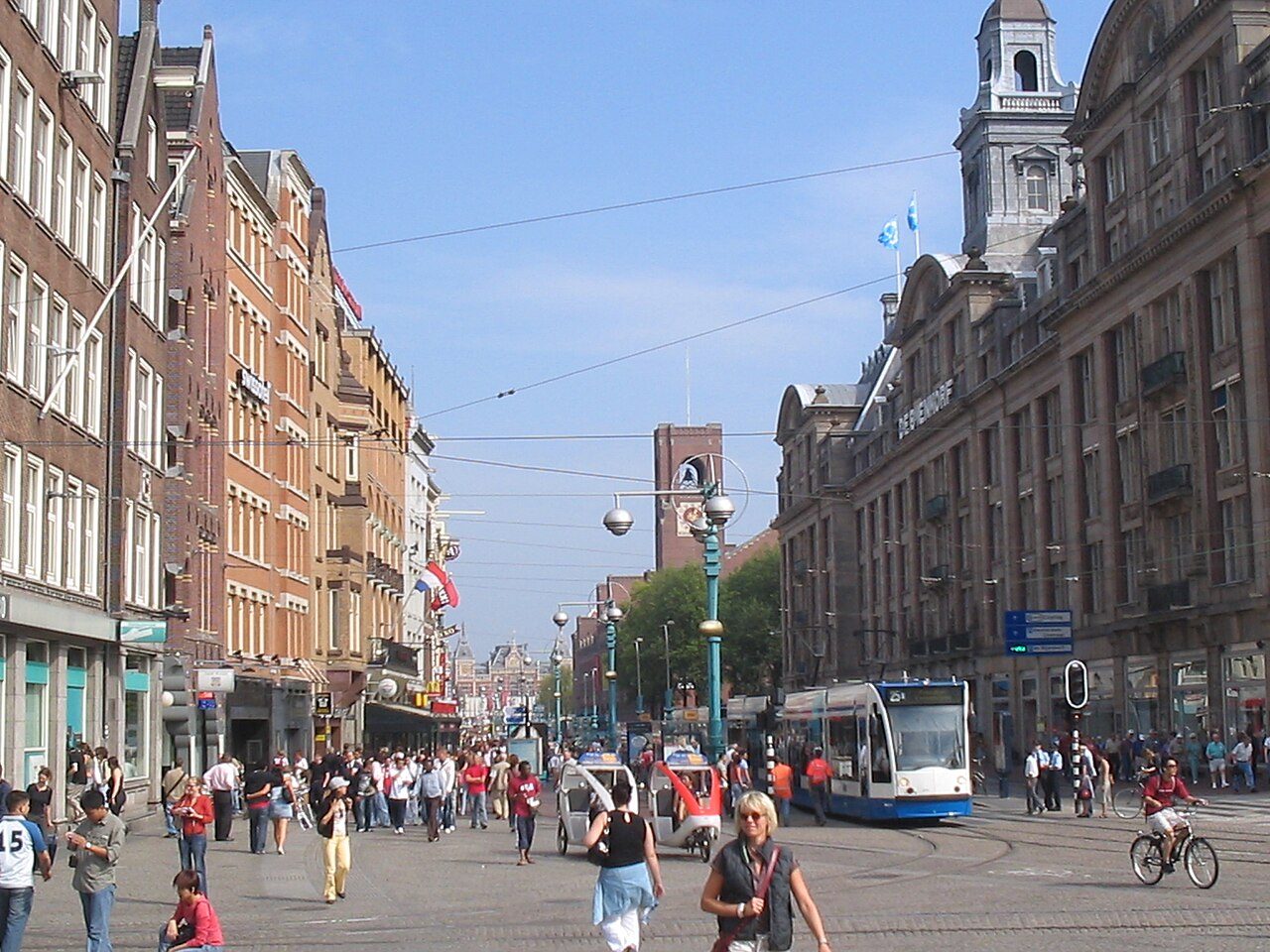
Dancing houses (Damrak)
The row of leaning canal houses on the Damrak water, the classic first photo out of Centraal Station.
Tours and quests that pass here
These walks have a stop a few minutes from Dam Square. Free, on your phone, start any time.
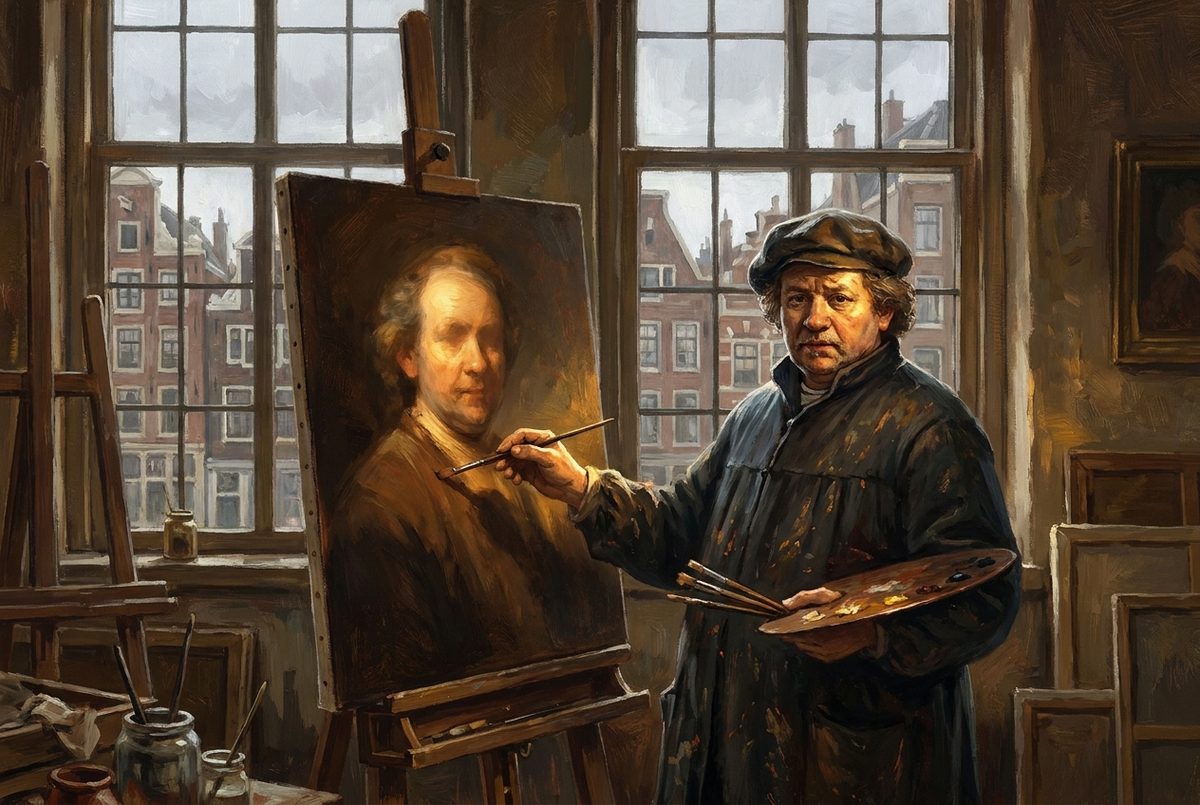 FREE AUDIO TOUR
In Rembrandt's Footsteps
The painter of The Night Watch lived and worked in Amsterdam, and his house is still standing. From the early 1630s until his death in 1669, Rembrandt made his life in streets you can walk today.
 FREE AUDIO TOUR
Amsterdam Ghost Tour
Amsterdam’s ghost stories belong to real streets, where crowds waited for spirits and families went out to look at hanging bodies. You can stand in those places today, with canal water beside you and old church towers overhead.
 FREE AUDIO TOUR
Amsterdam in a Day: Highlights Walk
Amsterdam’s canals and grand houses tell you how a trading city grew rich, but that is only half the story. If you have one day in Amsterdam, spend it on the streets where merchants, workers and people in hiding lived within walking distance of each other.