
LANDMARK
Java-eiland & Python Bridge
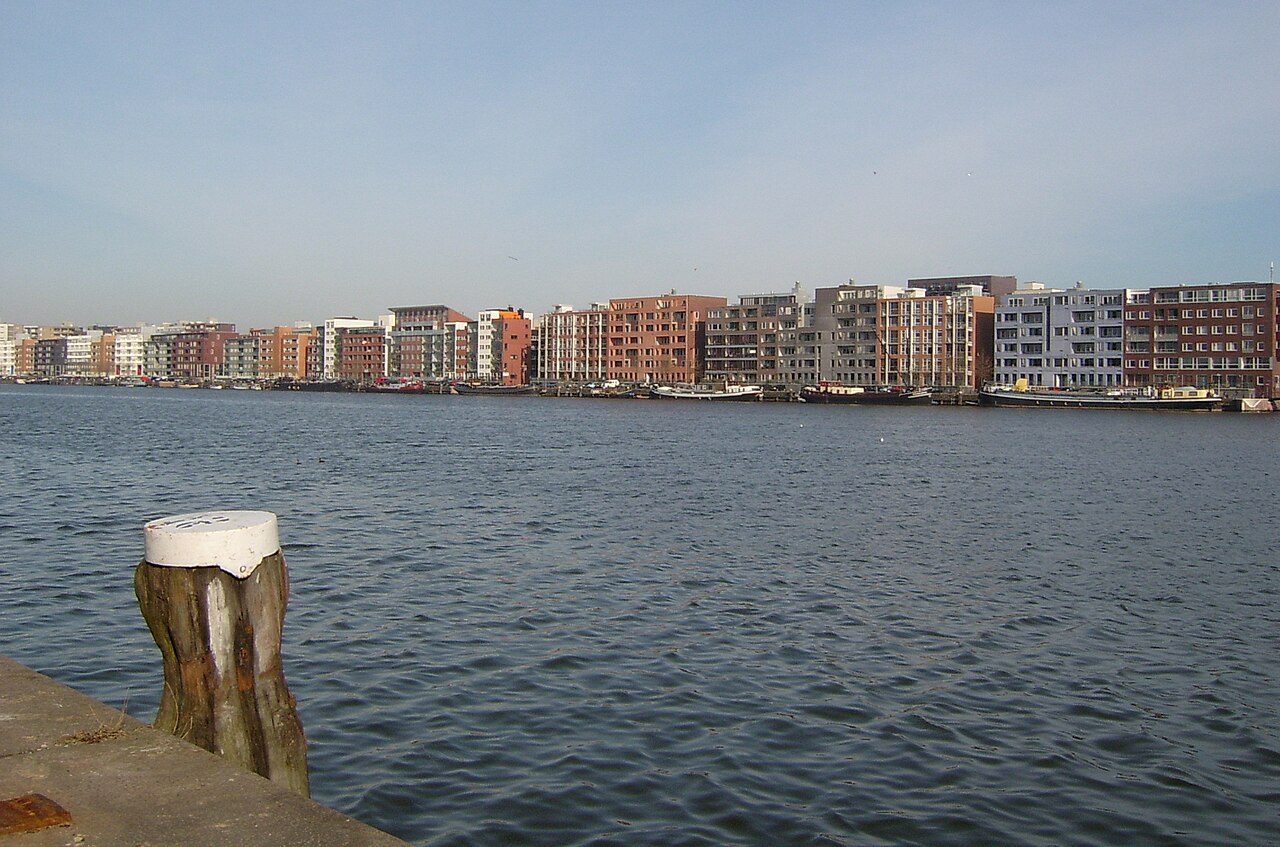
Modern canal houses on the old docks and the red snake-like bridge to Borneo-Sporenburg.
Old docks, new waterfront
Java-eiland is a place to walk between modern canal houses and broad stretches of harbour water. It has also been a rather unusual royal stage. In 2013, King Willem-Alexander, Queen Máxima and their three daughters stepped off their boat here and joined DJ Armin van Buuren and the Royal Concertgebouw Orchestra onstage. Picture that meeting of orchestra, dance music and royal passengers as you walk along the quay.
The attraction now is the contrast in scale. Small canals cut through a former dock landscape, while the outer waterfront leaves room for long views. The Python Bridge belongs to the separate Borneo-Sporenburg part of the eastern docks. Treat the two as a waterfront walk, rather than expecting the red bridge to stand among Java-eiland’s canal houses.
A ship and a child’s name
Javakade carries a history quite different from the royal celebration. In 1951, the Asturias arrived here carrying Moluccan former soldiers and their families. Among the passengers was baby Marthin Asturias Malawauw. He had been born during the voyage and was named after the ship. His name preserves that crossing in a particularly personal way.
Standing beside the water, think of the quay as an arrival point, not just a backdrop to housing. For a broader account of Amsterdam’s relationship with ships, Het Scheepvaartmuseum offers the museum counterpart to this outdoor walk. A harbour and IJ cruise gives the reverse perspective: the docks seen from the water rather than from their edges.
Bridges with an alphabet
On Java-eiland itself, slow down at the small canal bridges. Artists Guy Rombouts and Monica Droste designed nine of them using their own alphabet of shapes. Completed in 2000, these crossings are works you can read as well as walk over.
The bridge on the south side of Brantasgracht spells out the Dutch word for science. Look at the shapes individually before taking in the whole crossing. Without knowing the alphabet, you may not decipher it, but knowing that it carries a word changes the way you look.
There is another kind of local language at Het Einde van de Wereld, a neighbourhood restaurant founded in 1984 and now aboard the Quo Vadis. Volunteers call opening up and setting the tables ‘jannen’, after the late Jan, who used to do that work. In 2024, volunteer Yolly was carrying on the task. An ordinary daily job had become someone’s memorial.
The red curve over the water
At the Python Bridge, the visual language is much louder: a red, snake-like crossing between Borneo and Sporenburg. Look at it from the waterside before walking over. From below, its rising and falling profile is easier to appreciate than when you are standing on it.
On hot days, people jump into the water here. In June 2026, friends Duco and Oliver brought a rope swing and used it to launch themselves from the bridge. That is a reported local scene, not a recommendation to copy it. Stay on the bridge or quay and watch how the red structure changes against the water as you move. The curve is the reason to pause, rather than simply cross.
Things to know
- Walk the waterfront between Java-eiland and Borneo-Sporenburg; they are separate parts of the docks.
- Allow time for the small canal bridges as well as the Python Bridge.
- Bring a windproof layer for the exposed quays.
- View the Python Bridge from the waterside before crossing.
- Do not take local jumping or rope swings as evidence that swimming is safe.
What people say
Related spots
More things to do in Amsterdam ›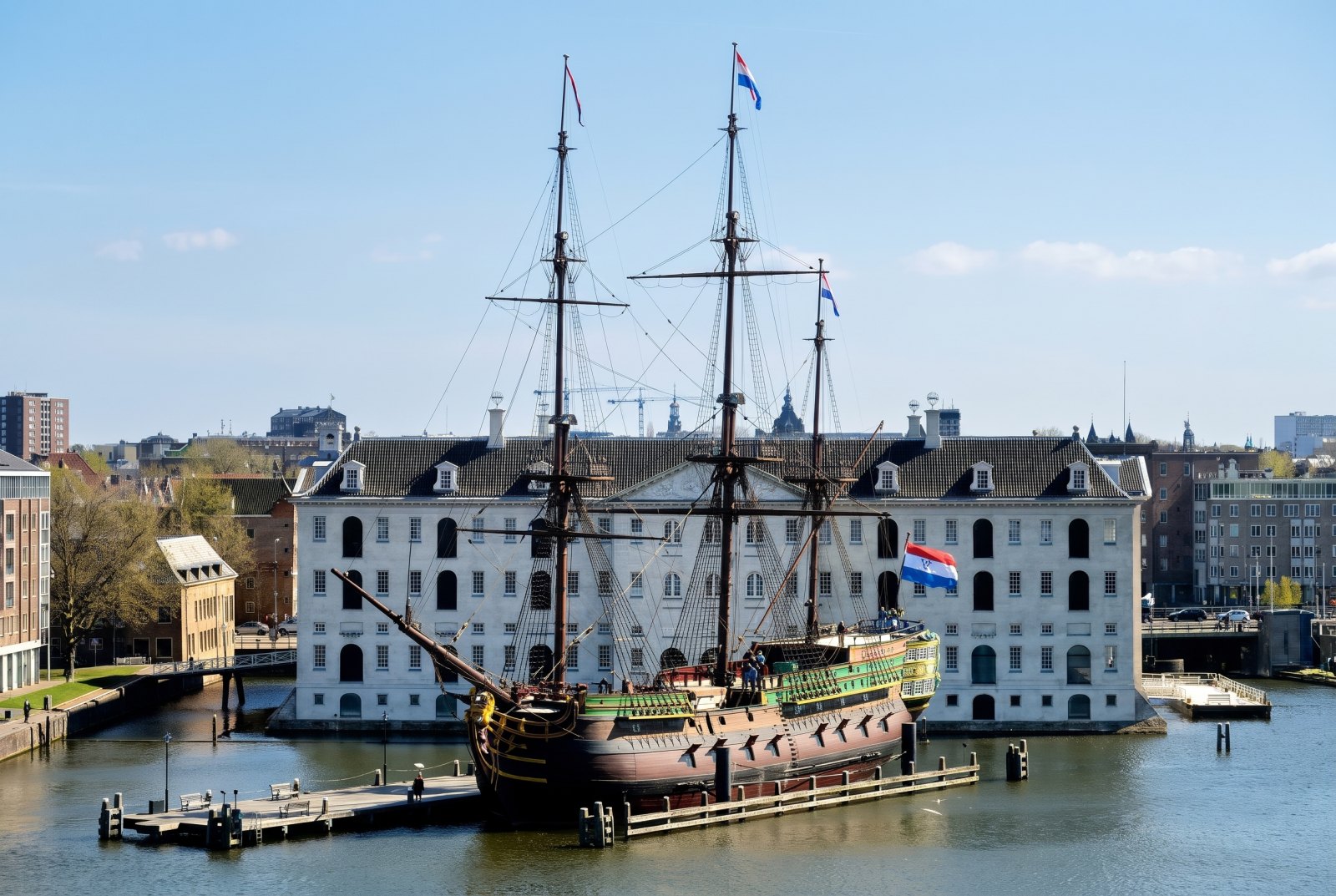
Het Scheepvaartmuseum
The maritime museum in the old naval storehouse, with a full-size replica East Indiaman moored outside.
Harbour and IJ cruise
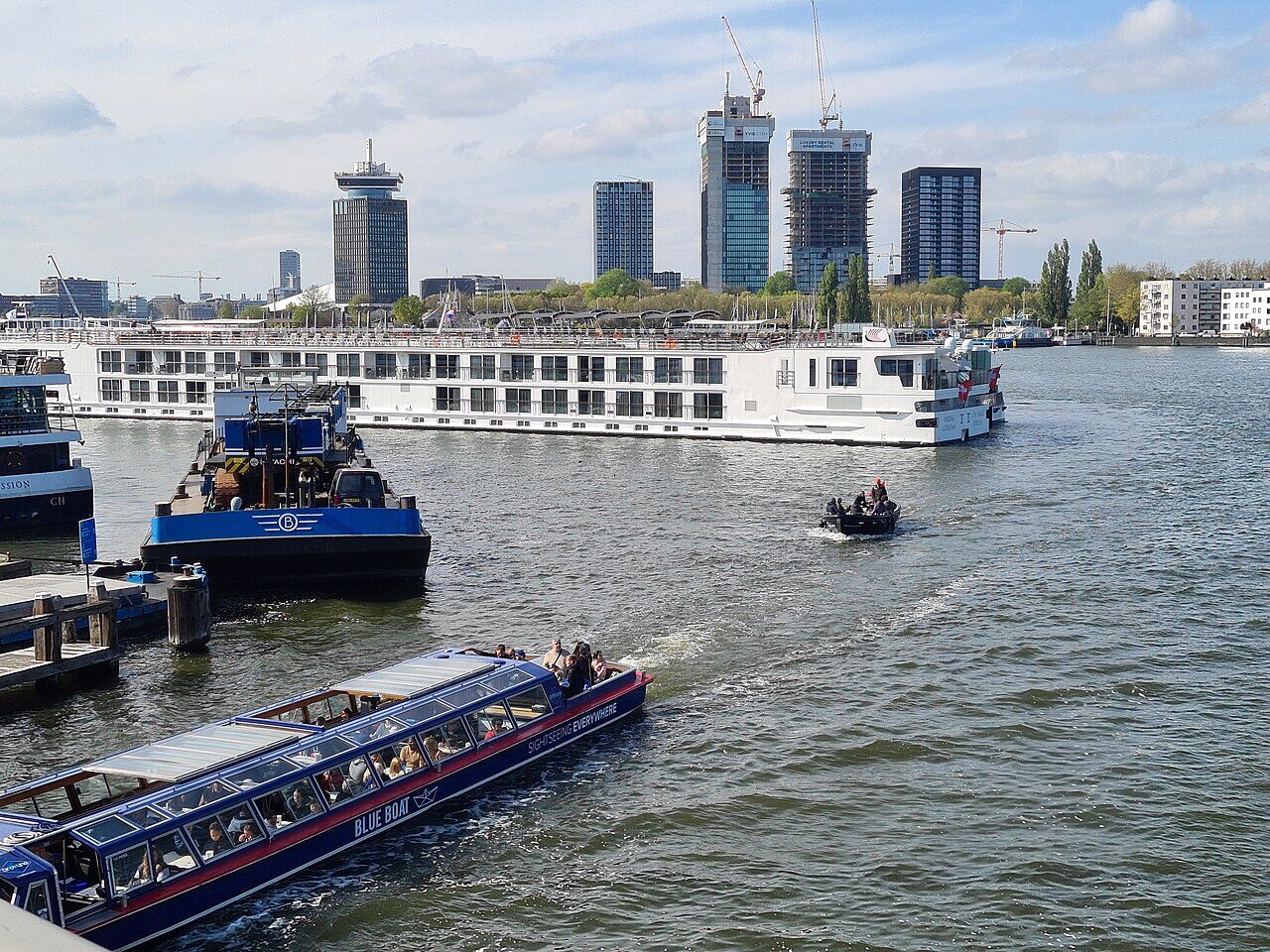
Tours that leave the canal ring for the IJ and the docks, where Amsterdam’s harbour and new architecture meet.
NEMO rooftop
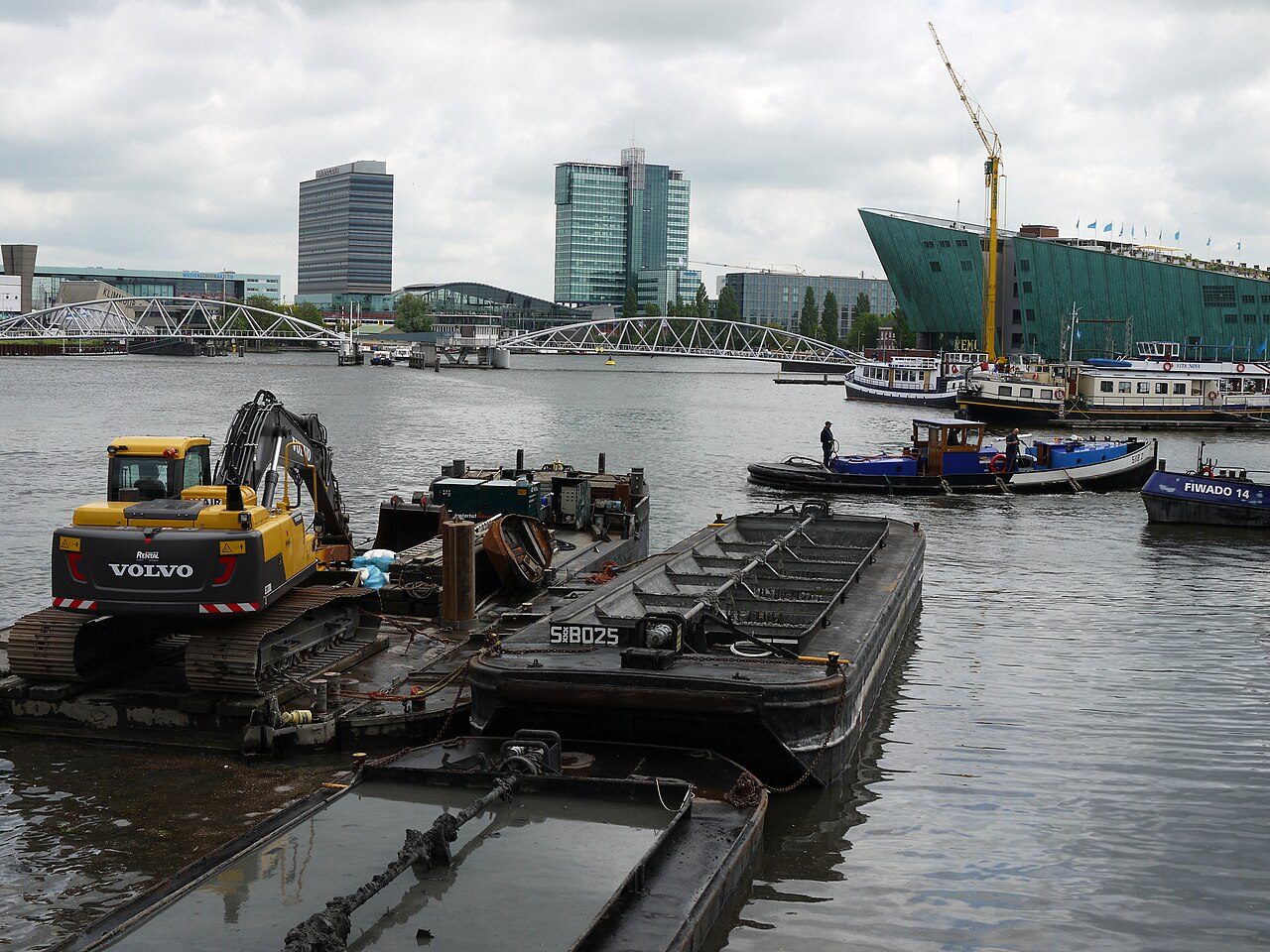
The sloping roof of the NEMO science museum is a free public square with a view over the old harbour.
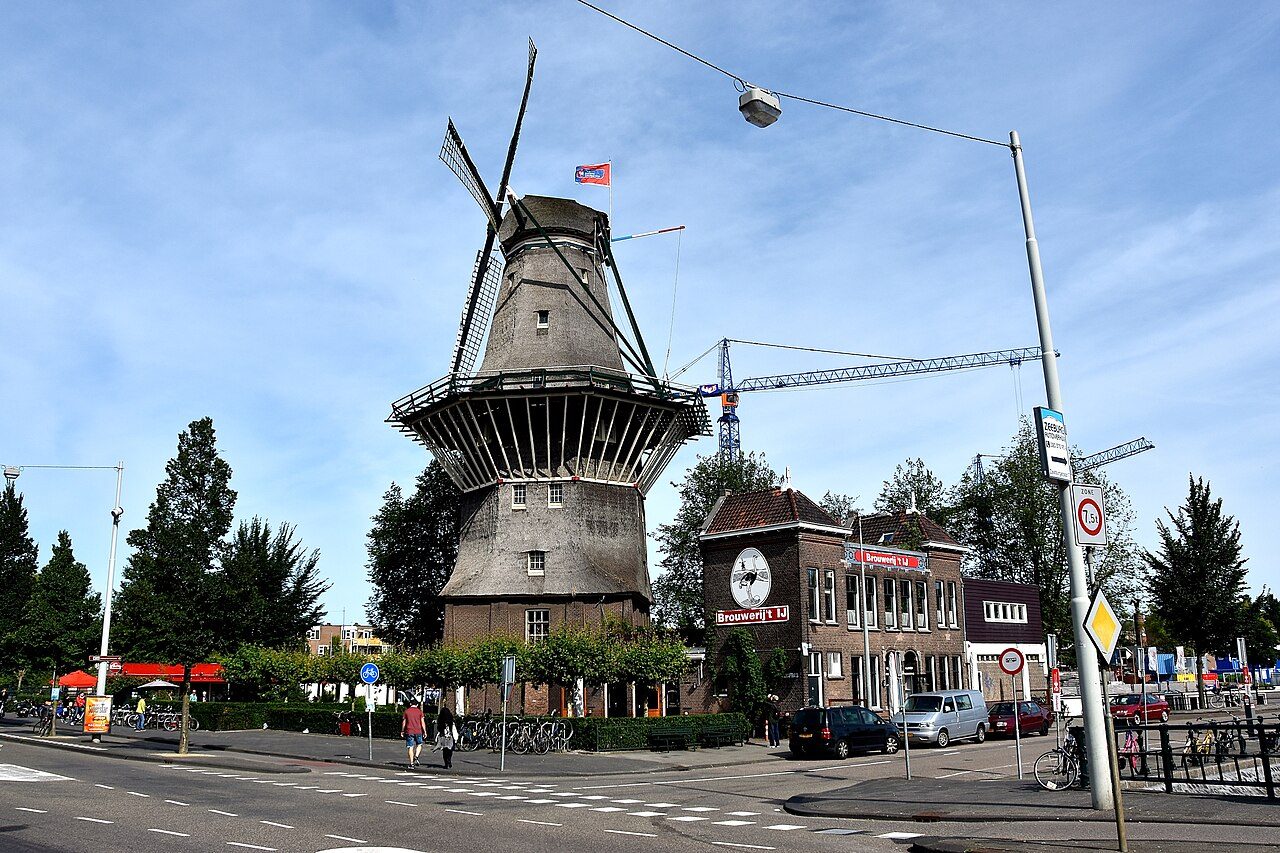
Molen De Gooyer
Amsterdam's tallest wooden windmill has a storm story, a miller family and a waterside view beside Brouwerij 't IJ.
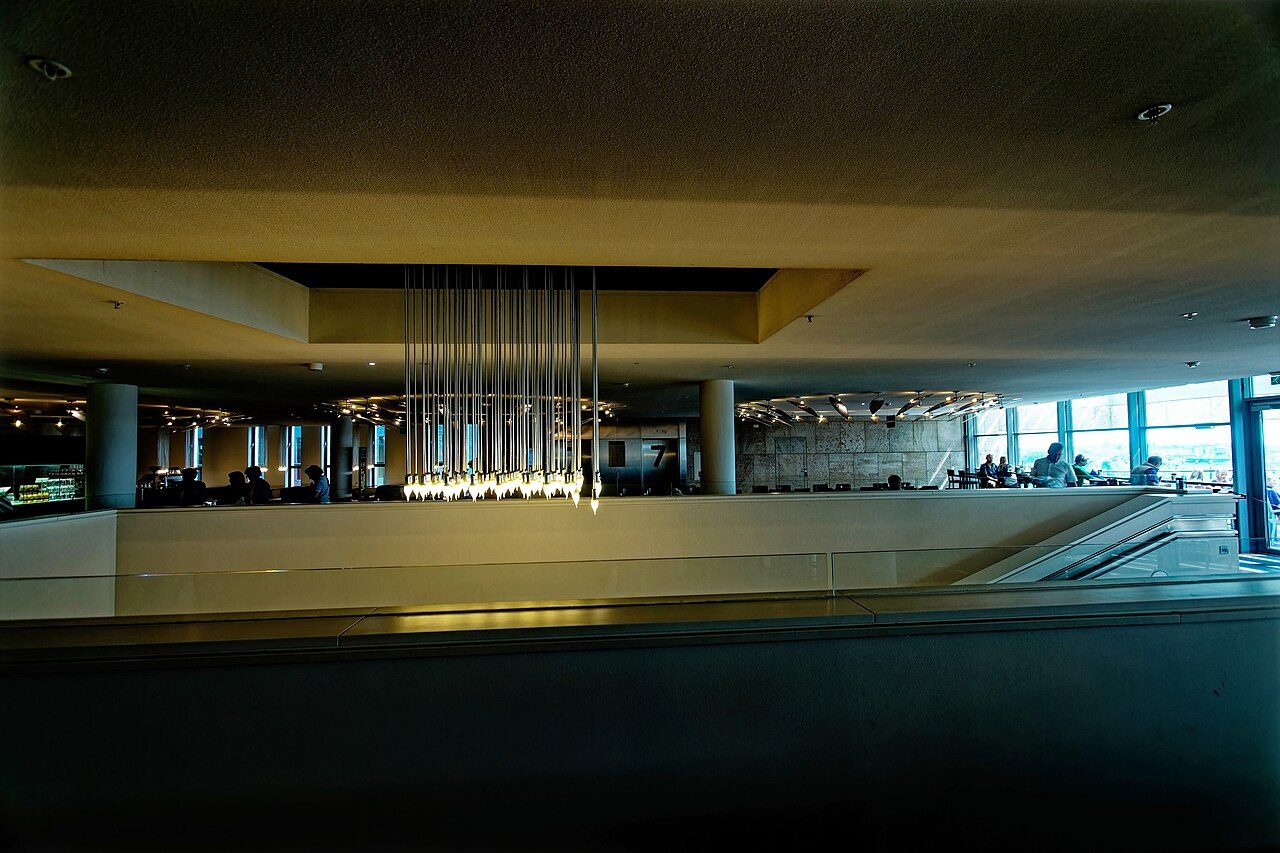
OBA Centrale Bibliotheek (rooftop view)
The central library: free to walk in, with one of the best free views from the top floor.
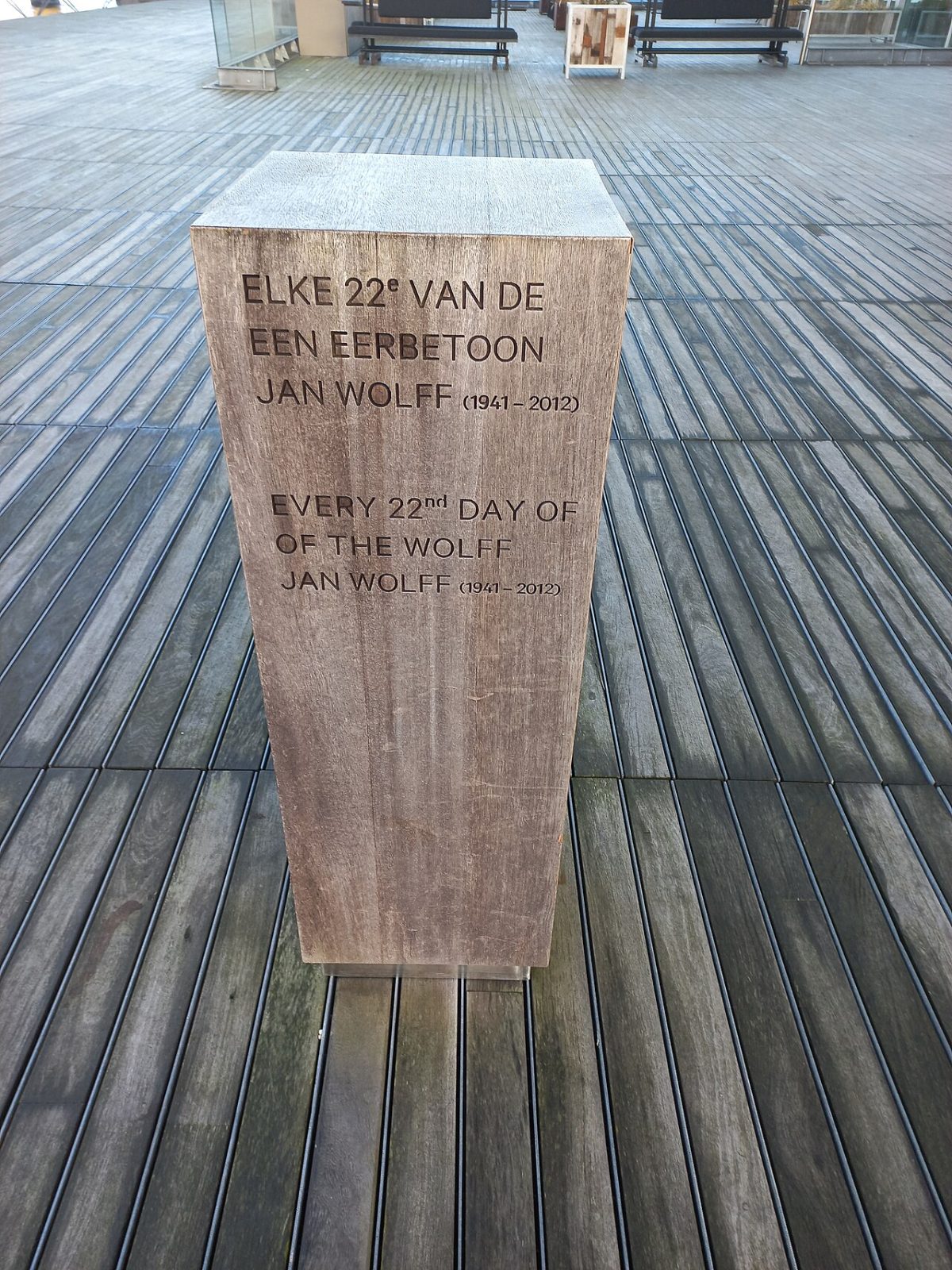
Huil van de Wolff
A sound monument under the overhang of the Muziekgebouw for horn player Jan Wolff: every 22nd of the month at 8 pm it plays wolf howls, ship horns and lapping water, shaped by the weather.
Walk it with a guide or a quest
If you want a story on the way, these walks also live in Amsterdam.
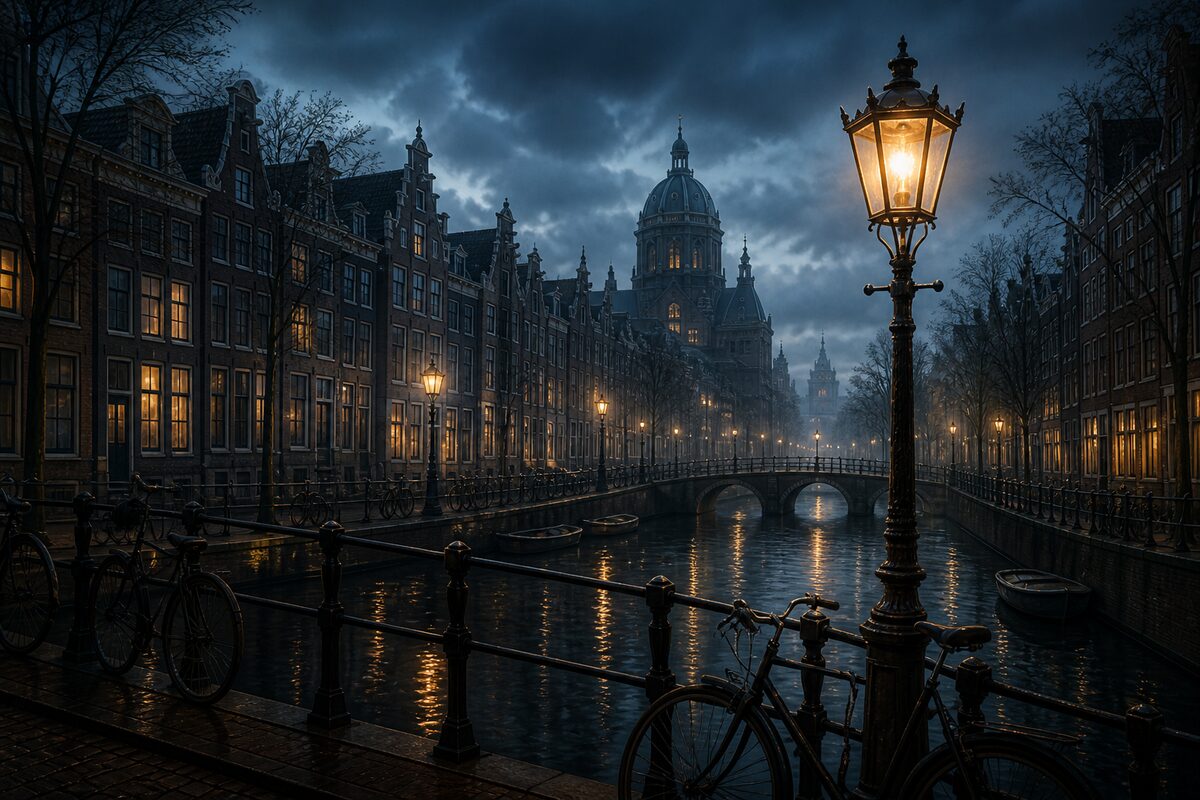 FREE AUDIO TOUR
Amsterdam Ghost Tour
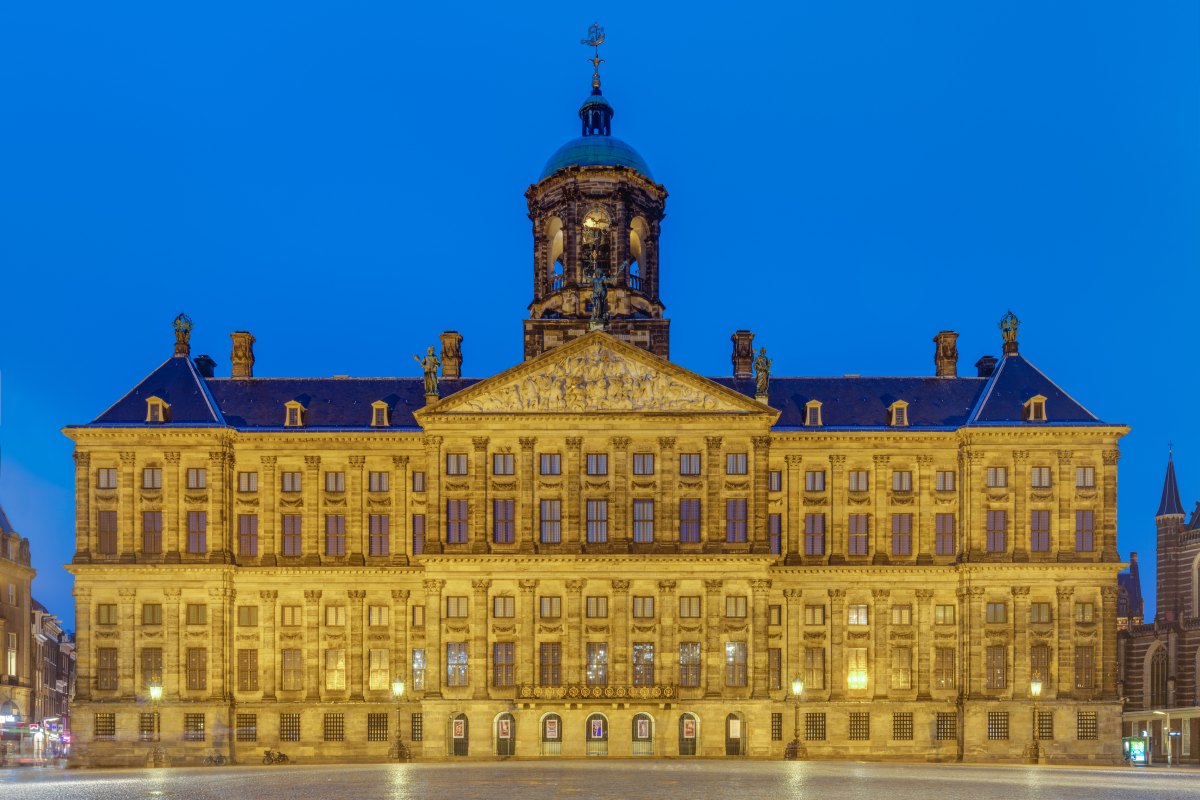
Amsterdam’s ghost stories belong to real streets, where crowds waited for spirits and families went out to look at hanging bodies. You can stand in those places today, with canal water beside you and old church towers overhead.
 FREE AUDIO TOUR
Amsterdam in a Day: Highlights Walk
Amsterdam’s canals and grand houses tell you how a trading city grew rich, but that is only half the story. If you have one day in Amsterdam, spend it on the streets where merchants, workers and people in hiding lived within walking distance of each other.
 FREE AUDIO TOUR
Red Light District
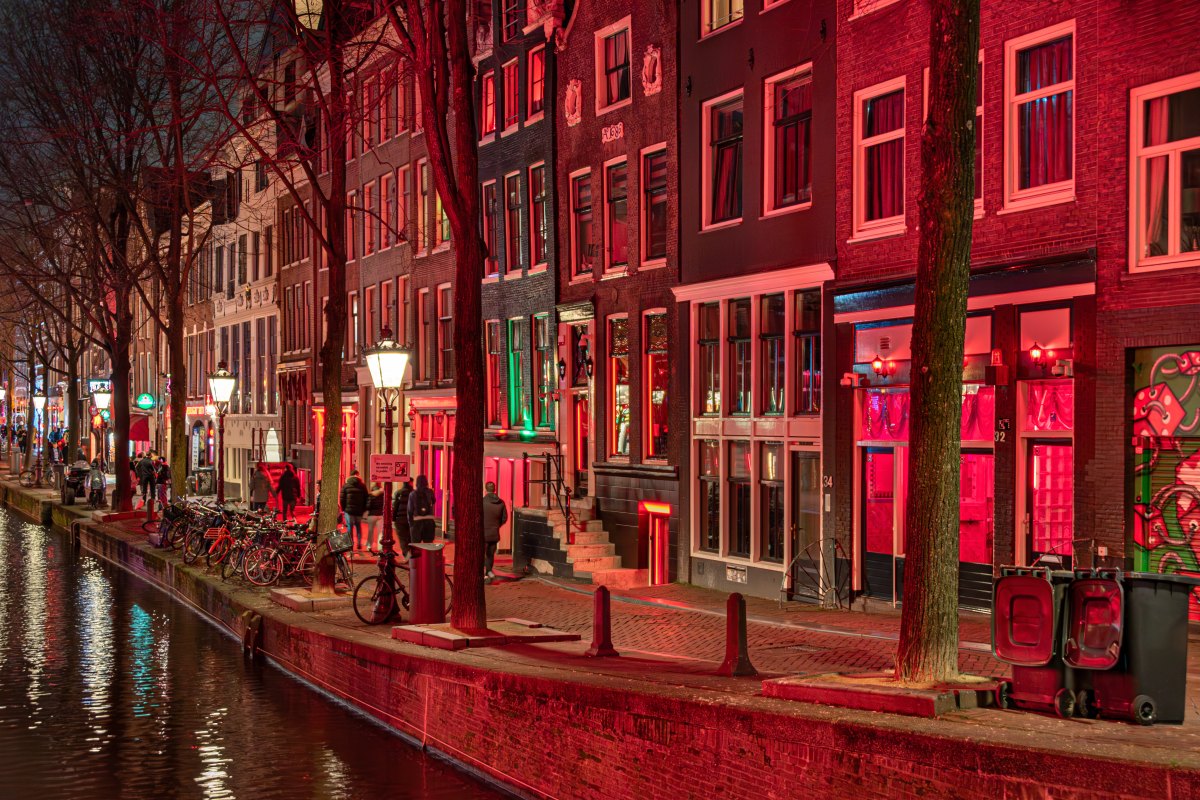
Amsterdam’s Red Light District is a neighbourhood where sex workers work behind street-level windows, right beside a church. Walk these lanes and you’ll stand where the city has made room for the sex trade while punishing people who worked in it.