CASTLE
Slot Teylingen
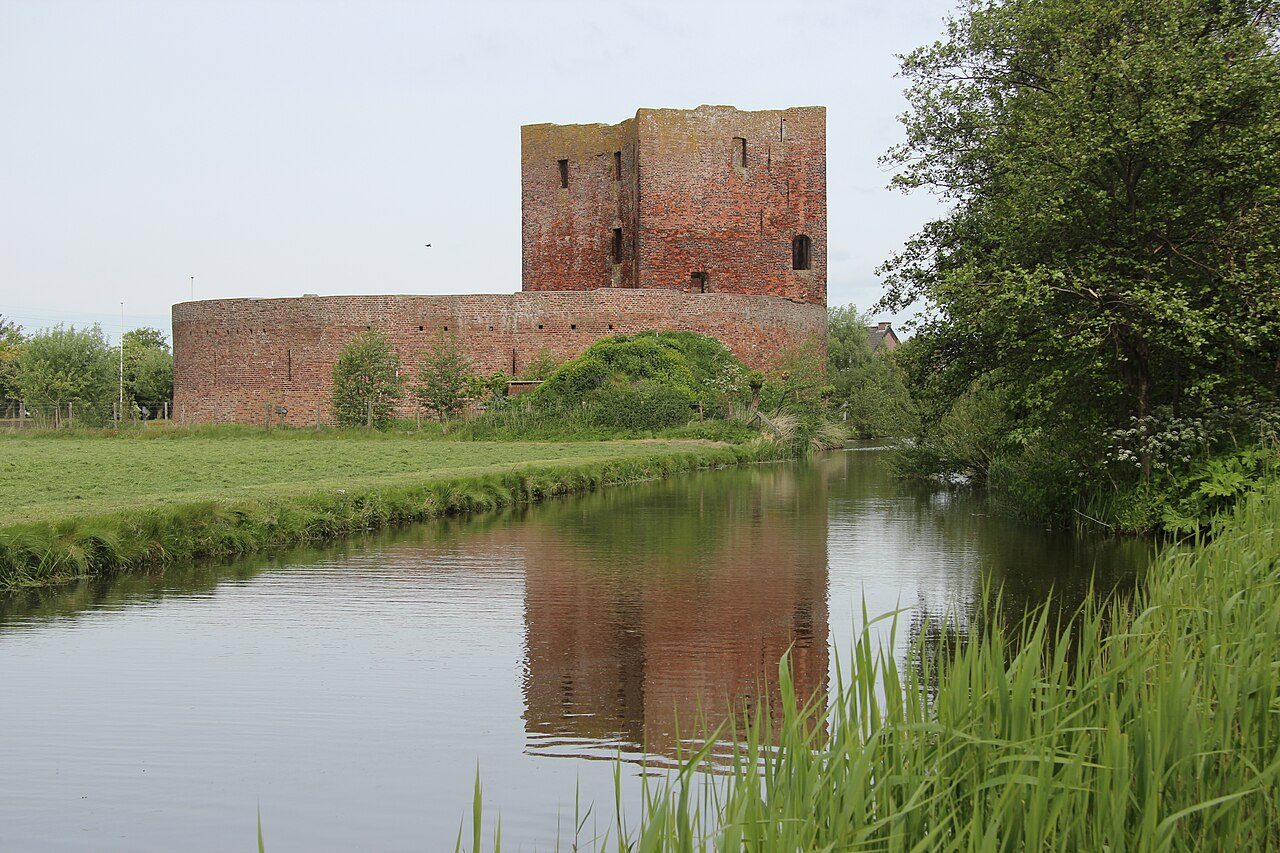
A moated medieval castle ruin with a circular wall and keep, where Countess Jacoba of Bavaria lived and died.
Jacoba and the little jugs
Slot Teylingen is a moated medieval castle ruin on the edge of Voorhout, beside Sassenheim. It is where Countess Jacoba of Bavaria lived and died in 1436. Her home was in the outer bailey, not the surviving keep. That distinction matters when you stand before the tall brick remains: they are only part of the castle she knew.
Small drinking jugs recovered around the castle and from its moat became known as *jakobakannetjes*. Later stories claimed they showed that Jacoba had taken to drink, or that she had spent her days making pottery. Neither tale explains the pots. They were imported from Siegburg in Germany. It is a useful story to remember here: the objects are real, but the tales attached to them need care.
A ring built for defence
Look first at the circular wall and the way the keep forms part of it. The wall dates from the early 13th century; the residential building followed shortly afterwards. Water still partly surrounds the ruin, helping you read its original purpose as a defended stronghold. The castle guarded the north–south route through the county of Holland.
Willem van Teylingen built the water castle, and Dirk van Teylingen enlarged and strengthened it around 1250. Soon afterwards, it hosted a young ruler at an important moment. On 20 August 1266, the 12-year-old Count Floris V issued his first independent charter at Teylingen. He issued another here that December. These broken walls once enclosed a place where the business of government was conducted.
How a ruin survived
The castle was badly damaged around 1570 during the Eighty Years’ War, then partly repaired. Around 1675, fire gutted the keep. Decay and gradual demolition followed. What remains is not an intact furnished castle, but substantial masonry whose shape you can still follow with your eyes.
After the estate was nationalised in 1795, it was sold on condition that the ruin must not be demolished. That makes Teylingen an early example of deliberate monument protection in the Netherlands. Late-20th-century work consolidated the remains and restored the partly filled moat.
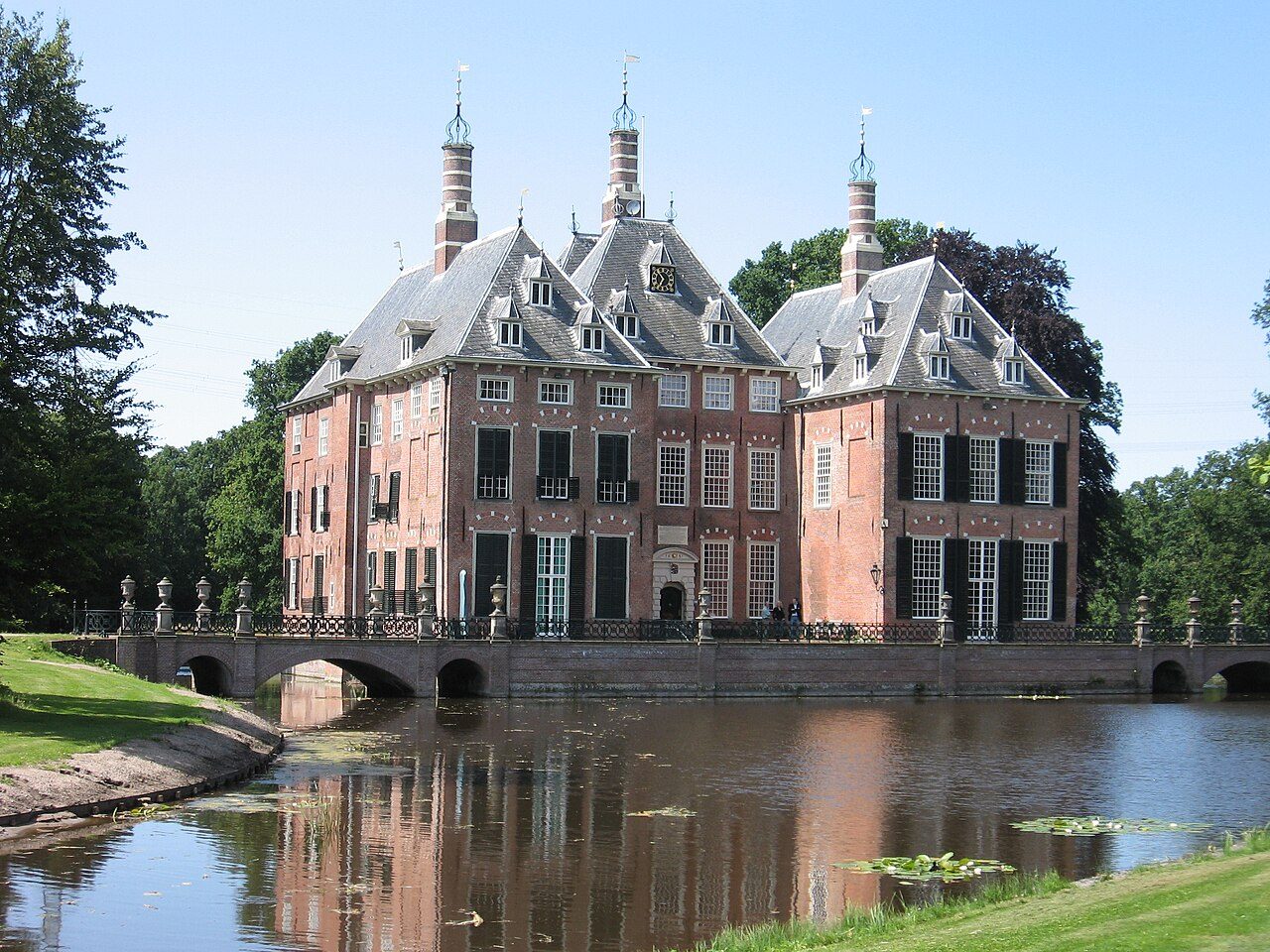
Like Kasteel Duivenvoorde in Voorschoten, Teylingen belongs to South Holland’s castle landscape. Here, the circular wall, keep and water are the things to concentrate on. The missing buildings are as important to understanding the site as the surviving brickwork.
What the moat kept
The moat has preserved a surprisingly mixed record. During excavations in 1983–1984, finds included a sword thought to date from the 14th century, still retaining its grip covering and part of its scabbard. In 1983, the IJmond archaeological diving group also recovered medieval bricks, a 17th-century bottle neck and a 78-rpm record by singer Bobbejaan Schoepen. Not everything beneath the water was medieval.
The ruins still provide a setting for retelling the past. In 2024, the Siege of Teylingen returned after a nine-year absence. Medieval crafts and storytelling accompanied a staged fight between knights to free Jacoba of Bavaria. That was theatre, not her biography. Standing beside the moat, you can separate those layers: the surviving fortress, the objects recovered from the water and the stories people continue to build around them.
Things to know
- Head for the Ruïne van Teylingen, on the edge of Voorhout beside Sassenheim.
- Wear comfortable shoes for looking around the outdoor ruin.
- Bring a waterproof layer if rain is forecast.
- Allow time to study the circular wall and keep, not just take a photograph.
- Opening hours and prices can change. Check the official website before you go. Official website