CASTLE
Kasteel Duivenvoorde
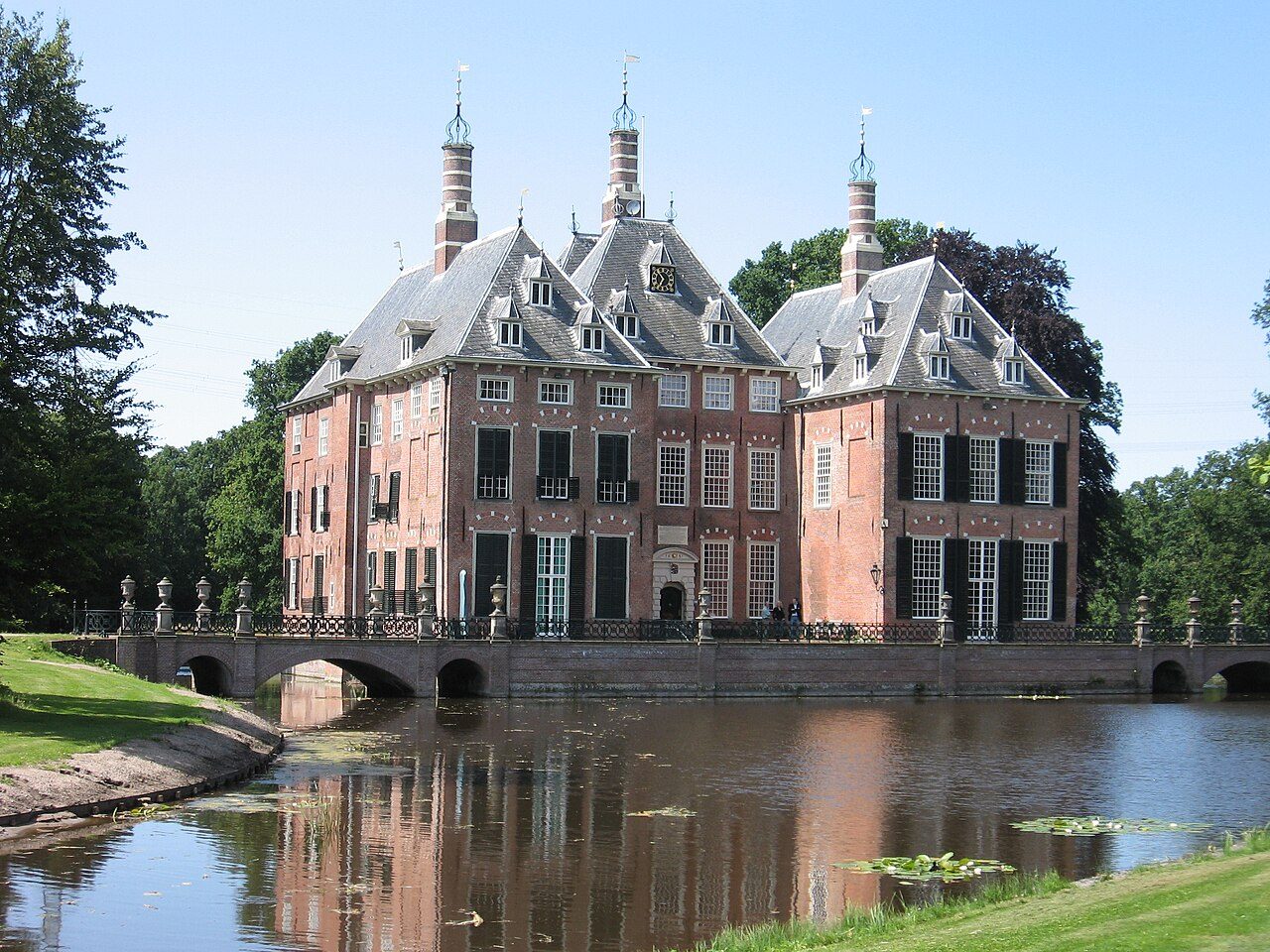
A moated country house with family portraits inside and a landscape park around it. Water and open views frame the house.
A castle across the water
Kasteel Duivenvoorde is a moated country house south of Voorschoten, with family portraits inside and a landscape park around it. Its calm appearance gives little hint of 29 March 1945. That day, German occupiers blew up ammunition stored in the old coach house opposite the castle. The explosion destroyed the coach house and badly damaged the castle and bridge. In 2022, ammunition fragments were still turning up: they were found inside a storm-felled tree on the estate.
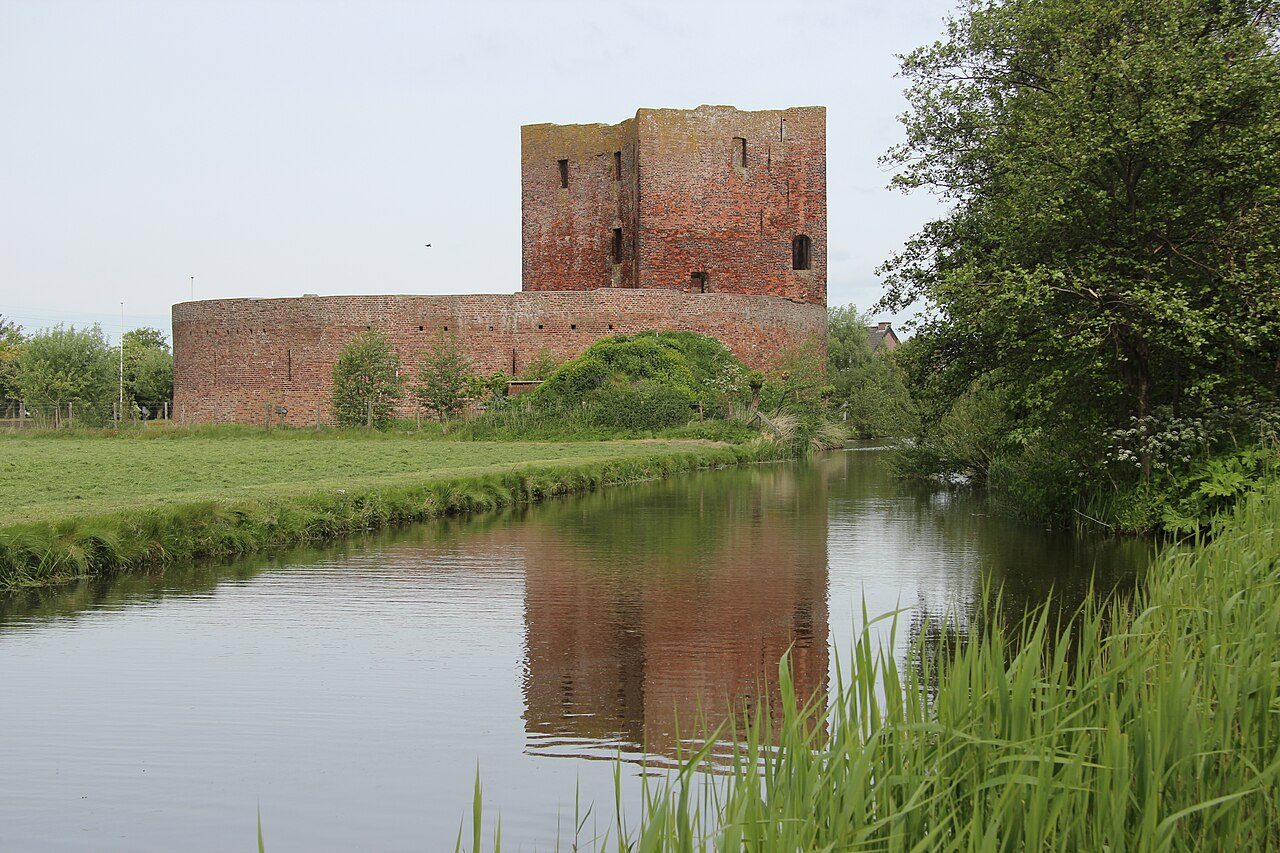
Pause before crossing the bridge. The stone vases on its pedestals survive from an earlier, formal garden. Above the entrance, the date 1631 marks the completion of the present country house. Unlike the ruined Slot Teylingen, Duivenvoorde developed into a furnished family home rather than remaining a defensive stronghold.
A house passed down, never sold
Duivenvoorde was first mentioned in 1226, when a fortified residential tower stood here. Parts of that tower remain in the rear and northern side walls of the present front section. Johan van Wassenaer replaced much of the medieval building with a summer residence suited to his wealth and position.
For nearly 750 years of private ownership, the property was never sold. It passed through inheritance, including through women, from the Van Wassenaer family to the Steengracht and Schimmelpenninck van der Oye families. In 1960, castle and estate passed to Stichting Duivenvoorde.
The rooms tell less comfortable family stories too. The Gold Leather Cabinet displays portraits of Johan van Wassenaer’s family, but not his daughter Maria. In 1639, she met Wolf Hendrik Salzer von Elwingen, a servant her family considered unsuitable. After the couple ran away, Johan confined Maria to her room for six years. Her absence from the portraits is worth noticing alongside the family members who were commemorated.
Portraits, scratched names and Roman stone
In the portrait of Jan II van Wassenaer, look for two flying bullets. They represent wounds received at Padua in 1509 and Sloten in 1523. The first earned him the nickname “Jan with the Jaw”; the second killed him. These are not decorative battlefield details, but a compressed account of his life and death.
The Marot Hall, dating from 1717, offers a more imposing version of family memory: five life-size portraits by court painter Theodorus Netscher. Elsewhere, the library holds more than 6,000 books and manuscripts, including Maria Sibylla Merian’s eighteenth-century book on Suriname.
The servants left a different record. From 1671, those sleeping in the attics scratched names into the roof timbers. Hearts survive there too. In 2022, curator Simone Nieuwenbroek said the lovers’ identities were still unknown. These marks record people largely absent from the grand portraits downstairs.
An older story belongs to a Roman inscription in the entrance hall. Found in 1502 while a field near Roomburg monastery was being ploughed, it records the rebuilding of an armoury under Emperor Septimius Severus.
The park’s changing shape
The grounds began with productive gardens, including an orchard and kitchen garden. Arent IX van Wassenaer introduced a formal garden in the early eighteenth century. In the 1840s, Nicolaas Johan Steengracht commissioned landscape architect J.D. Zocher to replace that arrangement with an English landscape park and large ponds.
As you walk, notice how water and open views frame the house. A restoration carried out in 2014–2015 with landscape architect Michael van Gessel recovered views into the surrounding countryside, reinstated a lost pond and renewed paths and bridges. The park is not simply a backdrop to the castle. Its changing layout records what successive generations wanted to see from their windows.
Things to know
- Head to the Duivenvoorde estate south of Voorschoten.
- Allow time for both the castle and park.
- Wear comfortable shoes for the park paths.
- Use daylight to study the bridge, façade and views.
- Look above the entrance for the date 1631.
- Opening hours and prices can change. Check the official website before you go. Official website