CASTLE
Ruïne van Brederode
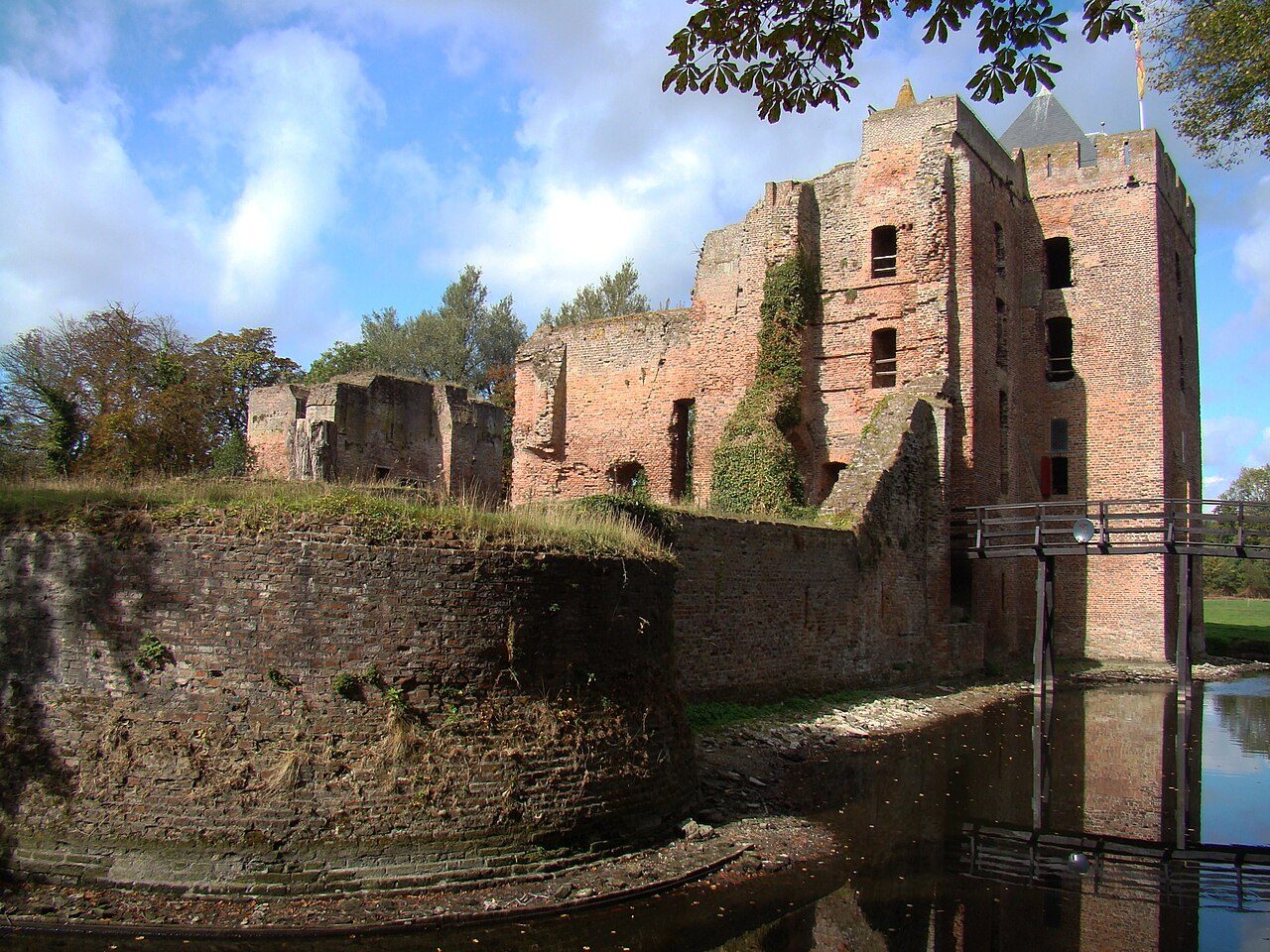
A medieval castle ruin at Santpoort-Zuid, with broken walls, a keep you can climb and a fallen wall still visible in the moat.
A wall in the water
At Ruïne van Brederode, even the small island in the moat is part of the castle’s story. In 1573, Spanish troops set the castle on fire, and its north wall collapsed into the water. That fallen wall can still be seen as an island. Look for it before turning your attention to the towers: the wreckage helps explain the place as clearly as the standing masonry.
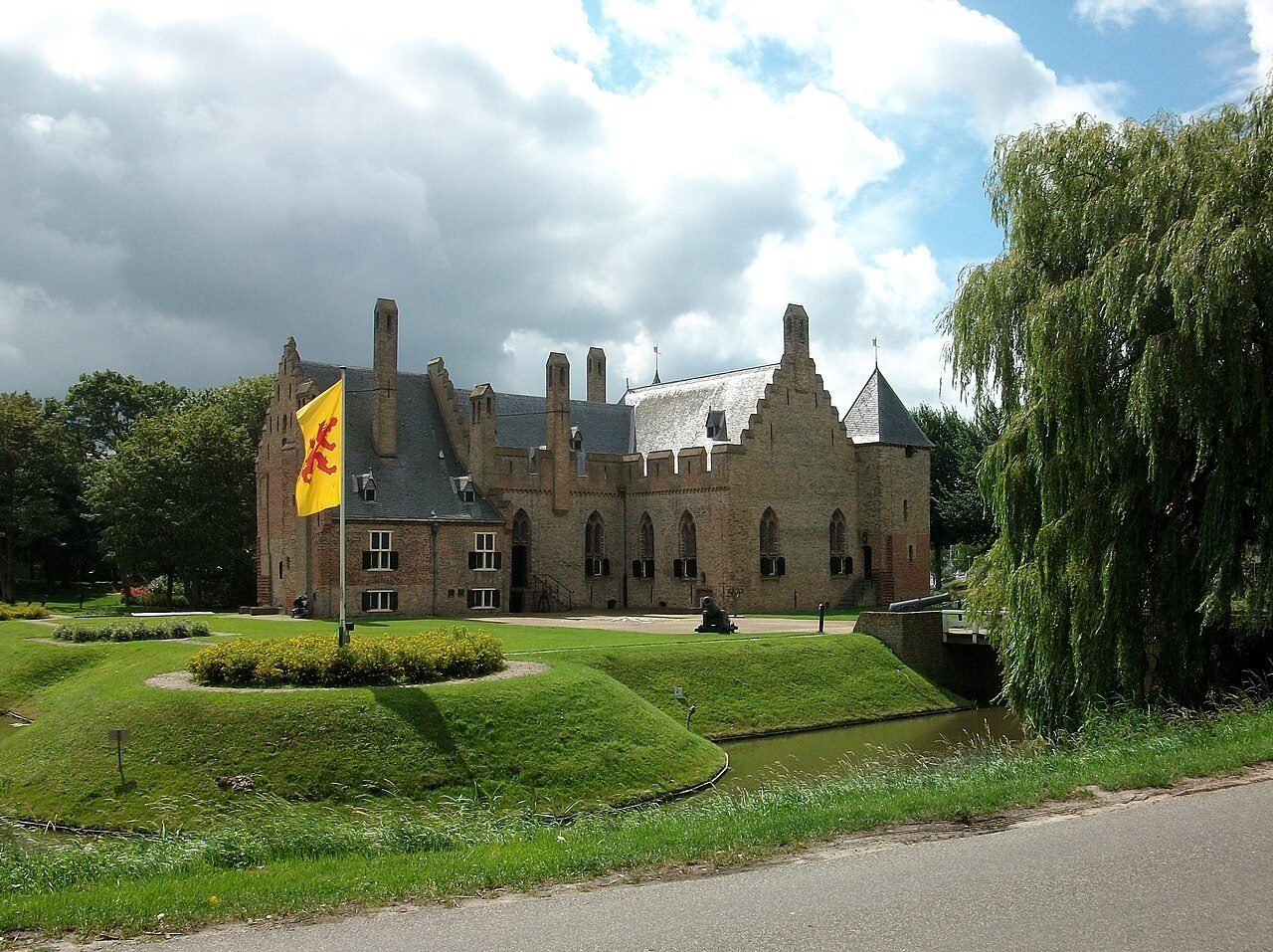
These are the remains of Castle Brederode at Santpoort-Zuid, in Velsen. You come for the broken walls, the climb up the keep and the chance to read a medieval stronghold through what survives. Alongside Kasteel Radboud in Medemblik, it offers another way into Noord-Holland’s castle history, with destruction and repair especially visible here.
Built, broken and rebuilt
Willem I van Brederode founded the castle in the second half of the 13th century. Its name refers to woodland cleared for the building. There was initially a residential tower; around 1300, Dirk II van Brederode replaced it with a square castle.
The family’s loyalties repeatedly brought trouble to its walls. During the Hook and Cod conflicts, the Brederodes supported Margaret of Bavaria. Gijsbrecht II van Nijenrode besieged the castle in 1351, leaving it so badly damaged that it was demolished. Rebuilding followed reconciliation in 1354. Further destruction came in 1426, followed by repairs to the northern part in 1464. German soldiers plundered it in 1492, after which it was no longer inhabited.
The castle’s 2026 exhibition brings that history back to a household scale. Yolande van Lalaing, its last lady, is presented in her former living quarters alongside her four daughters and her illustrated book of hours from 1460. Give this part some time: it shifts the story from sieges to the people who lived here.
An orca in the moat
The moat has yielded something much less expected than fallen stone. In 1996, local archaeologists found two unusual vertebrae. Jørn Zeiler and Erwin Kompanje later identified them as belonging to an adult female orca.
They suspected that the animal had stranded on the coast and been brought to the castle. That explanation remains a suggestion, not a settled account of how the bones arrived. Standing beside the water, it is worth holding on to that distinction: the identification is one thing; the journey here is another.
Old stone, romantic repairs
Not everything that looks medieval necessarily is. Restoration began in 1862, when additions were made to give the ruins a medieval appearance. In 1990, researchers J. Kamphuis and D. B. M. Hermans reported that weathering had made those additions look authentically old, misleading later investigators. Look closely at the walls, but do not assume age can always be judged by appearance.
The ruins had already stirred imaginations before that restoration. In an 1831 book, writer Petronella Moens recalled a summer visit with a friend. Their walk inspired a poem imagining the lives of Brederode’s former inhabitants.
Today, the open-air exhibition explains the castle and its lords, and the keep can be climbed. Between the standing tower, reconstructed details and wall lying in the moat, this is a place to look slowly rather than expect a complete medieval building.
Things to know
- Head to Santpoort-Zuid, in the municipality of Velsen.
- Wear shoes suited to walking around an outdoor ruin.
- Allow time for the exhibition and the climb up the keep.
- Check the castle’s programme for medieval-themed activities.
- Opening hours and prices can change. Check the official website before you go. Official website