CASTLE
Kasteel Radboud
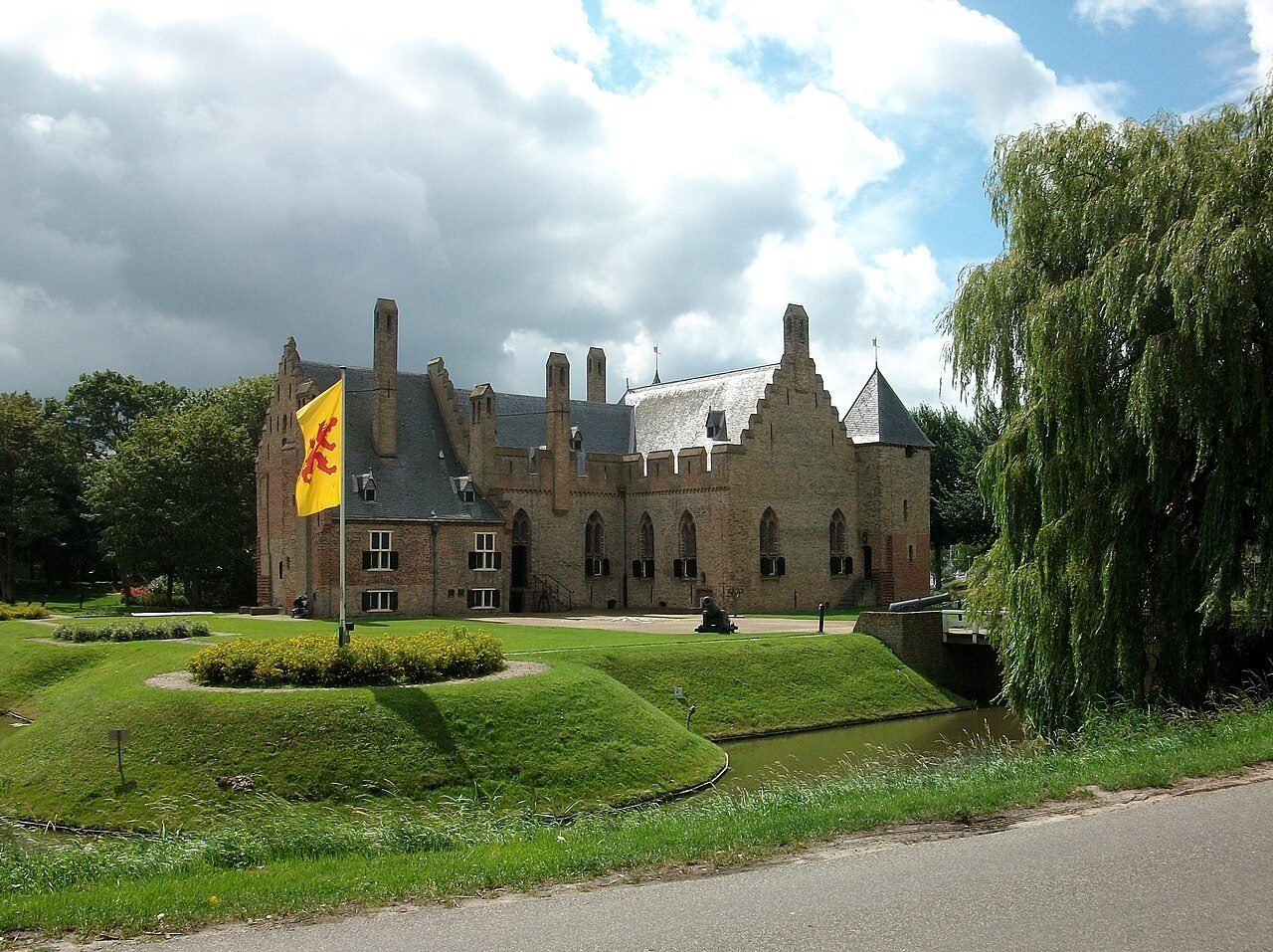
A medieval castle beside Medemblik’s harbour, with surviving towers, residential rooms and a Knights’ Hall whose beamed ceiling was reinstated.
A refuge beside the harbour
Kasteel Radboud stands on the east side of Medemblik’s harbour. In 1517, when the Frisian fighter Grutte Pier attacked and the town burned, castle commander Joost van Buren let townspeople shelter inside. The attackers failed to take the castle. That makes these walls more than a medieval backdrop: they were the difference between the burning town and a place of refuge.
Five hundred years later, the attack brought a very different fleet across the water. In 2017, people from Grutte Pier’s home village of Kimswerd crossed the IJsselmeer in a peace fleet to apologise. Their procession through Medemblik ended here at Kasteel Radboud.
A count’s castle, a king’s name
The castle dates from 1288 and was built as part of Floris V’s network of strongholds. These were instruments of control as well as defence. Floris wanted protection against Frisian incursions and bases from which to keep the recently subdued West Frisians under his authority. Despite its residential rooms, no noble family ever lived here.
The name Radboud reaches much further back. According to legend, the castle stands on the foundations of a stronghold belonging to the Frisian King Radboud. Cornelius Aurelius’s chronicle of 1517 placed the king’s royal residence in Medemblik. That is not proof that this building occupies its foundations.
An even darker local tale claims that Radboud, who lived in the seventh and eighth centuries, dropped Christian prisoners through a trapdoor into a lime pit. The supposedly surviving trapdoor belongs to that folklore. It is not established evidence of events here, and the present castle is centuries younger than the king.
Walls could not stop everything
In 1572, rebels found a way to overcome the defenders without simply breaking through the walls. They used local women and children as human shields. Historian Peter Swart says the defenders surrendered after seven hours rather than shoot at their own families. It is a grim counterpoint to the successful refuge of 1517.
After new town ramparts were built from 1578, the castle lost its defensive purpose and fell into decay. Restoration followed between 1890 and 1897 under P.J.H. Cuypers.
The building later sheltered something quite different. On 4 September 1939, Rembrandt’s *The Night Watch* was brought here for safekeeping. It remained temporarily before moving to a bunker in the dunes near Castricum in May 1940.
Read the building that remains
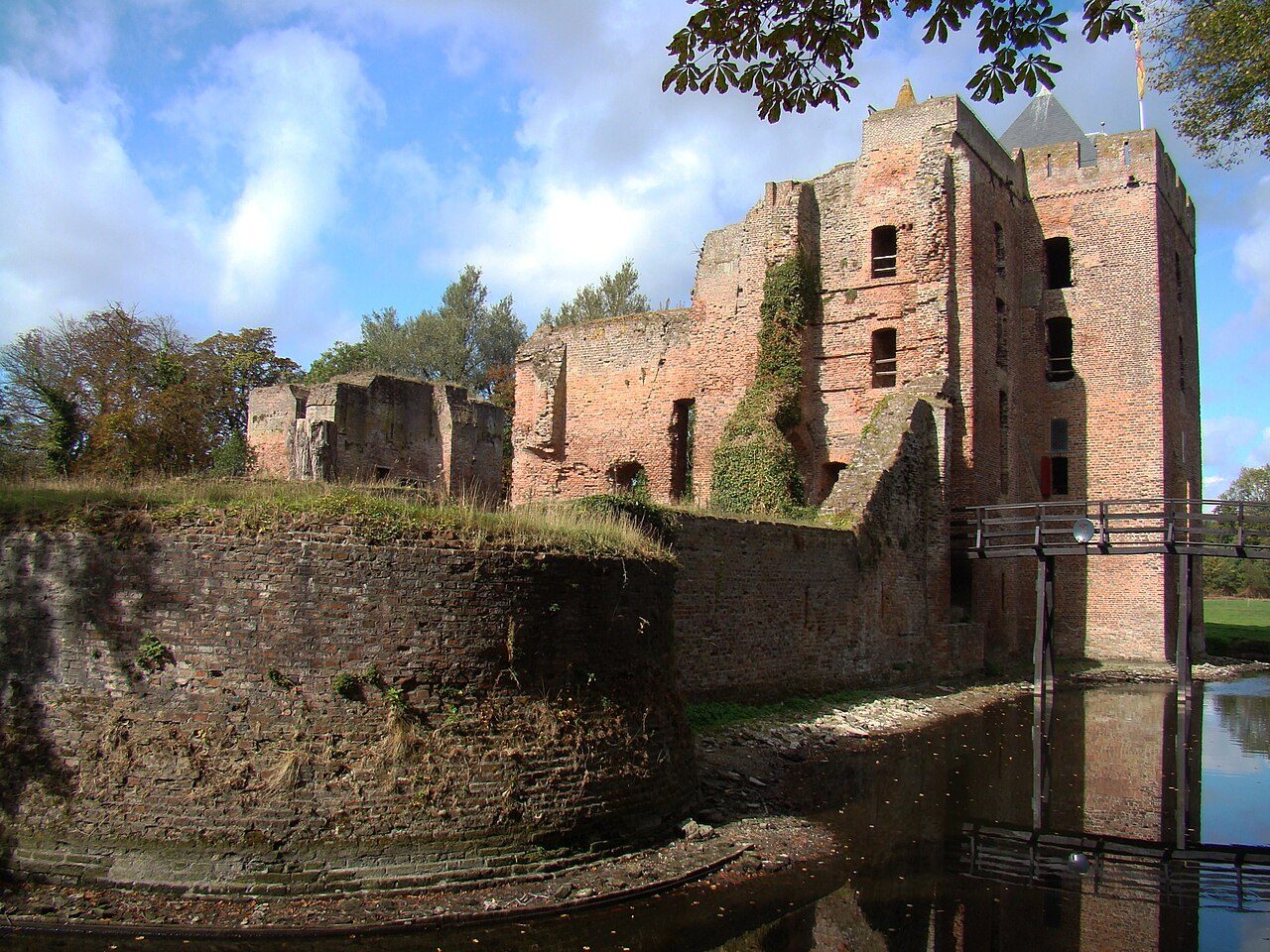
Outside, look for the two surviving residential wings, two square towers and round corner tower. Other parts have disappeared, leaving only their outlines. The surviving rooms give a different sense of castle life from a ruin such as Ruïne van Brederode. Here, you can read both the defensive shape and the spaces within it.
Inside the Knights’ Hall, look up at the beamed ceiling. In the 1990s, caretakers Henk and Ina de Beer produced an old photograph showing that the hall had once had such a ceiling. It was reinstated, giving the room its notable acoustics. What you see overhead is the result of a photograph being taken seriously, not simply a guess at how a medieval hall should look.
Things to know
- Head for the east side of Medemblik’s harbour.
- Bring a layer for the walk around the exterior.
- Allow time to trace the missing sections outside.
- In the Knights’ Hall, remember to look up.
- Opening hours and prices can change. Check the official website before you go. Official website