
CASTLE
Kasteel de Haar
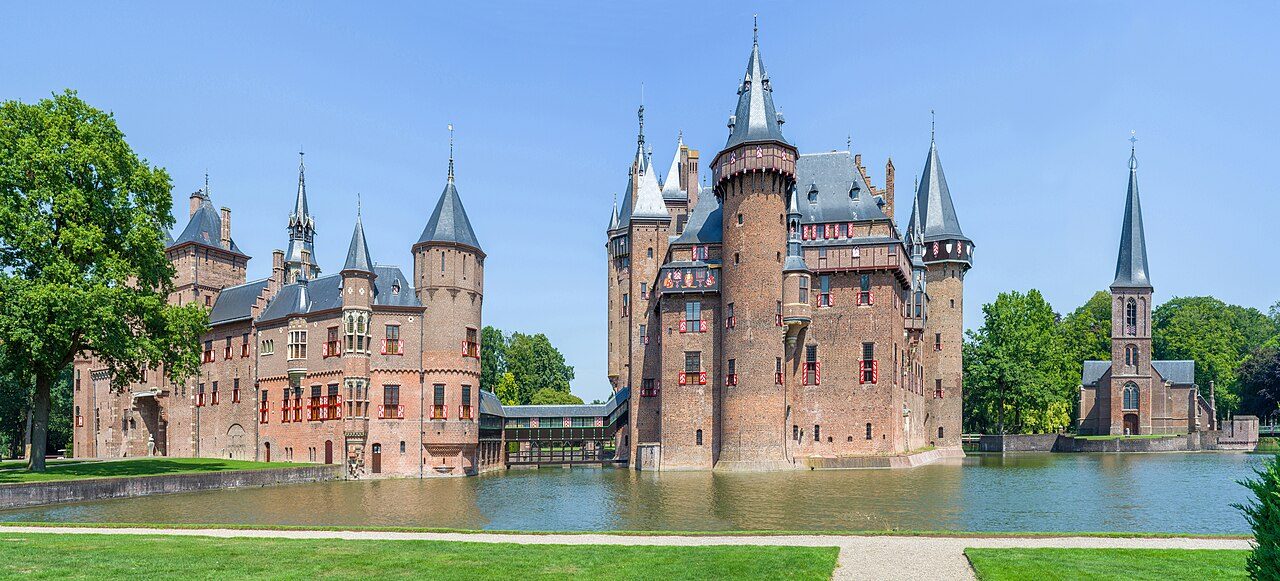
Kasteel de Haar in Haarzuilens is the Netherlands’ largest castle, with towers, richly decorated rooms and a landscaped park.
A castle built for guests
Kasteel de Haar in Haarzuilens is the Netherlands’ largest castle, with towers, richly decorated rooms and a landscaped park. It was also a house for entertaining. In September 1967, Brigitte Bardot stayed here with Baron Thierry van Zuylen. The castle later revealed that she rode a moped through its corridors at night. Keep that image in mind as you look at the formal interiors: family life here was not always as solemn as the architecture suggests.
The castle stands outside Utrecht, in grounds that include gardens, bridges, gates and a chapel. Give yourself time for both the rooms and the park. They were designed together, down to furniture and family emblems, rather than assembled as separate attractions.
Medieval roots, modern comforts
The earliest written mention dates from 1391. Through the marriage of Yosina van de Haar and Dirk van Zuylen van Harmelen in 1449, the castle passed to the Van Zuylen family. Attacks, French troops in 1672 and the storm of 1674 all left damage. By the late 19th century, it was a ruin.
Baron Étienne van Zuylen inherited it in 1890. His marriage to Hélène de Rothschild helped provide the means for rebuilding. Architect Pierre Cuypers and his son Joseph worked on the project from 1892 to 1912. What looks medieval is largely their neo-Gothic creation, equipped with electric lighting, its own generator and central heating. The owners wanted a country house for receiving guests, not a permanent home.
Look beyond the decoration
Start with the central hall. Its Gothic windows, pinnacles and large statues make it feel like a church, just as Étienne intended when he requested a hall in “cathedral style”. Look for the little columns associated with the Van Zuylen family and the diamond shapes of the Van de Haar family. In the knights’ hall, Stars of David on the beams acknowledge Hélène’s Jewish background. Above the doorway towards the library, the Rothschild arms show a hand holding five arrows.
The ballroom carries a less formal memory. In 2023, Baroness Alexandra recalled Gregory Peck bringing films for the children during his September visits. They watched from blankets spread across the ballroom floor. The hole for the projector lens can still be seen in the minstrel gallery.
Another object deserves a close look: the Japanese norimono, a covered litter bearing the Tokugawa family crest. De Haar unveiled it after restoration in 2026. A passenger travelled kneeling inside, carried by two to four people. It is a very different expression of status from the castle surrounding it.
A park made to look older
The mature landscape was part of the plan from the beginning. In 1895, landscape designer Hendrik Copijn had full-grown trees brought here on specially made wagons called mallejannen. A contemporary newspaper reported that three wagons made two journeys a day, delivering six trees altogether. Étienne wanted an established park without waiting for saplings to grow.
The space came at a human cost. Until 1898, Haarzuilens village stood roughly where the Roman Garden is today. To make room for the park, its residents moved to a new village about twenty minutes’ walk east. Standing in the Roman Garden, picture houses and village life occupying this carefully arranged ground. The gardens are not simply a setting around the castle; their creation changed the place around it.
Things to know
- Plan your journey to Haarzuilens, outside Utrecht, rather than Utrecht’s city centre.
- Allow time for the interiors and a separate walk through the park.
- Wear comfortable shoes for walking around the grounds.
- Choose daylight if you want a good look at the gardens.
- In the ballroom, look up towards the minstrel gallery for the projector opening.
- Opening hours and prices can change. Check the official website before you go. Official website