

Stroopwafel
A stroopwafel is a thin waffle split in two and filled with sweet, buttery syrup. Order one freshly baked for the pleasure of crisp wafer and warm, soft filling.
What it is
The familiar stroopwafel starts with dough baked in a waffle iron. In Albert Heijn’s recipe, the dough contains flour, butter, egg, sugar and yeast. The baked waffle is sliced across the middle while still warm, then filled with syrup, brown sugar, cinnamon and butter. Gouda also has a different style: the Kamphuisen siroopwafel. Its two crisp wafers are baked separately, and its filling is more fluid than that of the softer, split stroopwafel.
Where it comes from
The stroopwafel was born in Gouda in the 19th century. The local historical association names Gerard Kamphuisen, whose shop opened in 1810, as the likeliest inventor, though others have claims too. Gouda bakery Markus tells a story of a baker using leftover dough, splitting the baked wafer and adding syrup. As orders grew, the bakery says, he developed a recipe just for stroopwafels.
How to eat it
Look for the words ‘verse stroopwafel’, meaning a fresh stroopwafel. Rudi’s stall on Amsterdam’s Albert Cuyp market recommends eating one just baked, while it is warm and syrupy. If you have saved yours for later, rest it over a warm cup of tea, coffee or hot chocolate. Leave it there for one or two minutes without turning it over. The warmth softens the syrup inside.
How to spot a good one
For the Gouda historical association, a good wafer should be crisp rather than tough, with a generous syrup filling. It describes a filling made with dark syrup, butter, brown sugar and cinnamon. Fresh and warm is a useful starting point when choosing one, but remember that the separately baked Kamphuisen style is meant to differ from the softer, split version.
Worth knowing
At Dough’s Gouda stall, you can choose mini stroopwafels, extra-large ones with chocolate and toppings, or ‘snippers’: waffle pieces in a paper cone or with syrup in a tub. Prices can vary sharply. In February 2024, DutchNews reported €2.50 at Rudi’s Amsterdam stall and €13 at Van Wonderen on Kalverstraat. Gouda has also gone big in another way: in 2013, Markus and six other local businesses baked a Guinness-recognised stroopwafel measuring 2.47 metres across and weighing 50 kilograms.
Sources
- Historische Vereniging Die Goude ([goudatijdmachine.nl](https://www.goudatijdmachine.nl/wp-content/uploads/1000-jaar-gouda/Duizend-Jaar-Gouda-Economie-18.pdf))
- Markus & Markus ([stroopwafelsvanmarkus.nl](https://stroopwafelsvanmarkus.nl/uploads/spreekbeurt_stroopwafels_1_20160210_092631.pdf))
- Albert Heijn ([ah.nl](https://www.ah.nl/allerhande/video/R-V3690661/stroopwafels))
- Rudi’s Original Stroopwafels ([originalstroopwafels.com](https://originalstroopwafels.com/?lang=nl))
- Reformatorisch Dagblad, 2026 ([rd.nl](https://www.rd.nl/artikel/koekenbakkers-aan-het-werk-in-nostalgisch-gouda))
- Dough ([dough.nl](https://dough.nl/en/))
- Markus Stroopwafels ([markusstroopwafels.nl](https://markusstroopwafels.nl/nl/wereldrecord/))
- DutchNews.nl, 2024 ([dutchnews.nl](https://www.dutchnews.nl/2024/02/e13-for-a-stroopwafel-is-this-the-most-expensive-tourist-snack/))
Where to eat it in Amsterdam
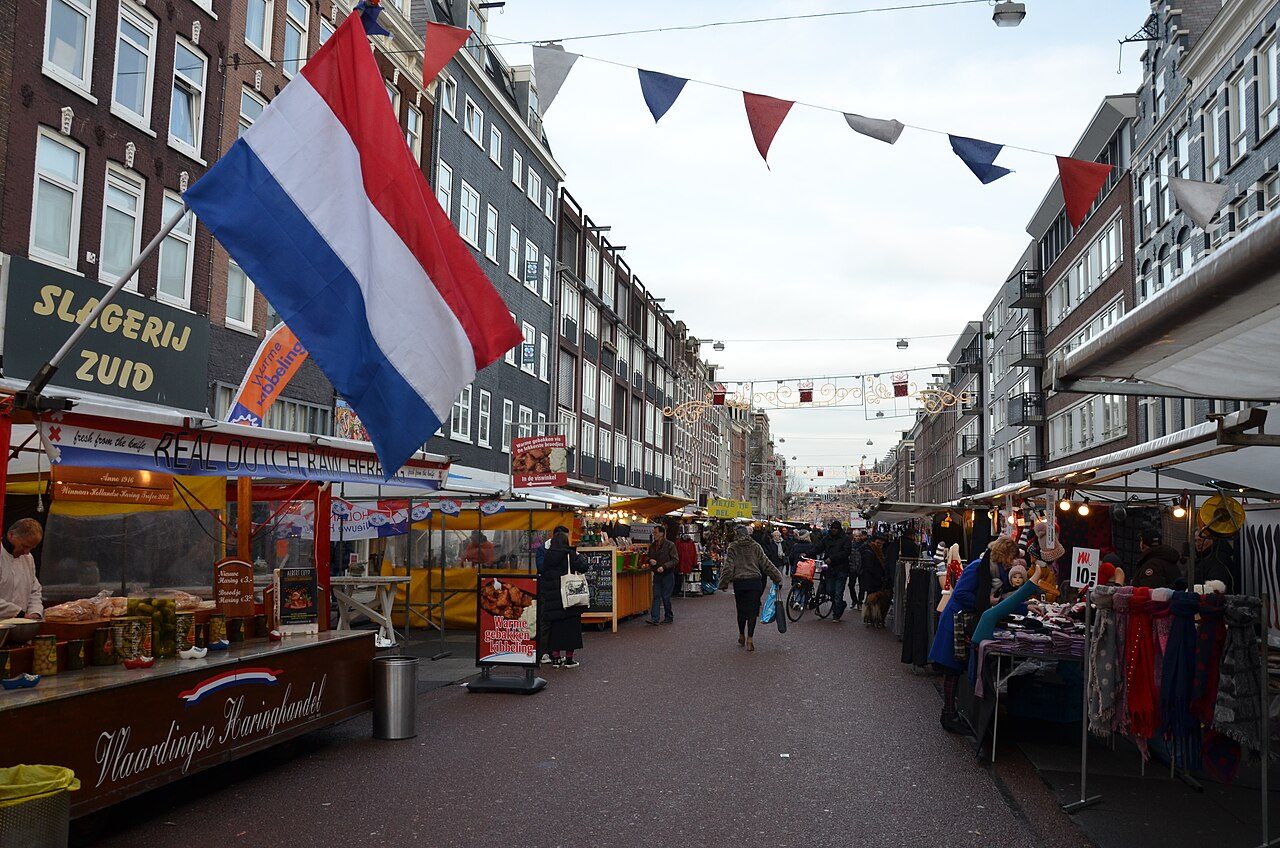
Albert Cuypmarkt
Several stroopwafel stands
Lanskroon
Bakery on Singel
Your café hereFEATURED
A featured place shows first, marked “Featured”
Next on your passport
All 15 › Fish · €3–6
Dutch herring
Dutch herring is salted, ripened fish with a creamy texture and a lightly salty taste. Order it for a Dutch food tradition that comes with a choice: bite-sized pieces, a sandwich, or the head-back, tail-in-hand approach.
Where to eat it ›
 Snack · €6–9 for 6–8
Bitterballen
Bitterballen are fried balls of thick meat ragout, with a crunchy breadcrumb shell and a soft centre. Order a portion with mustard for a Dutch drinks snack that is small enough to share but hot enough to demand patience.
Where to eat it ›
 Cheese · €2–6 a wedge
Gouda cheese
Gouda cheese is a cow’s milk cheese that can be mild and soft or firm and strongly flavoured, depending on its age. Order a selection to taste how much a few months of maturing can change this Dutch cheese.
Where to eat it ›
 Dutch-Indonesian · €18.82 average for chicken satay in 2024
Satay
Satay is meat grilled on skewers, commonly served in the Netherlands with thick brown peanut sauce. Order it for browned bites from the grill and a generous helping of sweet, nutty sauce.
Where to eat it ›