

Dutch herring
Dutch herring is salted, ripened fish with a creamy texture and a lightly salty taste. Order it for a Dutch food tradition that comes with a choice: bite-sized pieces, a sandwich, or the head-back, tail-in-hand approach.
What it is
The key is the way the fish is prepared. In kaken, or gibbing, the gills and some organs are removed, but the pancreas stays in. Enzymes from this organ help the salted or brined fish ripen, creating its taste and texture. Hollandse Nieuwe must contain at least 16% fat. Much of the catching and processing happens in Scandinavia. The Dutch name refers to the method of gibbing, brining and controlled ripening, not where the fish was caught.
Where it comes from
A turning point came in 1384. A Hanseatic ban on services to Holland’s fishing boats helped push fishermen to clean and salt their herring at sea. This made it keep better. Willem Beukelzoon of Biervliet is traditionally credited with inventing gibbing, but historians still debate whether he really invented it.
How to eat it
One traditional way is to hold the fish by its tail, dip it in chopped onions, tilt your head back and lower it into your mouth. A sandwich is another option: ask for a broodje haring, enjoyed with onions and pickles. In Amsterdam, cutting herring into pieces is a local tradition. Haringhandel Frens on Koningsplein serves it this way with onions and pickles, so there is no need for the head tilt.
How to spot a good one
Good herring should smell fresh, not rancid, and feel both firm and tender. Its taste should be creamy and lightly salty. These are the qualities fishmongers traditionally check, rather than judging it by saltiness alone.
When to have it
The new-herring season is celebrated in June. The fish is sold as Hollandse Nieuwe through September. After that, it is called Hollandse maatjesharing. If you want to join the seasonal celebration, June is the month to aim for.
Worth knowing
The first barrel can make big news. On 22 June 2023, it was auctioned in Scheveningen for €159,500 for the Dutch food banks. The auction had been delayed because the fish had not yet reached the required 16% fat. Also, a rolmops is a different preparation: sour herring rolled around a pickle and onions, held together with a stick.
Sources
Where to eat it in Amsterdam
Stubbe’s Haring
On the bridge at Singel, near Centraal Station
Frens Haringhandel
By the Bloemenmarkt
Rob Wigboldus Vishandel
Zoutsteeg, near Dam Square
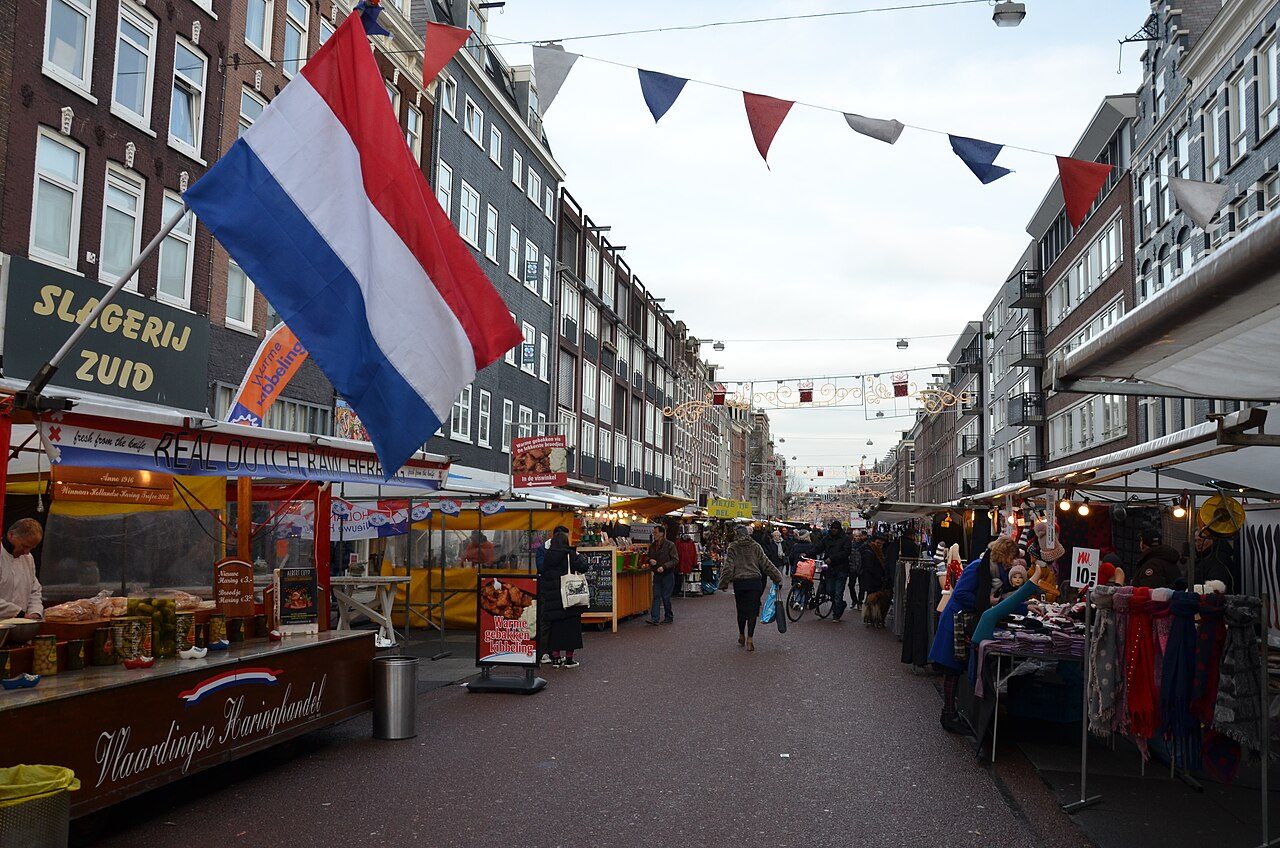
Albert Cuypmarkt
Fish stalls along the market
Next on your passport
All 15 › Snack · €6–9 for 6–8
Bitterballen
Bitterballen are fried balls of thick meat ragout, with a crunchy breadcrumb shell and a soft centre. Order a portion with mustard for a Dutch drinks snack that is small enough to share but hot enough to demand patience.
Where to eat it ›
 Cheese · €2–6 a wedge
Gouda cheese
Gouda cheese is a cow’s milk cheese that can be mild and soft or firm and strongly flavoured, depending on its age. Order a selection to taste how much a few months of maturing can change this Dutch cheese.
Where to eat it ›
 Sweet · €2–4
Stroopwafel
A stroopwafel is a thin waffle split in two and filled with sweet, buttery syrup. Order one freshly baked for the pleasure of crisp wafer and warm, soft filling.
Where to eat it ›
 Dutch-Indonesian · €18.82 average for chicken satay in 2024
Satay
Satay is meat grilled on skewers, commonly served in the Netherlands with thick brown peanut sauce. Order it for browned bites from the grill and a generous helping of sweet, nutty sauce.
Where to eat it ›